- Top Pick: 【5-Years Data Recovery】GIGASTONE 128GB SD Card 4K Camera Pro, 150MB/s Read | UHS-I A1 V30 U3 Class 10 SDXC Memory Card 4K UHD Video Compatible with Digital Camera, Full-Sized SD Card, with 1 Mini Case
- Best Value: SanDisk 32GB Ultra 100MBs SDHC Memory Card | Up to 100MB/s read, Water-resistant design, Impact-resistant build
- Premium Choice: SANDISK 256GB Extreme PRO SD Memory Card, Up to 200MB/s Read Speeds, UHS-I | V30, U3, C10, 4K UHD, Up to 140MB/s Write Speeds, SANDISK QuickFlow Technology – SDSDXXD-256G-GN4IN
Choosing an SD card for a Sony camera is less about brand loyalty and more about matching three numbers to what your body can actually write: bus type, video speed class, and capacity. A Sony mirrorless body shooting 4K video demands sustained write speed, while a compact point-and-shoot is happy with a modest card. Buy too little and recording stops or burst shooting stalls; buy too much and you carry a card that your camera cannot fully use.
This guide ranks ten SD cards by what each listing says, from a plain 32GB SDHC for a basic camera to UHS-II cards with V60 and V90 classes aimed at heavy video. It is meant for photographers who own a Sony camera and want a clear shortlist for 2026. Check your camera manual for the supported card type first, because that answer decides which half of this list matters.
Quick Picks
As an Amazon Associate we earn from qualifying purchases at no extra cost to you.



| Product | Best for | Key spec from the title |
|---|---|---|
| Gigastone 128GB 4K Camera Pro | General 4K shooting on UHS-I | 150MB/s read, V30, A1 |
| SanDisk 32GB Ultra SDHC | Basic camera, light use | Up to 100MB/s read |
| SanDisk 256GB Extreme PRO | High-capacity UHS-I | 200MB/s read, 140MB/s write, V30 |
| Lexar 256GB Silver | Large 4K library, UHS-I | 225MB/s read, V30 |
| SanDisk 64GB Extreme PRO | Smaller UHS-I V30 card | 200MB/s read, 90MB/s write |
| Sony TOUGH-M 128GB | UHS-II with V60 | R277MB/s, W150MB/s |
| Gigastone 256GB 4K Camera Pro | Large UHS-I capacity | Up to 170MB/s, V30, A1 |
| Lexar 128GB Silver PRO | UHS-II V60 video | 280MB/s read, V60 |
| Sony TOUGH-G 128GB | Top-tier UHS-II video | V90, R300MB/s, W299MB/s |
| SanDisk 64GB Ultra | Compact cameras, Full HD | Up to 140MB/s read, U1 |
How to Choose
UHS-I or UHS-II
UHS-I cards, which include most models here, top out well below UHS-II. A UHS-II card has an extra row of pins and reaches far higher listed speeds, such as the 300MB/s read figure on the Sony TOUGH-G. It can still work in a UHS-I slot, but only at UHS-I pace. If your Sony body has a UHS-I slot, the faster card is surplus for that camera.
Video speed class
The V class describes minimum sustained write speed: V30 means 30MB/s, V60 means 60MB/s, and V90 means 90MB/s. For 4K video, V30 covers many standard modes, while higher bitrate formats call for V60 or V90. U1 and U3 are older classes and guarantee less. Choose the class your camera manual names for your recording mode, not the biggest number.
Capacity and card format
SDHC covers cards up to 32GB and SDXC covers larger sizes, so a 32GB SDHC works only in cameras that read it. A 4K clip uses storage quickly, so 128GB suits a day of shooting and 256GB suits a trip. Smaller 64GB cards make sense as a spare, and a single huge card puts all your footage in one place.
Read versus write, and where budget cards cut corners
Read speed shows how fast you offload files; write speed decides whether recording keeps up. Listings often feature the bigger read figure, so look for the write number or the V class instead. Budget cards usually quote only read speed, lack higher video classes, and offer fewer durability claims than premium models.
The 10 Best Options
Gigastone 128GB 4K Camera Pro
A UHS-I card for photographers who want V30 and A1 labels in a mid-range 128GB size, plus a case and a data-recovery service in the listing. It suits a mid-range Sony body used for travel clips and family events.
- Strength: 150MB/s read, V30, U3, and Class 10 for 4K UHD video.
- Strength: includes a mini case and a five-year data-recovery offer.
- Trade-off: UHS-I only, so it will not reach UHS-II speeds.
Skip it if your camera records at higher bitrates that call for V60 or V90, or if you want the faster UHS-II bus for quick offloads and long continuous recording.
SanDisk 32GB Ultra SDHC
A small, simple card for an older or basic camera that records photos and light video. The listing emphasizes a rugged body and simple speed figure, so it works as a backup card in a bag or a starter card for a beginner.
- Strength: up to 100MB/s read with a water-resistant, impact-resistant design.
- Strength: a familiar brand in a very small capacity.
- Trade-off: the title shows no video class, so 4K is not its target.
Skip it if you shoot 4K video or large bursts of high-resolution photos, since the small capacity fills fast and no video class appears in the title.
SanDisk 256GB Extreme PRO
A high-capacity UHS-I card for photographers who shoot long events or travel without a laptop. The large capacity reduces card swaps, and the faster write figure helps keep up with bursts and standard 4K recording.
- Strength: up to 200MB/s read and up to 140MB/s write.
- Strength: V30, U3, C10, and 4K UHD, with QuickFlow technology listed.
- Trade-off: UHS-I, so a UHS-II slot gives it no advantage.
Skip it if your recordings need a V60 or V90 class, or if your Sony body has a UHS-II slot you want to fully use for the fastest offloads.
Lexar 256GB Silver
A UHS-I V30 card that names Canon, Sony, and Nikon compatibility, aimed at enthusiasts with a lot of footage. The big capacity and a quick listed read figure make offloading to a computer comparatively fast.
- Strength: 225MB/s read, 4K, V30, and U3.
- Strength: large capacity for a long shoot day.
- Trade-off: the title gives no write speed figure.
Skip it if you need a confirmed write number or a higher video class, because the listing highlights read speed and V30 while leaving sustained write unstated.
SanDisk 64GB Extreme PRO
A smaller Extreme PRO that works as a spare or a dedicated photo card in a Sony body. It brings the Extreme PRO line into a smaller capacity, which keeps each card to a manageable shoot.
- Strength: up to 200MB/s read, V30, U3, and 4K UHD.
- Strength: SanDisk app support for backup and transfer.
- Trade-off: only up to 90MB/s write, lower than the larger Extreme PRO.
Skip it if you plan to fill a card with 4K clips quickly, since 64GB runs out fast and the write figure is the lowest among the Extreme PRO models listed.
Sony TOUGH-M 128GB
A UHS-II V60 card from the camera maker itself, built for video shooters who want a step up from UHS-I. It carries the same brand as the camera, which some buyers prefer when they want one supplier for body and media.
- Strength: UHS-II with V60 and U3, with a maximum 277MB/s read.
- Strength: 150MB/s write in the title and the Sony brand.
- Trade-off: UHS-II only matters if your camera slot supports it.
Skip it if your Sony body has only a UHS-I slot, since the faster bus then goes unused and a V30 card would do the same job in that camera.
Gigastone 256GB 4K Camera Pro
A larger UHS-I card with V30 and A1 labels, for travelers who want one big card and a recovery service. The 256GB size keeps a long trip on a single card, and the bundled case helps with storage.
- Strength: up to 170MB/s and 256GB of space.
- Strength: mini case and five-year recovery in the listing.
- Trade-off: V30 only, with no V60 or V90 option.
Skip it if you want a higher sustained write class, since V30 is the top class on the title and no UHS-II option appears.
Lexar 128GB Silver PRO
A UHS-II V60 card that names Canon, Sony, and Nikon, aimed at pros and enthusiasts who shoot video. It sits one tier below the V90 option in video class but offers a faster read figure than the Sony TOUGH-M listed here.
- Strength: 280MB/s read, V60, U3, and UHS-II.
- Strength: 4K support and a mid-size 128GB capacity.
- Trade-off: no write speed figure in the title.
Skip it if your camera uses UHS-I or needs V90, because the V60 class is the ceiling and the title omits a write speed figure.
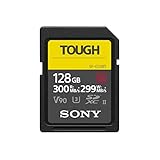
Sony TOUGH-G 128GB
The top-tier option here: a UHS-II V90 card for heavy video recording and fast bursts. Its figures are the highest in this group, so it fits buyers who want the most headroom from a UHS-II body.
- Strength: V90, 300MB/s read, and 299MB/s write.
- Strength: UHS-II from the camera maker, with TOUGH series branding.
- Trade-off: it is overkill for basic cameras, and 128GB fills quickly at high bitrates.
Skip it if you shoot photos only or use a UHS-I slot, because most of its speed would go unused and a lower class covers stills easily.
SanDisk 64GB Ultra
A basic Full HD card for compact cameras and camcorders, with a rugged build. The listing points to compact and mid-range cameras and camcorders, so it matches modest shooting needs.
- Strength: up to 140MB/s read, with temperature, water, and shock proof claims.
- Strength: aimed at compact to mid-range cameras and camcorders.
- Trade-off: U1 and Full HD only, not suited to 4K.
Skip it if you record 4K or need fast burst shooting, since the U1 class and Full HD focus leave little headroom for demanding modes.
Which One Fits Your Situation
You shoot 4K video on a UHS-II body
Choose the Sony TOUGH-G for V90, or the Lexar Silver PRO or Sony TOUGH-M for V60 at a lower tier. Keep a spare card in the bag, since high-bitrate clips use up space far faster than stills do.
Your camera has a UHS-I slot
The SanDisk Extreme PRO and Lexar Silver deliver V30 without stepping up to UHS-II. Pick 64GB for a spare or 256GB for a long trip, and remember that the extra read speed mainly shortens the transfer to your computer afterward.
You want extra peace of mind
The Gigastone cards bundle a five-year data-recovery offer and a mini case, which suits casual shooters who value a safety net and a tidy way to carry the card between shoots.
You own a simple camera
The SanDisk Ultra cards, 32GB or 64GB, are enough for photos and Full HD clips, and the rugged claims in the listing suit a camera that rides in a pocket or outdoor bag.
Common Mistakes
- Buying UHS-II for a camera that only has a UHS-I slot.
- Judging a card by read speed alone and ignoring the V class.
- Using a 32GB SDHC card for 4K video, where capacity runs out fast.
- Putting a whole trip on one card with no spare.
- Skipping a format step in the camera before a shoot, which prevents file-system errors left over from use in other devices.
Related guides
- Aio Liquid Coolers For High Performance Gaming
- How To Lower Input Delay In Competitive Shooters
- Wireless Gaming Headsets Under 100 For Pc
Frequently Asked Questions
Do Sony cameras need UHS-II cards?
Only some do benefit. Check your model manual for slot type, because a UHS-II card in a UHS-I slot runs at the slower speed.
What does V30 mean?
It means a guaranteed minimum sustained write speed of 30MB/s, enough for many 4K recording modes. V60 and V90 guarantee 60MB/s and 90MB/s.
How much capacity should I buy?
For stills, 64GB goes far. For 4K video, 128GB or 256GB gives breathing room, and a second card avoids interruptions.
Is a Sony-branded card necessary?
No. Any card that meets your camera’s speed and format needs works, so brand matters less than the class and bus.