For most owners the best Nintendo Switch AC adapter is the official one made for your specific console, and a third-party USB-C Power Delivery charger only makes sense as a travel or spare option when its listed output profiles clearly match what the console needs. Docked play is where cheap chargers fail most often, because the console asks for more power than a typical phone charger offers. This guide explains what to look for on the label, which kinds of adapters fit which buyer, and the safety points worth taking seriously.
As an Amazon Associate we earn from qualifying purchases at no extra cost to you.


At a Glance: Adapter Types Compared
| Adapter type | Best for | Key stated traits | Limits |
|---|---|---|---|
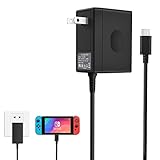
| Official Nintendo AC adapter for your model | Dock use, daily charging, peace of mind | Made and licensed by the console maker; included with the dock set | Fixed to one household spot; a spare costs more than generic chargers |
| High-wattage USB-C PD charger (mid-range) | Travel, second room, desk charging | USB-C Power Delivery; look for a 15V profile and at least 45W to 65W | Not every model works in TV mode; Nintendo does not endorse unlicensed units |
| Multi-port GaN charger (premium) | Carrying one brick for laptop, phone and Switch | Several ports, shared wattage, PD profiles listed by the maker | Wattage drops when several devices are plugged in |
| Low-wattage phone charger (budget) | Topping up in handheld mode only | 5V and 9V profiles are common | Often fails to power the console in the dock or charges very slowly |
| Car charger with PD | Road trips | Typically lists 30W to 60W combined across ports | Check per-port output before you plug in |
What the Console Actually Needs
Different Switch models draw power differently, so start with which one you own.
- Original Switch, OLED model, Lite: The official adapter is a USB-C Power Delivery unit. One independent review of the original adapter lists a 39W unit with 5V and 15V profiles and notes that it skips the 9V step some chargers use. That helps explain why a charger that suits your phone may not suit the Switch dock.
- Switch Lite: It has no dock and charges over its own USB-C port, so it is the least demanding model, though the maker still advises using a suitable adapter.
- Switch 2: Reports about its power requirements conflict. One source says Nintendo’s guidance for third-party charging is an output of 54W or more, and the same source warns that clearing 54W does not guarantee TV mode will work. Another guide claims a lower-wattage dedicated adapter. Because the numbers differ, treat any figure from a retailer or blog as a starting point and read the manual or the maker’s support page for your exact console.
The takeaway across sources is consistent: pick an adapter with enough wattage, USB-C Power Delivery 3.0, and a 15V profile (ideally 20V as well) listed on the label.
Why Docked Play Is the Hard Part
In handheld or tabletop mode, the console draws modest power and many phone chargers will do the job, if slowly. In TV mode, the dock needs to power the console while also driving video output, and it negotiates a higher voltage with the adapter. Reviewers and forum posters report that many chargers tuned for phones offer only 5V and 9V, which can leave a docked console stuck or charging poorly. If you only ever plug the console into the dock, you gain very little by shopping for a third-party adapter, because the dock set already includes the official one.
Types of Pick, Explained
Official adapter: the safe default
The official adapter is built to the console’s profile and is the one Nintendo supports. If you lost the one that came with your dock or need a second at the office, buying the official part avoids guesswork. It is not the cheapest route, but it is the least likely to cause a problem, and warranty conversations stay simple.
Reputable USB-C PD chargers
Brands such as Anker publish detailed spec sheets for their USB-C chargers, including which voltage steps each port supports. A review guide suggested that a 45W unit such as the Anker Nano III can charge a Switch 2 in docked mode, but this comes from a single secondary source and the details were thin, so check Anker’s listing before you rely on it. In general, reputable brands list the supported profiles and carry safety certification marks, which is the main reason to prefer them over anonymous bargain bricks.
Multi-port GaN chargers
These suit travelers who carry a laptop, phone and console. The catch is shared power: when you plug in two or three devices, the wattage per port may fall under what the Switch needs. Read the chart on the back of the unit or the maker’s listing for output with all ports in use.
Car chargers and power banks
Handy for long trips, but check the per-port output. Power banks vary widely; some deliver only low-power profiles. The Switch can charge from one that supports PD at the right voltage, and handheld play drains faster than charging adds on a weak source.
Safety and Compatibility Notes
- Nintendo states that only licensed accessories are supported, and it is unlikely to repair damage that results from unlicensed ones, according to reviewers who have covered the topic.
- In 2018, third-party docks were reported to have damaged original Switch consoles after a firmware update. Dock and adapter issues are related, so buy from reputable brands with clear spec sheets.
- Look for recognized safety certification marks printed on the unit, not just on the listing page.
- Use a USB-C cable rated for the wattage. A thin phone cable can limit charging, and a damaged one is a heat risk.
- Stop using an adapter that gets unusually hot, smells, makes noise or has a bent plug, and contact the maker or a qualified electrician about faulty mains-side issues.
- Unplug adapters during thunderstorms and when not in use for long periods, and never use one that is wet.
Pick X If… Decision Table
| Pick this | If you |
|---|---|
| Official adapter for your model | Want a second dock-ready charger with the lowest compatibility risk |
| Reputable 45W to 65W USB-C PD charger | Travel often and your charger lists a 15V profile; confirm it for your exact console |
| Multi-port GaN brick | Carry a laptop and phone too, and the listing shows enough power per port |
| Basic phone charger | Only top up handheld sessions and do not mind slower charging |
| Car PD charger | Play in the car and the per-port output meets the requirement |
| Nothing new | Only ever play docked with the adapter that came in the box |
Budget Tiers
- Budget: Basic single-port chargers. Fine for handheld top-ups, risky for docked play.
- Mid-range: Reputable PD chargers in the 45W to 65W class, and the official adapter. Best value for most.
- Premium: Multi-port GaN chargers with strong listed output per port. Worth it if you travel with many devices.
Alternatives to Consider
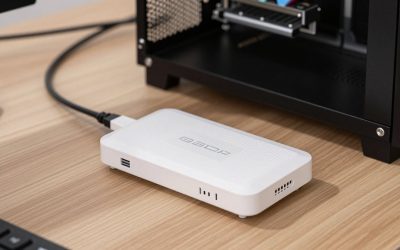
- Portable dock with built-in power passthrough: Reviewers at Deku Deals describe a compact dock with up to 65W output that doubles as a power adapter, which can replace a second brick for travel. See the dock guide for details and compatibility cautions.
- Power bank with PD: A decent option for handheld use on trips, provided the maker lists the right output.
- Extra official dock set: Costs more but gives you a complete second-room setup.
Frequently Asked Questions
Can I charge a Switch with a phone charger?
Often yes in handheld or sleep mode, but charging may be slow. In the dock, phone chargers frequently fail because they lack the higher voltage profile the dock requires. Reviewers advise matching the listed profiles instead of assuming any USB-C brick will work.
How many watts does a Switch 2 charger need?
Sources conflict. One report says Nintendo’s third-party guidance is 54W or more, while another claims a lower figure for a dedicated adapter. Check the manual or the maker’s support page, and choose a charger with comfortable headroom and USB-C PD 3.0.
Is it safe to use a third-party adapter?
Reputable brands with clear specs and safety marks are widely used, but Nintendo supports only licensed accessories and is unlikely to cover damage from unlicensed ones. If you want zero risk, buy the official adapter.
Why does my Switch charge in handheld mode but not in the dock?
The dock negotiates a higher voltage than handheld charging does, and many adapters only offer 5V and 9V. A charger with a 15V profile, or the official adapter, usually resolves this. If the problem persists with the official adapter, contact the maker.
Can the same adapter work for Switch 1 and Switch 2?
Do not assume so. Power needs differ between generations, and the original adapter may not satisfy the newer console’s docked requirements. Use the adapter named for your console in the manual.
What cable should I use with a USB-C charger?
Use a good-quality USB-C cable rated for the wattage you plan to deliver. Cheap or frayed cables can limit charging or get hot, so replace any that look damaged.