- Top Pick: JOYO Wireless in Ear Monitor System 2.4G Wireless IEM System with Transmitter Clip on Receiver Automatic Pairing in-Ear Monitoring for Studio,Guitar,DJ,Live Performance (JW-07)
- Best Value: LEKATO Wireless in Ear Monitor System MS-02, Upgraded 2.4G Stereo IEM System Low Latency with Transmitter Beltpack Receiver Auto-Pairing,One to More, in-Ear Monitoring for Church,Band,Singer,Stage
- Premium Choice: POGOLAB Wireless in-Ear Monitor System, UHF 7-Channel IEM with XLR & AUX/LINE,1ms Ultra-Low Latency, 164ft Range,48kHz/24Bit,Rechargeable Transmitter & Belt Receiver for Stage,Band,Live Performance
In competitive and fast-paced gaming, the gap between seeing something and reacting to it is everything, and a low latency monitor exists to shrink that gap. Latency on a display comes from three things working together: a high refresh rate so new frames appear sooner, a quick pixel response time so those frames are sharp rather than smeared, and low input lag so what you do reaches the screen without delay. Chase those three and the game simply feels more immediate. This guide rounds up the best low latency monitors in 2026, focused on high-refresh panels that prioritise speed and responsiveness over everything else.
- Best Low Latency Monitors at a Glance
- 1. SANSUI 32-inch Curved 240Hz Gaming Monitor, High Refresh Rate FHD 1080P
- 2. SANSUI 27-Inch IPS Monitor, 120Hz, Full HD 1920×1080, HDMI and DisplayPort
- 3. SANSUI 34-Inch Curved Gaming Monitor UWQHD 3440 x 1440P, Up to 200Hz / 165Hz
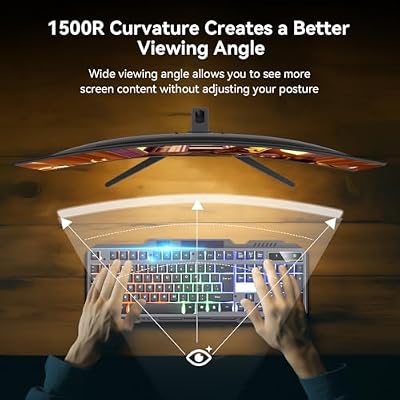
- 4. SANSUI 27 Inch Curved 240Hz Gaming Monitor FHD 1080P, 1500R Curve
- 5. ASUS TUF Gaming 27″ 2K HDR Monitor (VG27AQ) – QHD 2560 x 1440, 165Hz
- 6. Acer Nitro KG241Y Sbiip 23.8″ Full HD VA Gaming Monitor, AMD FreeSync
- How to Choose a Low Latency Monitor
- Frequently Asked Questions
- Related Guides
- Related Articles
- Related Guides
Our picks were chosen on what genuinely drives a fast display: refresh rate, response time, adaptive sync to keep motion clean, and value for the money. We have led with the fastest, most responsive panels and worked toward the gentler options, with prices from around $99 up to around $279, because the right low latency monitor is the one that matches your GPU and your game. The list spans blistering 240Hz curved panels, a sharper 165Hz QHD option, and an affordable FreeSync entry point. Below is an at-a-glance comparison of all six, then a closer look at each and a buyer’s guide built around refresh rate, response time and sync — the things that actually decide how fast a monitor feels.
As an Amazon Associate we earn from qualifying purchases at no extra cost to you.


![[328FT Long Range & 4K Decode] Wireless HDMI Transmitter and Receiver Wireless Display Adapter for Laptop PC TV Projector Instant Pairing Plug & Play Low Latency Video Audio for Office Presentation](https://m.media-amazon.com/images/I/41cXApWyzdL._SL160_.jpg)


🛒 Best Price Today on Amazon
Prime members get fast, free shipping on everything above, plus member-only deals. New members get a 30-day free trial — cancel anytime.
Best Low Latency Monitors at a Glance
| Monitor | Best For | Standout Spec | Approx Price |
|---|---|---|---|
| SANSUI 32-inch Curved 240Hz FHD | Fastest big-screen play | 240Hz, curved 1080p | around $180 |
| SANSUI 27-inch IPS 120Hz FHD | Low-cost responsive IPS | 120Hz IPS, DP + HDMI | around $100 |
| SANSUI 34-inch Curved UWQHD up to 200Hz | Fast ultrawide immersion | 3440×1440, up to 200Hz | around $216 |
| SANSUI 27-inch Curved 240Hz FHD | Compact 240Hz competitive | 240Hz, 1500R curve | around $129 |
| ASUS TUF Gaming VG27AQ 27-inch QHD 165Hz | Sharp high-refresh esports | QHD 165Hz, ELMB | around $279 |
| Acer Nitro KG241Y 23.8-inch FHD VA | Budget FreeSync entry | FHD VA, AMD FreeSync | around $110 |
1. SANSUI 32-inch Curved 240Hz Gaming Monitor, High Refresh Rate FHD 1080P

SANSUI 32 Inch Curved 240Hz Gaming Monitor High Refresh Rate, FHD 1080P | Gaming PC Monitor HDMI DP1.4, 1500R Curvature, 1Ms MPRT, HDR,Metal Stand,VESA Compatible(DP Cable Incl.)




As an Amazon Associate we earn from qualifying purchases. Product prices and availability are accurate as of the date/time indicated.
The SANSUI 32-inch curved is the fastest big-screen pick on this list and the natural lead for anyone chasing low latency on a large panel. Its headline figure is a 240Hz refresh rate on a 32-inch curved 1080p screen, which means the display can draw up to 240 new frames every second — far more than a standard 60Hz panel — so motion looks fluid and your inputs feel immediate. At around $180 it delivers serious speed on a generous screen.
For low latency this is exactly the intent it serves. A high refresh rate is the single biggest contributor to a responsive feel, and at 240Hz fast-flicking shooters, racers and fighters render with very short gaps between frames. The 32-inch curve wraps the action around your view for immersion, while the FHD resolution keeps the frame rate easy for a mid-range GPU to sustain — exactly what you want when you are pushing for the highest, most consistent refresh. If you want maximum speed on a big, immersive panel, the SANSUI 32-inch starts the list for good reason.
Pros: Blistering 240Hz refresh, large immersive curve, FHD keeps frame rates high for low latency.
Cons: 1080p stretched across 32 inches looks softer; needs a capable GPU to feed 240Hz.
2. SANSUI 27-Inch IPS Monitor, 120Hz, Full HD 1920×1080, HDMI and DisplayPort

SANSUI 27 Inch Monitor,120Hz Computer Monitor Full HD 1920 x 1080P with HDMI DP Ports, 4000:1 Contrast, 110% sRGB, Eye Care, Frameless, 100 x 100mm VESA Mountable, for Work, Business, Gaming


As an Amazon Associate we earn from qualifying purchases. Product prices and availability are accurate as of the date/time indicated.
The SANSUI 27-inch IPS is the low-cost responsive pick, proving you do not need a triple-figure budget for a quick display. It is a 27-inch Full HD IPS panel running at 120Hz with both HDMI and DisplayPort inputs and a VESA mountable design. At around $100 it doubles the responsiveness of a typical 60Hz office monitor while keeping the wide viewing angles and even color of an IPS panel.
For low latency on a budget, 120Hz is a genuine, noticeable upgrade: motion is visibly smoother and inputs feel snappier than on a 60Hz screen, which is plenty for most fast-paced games on entry hardware. The IPS panel keeps the image consistent off-axis, the DisplayPort input ensures you can reach the full 120Hz cleanly, and the flat 27-inch format suits a tidy desk. If you want a responsive, good-looking monitor without overspending, this SANSUI IPS is the value entry to a faster display.
Pros: Affordable 120Hz, even IPS panel with wide angles, DisplayPort for full refresh.
Cons: 120Hz trails the 240Hz panels here; 1080p detail is modest on 27 inches.
3. SANSUI 34-Inch Curved Gaming Monitor UWQHD 3440 x 1440P, Up to 200Hz / 165Hz

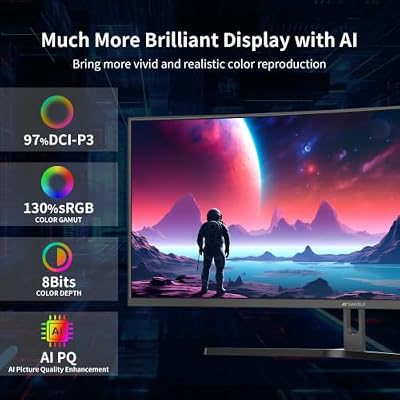
SANSUI 34-Inch Curved Gaming Monitor UWQHD 3440 x 1440P 200Hz Ultrawide | 34” Ultra Wide Gaming Computer Monitor-PBP, OD 1ms, HDR, 300nits, 130%sRGB, DCI-P3 97%,AI Crosshair,HDMI2.1x2,DP1.4




As an Amazon Associate we earn from qualifying purchases. Product prices and availability are accurate as of the date/time indicated.
The SANSUI 34-inch curved ultrawide is the fast-immersion pick, combining a wide, sharp canvas with serious speed. It is a 34-inch UWQHD (3440 x 1440) 21:9 curved panel that refreshes at up to 200Hz (165Hz in some modes), giving you both the extra horizontal real estate of an ultrawide and the high refresh rate a responsive display demands. At around $216 it is a premium, speed-focused ultrawide.
For low latency gaming with a wide field of view, this hits a strong balance. The up-to-200Hz refresh keeps motion fluid and inputs immediate in fast games, the 3440 x 1440 resolution is far sharper than 1080p so the speed never comes at the cost of a soft image, and the 21:9 curve pulls the periphery into view for racers and immersive shooters. It asks more of your GPU than a 1080p panel, but for a fast, sharp, wraparound experience the SANSUI 34-inch ultrawide is the standout.
Pros: Fast up-to-200Hz refresh, sharp UWQHD ultrawide, immersive 21:9 curve.
Cons: Higher resolution demands a stronger GPU; pricier than the 1080p picks.
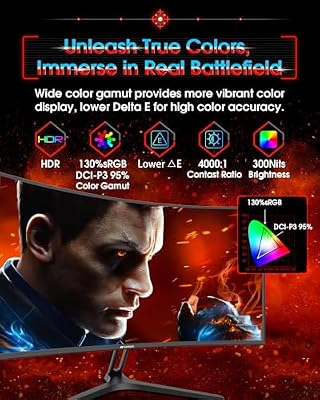
4. SANSUI 27 Inch Curved 240Hz Gaming Monitor FHD 1080P, 1500R Curve

SANSUI 27 Inch Curved 240Hz Gaming Monitor FHD 1080P, 1500R Curve Computer Monitor, 130% sRGB, 4000:1 Contrast, HDR, FreeSync, MPRT 1Ms, Low Blue Light, HDMI DP Ports, Metal Stand, Cable Incl.




As an Amazon Associate we earn from qualifying purchases. Product prices and availability are accurate as of the date/time indicated.
The SANSUI 27-inch curved is the compact 240Hz pick, bringing top-tier refresh to a more focused screen size. It pairs a 240Hz refresh rate with a 27-inch Full HD panel and an aggressive 1500R curve, delivering the same blistering speed as the 32-inch model in a tighter footprint. At around $129 it is one of the most affordable routes to a true 240Hz competitive display.
For low latency this is an ideal sweet spot for competitive players. The 240Hz refresh keeps frames arriving with minimal gaps for a fast, responsive feel, the 27-inch size keeps the whole screen comfortably in your central vision so your eyes track targets quickly, and the 1080p resolution makes hitting and holding 240fps achievable on mainstream hardware. If you want serious competitive speed at a sensible price and a size that suits fast aim, this compact 240Hz SANSUI is a smart buy.
Pros: True 240Hz at a low price, focused 27-inch size for fast aim, immersive 1500R curve.
Cons: 1080p only; the deep curve is a personal preference some dislike for work.
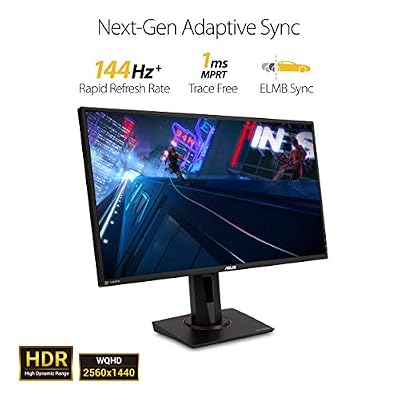
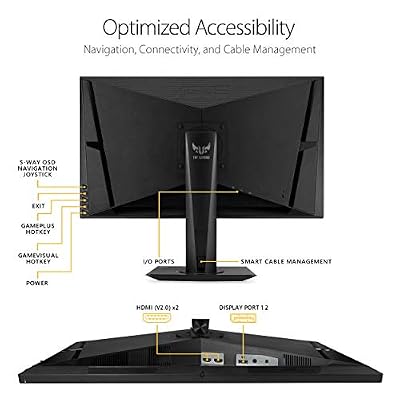
5. ASUS TUF Gaming 27″ 2K HDR Monitor (VG27AQ) – QHD 2560 x 1440, 165Hz

ASUS TUF Gaming VG27AQ 27 Inch QHD 165Hz 1ms G-SYNC Gaming Monitor | 27" 2K QHD, IPS Panel, 165Hz, 1ms, ELMB Sync, G-SYNC Compatible, HDR10, Built-In Speakers, Height Adjustable Stand



As an Amazon Associate we earn from qualifying purchases. Product prices and availability are accurate as of the date/time indicated.
The ASUS TUF Gaming VG27AQ is the sharp high-refresh pick, the choice for players who want low latency without dropping to 1080p. It is a 27-inch QHD (2560 x 1440) HDR panel running at 165Hz, and crucially it includes ASUS’s ELMB (Extreme Low Motion Blur) technology, which is designed specifically to cut the perceived blur that can make even a fast panel feel less crisp in motion. At around $279 it is the premium, enthusiast-grade option here.
For low latency it tackles the response side of the equation as well as the refresh side. The 165Hz refresh is high enough for fluid, responsive play, the QHD resolution keeps the image sharp so fast motion stays detailed, and ELMB works to reduce motion blur for a clearer picture during quick movement — a real benefit for tracking targets. Adaptive sync keeps frames tear-free under load. For the player who wants a fast, sharp, blur-reduced QHD display from a trusted gaming brand, the VG27AQ is the standout.
Pros: Sharp QHD at 165Hz, ELMB motion-blur reduction, adaptive sync, trusted ASUS build.
Cons: Most expensive here; 165Hz is lower than the 240Hz FHD competitive panels.
6. Acer Nitro KG241Y Sbiip 23.8″ Full HD VA Gaming Monitor, AMD FreeSync

Acer Nitro 23.8in FHD 1920x1080 180Hz Gaming Monitor KG241Y Sbiip | 1ms, AMD FreeSync Premium, 2xHDMI, DisplayPort, VESA Mountable, Bluelight Filter, Flickerless Technology


As an Amazon Associate we earn from qualifying purchases. Product prices and availability are accurate as of the date/time indicated.
Rounding out the list is the Acer Nitro KG241Y, the budget FreeSync entry point. It is a 23.8-inch Full HD VA gaming monitor with AMD FreeSync support, designed to deliver smooth, tear-free motion on a tight budget. At around $110 it is an affordable way into a more responsive gaming display from an established monitor brand.
For low latency on a strict budget, its key strength is adaptive sync. AMD FreeSync matches the monitor’s refresh to your graphics card’s output, eliminating the screen tearing and stutter that hurt the feel of fast games and add perceived lag. The 23.8-inch size keeps the whole screen in your central view for quick target tracking, and the VA panel offers strong contrast for darker scenes. It does not reach the sky-high refresh rates of the 240Hz panels, but as an affordable, tear-free gaming display, the Acer Nitro rounds out the list sensibly.
Pros: Affordable FreeSync for tear-free motion, compact size for fast aim, strong VA contrast.
Cons: Lower refresh ceiling than the 240Hz panels; VA response trails fast IPS.
How to Choose a Low Latency Monitor
Choosing a low latency monitor starts with refresh rate, because it is the single biggest contributor to how responsive a display feels. Refresh rate, measured in hertz, is how many times per second the screen draws a new image — a 240Hz panel like the SANSUI 32-inch and 27-inch can show up to four times as many frames as a 60Hz office monitor, so motion looks fluid and your inputs appear on screen with less delay. For fast, competitive games, prioritise the highest refresh rate your graphics card can actually feed.
Response time is the next piece, and it works hand in hand with refresh rate. Response time describes how quickly each pixel can change color; a slow pixel leaves a smear or ghost trail behind moving objects, which makes even a high-refresh panel feel less crisp. Fast panels and blur-reduction features like the ELMB on the ASUS VG27AQ are designed to keep motion sharp. A high refresh rate with a quick response time is what delivers a genuinely clean, low-latency image in fast motion.
Adaptive sync ties the experience together by matching the monitor’s refresh to your GPU’s frame output. AMD FreeSync, as on the Acer Nitro, and compatible variable-refresh technologies eliminate the screen tearing and stutter that not only look bad but add a sense of lag and inconsistency. If your frame rate fluctuates — and in demanding games it always does — adaptive sync keeps motion smooth and tear-free, which is well worth having on any low latency display.
Finally, balance resolution and size against the frame rate you can sustain, and match the panel to your hardware. A 1080p panel like the SANSUI 240Hz models makes hitting very high frame rates achievable on mainstream GPUs, which is ideal for pure competitive speed; a sharper QHD or UWQHD panel like the ASUS or the 34-inch SANSUI looks better but asks more of your graphics card to keep the refresh high. Decide whether raw speed or image sharpness matters more, confirm your GPU and DisplayPort connection can drive the rated refresh, and pick the monitor on this list that lands on your priority. That is how you get a display that genuinely feels fast.
Frequently Asked Questions
What actually makes a monitor ‘low latency’?
Three things working together: a high refresh rate so new frames appear sooner, a quick pixel response time so those frames are sharp rather than smeared, and low input lag so your actions reach the screen without delay. A panel like the 240Hz SANSUI models leads on refresh, while features such as the ELMB on the ASUS VG27AQ address response and motion clarity. Look at all three rather than any single number.
Is 240Hz worth it over 165Hz or 120Hz?
For fast competitive games, a higher refresh rate produces smoother motion and a more immediate feel, so 240Hz panels like the SANSUI 32-inch and 27-inch are the most responsive picks here. That said, 165Hz on the ASUS VG27AQ or even 120Hz on the SANSUI IPS is already a major step up from 60Hz. The catch is your GPU must be able to push enough frames to take advantage of the higher refresh.
Do I need DisplayPort to get the full refresh rate?
Often, yes. Many high-refresh monitors reach their top refresh rate over DisplayPort, which is why panels like the SANSUI IPS include it alongside HDMI. Use the DisplayPort connection where available, make sure your graphics card supports the monitor’s rated refresh, and select the highest refresh rate in your operating system’s display settings — it does not always default to the maximum.
Does adaptive sync like FreeSync reduce input lag?
Its main job is to eliminate screen tearing and stutter by matching the monitor’s refresh to your GPU’s frame output, as AMD FreeSync does on the Acer Nitro. That removes the inconsistency and visual artifacts that make fast games feel laggy and uneven. While it is not the same as raw refresh rate, smooth, tear-free motion contributes a great deal to a responsive, low-latency feel.
Related Guides
- Best Gaming Monitors
- Best 144Hz Monitors
- Best Low Latency Mouse
- Best GPUs for High Refresh Gaming
- Best Mechanical Keyboards
- Best Gaming PCs
Affiliate Disclosure: As an Amazon Associate, we earn from qualifying purchases. If you click a link and make a purchase, we may earn a small commission at no extra cost to you. Prices and availability are accurate as of publication and may change.