- Top Pick: Elgato 4K Pro Internal Capture Card, 8K60 Passthrough
- Best Value: AVerMedia GC573 Live Gamer 4K, Internal Capture Card, Stream and Record 4K60 HDR10 with ultra-low latency on PS5, PS4 Pro, Xbox Series X/S, Xbox One X, in OBS, Twitch, YouTube
- Premium Choice: VIXLW 4K Internal Capture Card, PCIe Capture Card, HDMI, 4K60 Passthrough, Ultra-Low Latency for Streaming & Recording, for PS4,PS5, Xbox, in OBS, YouTube, Single & Dual PC Setups, Black
🛒 Best Price Today on Amazon
Prime members get fast, free shipping on everything above, plus member-only deals. New members get a 30-day free trial — cancel anytime.
- Top Internal Pcie Capture Cards Picks for 2026
- Best Internal PCIe Capture Cards at a Glance
- 1. Elgato 4K Pro Internal Capture Card (B0DLR3WQWR)
- 2. Elgato 4K Pro Internal Capture Card (B0CSJPDYDN)
- 3. AVerMedia HDMI 2.1 Internal PCIe Capture Card
- 4. AVerMedia GC573 Live Gamer 4K Internal PCIe Capture Card
- 5. AVerMedia Live Gamer Duo Dual HDMI 1080p PCIe Capture Card
- 6. Elgato HD60 Pro 1080p60 PCIe Capture and Passthrough
- How to Choose an Internal PCIe Capture Card
- Related Guides
- Frequently Asked Questions
- Related Guides
- Related Articles
- Related Guides
Top Internal Pcie Capture Cards Picks for 2026
Here are our current top internal pcie capture cards picks, compared on real Amazon owner reviews, price, and features. Live prices update below.
As an Amazon Associate we earn from qualifying purchases at no extra cost to you.





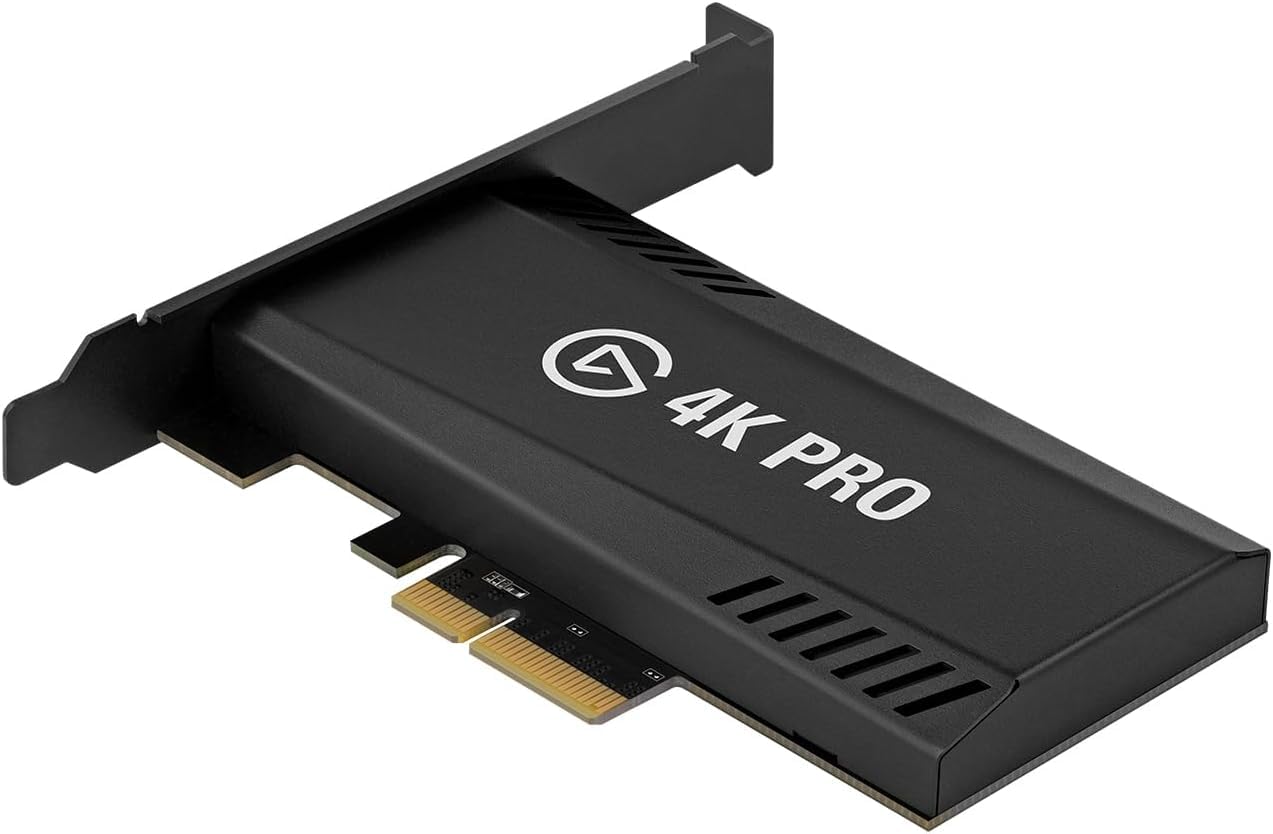
A PCIe capture card lives inside your streaming PC rather than dangling off a USB cable, and that one change matters more than people expect. It draws power and bandwidth directly from the motherboard slot, sidesteps USB bus contention, and on the best cards delivers tangibly lower latency and more consistent capture than external alternatives. This guide is dedicated exclusively to genuine PCIe (not USB) capture cards, with picks from Elgato and AVerMedia covering 4K60 HDR streaming, dual-HDMI multi-source workflows, and the affordable 1080p60 territory that still suits a huge number of streamers.
Our picks were chosen on PCIe interface and slot fit, capture and passthrough resolution, HDR support, software ecosystem and value. Prices range from around $160 for the AVerMedia GC573 to around $270 for the top-trim Elgato 4K Pro, and we describe each card by what it really does in a streaming PC rather than by buzzwords. Below is an at-a-glance comparison of all six, then a closer look at each board and a buyer’s guide built around the things that matter for an internal capture card: slot compatibility, capture resolution, latency, HDR and the streaming software you intend to use.
Best Internal PCIe Capture Cards at a Glance
| Capture Card | Best For | Standout Spec | Approx Price |
|---|---|---|---|
| Elgato 4K Pro (B0DLR3WQWR) | Headline 4K60 HDR streaming | 8K60 passthrough, 4K60 HDR10 capture | around $186 |
| Elgato 4K Pro (B0CSJPDYDN) | PS5 Pro / Xbox Series X creators | 8K60 passthrough, ultra-low latency | around $270 |
| AVerMedia HDMI 2.1 Internal PCIe (B0CPXMDKF9) | HDMI 2.1 4K60 streaming | HDMI 2.1, 4K60 ultra-low latency | around $230 |
| AVerMedia GC573 Live Gamer 4K | Best-value 4K60 HDR capture | 4K60 HDR10 capture, RGB | around $160 |
| AVerMedia Live Gamer Duo | Dual-HDMI multi-source streaming | Two HDMI inputs, 4K60 passthrough | around $230 |
| Elgato HD60 Pro | Reliable 1080p60 PCIe pick | 1080p60 capture and passthrough, low latency | around $243 |
1. Elgato 4K Pro Internal Capture Card (B0DLR3WQWR)
Elgato 4K Pro, Internal Capture Card: 8K60 Passthrough/4K60 HDR10 with Ultra-Low Latency on PS5, Xbox Series X/S, OBS and More, for Streaming & Recording, Windows PC and Dual PC Setups(Renewed)
In Stock
As an Amazon Associate we earn from qualifying purchases. Product prices and availability are accurate as of the date/time indicated.
The Elgato 4K Pro is the flagship internal capture card for 2026 and the obvious lead pick for any creator building a serious streaming PC. It is a true PCIe board offering 8K60 passthrough, 4K60 HDR10 capture, and Elgato’s well-tuned ultra-low-latency pipeline into OBS and 4K Capture Utility. At around $186 for this trim, it brings flagship internal capture inside reach of more streamers than the top-trim variant.
This is the card to choose when you want the cleanest possible 4K HDR stream on a PS5, Xbox Series X or PC and you have a free PCIe slot on the streaming machine. The PCIe interface delivers consistent bandwidth without USB bus contention, the 8K60 passthrough handles even future high-refresh setups gracefully, and Elgato’s software stack is the most polished on the list. If you want the most capable Elgato internal capture card and the best price on a 4K Pro variant, this is the pick.
Pros: 8K60 passthrough, 4K60 HDR10 capture, ultra-low latency, mature Elgato software stack.
Cons: Premium price; needs a PCIe slot and a capable streaming PC.
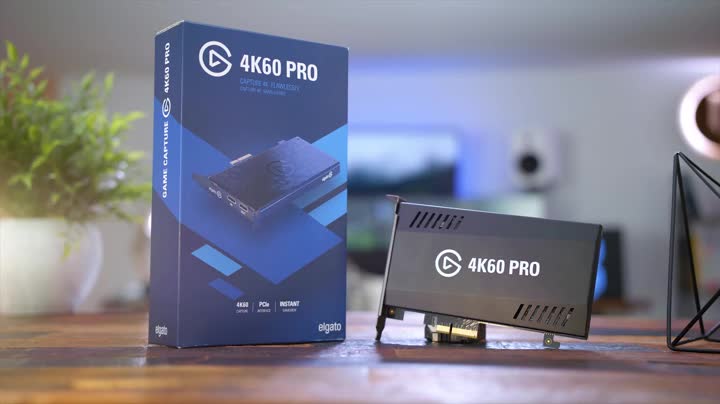
2. Elgato 4K Pro Internal Capture Card (B0CSJPDYDN)
25
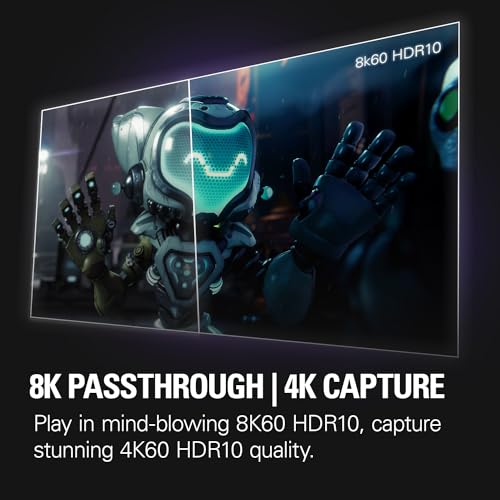
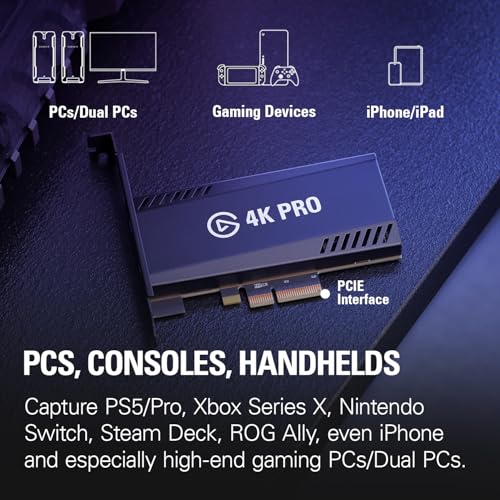
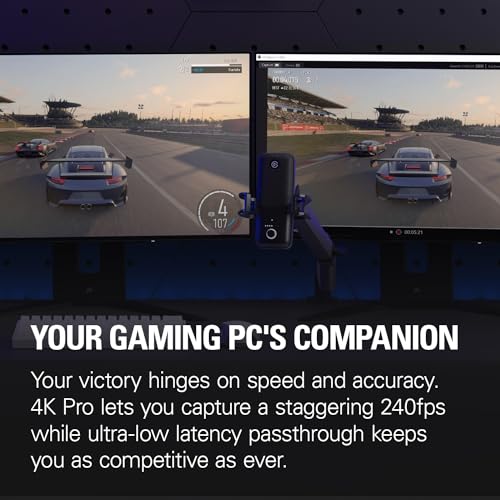
Elgato 4K Pro Internal Capture Card, 8K60 Passthrough | 4K60 HDR10 capture, HDMI 2.1, Up to 1080p240 recording, VRR support, Ultra-low latency, Dual PC setup compatible
In Stock





As an Amazon Associate we earn from qualifying purchases. Product prices and availability are accurate as of the date/time indicated.
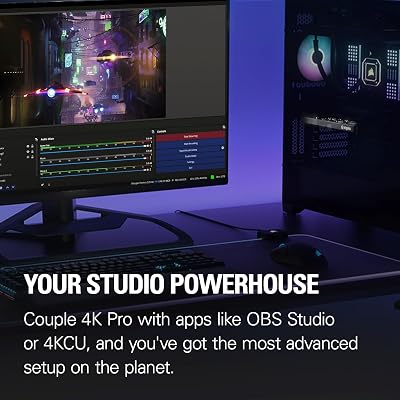
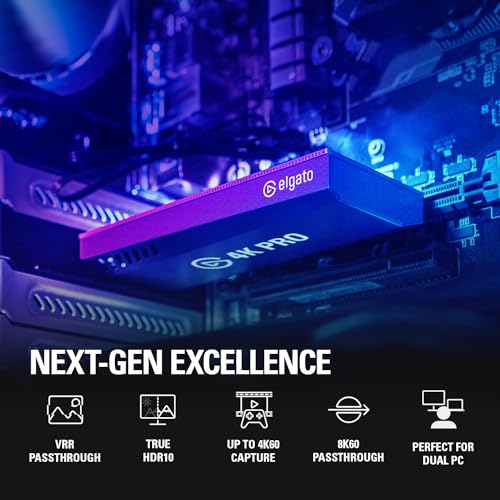
This is the higher-trim Elgato 4K Pro, listed at around $270, sharing the same 4K60 HDR10 capture and 8K60 passthrough as the variant above. It is the premium PCIe pick aimed squarely at PS5 Pro and Xbox Series X creators who treat capture as a core part of their workflow rather than an occasional task, and who want Elgato’s full feature set installed inside the streaming PC.
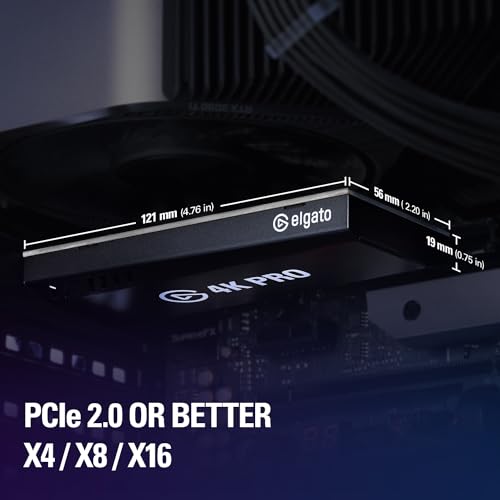
This is the pick when capture quality and stability are non-negotiable. The PCIe x4 link gives you headroom for 4K60 HDR streams without the wobble that plagues some external devices, the ultra-low latency pipeline keeps OBS scenes responsive, and 8K60 passthrough means you do not have to cap your console’s output to a lower mode just to keep your TV happy. For pro creators who want the most capable Elgato internal capture card with the full retail spec, this is the trim to buy.

Pros: Flagship Elgato internal capture, 8K60 passthrough, 4K60 HDR10, premium build.
Cons: Highest price here; identical spec on a sale to the cheaper variant.
3. AVerMedia HDMI 2.1 Internal PCIe Capture Card
Prime
AVerMedia HDMI 2.1 Internal PCIe Capture Card for Streaming and Recording 4K60 with Ultra-Low Latency on PS5, PS4 Pro, Xbox Series X/S, Xbox One X, Switch Games – GC575 Live Gamer 4K 2.1
In Stock
As an Amazon Associate we earn from qualifying purchases. Product prices and availability are accurate as of the date/time indicated.
The AVerMedia HDMI 2.1 Internal PCIe is the modern challenger to Elgato’s 4K Pro and the pick for streamers who want a current-spec HDMI 2.1 board from AVerMedia. It is a PCIe internal card offering 4K60 capture with ultra-low latency on PS5, Xbox Series X and PC, with HDMI 2.1 inputs and passthrough designed for modern consoles. At around $230 it is firmly in the premium tier alongside the Elgato 4K Pro.
This is the card for the AVerMedia loyalist or the creator who values HDMI 2.1-tier capability with broad PS5 Pro and Xbox Series X support. The PCIe interface gives the same bus-isolated advantages as the Elgato, the 4K60 capture is competitive with the flagship, and the ultra-low latency is suitable for live streaming. If you prefer the AVerMedia ecosystem and their RECentral software, or you specifically want HDMI 2.1 on an internal card, this is the right pick.
Pros: HDMI 2.1 internal PCIe, 4K60 capture, ultra-low latency, full PS5 Pro / Xbox Series X support.
Cons: Premium price; depends on AVerMedia software and driver support.
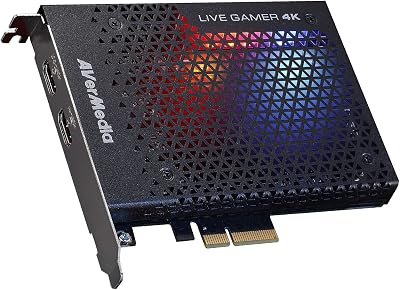
4. AVerMedia GC573 Live Gamer 4K Internal PCIe Capture Card
25
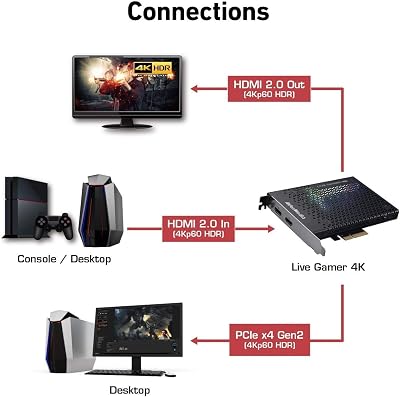
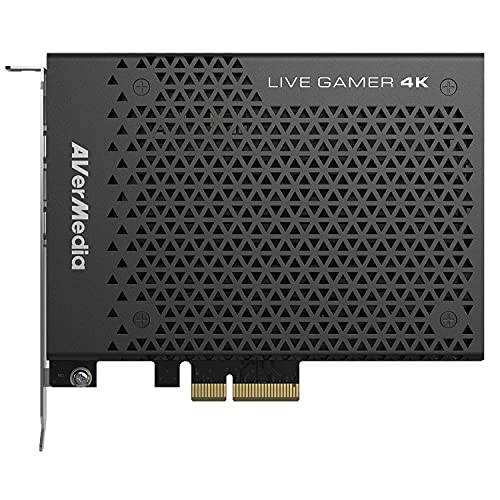
AVerMedia GC573 Live Gamer 4K, Internal Capture Card, Stream and Record 4K60 HDR10 with ultra-low latency on PS5, PS4 Pro, Xbox Series X/S, Xbox One X, in OBS, Twitch, YouTube
In Stock




As an Amazon Associate we earn from qualifying purchases. Product prices and availability are accurate as of the date/time indicated.
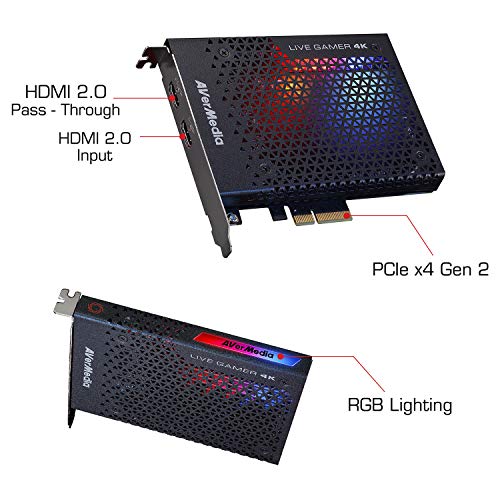
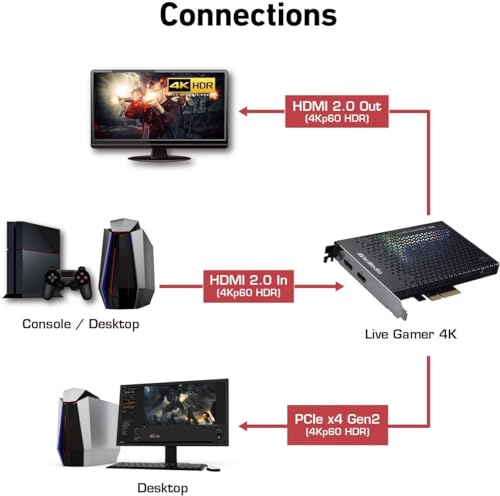
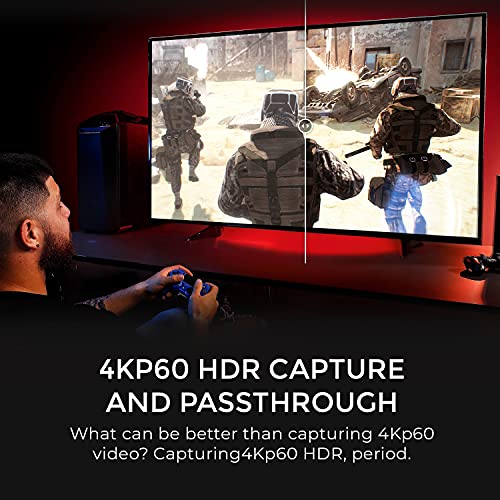
The AVerMedia GC573 Live Gamer 4K is the proven best-value pick on this list and a long-time favourite of streaming PC builders. It is a genuine PCIe internal card capturing 4K60 HDR10 with ultra-low latency on PS5, PS4 Pro and PC, complete with RGB lighting and AVerMedia’s RECentral software. At around $160 it is the cheapest 4K60 HDR PCIe capture card on this list by a wide margin.
This is the card to choose when you want flagship-tier 4K60 HDR capture without paying flagship money. The PCIe x4 link delivers consistent bandwidth for clean 4K60 streams, the HDR10 support keeps console HDR intact, and the ultra-low latency suits live streaming on Twitch and YouTube. Years of driver maturity mean it ‘just works’ in a wide range of streaming PCs, and the price-to-capability ratio is the best on the list. For most streamers stepping up to internal 4K capture, the GC573 is the sweet-spot pick.
Pros: Best value 4K60 HDR10 capture, mature drivers, RGB, dependable PCIe interface.
Cons: Older HDMI revision than HDMI 2.1 cards; styling shows its generation.
5. AVerMedia Live Gamer Duo Dual HDMI 1080p PCIe Capture Card

Prime
AVerMedia Live Gamer Duo. Dual HDMI 1080p PCIe Video Capture Card, Stream with 4k60 HDR and FHD 240fps Pass-Through, Work with DSLR, Xbox Series x/s, PS5, Nintendo Switch, Windows 11 (GC570D)
In Stock
As an Amazon Associate we earn from qualifying purchases. Product prices and availability are accurate as of the date/time indicated.
The AVerMedia Live Gamer Duo is the dual-input PCIe pick and uniquely useful for multi-source streamers. It is a single internal PCIe card with two HDMI inputs, supporting 4K60 HDR and 1080p240 passthrough and capturing 1080p from each input — ideal for capturing a console and a camera, or two consoles, simultaneously on one card. At around $230 it brings professional-style multi-source capture inside a single PC.
This is the card to choose when your stream regularly involves more than one HDMI source and you want them both fed cleanly into OBS without stacking external boxes. The dual HDMI inputs let you cut between a console and a face-cam DSLR, or share a stream between two players, and the 4K60 HDR passthrough plus 1080p240 passthrough keeps competitive gameplay smooth. For pro and semi-pro streamers running multi-source shows, the Live Gamer Duo is a uniquely capable pick on this list.
Pros: Two HDMI inputs on one card, 4K60 HDR passthrough, 1080p240 passthrough, multi-source ready.
Cons: Captures at 1080p, not 4K; specialised dual-source use case.
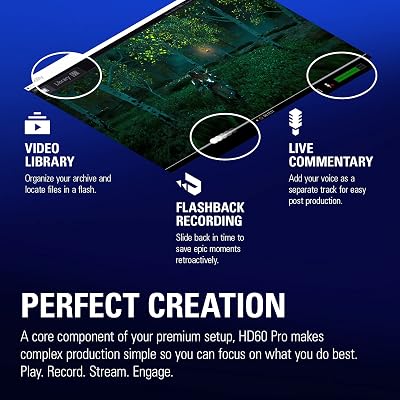
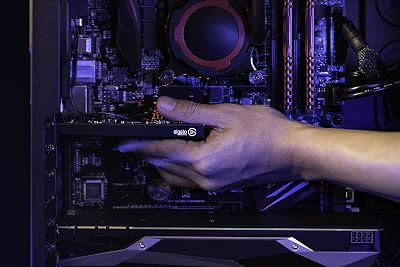
6. Elgato HD60 Pro 1080p60 PCIe Capture and Passthrough

36
Elgato HD60 Pro1080p60 Capture and Passthrough, PCIe Capture Card, Low-Latency Technology, PS5, PS4, Xbox Series X/S, Xbox One
In Stock










As an Amazon Associate we earn from qualifying purchases. Product prices and availability are accurate as of the date/time indicated.
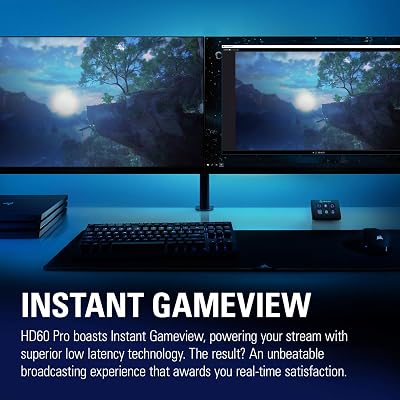
Rounding out the list is the Elgato HD60 Pro — the original Elgato PCIe capture card and a staple of streaming PCs for years. It is a genuine internal PCIe board capturing and passing through at 1080p60 with low-latency technology and full support for PS5, PS4 and Xbox Series X/S (at 1080p). At around $243 it is now an older-generation card, but a long history of dependable use earns its spot here.
This is the pick for the streamer who wants a proven, no-surprises 1080p60 PCIe capture card and does not need 4K60 capture. The Elgato HD60 Pro has been the workhorse of countless Twitch streams for years, the PCIe link delivers stable capture independent of USB bus issues, and the Elgato software stack is mature. If 1080p60 is your output target and you want an internal card from a brand you trust, the HD60 Pro is the safe, long-running pick — just be aware that newer 4K-capable cards now offer more headroom for the same outlay.
Pros: Proven 1080p60 PCIe capture, low-latency tech, mature Elgato ecosystem, broad console support.
Cons: Captures at 1080p60 only, not 4K; price reflects pedigree more than spec.
How to Choose an Internal PCIe Capture Card
First, confirm you have a free PCIe slot and the right one. Every card here uses a short PCIe x4 connector but should be installed in a slot that runs at x4 or wider — typically the second or third long slot on the motherboard, not the GPU’s primary slot. Check your manual, because a card wired only to x1 lanes can bottleneck a 4K stream. Internal capture also demands a streaming PC that can handle the encoder load you are asking it to do, which usually means a recent multi-core CPU and a reasonable GPU.
Next, decide whether you genuinely need 4K60 HDR capture. A PS5 Pro or Xbox Series X creator who streams 4K HDR content to YouTube benefits clearly from the Elgato 4K Pro, AVerMedia HDMI 2.1 or AVerMedia GC573. If you stream at 1080p60 to Twitch and your monitor is 1080p, the HD60 Pro or the Live Gamer Duo’s 1080p capture is plenty — and you keep the cost down. Match the card’s capture resolution to the resolution you actually broadcast and the platform you target.
Latency and software are where these cards earn their price difference over USB devices. PCIe boards from Elgato and AVerMedia are tuned for the live workflow, with ultra-low-latency drivers and mature OBS and first-party software (Elgato 4K Capture Utility and AVerMedia RECentral). If you prefer Elgato’s tooling, the 4K Pro or HD60 Pro is the natural pick; if you prefer AVerMedia’s, the GC573, HDMI 2.1 board or Live Gamer Duo make more sense. Software preference matters more than people admit on day one.
Finally, consider single-source vs multi-source workflows. If your stream is one console (or one PC) on one HDMI line, any of the single-input cards fit. If you regularly mix a console with a face-cam DSLR or share a stream between two players, the AVerMedia Live Gamer Duo’s two HDMI inputs on a single card avoids the cost and complexity of stacking external devices. Set your resolution target, pick the software ecosystem you want, decide single or dual-source, and the right PCIe card on this list will fall out of those answers.
Frequently Asked Questions
Why choose internal PCIe capture over USB?
PCIe capture cards bypass the USB bus and pull their bandwidth directly from the motherboard slot, which generally means lower latency, more stable performance and fewer dropped frames in long streams. Cards like the Elgato 4K Pro and AVerMedia GC573 also benefit from mature drivers and tighter software integration. The trade-off is that they only work in a desktop PC with a spare slot — not laptops.
Which is the best value 4K HDR PCIe capture card?
The AVerMedia GC573 Live Gamer 4K. At around $160 it captures 4K60 HDR10 with ultra-low latency on PS5 and PS4 Pro, uses a genuine PCIe x4 interface, and benefits from years of driver maturity. It is significantly cheaper than the Elgato 4K Pro or AVerMedia HDMI 2.1 cards while still covering the headline 4K60 HDR use case.
Can I capture two HDMI sources on one PCIe card?
Yes — that is exactly what the AVerMedia Live Gamer Duo is designed for. It is a single PCIe card with two HDMI inputs, supporting 4K60 HDR and 1080p240 passthrough and capturing both inputs at 1080p. It is the right pick when you stream with two sources (a console plus a face-cam DSLR, or two consoles together) and want to avoid stacking external boxes.
Is the Elgato HD60 Pro still worth buying in 2026?
It is, but only if 1080p60 is genuinely your target. The HD60 Pro is a proven 1080p60 PCIe capture card with mature drivers and a long track record. However, for similar money the AVerMedia GC573 now offers 4K60 HDR10 capture on the same PCIe form factor, which gives meaningfully more headroom for future-proofing.
Related Guides
- Best PCs for Streaming
- Best Gaming PCs
- Best Microphones for Streaming
- Best Webcams for Streaming
- Best CPUs for Streaming
- Best Motherboards
Affiliate Disclosure: As an Amazon Associate, we earn from qualifying purchases. If you click a link and make a purchase, we may earn a small commission at no extra cost to you. Prices and availability are accurate as of publication and may change.