Affiliate disclosure: As an Amazon Associate we earn from qualifying purchases. This post contains affiliate links — if you buy through them we may earn a small commission at no extra cost to you. This never affects our recommendations.
As an Amazon Associate we earn from qualifying purchases at no extra cost to you.


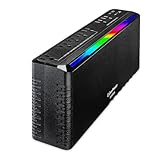


One power surge is all it takes. A brownout during a ranked match, a split-second blackout while your system writes a save file — and you could be looking at corrupted game data, a fried power supply, or worse, a damaged GPU that costs more than your entire setup. A high-end gaming PC represents thousands of dollars in components, yet most gamers protect everything except the one thing that feeds it power. An Uninterruptible Power Supply (UPS) gives you five to ten minutes of clean, stable electricity when the grid fails — enough time to finish saving, close your applications, and shut down safely. It also acts as a surge protector and, in many cases, a voltage regulator, shielding sensitive components from the spikes and sags that quietly kill electronics over time.
In 2026, with gaming PCs drawing more wattage than ever and power grids under increasing stress, a UPS is no longer optional for serious setups. We have evaluated the top options across wattage tiers, sine wave output quality, runtime, and price so you can make the right call for your rig.
In a hurry? See the top-rated UPS for Gaming PC deals available right now:
🛒 Check Ups For Gaming Pc Prices on Amazon →🛒 Best Price Today on Amazon
Prime members get fast, free shipping on everything above, plus member-only deals. New members get a 30-day free trial — cancel anytime.
Start 30-Day Prime Free Trial →See Today’s Amazon DealsThe 5 Best UPS Units for Gaming PCs in 2026
APC Back-UPS Pro BX1500M
The APC Back-UPS Pro BX1500M is the most popular UPS in the gaming space for good reason: it delivers 1500VA and 900W of capacity at a price point most builders can justify. With ten outlets — five battery-backed and five surge-only — it covers your PC, monitor, router, and peripheral hub without running out of sockets. The integrated LCD panel displays load percentage, estimated runtime, and battery health at a glance, which is genuinely useful for understanding how close you are to capacity during gaming sessions.
The BX1500M uses a simulated (stepped approximation) sine wave rather than a pure sine wave output. For most systems built around traditional power supplies, this is completely acceptable. However, if your gaming PC uses a high-efficiency PSU with active Power Factor Correction (PFC), you need to pay attention here. Active PFC power supplies are designed to work with utility-quality sine waves. Under a simulated sine wave, some active PFC PSUs will behave erratically, fail to start from battery, or in rare cases shut down entirely. Before purchasing, confirm your PSU’s compatibility with simulated sine wave output — most Tier-A and Tier-B units from Seasonic, Corsair, and EVGA in the Gold/Platinum/Titanium range use active PFC.
At a 300W load (typical for a mid-range gaming PC with a 1080p monitor), the BX1500M provides approximately 13 to 16 minutes of runtime — more than enough for a controlled shutdown. The unit also features automatic voltage regulation (AVR), which boosts or trims incoming voltage without switching to battery, extending battery life and protecting components from prolonged sag. Cable management is clean, the unit is quiet under load, and APC’s warranty and replacement battery ecosystem remain among the best in the industry.
Pros: Best value-to-capacity ratio in its class; reliable AVR; large outlet count; strong ecosystem.
Cons: Simulated sine wave limits compatibility with active PFC PSUs.
Price: ~$180
CyberPower CP1500PFCLCD
The CyberPower CP1500PFCLCD is the unit we recommend most often when someone asks for the best UPS for gaming PC with no asterisks. The critical differentiator is in the name: PFC. This unit outputs a true pure sine wave, making it fully compatible with every modern gaming PSU regardless of whether it uses active PFC. You will not encounter startup failures, instability, or buzzing components when running your PC from battery — the output is electrically indistinguishable from clean utility power.
Rated at 1500VA and 1000W, the CP1500PFCLCD has slightly more watt headroom than the APC BX1500M at a similar VA rating, which is important because the watt figure is the real limit when powering resistive loads. Twelve outlets — eight battery-backed and four surge-only — provide generous coverage. The LCD readout shows input/output voltage, load, and estimated runtime, all of which are displayed clearly. CyberPower’s PowerPanel Personal software allows scheduled shutdowns and real-time monitoring via USB.
At a 300W gaming load, expect roughly 14 to 18 minutes of runtime depending on battery health and actual draw. The unit is surprisingly quiet in operation — some users report a faint hum from the transformer under load, but nothing that competes with a gaming PC’s cooling system. CyberPower includes a $500,000 connected equipment guarantee and a three-year warranty on the unit with a two-year warranty on batteries. For a system drawing 400W to 600W under gaming load, this is the UPS to buy first.

Pros: True pure sine wave; fully compatible with active PFC PSUs; excellent watt-to-dollar ratio; quiet.
Cons: Slightly larger footprint than budget competitors; batteries are non-user-replaceable in some markets without ordering direct.
Price: ~$200
APC Smart-UPS 1500
The APC Smart-UPS 1500 is where gaming UPS territory crosses into enterprise-grade infrastructure, and that distinction comes with real benefits for high-end builds. Rated at 1440VA and 1000W with a true pure sine wave output, this unit was designed to protect servers and workstations that cannot tolerate any power quality compromise — and your $4,000 gaming PC deserves the same treatment. Build quality is immediately apparent: the chassis is heavier, the internals are more robustly engineered, and the unit is designed for extended duty cycles.
The Smart-UPS 1500 includes network management features, SNMP monitoring capability, and APC’s SmartConnect cloud monitoring if you want visibility into power events over time. For a gaming PC this may seem like overkill, but for a content creator or streamer whose PC is also a production machine, having a log of every power event is genuinely valuable. The unit supports hot-swappable batteries, meaning you can replace cells without powering down — a feature unheard of at the consumer tier.
Runtime at 300W sits at approximately 20 to 24 minutes, the longest of any unit on this list. The automatic voltage regulation is more sophisticated than entry-level units, correcting a wider range of incoming voltage issues before touching the battery. The trade-off is price: at approximately $400, this is double the CyberPower CP1500PFCLCD. For most gamers, the extra $200 buys features that will go unused. For streamers, video editors, or anyone running a high-value workstation-gaming hybrid, it is a considered investment in uptime.
Pros: Enterprise-grade pure sine wave; longest runtime; hot-swappable batteries; superior build quality; cloud monitoring.
Cons: Significant price premium; enterprise features unnecessary for pure gaming use.
Price: ~$400
Eaton 5P 1150
The Eaton 5P 1150 is the specialist pick on this list — compact, pure sine wave, and engineered around one feature that most competitors treat as optional: automatic voltage regulation with true online-interactive topology. At 1150VA and 770W, it sits below the 1500VA units in raw capacity, but its voltage management architecture is more sophisticated than most consumer UPS devices at any price. The Eaton 5P actively conditions incoming power, correcting sags and spikes continuously without switching to battery, which dramatically extends battery lifespan over time.
Pure sine wave output means zero compatibility concerns with active PFC power supplies. The unit is noticeably more compact than comparable APC and CyberPower units, which matters if your setup is space-constrained. Eight outlets provide adequate coverage for a gaming PC plus monitor and peripherals, though power users with multiple displays or a streaming PC alongside may feel the limitation. The LCD panel is informative and the USB/serial connectivity integrates cleanly with Windows power management for automatic shutdown during extended outages.

At 300W load, expect approximately 10 to 13 minutes of runtime — slightly less than the larger 1500VA units. For gaming PCs drawing 250W to 450W under load, this is an appropriate match that avoids over-investing in unused capacity. Eaton’s build quality is excellent and the brand has a strong reputation in the data center space, meaning the component quality is validated in demanding environments. The ~$300 price point sits between budget and premium, and is justified by the superior voltage management rather than raw VA capacity.
Pros: True pure sine wave; superior automatic voltage regulation; compact form factor; enterprise-grade build quality.
Cons: Lower VA/watt ceiling limits headroom for high-wattage systems; fewer outlets than competitors.
Price: ~$300
CyberPower EC850LCD
The CyberPower EC850LCD is the entry point of this list and the right answer for gamers on a strict budget or those with lower-wattage systems. At 850VA and 510W, it is not a match for a flagship gaming rig drawing 500W under load — but for a budget or mid-range build with a 65W processor and a 150W GPU, it is completely appropriate. Ten outlets split between battery-backed and surge-only, an LCD display, and CyberPower’s PowerPanel software round out a feature set that punches above its price.
This unit uses a simulated sine wave, applying the same caveat as the APC BX1500M: verify your PSU’s compatibility before purchasing. If your power supply is a basic unit without active PFC — common in pre-built systems and budget builds — simulated sine wave is fine. If you are running a Gold or Platinum rated unit from a major brand, check the manufacturer’s specs. Most modern high-efficiency PSUs do use active PFC, which means the CP1500PFCLCD at $200 is a safer investment for only $120 more.
Runtime at a 300W load is approximately 5 to 7 minutes — tighter than the 1500VA units but sufficient for a safe shutdown. For a system actually drawing 150W to 200W in light gaming sessions, runtime stretches considerably. The EC850LCD is quiet, compact, and unobtrusive. CyberPower’s warranty and connected equipment guarantee apply at this tier as well. If you are gaming on an older or budget system and just want baseline protection against surges and brief outages, this unit delivers solid value at around $80.
Pros: Most affordable option on the list; compact; decent outlet count; good for lower-wattage builds.
Cons: Simulated sine wave; limited runtime and watt headroom for modern high-performance rigs.
Price: ~$80
Comparison Table
| UPS | VA Rating | Runtime at 300W | Sine Wave |
|---|---|---|---|
| APC Back-UPS Pro BX1500M | 1500VA / 900W | ~13–16 min | Simulated |
| CyberPower CP1500PFCLCD | 1500VA / 1000W | ~14–18 min | Pure |
| APC Smart-UPS 1500 | 1440VA / 1000W | ~20–24 min | Pure |
| Eaton 5P 1150 | 1150VA / 770W | ~10–13 min | Pure |
| CyberPower EC850LCD | 850VA / 510W | ~5–7 min | Simulated |
How to Choose the Right UPS for Your Gaming PC
Understand VA vs. Watts. VA (volt-amps) is the apparent power rating. Watts is the real power the UPS can deliver continuously. Always buy based on the watt figure, not VA. A UPS rated 1500VA but only 900W cannot sustain a 950W load even if you do the math on VA and think it should work. Add up your PC’s peak draw, monitor(s), and any other battery-backed peripherals, then buy a UPS with at least 20% headroom above that figure.

Pure sine wave vs. simulated sine wave — this is the most important decision. Simulated (or “stepped approximation”) sine wave UPS units output a rough wave shape that most basic power supplies handle without issue. However, modern gaming PSUs at Gold efficiency and above almost universally use active Power Factor Correction. Active PFC circuits are designed to receive true utility-quality sine waves. Running an active PFC PSU on simulated sine wave during a power event can cause the PSU to buzz loudly, fail to operate from battery, or trigger protective shutdowns. A pure sine wave UPS eliminates this problem entirely. If your PSU is from a reputable brand at Gold efficiency or higher — and in 2026, it almost certainly is — spend the extra $20 to $30 and get pure sine wave.
Calculate your real runtime needs. You do not need 30 minutes of battery runtime. You need enough time to save your game and shut down safely — typically three to five minutes. The longer runtime specifications are useful if you experience frequent brownouts or live in an area with power quality issues and want the option to keep gaming through brief outages. For most users, 10 to 15 minutes at their actual draw is more than sufficient.
Do not forget automatic voltage regulation. AVR is the feature that corrects incoming voltage issues — sags, swells, and brownouts — without switching to battery. Without AVR, every voltage sag forces your UPS onto battery power, draining runtime and degrading battery health over time. Every unit on this list includes AVR, but the quality of implementation varies: the Eaton 5P and APC Smart-UPS 1500 have the most sophisticated AVR topology of the group.
Match the UPS to your actual load. A 1500VA UPS on a system drawing 150W is a waste of money. An 850VA UPS on a system drawing 450W is a safety risk. Use a watt meter (or your PSU’s rated output multiplied by typical load percentage from a source like TechPowerUp’s PSU Calculator) to estimate your actual draw before choosing a unit.
Check battery replacement costs before you buy. UPS batteries degrade over three to five years. A unit that costs $80 upfront with a $60 replacement battery is not necessarily better value than a $200 unit with a $40 replacement. APC and CyberPower both have well-established replacement battery markets; Eaton’s batteries are available but sometimes require ordering from specialty suppliers.
Final Verdict
For the majority of gaming PC builders in 2026, the CyberPower CP1500PFCLCD is the correct choice. Pure sine wave output at 1500VA/1000W capacity covers virtually every modern gaming system, the runtime is generous, the price is fair, and there are no compatibility asterisks. It protects your investment without requiring you to research your PSU’s PFC architecture before purchasing.
If budget is the primary constraint and your system draws under 350W, the CyberPower EC850LCD provides baseline surge and outage protection at a price that removes any excuse for leaving your rig unprotected.
If you are running a high-value workstation-gaming hybrid or streaming setup where uptime and component longevity are paramount, step up to the APC Smart-UPS 1500. The premium buys genuine engineering quality and features that a professional setup warrants.
The APC Back-UPS Pro BX1500M remains a strong value pick for builders who confirm their PSU is compatible with simulated sine wave — it is the closest thing to a mainstream default in the gaming UPS market. The Eaton 5P 1150 earns its place for users who value voltage conditioning quality and compact form over maximum wattage headroom.
Whatever you choose, choose something. The cost of a UPS is measured in dollars. The cost of not having one is measured in corrupted save files, failed PSUs, and GPUs that will not be replaced under warranty because power events are an excluded cause. Protect your rig.
Affiliate disclosure: As an Amazon Associate, gamingpcguru.com earns from qualifying purchases. This does not affect our editorial recommendations.
Frequently Asked Questions
Why does a gaming PC need a UPS?
A UPS protects your rig from sudden power loss, preventing data corruption, lost game progress, and storage damage. It also conditions dirty power and gives you time to save and shut down safely during an outage.
What size UPS do I need for a gaming PC?
Match the UPS to your system draw. A mid-range build needs roughly a 1000-1500VA unit, while a high-end RTX 4080/4090 rig benefits from 1500VA or more for a safe shutdown window.
Should I get a pure sine wave UPS for gaming?
Yes. Modern PSUs with active PFC can behave erratically on the stepped output of cheaper simulated sine wave units, causing shutdowns or buzzing. A pure sine wave UPS ensures clean, stable power.
How long will a UPS run my gaming PC?
Most units are designed for a safe shutdown window, not extended play, so expect 5-15 minutes depending on capacity and load. The goal is bridging brief outages and letting you save your work.
Related Articles
Looking for more on this topic? Browse the hand-picked guides below — each one applies the same scoring rubric used in this review.
Ready to decide? Our #1 pick for 2026 is the UPS.
Live price & availability on Amazon.