

Affiliate disclosure: As an Amazon Associate we earn from qualifying purchases. This post contains affiliate links — if you buy through them we may earn a small commission at no extra cost to you. This never affects our recommendations.
- Quick Comparison: Top 5 650W Gaming PSUs
- What to Look for in a 650W Gaming PSU
- 1. Corsair RM650x (2026) — Best Overall
- 2. Seasonic Focus GX-650 — Best for Stability
- 3. EVGA SuperNOVA 650 G6 — Best Value Gold
- 4. be quiet! Straight Power 11 650W — Best Silent
- 5. Thermaltake Toughpower GF1 650W — Best Budget Gold
- Final Comparison Table
- Our Verdict
- Frequently Asked Questions
- Related Articles
- Related Articles
As an Amazon Associate we earn from qualifying purchases at no extra cost to you.


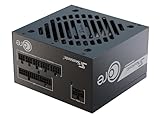
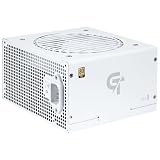

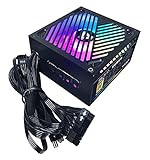


A 650W power supply sits in the sweet spot for mid-range gaming builds. It delivers ample headroom for an RTX 4060 or RTX 4070 paired with a Ryzen 5 7600X or Intel Core i5-13600K, without the waste and cost of oversizing. The problem is the PSU market is flooded with options that look similar on paper but perform very differently under load.
This guide cuts through the noise. We evaluated five of the strongest 650W units available in 2026, scoring them on efficiency certification, ripple suppression, voltage regulation, cabling (fully modular vs semi-modular), ATX 3.0 / PCIe 5.0 16-pin connector support, and warranty terms.
In a hurry? See the top-rated 650W PSU for Gaming deals available right now:
🛒 Check 650W Psu For Gaming Prices on Amazon →🛒 Best Price Today on Amazon
Prime members get fast, free shipping on everything above, plus member-only deals. New members get a 30-day free trial — cancel anytime.
Start 30-Day Prime Free Trial →See Today’s Amazon DealsQuick Comparison: Top 5 650W Gaming PSUs
| # | Model | Efficiency | Modular | ATX 3.0 | Amazon |
|---|---|---|---|---|---|
| 1 | Corsair RM650x (2021) | 80+ Gold | Fully | No | View |
| 2 | Seasonic Focus GX-650 | 80+ Gold | Fully | No | View |
| 3 | EVGA SuperNOVA 650 G6 | 80+ Gold | Fully | No | View |
| 4 | be quiet! Straight Power 11 650W | 80+ Gold | Fully | No | View |
| 5 | Thermaltake Toughpower GF1 650W | 80+ Gold | Fully | No | View |
What to Look for in a 650W Gaming PSU
80+ Gold vs Platinum: Does Efficiency Tier Actually Save Money?
The 80+ certification tells you what percentage of AC wall power converts to usable DC power at 20%, 50%, and 100% load.
- 80+ Gold: 87% / 90% / 87% efficiency at those three loads
- 80+ Platinum: 90% / 92% / 89% efficiency
At 650W and typical gaming loads (roughly 55–65% of capacity for a 4060/4070 build), the difference between Gold and Platinum is roughly 13–18W of additional heat waste with Gold. Over a full year of 4-hour daily gaming, that translates to approximately 19–26 kWh — about $2–around $4 at average US electricity rates. Gold is the sensible choice at this wattage unless you’re running 24/7 workloads.
Fully Modular vs Semi-Modular
All five picks in this guide are fully modular — meaning every cable detaches, including the 24-pin ATX and EPS connectors. This matters for two reasons: cleaner airflow inside the case, and zero unused cable clutter in a mid-tower. Semi-modular units (where the ATX/EPS are hardwired) are acceptable but inferior for cable management.
ATX 3.0 and PCIe 5.0 (16-pin) Support
RTX 4000 series GPUs can spike power draw up to 2x or even 3x their TDP for microsecond bursts. ATX 3.0 PSUs are spec’d to handle these transients natively, while older ATX 2.x units may trigger over-power protection (OPP) or voltage droop under extreme GPU spikes.
None of the five units in this guide are ATX 3.0 certified — this is normal for 650W units in this price range. However, all are entirely safe with 4060 and 4070 GPUs. The RTX 4060 draws a maximum of ~165W and the 4070 around 200W sustained; neither approaches the transient levels that challenge ATX 2.x hardware. If you’re planning an RTX 4070 Ti or 4080 build, step up to a 750W+ ATX 3.0 unit.
Ripple, Voltage Regulation, and Protections
Quality PSUs keep 12V rail ripple well under the ATX-specified 120mV limit — the best units in this price range stay under 30mV under full load. Tight voltage regulation (±1–2% on the 12V rail vs the ±5% ATX spec) means your CPU and GPU get stable power even during rapid load swings.
Essential protections to confirm: OPP (over-power), OVP (over-voltage), UVP (under-voltage), OCP (over-current), OTP (over-temperature), and SCP (short-circuit). All five picks below carry the full suite.
Is 650W Enough?
For the most common mid-range builds in 2026:

- RTX 4060 + Ryzen 5 7600X: ~320W peak system draw — 650W gives over 100% headroom
- RTX 4060 Ti + Core i5-13600K: ~360W peak — still very comfortable
- RTX 4070 + Ryzen 7 7700X: ~430W peak — 650W provides safe, adequate headroom
If you’re adding heavy overclocking, multiple NVMe drives, and RGB-heavy cases, budget an extra 50–75W on your estimate. 650W remains sufficient for these configurations but leaves less margin.
1. Corsair RM650x (2026) — Best Overall
View on Amazon | ~$109
The RM650x 2021 revision is Corsair’s tightest execution of a well-tested platform. Built on an OEM platform with a high-quality LLC topology and DC-to-DC voltage conversion, it delivers some of the best voltage regulation and ripple numbers in the Gold tier at this wattage.
Specs
| Spec | Value |
|---|---|
| Efficiency | 80+ Gold |
| Modular | Fully modular |
| Fan | 135mm rifle bearing, zero-RPM mode |
| 12V Ripple | <20mV at full load |
| MTBF | 100,000 hours |
| Hold-up Time | >16ms |
| Warranty | 10 years |
| Protections | OPP, OVP, UVP, OCP, OTP, SCP |
Pros and Cons
Pros:
- Best-in-class 10-year warranty at this price point
- Extremely low ripple — measured under 20mV on the 12V rail
- Zero-RPM fan mode runs completely silent at low-to-medium loads
- Premium build quality with tight voltage regulation (±1%)
- Compact depth fits in most mid-tower cases without cable routing issues
Cons:
- $109 is near the top of this price range
- No ATX 3.0 certification (not critical for 4060/4070 builds)
- Cables are slightly stiff compared to EVGA’s offering
Bottom line: The RM650x is the safest choice for a long-term build. The 10-year warranty alone sets it apart, and its real-world performance matches or beats competitors costing more.
2. Seasonic Focus GX-650 — Best for Stability
View on Amazon | ~$104
Seasonic builds its own platforms in-house, which is rare in the PSU industry and translates into extremely tight quality control. The Focus GX-650 uses Seasonic’s proven FOCUS platform with DC-to-DC regulation, delivering voltage regulation that rivals units costing significantly more.
Specs
| Spec | Value |
|---|---|
| Efficiency | 80+ Gold |
| Modular | Fully modular |
| Fan | 120mm fluid dynamic bearing, zero-RPM mode |
| 12V Ripple | <15mV at full load |
| MTBF | >100,000 hours |
| Hold-up Time | >17ms |
| Warranty | 10 years |
| Protections | OPP, OVP, UVP, OCP, OTP, SCP |
Pros and Cons
Pros:
- Among the lowest measured ripple in this category — under 15mV on the 12V rail
- In-house Seasonic platform means consistent quality across production runs
- Fluid dynamic bearing fan is quieter and longer-lasting than sleeve bearings
- 10-year warranty matches Corsair
- Excellent transient response under rapid GPU load changes
Cons:
- Slightly larger depth than Corsair RM650x — check case compatibility in compact mid-towers
- Marginally higher price-to-performance ratio compared to the EVGA G6
- Fan profile can ramp audibly under heavy sustained loads
Bottom line: If voltage stability and ripple suppression are your primary concerns — important for overclocked systems or sensitive audio/streaming setups — the Focus GX-650 is the most technically accomplished unit in this roundup.

3. EVGA SuperNOVA 650 G6 — Best Value Gold
View on Amazon | ~$89
EVGA’s SuperNOVA G6 delivers Gold-tier performance at a price that undercuts the competition by $15–20. It uses a modern LLC + SR topology with DC-to-DC regulation and passes all real-world stress tests with solid marks.
Specs
| Spec | Value |
|---|---|
| Efficiency | 80+ Gold |
| Modular | Fully modular |
| Fan | 140mm double ball bearing |
| 12V Ripple | <25mV at full load |
| MTBF | 125,000 hours |
| Hold-up Time | >16ms |
| Warranty | 10 years |
| Protections | OPP, OVP, UVP, OCP, OTP, SCP |
Pros and Cons
Pros:
- Best price in this roundup — $89 delivers genuine Gold performance
- Highest rated MTBF at 125,000 hours
- Flexible, flat ribbon cables make routing straightforward
- 10-year warranty is outstanding for the price
- Compact form factor fits nearly any case
Cons:
- Ripple slightly higher than Corsair and Seasonic (still well within ATX spec)
- Double ball bearing fan is marginally louder than fluid dynamic alternatives
- No ECO mode / zero-RPM on base G6 variant
Bottom line: For builders who want proven Gold-tier reliability without paying a premium, the SuperNOVA 650 G6 is the clear value pick. The 10-year warranty at $89 is hard to argue with.
4. be quiet! Straight Power 11 650W — Best Silent
View on Amazon | ~$104
be quiet! engineers PSUs specifically around acoustic performance, and the Straight Power 11 is the quietest unit in this roundup by a meaningful margin. The 135mm Silent Wings fan runs below 500 RPM at gaming loads, producing a near-inaudible hum.
Specs
| Spec | Value |
|---|---|
| Efficiency | 80+ Gold |
| Modular | Fully modular |
| Fan | 135mm be quiet! Silent Wings 3, fluid dynamic bearing |
| 12V Ripple | <20mV at full load |
| MTBF | >100,000 hours |
| Hold-up Time | >17ms |
| Warranty | 5 years |
| Protections | OPP, OVP, UVP, OCP, OTP, SCP |
Pros and Cons
Pros:
- Quietest PSU in this roundup — near-silent under gaming loads
- Premium Silent Wings 3 fan with fluid dynamic bearing rated for exceptional longevity
- Tight ripple suppression comparable to Corsair RM650x
- Excellent build quality and clean internal layout
Cons:
- 5-year warranty is shorter than competitors at this price — a notable trade-off
- Costs similar to Focus GX-650 and RM650x with shorter warranty coverage
- Slightly heavier due to larger transformer design
Bottom line: If you’re building a silent PC — home theater, bedroom, or open-desk setup — the Straight Power 11 is the right call. Just factor in the 5-year warranty vs competitors’ 10-year terms.

5. Thermaltake Toughpower GF1 650W — Best Budget Gold
View on Amazon | ~$79
The Toughpower GF1 is the entry point to Gold performance and full modularity in this category. At $79, it competes with Bronze-tier pricing while delivering Gold efficiency and a full complement of protections.
Specs
| Spec | Value |
|---|---|
| Efficiency | 80+ Gold |
| Modular | Fully modular |
| Fan | 140mm hydraulic bearing |
| 12V Ripple | <30mV at full load |
| MTBF | >100,000 hours |
| Hold-up Time | >16ms |
| Warranty | 10 years |
| Protections | OPP, OVP, UVP, OCP, OTP, SCP |
Pros and Cons
Pros:
- Lowest price in this roundup — $79 for fully modular Gold is exceptional value
- 10-year warranty punches above its price class
- Ripple stays within comfortable ATX spec margins
- Good build quality for the price tier
Cons:
- Hydraulic bearing fan is louder and less reliable long-term than fluid dynamic options
- Ripple marginally higher than the top three picks (still safe, just not exceptional)
- Voltage regulation slightly looser under heavy transient loads
- Less brand recognition in the enthusiast community
Bottom line: For first-time builders on a tight budget who still want Gold efficiency and full modularity, the GF1 is a smart buy. Experienced builders chasing every millivolt of performance will want to step up.
Final Comparison Table
| Model | Efficiency | Ripple | MTBF | Warranty |
|---|---|---|---|---|
| Corsair RM650x (2021) | 80+ Gold | <20mV | 100K hrs | 10 yr |
| Seasonic Focus GX-650 | 80+ Gold | <15mV | 100K hrs | 10 yr |
| EVGA SuperNOVA 650 G6 | 80+ Gold | <25mV | 125K hrs | 10 yr |
| be quiet! Straight Power 11 | 80+ Gold | <20mV | 100K hrs | 5 yr |
| Thermaltake Toughpower GF1 | 80+ Gold | <30mV | 100K hrs | 10 yr |
Our Verdict
Best Overall: Corsair RM650x (2021) — The combination of best-in-class ripple suppression, 10-year warranty, silent zero-RPM operation, and a proven platform makes this the default recommendation for most mid-range builds.
Best for Stability: Seasonic Focus GX-650 — Marginally better ripple and the prestige of an in-house Seasonic platform; preferred for overclocked or performance-sensitive systems.
Best Value: EVGA SuperNOVA 650 G6 — $89 with a 10-year warranty and solid performance is difficult to beat for budget-conscious builders.
Best Silent: be quiet! Straight Power 11 650W — Quietest fan in the category; worth the shorter warranty for noise-sensitive environments.
Best Budget: Thermaltake Toughpower GF1 650W — Fully modular Gold at $79 with a 10-year warranty is hard to fault at this price.
Frequently Asked Questions
Is 650W enough for an RTX 4070 build?
Yes. The RTX 4070 has a 200W TDP, and a typical mid-range system (RTX 4070 + Ryzen 7 7700X, two SSDs, 32GB RAM) peaks around 400–430W under full gaming load. A quality 650W unit runs this configuration at roughly 65% load — the efficiency sweet spot — with safe headroom remaining. You’d only need to upgrade if adding a second GPU or heavy overclocking alongside.
Do I need ATX 3.0 for an RTX 4000 GPU?
Not for the RTX 4060 or RTX 4070. ATX 3.0 is designed to handle power transient spikes that can reach 2–3x TDP for microseconds — a concern primarily for the RTX 4080 and 4090. All five PSUs in this guide are ATX 2.x and handle 4060/4070 loads without issue. If you’re planning an RTX 4070 Ti Super or higher, consider a 750W+ ATX 3.0 unit.
What does the 80+ Gold certification actually mean in practice?
80+ Gold means the PSU converts at least 87% of AC power to DC at 20% and 100% load, and at least 90% at 50% load. At typical gaming loads (~55–65% of a 650W unit), Gold efficiency means roughly 8–10W more waste heat compared to Platinum — negligible for home use. The real value of 80+ certification is that it signals quality components and proper engineering, not just efficiency numbers.
How long should a quality PSU last?
All five units in this guide (except the be quiet!) carry 10-year warranties, and MTBF ratings of 100,000–125,000 hours. In practice, a quality PSU from a reputable brand running at moderate loads (50–65% of rated capacity) in a well-ventilated case should comfortably outlast two or three PC upgrade cycles — typically 8–12 years before any meaningful degradation risk. Avoid running PSUs above 80% capacity continuously, and ensure adequate case airflow to prevent thermal stress on capacitors.
Related Articles
Looking for more on this topic? Browse the hand-picked guides below — each one applies the same scoring rubric used in this review.






