Best Gaming Monitor Brands 2026 Guide
Brand names carry weight on a gaming monitor, but they are a weaker guide than most shoppers assume. Several well-known companies build monitors on the same underlying panels, and the same panel can appear in very different products with different tuning, stands, warranties and firmware. A brand may be strong in one segment, such as premium OLED, and only average in budget 1080p screens. The useful question is not which logo is best overall, but which company has a good record in the specific class of monitor you want.
This guide explains how to think about monitor brands, which types of companies tend to serve different buyers, and what to check beyond the name. It is a buying guide, not a ranking of manufacturers based on our own testing. We have not compared warranty claims, service response times or long-term failure rates directly, so the advice relies on the general market structure, the way panels are supplied and the factors a buyer can verify from reviews and manufacturer documentation. The hero listing above is the closest match for the query “gaming monitor brand”, and the four cards in the list show related options. Check the card for the exact model and current price.

Why Brand Matters Less Than Panel and Tuning
A monitor’s image quality comes from its panel, its backlight or self-emissive structure, and the electronics that process the signal. Many panels are produced by a small number of display manufacturers and supplied to multiple brands. Two monitors that share a panel can differ in brightness, overdrive tuning, uniformity and input lag because of the scaler and firmware the brand chooses. The panel sets the ceiling, and the brand’s engineering decides how close the final product gets to it.
This is why a brand reputation should never replace a review of the specific model. A well-regarded company can release a weak budget monitor, and a lesser-known company can release a strong one with a good panel and careful tuning. Read the review of the exact model number and check the panel type in the spec table. The brand then becomes a secondary factor that informs warranty, support and firmware expectations.
Panel Source and Model Variants
Brands often sell several variants of the same monitor, differing in panel generation, refresh rate or colour tuning. The model number tells you which variant you are buying. Pay attention to suffixes and letters in the name, because they sometimes indicate a difference in panel or feature set. If two listings look identical but differ in price, the reason is often a change in the panel or the tuning rather than the brand itself.

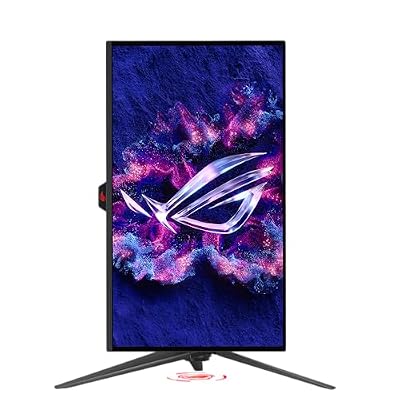
ASUS ROG PG27UCDM 27 Inch 4K 240Hz OLED Gaming Monitor QD-OLED | OLED Care Pro, Neo Proximity Sensor, Custom Heatsink, DisplayPort 2.1, G-SYNC Compatible, True 10-bit, for PS5 and Xbox




As an Amazon Associate we earn from qualifying purchases. Product prices and availability are accurate as of the date/time indicated.
How Monitor Brands Usually Differ
Some companies focus on gaming-specific lines with fast panels, strong feature sets and bold styling. Others sell broadly across office, creative and gaming categories, and their gaming models may be part of a wider catalogue. Premium-focused brands tend to concentrate on high-end panels, colour accuracy and build quality. Budget-focused brands often compete on price and size, and they may trade some tuning or features to reach a lower cost. None of these approaches is wrong. Each suits a different buyer.
Warranty length and support also vary. Some manufacturers offer longer coverage for certain panel types, and some handle returns through a local distributor while others ship directly. Check the warranty in writing for the country you buy in, and look at how the manufacturer handles dead pixels and burn-in if you consider an OLED model. A warranty that looks generous on paper may have conditions that matter in practice.
Gaming Monitor Brand Categories Compared
The table groups common brand types by what they tend to offer. Price ranges are broad and reflect typical positioning rather than specific products. Use the table to set expectations, then compare the specific models you are considering.
| Brand type | Typical strength | Typical trade-off | Best for | Typical price range |
|---|---|---|---|---|
| Gaming-focused specialist | Fast panels and gaming features | Styling may suit gamers more than offices | Competitive and mixed gaming | Mid to upper range; check current price |
| Broad electronics maker | Wide range of sizes and panel types | Gaming tuning varies by model | Buyers who want one brand for many uses | Wide range; check current price |
| Premium display specialist | Strong colour and build quality | Higher cost for similar specs | Creators and premium gamers | Upper range; check current price |
| Budget-focused brand | Low price and useful size choices | Tuning and support may be limited | Budget builds and secondary screens | Lower cost; check current price |
The categories overlap, and many brands fall into more than one. Use the table as a starting point and then check the model.
Checks Beyond the Brand Name
Start with reviews of the exact model. Look for measurements of brightness, colour, motion and input lag, and read how the reviewer describes the out-of-box settings. A monitor that looks good only after lengthy manual tuning may suit enthusiasts but frustrate casual buyers. Next, check the firmware. Some manufacturers release updates that improve variable refresh behaviour or fix flicker, and a brand with a record of updates can be a better long-term choice.
Then review the warranty and returns policy for your country. Note whether the warranty covers panel defects and how long it lasts. For OLED models, check the stated policy on burn-in. For any monitor, keep the receipt and packaging until you have tested the screen, because some returns policies require the original box. These details matter more than a brand slogan when a monitor fails or disappoints.
Where to Look Next
If you know the panel type you want, start there and then compare the brands that offer it. Our best monitors for gaming roundup lists models across several brands and price points, and the best gaming monitor 2026 guide covers current picks by use case. For budget-focused buyers, the best budget gaming monitor page shows which options keep the spec sheet reasonable.
Brand-focused reviews can also help. The Samsung Odyssey OLED G8 review and the MSI MEG 342C QD-OLED review show how two OLED models approach the same panel class in different ways. The Alienware AW3423DWF review and the AOC Pro 360 review add more context on how gaming-focused brands tune their screens. Read them to see how tuning, styling and feature sets vary across brands, not to choose a winner by name.
Buying Checklist for Any Brand
Confirm the exact model number, the panel type, the refresh rate and the resolution. Read at least one independent review, and check whether the brand’s firmware has been updated since release. Compare the warranty in writing for your country. Check the stand and mounting options if you plan to use a wall arm. Finally, match the monitor to the games and work you do most. The brand matters, but the model you choose is what you will live with every day.
To compare brands within a single category, start with the best buy gaming monitor roundup for retail-focused picks, then the best OLED monitor for gaming page for premium panels across several brands. The best IPS gaming monitor guide shows how colour-focused models from different makers compare on the same panel class.
Frequently Asked Questions
Which gaming monitor brand is the best?
No single brand is best in every category. Some companies focus on fast gaming panels, some on premium colour, and others on budget value. Choose by panel type, review results and warranty for the specific model rather than by brand alone.
Do expensive monitor brands always perform better?
Not always. Price often reflects panel type, size, refresh rate and features, and a lower-cost model can perform well in the areas you care about. Compare the specific measurements in reviews rather than assuming a higher price means better performance.
Are monitors from the same panel supplier identical?
No. The panel is only one part of the result. Scaler design, firmware, overdrive tuning, backlight behaviour and stand quality can all differ, so two monitors with the same panel may look and behave differently.
How important is warranty when choosing a monitor brand?
It matters, especially for OLED panels and any model you plan to keep for years. Read the warranty in writing, check how the brand handles panel defects and returns in your country, and keep proof of purchase.