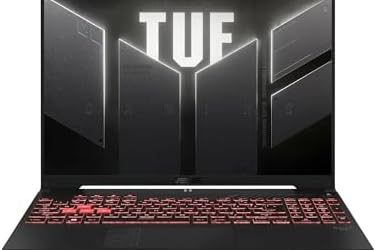
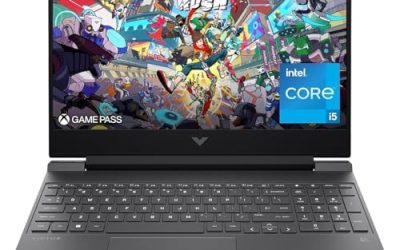
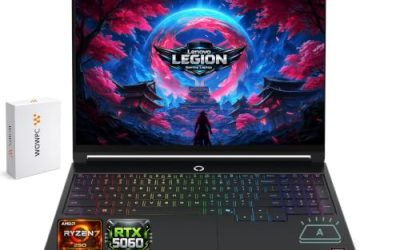
- Top Pick: ASUS ROG Strix G16 (2025) Gaming Laptop, 16” FHD+ 16:10 165Hz/3ms, NVIDIA® GeForce RTX™ 5060, Intel® Core™ i7 Processor 14650HX, 16GB DDR5, 1TB Gen 4 SSD, Wi-Fi 7, Windows 11 Home, G615JMR-AS74
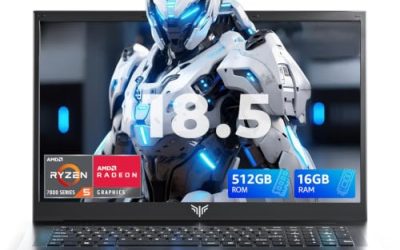
- Best Value: KAIGERR Gaming Laptop, 24GB DDR5 512GB NVMe SSD Laptop Computer with AMD Ryzen 7 H255(8C/16T, Up to 4.9GHz), 16.0 inch Windows 11 Laptop, Radeon RX Vega 8 Graphics,WiFi 6, Backlit KB
- Premium Choice: KAIGERR Gaming Laptop, Laptops with AMD Ryzen 7430U(Up to 4.3GHz), 16GB DDR4 512GB SSD Laptop Computer, 15.6inch Windοws 11 Laptop, 1920P FHD Display, WiFi 6, USB3.2, Type_C
Affiliate disclosure: As an Amazon Associate we earn from qualifying purchases. This post contains affiliate links — if you buy through them we may earn a small commission at no extra cost to you. This never affects our recommendations.
A gaming laptop under $1000 in 2025 delivers genuine 1080p and entry 1440p gaming performance — no longer the compromised experience it once was. RTX 4060 laptop GPU options, fast NVMe storage, and 144Hz+ displays have trickled down to the sub-$1000 tier, making portable gaming accessible without breaking the bank. These picks maximize gaming performance per dollar in the most competitive laptop price segment.
As an Amazon Associate we earn from qualifying purchases at no extra cost to you.




Check Price ↗
In a hurry? See the top-rated Gaming Laptop Under $1000 deals available right now:
🛒 Check Gaming Laptop Under $1000 Prices on Amazon →
⚡ Save on Your Next PC — Amazon Prime
Prime members get fast free shipping on the systems above, plus early access to Prime Day & Black Friday PC deals. New members get a 30-day free trial.
Watch: Best Gaming Laptop Under $1000 in 2026: Top Budget Picks — Video Review
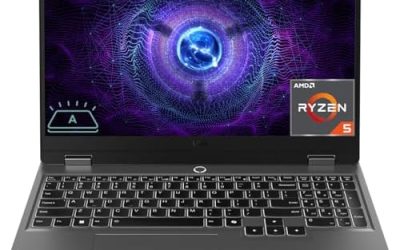
Best Overall Under $1000: ASUS TUF Gaming F15 — RTX 4060 Value King
The ASUS TUF Gaming F15 with RTX 4060 laptop GPU is the best gaming laptop under $1000 for most buyers. Its 144Hz IPS display delivers smooth 1080p gaming, the RTX 4060’s DLSS 3 support extends performance headroom significantly, and MIL-STD-810H durability certification provides confidence for daily carry. 16GB DDR5 RAM and 512GB NVMe storage are adequate starting points, with user-accessible slots for future upgrades. ASUS’s intelligent fan control balances performance and noise effectively in both gaming and productivity modes.
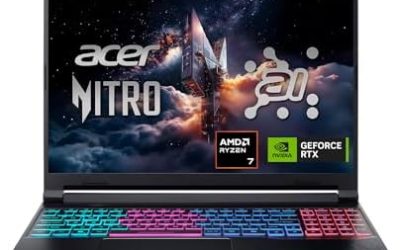
Best Display Under $1000: Acer Nitro 16 — 165Hz QHD on a Budget
Acer’s Nitro 16 offers a 16-inch QHD (2560×1600) 165Hz IPS display — a resolution tier typically found in $1,200+ laptops. The RTX 4060 laptop GPU handles QHD gaming well with DLSS Quality mode, and the large display makes it a capable productivity machine for remote work. The keyboard and trackpad are above-average for the price tier, and 16GB DDR5 is easily expandable to 32GB. Best gaming laptop under $1000 for those who prioritize display quality.
Best Battery Life: Lenovo IdeaPad Gaming 3i — All-Day Productivity with Gaming
Lenovo’s IdeaPad Gaming 3i with RTX 4060 balances gaming performance with a genuine 5–6 hour battery life in productivity mode — rare for gaming laptops. The efficiency modes intelligently scale CPU and GPU power limits, enabling work-from-coffee-shop productivity without searching for an outlet. Gaming mode returns performance to full RTX 4060 capability. Best gaming laptop under $1000 for students who need a single device for both gaming and academic work.
Best AMD Option: ASUS ROG Strix G15 (Ryzen) — AMD Platform Advantages
ASUS’s ROG Strix G15 with AMD Ryzen 7 7745HX and RX 7600M XT offers a capable alternative to Intel+NVIDIA configurations at a competitive price. AMD’s Smart Access Memory technology enables communication between the Ryzen CPU and Radeon GPU with zero latency overhead — a unique advantage on AMD platform laptops. The 15.6-inch 144Hz display and 16GB DDR5 complete a well-rounded gaming package. Best gaming laptop under $1000 for AMD ecosystem enthusiasts.
Sub-$1000 Gaming Laptop Compromises
What You Give Up Under $1000
Premium chassis materials (aluminum vs plastic), MUX switch (most sub-$1000 laptops lack direct GPU-to-display connection), OLED displays (IPS is standard at this tier), thin-and-light form factor (sub-$1000 gaming laptops tend toward 2kg+), and Thunderbolt 4 ports. These are real trade-offs, not dealbreakers — the gaming performance is genuine and satisfying.
Upgrade Priorities After Purchase
Most sub-$1000 gaming laptops ship with 512GB NVMe storage — upgrade to 1TB or 2TB immediately if gaming on the device (modern games are 50–100GB each). RAM is usually 16GB single-channel (one stick) — adding a second matched 16GB stick enables dual-channel memory, improving gaming performance 5–15% at no cost beyond the RAM price.
What a Sub-1000 Gaming Laptop Can and Cannot Do
A gaming laptop under 1000 in 2026 is a genuine 1080p machine, and the ceiling has moved up since this guide was first written. The original article was built around RTX 4060 and RTX 4050 laptops, and those remain the sweet spot when found on sale. What has changed is the entry point: RTX 5050 laptops now reach this tier, bringing Blackwell architecture and DLSS 4 frame generation to the budget class for the first time. That matters because frame generation is the single feature that most extends the life of a modest laptop GPU in demanding titles.
What the tier can do is clear. A laptop with an RTX 4050, RTX 4060, or RTX 5050, 16GB of memory, and a 144Hz or faster display plays modern releases at 1080p on medium to high settings, handles esports titles at high refresh rates, and doubles as a capable everyday machine for study or work. With upscaling enabled, many demanding games run well above 60 frames per second, and the gap between this tier and the next one up is narrower than it was two years ago.
What it cannot do is just as important. No laptop in this tier ships with a high-wattage GPU, a premium display, or a metal chassis. Most models use plastic bodies, run their GPUs at reduced power limits compared with the same chip in a thicker machine, and pair a capable GPU with a single stick of memory or a small 512GB drive. Battery life while gaming is short on every model here, and buyers who expect all-day unplugged play will be disappointed. The honest framing is that this tier buys real gaming performance and genuine portability, and it asks the buyer to accept plastic, modest cooling, and a few upgrade chores in return.
GPU and CPU Balance at This Budget
The most common mistake at this budget is buying the biggest CPU and the smallest GPU. For gaming, the graphics chip decides frame rates far more than the processor does, and every laptop in this guide pairs a mid-range CPU with a dedicated GPU for that reason. A Core i5 or Ryzen 5 is enough for the GPUs in this tier; a Core i7 or Ryzen 7 only earns its place when the buyer also edits video or streams while playing.
The table below compares the GPUs buyers actually meet under 1000, including the four new picks added in this update.
| Laptop | GPU | Memory | Storage | Display |
|---|---|---|---|---|
| ASUS TUF Gaming F15 (original pick) | RTX 4060 | 16GB DDR5 | 512GB NVMe | 144Hz IPS |
| Acer Nitro 16 (original pick) | RTX 4060 | 16GB DDR5 | 512GB NVMe | 165Hz QHD |
| Lenovo IdeaPad Gaming 3i (original pick) | RTX 4060 | 16GB DDR5 | 512GB NVMe | 144Hz IPS |
| MSI Cyborg 15 A13VE-218US (new) | RTX 4050 | 16GB DDR5 | 512GB NVMe | 144Hz FHD |
| MSI Thin GF63 12VE-066US (new) | RTX 4050 | 16GB DDR4 | 512GB NVMe | 144Hz FHD |
| Acer Nitro V 15 ANV15-51-51H9 (new) | RTX 4050 | 8GB DDR5 | 512GB NVMe | 144Hz FHD |
| Acer Nitro V 16 AI (new) | RTX 5050 | 16GB DDR5 | 512GB NVMe | 180Hz WUXGA |
Two things stand out. First, the RTX 5050 in the Nitro V 16 AI is the only Blackwell GPU in the group, and it is the pick for buyers who want DLSS 4 support in a brand-new machine. Second, the Nitro V 15 is the only new pick with 8GB of memory, which is a real limitation in 2026 and the reason its section below tells buyers to plan a memory upgrade from day one.
GPU power limits deserve a warning of their own. The same RTX 4050 or RTX 4060 can run at very different wattages in different laptops, and a low-power version can trail a higher-power one by a visible margin. Manufacturers rarely print the wattage on the retail listing, so buyers should check the exact model number against the manufacturer’s specification page before ordering, and treat any listing that hides the model number as a warning sign.
Screen and Storage Trade-Offs
At this budget the display is usually the second compromise after the chassis. Most models ship with a 144Hz full HD IPS panel, which is the right call for the GPUs in this tier: 1080p keeps frame rates high, and 144Hz makes esports titles feel smooth. The Nitro 16 in the original article is the exception, with a QHD 165Hz panel that suits buyers who value sharpness over maximum frame rate, and the new Nitro V 16 AI goes the other way, with a taller 1920 by 1200 panel at 180Hz that gives extra vertical space for work and browsing.
Two display details are worth checking before buying. The first is brightness and colour coverage, which budget panels often skimp on; a dim panel is hard to use outdoors and dull for media. The second is the panel type: IPS is standard here, and any listing that does not name the panel type should be treated with caution, since cheaper TN-style panels still appear in the lowest-priced machines.
Storage is the most predictable trade-off in the tier. Almost every sub-1000 gaming laptop ships with a single 512GB drive, and modern games regularly take 50 to 100GB each, so a buyer with more than a handful of installed games will fill the drive fast. The fix is cheap and easy on most models: a second M.2 slot or a larger replacement drive. Buyers should check that the laptop has a free slot or an accessible drive bay before ordering, and should budget for a 1TB drive as the first upgrade if the machine ships with 512GB.
Who Should Skip This Tier
This tier is wrong for three kinds of buyers. The first is the buyer who wants high-refresh 1440p gaming in demanding titles without upscaling; that needs a higher-wattage GPU and a bigger budget. The second is the buyer who wants a thin, light, all-metal laptop with a premium display; this tier is plastic and heavy by design, and the machines that combine gaming power with premium build cost far more. The third is the buyer who needs long unplugged battery life for a full day of classes or work; gaming laptops in this class last a few hours in productivity mode at best, and the original article’s IdeaPad Gaming 3i is the closest thing to an exception.
Buyers who mainly play older or lighter games should also pause. A laptop with integrated graphics or a previous-generation entry GPU can handle those titles, and spending the full budget on a dedicated-GPU machine they do not need wastes money that could go to a better display or more storage.
Common Mistakes When Buying Under 1000
The first mistake is buying a seller-upgraded listing without noticing. Many listings on the big marketplaces are factory machines that a third-party seller has opened to add memory or storage, and those listings carry different model numbers, different warranties, and sometimes different parts than the factory configuration. The safe habit is to match the model number and the ASIN together, and to prefer the factory configuration unless the upgrade is exactly what the buyer wants.
The second mistake is buying 8GB of memory in 2026. Several budget laptops still ship with a single 8GB stick, which is enough to boot and browse but not enough for modern games alongside background apps. The fix is a second matched stick, which also enables dual-channel memory and lifts gaming performance. Buyers should treat an 8GB machine as a machine that needs a memory upgrade, not as a finished purchase.
The third mistake is judging a laptop by its GPU name alone. An RTX 4060 in a thin chassis at a low power limit can trail an RTX 4050 in a better-cooled machine, and an RTX 5050 with 8GB of video memory is not automatically faster than an RTX 4060 with the same amount. The GPU name, the power limit, the memory configuration, and the cooling all matter together.
The fourth mistake is ignoring the display. A 60Hz panel on a gaming laptop in 2026 is a dealbreaker, and a dim panel ruins an otherwise good machine. Buyers should confirm the refresh rate and, where possible, the brightness before ordering.
The fifth mistake is buying for a single sale headline. Budget laptop prices move constantly, and a model that is a good value one week can be a poor one the next. The right approach is to shortlist two or three models with the right GPU, memory, and display, and buy whichever of them is genuinely in stock in its factory configuration.
More Picks Worth Considering
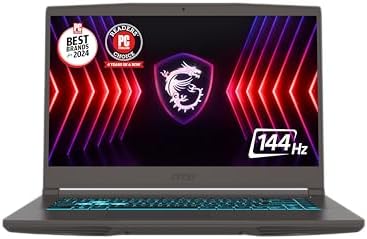
MSI Cyborg 15 A13VE-218US

The Cyborg 15 is the most distinctive-looking budget gaming laptop in this update, with a translucent chassis that sets it apart from the plain black plastic of its rivals. The Core i7-13620H and RTX 4050 pairing is a sensible match for 1080p gaming, and 16GB of DDR5 memory with a 512GB NVMe drive means no day-one upgrade is required. The 144Hz full HD display is the tier standard, and Cooler Boost 5 keeps thermals in check under load. It fits buyers who want a recognizable design and balanced specs without paying for a higher-tier GPU. The trade-off is the Cyborg family’s modest GPU power limits, so buyers chasing maximum frame rates should look at the RTX 4060 picks in the original article instead. Match model A13VE-218US exactly: the family also ships RTX 4060 versions under similar names.
MSI Thin GF63 12VE-066US

The Thin GF63 is the lightest machine in this update and the easiest to carry, the pick for buyers who move between home and campus. The Core i7-12650H and RTX 4050 handle 1080p gaming well, 16GB of memory and a 512GB drive cover everyday use, and the 144Hz display keeps esports titles smooth. The fit is best for buyers who value portability and a proven design over the newest hardware. The trade-offs are real and should be stated plainly: this configuration uses DDR4 memory rather than DDR5, the display is dimmer than the panels on the other picks here, and stock is thin, with one tracker showing only a handful of new units left, so buyers should confirm a live offer before ordering. Match model 12VE-066US, since the GF63 family spans many processors, GPUs, and memory configurations under the same name.
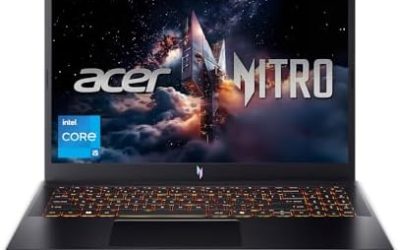
Acer Nitro V 15 ANV15-51-51H9
The Nitro V 15 is the lowest-cost route into a dedicated RTX GPU in this update, for buyers whose budget is genuinely tight. The Core i5-13420H and RTX 4050 deliver real 1080p gaming, the 144Hz IPS display suits the GPU, and the 512GB Gen 4 drive loads games fast. It fits buyers who want the cheapest credible gaming laptop and will do one upgrade themselves. The trade-off is the 8GB of memory, the weakest specification in this update: buy a second matched memory stick with the laptop, or the machine will stutter in modern titles. The 16GB version of the same laptop is a separate listing and was not used here. Match model ANV15-51-51H9, and avoid bundle listings that add a headset or other accessories under a different code.
Acer Nitro V 16 AI
The Nitro V 16 AI is the only pick here with a current-generation Blackwell GPU. The Ryzen 5 240 and RTX 5050 bring DLSS 4 frame generation to the budget tier, 16GB of DDR5 and a 512GB drive mean no immediate upgrades, and the 16-inch 1920 by 1200 IPS display at 180Hz is the fastest and tallest panel in this group. It fits buyers who want the newest GPU architecture and the smoothest display under 1000, and who plan to keep the laptop for years. The trade-off is that the RTX 5050 is an entry-level Blackwell chip, so it does not outrun the RTX 4060 picks in raw performance; its advantage is frame generation and newer feature support. Match the factory 16GB and 512GB configuration: seller-upgraded 32GB and 64GB versions are separate listings, and the Nitro V 16S AI is a different machine with an RTX 5060.
Buyer Questions
Is an RTX 4050 laptop still worth buying in 2026?
Yes, for 1080p gaming. The RTX 4050 handles modern releases at medium to high settings with upscaling, and it is the GPU that keeps the most laptops genuinely under 1000. Buyers who want 1440p gaming or the longest useful life should step up to an RTX 4060 or RTX 5050 instead.
Should I buy an RTX 5050 laptop or an RTX 4060 laptop?
The RTX 5050 brings Blackwell architecture and DLSS 4 frame generation, which helps in supported titles. The RTX 4060 generally delivers stronger raw performance in games without frame generation. Buyers who play titles with DLSS 4 support should lean toward the 5050; buyers who play a wide mix of older games should lean toward the 4060.
How much memory does a budget gaming laptop need?
16GB is the floor in 2026. Machines that ship with 8GB need a second stick added immediately, and buyers should budget for that before ordering. Two matched sticks also enable dual-channel memory, which lifts gaming performance over a single stick.
Can a sub-1000 gaming laptop replace a desktop?
For portable gaming, yes. For maximum performance per dollar at a fixed desk, no: a desktop at the same budget delivers more GPU power and better cooling. Buy the laptop for portability and the desktop for stationary performance.
Frequently Asked Questions
What GPU should I expect under $1000?
RTX 4060 laptop GPU is the standard at the $900–$1000 tier in 2025. RTX 4050 appears at $700–$850. Both are capable 1080p gaming GPUs — the RTX 4060 handles 1440p with DLSS Quality mode effectively. Avoid laptops with RTX 3050 or older GPUs at this price point.
Is a $1000 gaming laptop better than a $1000 gaming PC?
A $1000 gaming PC delivers 40–60% more GPU performance than a $1000 gaming laptop (no chassis tax, better thermal headroom, desktop GPU efficiency). Choose a laptop for portability; choose a desktop for maximum performance-per-dollar at stationary setups.
Can a $1000 gaming laptop run new games in 2026?
Yes — RTX 4060 laptop GPU handles virtually every 2025 game at 1080p medium-high settings with 60+ FPS. With DLSS Quality mode enabled, many demanding titles hit 90+ FPS. 1440p gaming is achievable in less demanding titles and with upscaling in demanding ones.
Related Articles
Looking for more on this topic? Browse the hand-picked guides below — each one applies the same scoring rubric used in this review.