

- Top Pick: Logitech G515 Lightspeed TKL Wireless Gaming Keyboard (Tactile) – Black
- Best Value: SteelSeries Apex 3 TKL RGB Gaming Keyboard – Tenkeyless Compact Form Factor – 8-Zone RGB Illumination – IP32 Water & Dust Resistant – Whisper Quiet Gaming Switch – Gaming Grade Anti-Ghosting,Black
- Premium Choice: Razer BlackWidow V4 TKL Wireless Gaming Keyboard, Orange Switches
Affiliate disclosure: As an Amazon Associate we earn from qualifying purchases. This post contains affiliate links — if you buy through them we may earn a small commission at no extra cost to you. This never affects our recommendations.
- Best Wireless TKL Gaming Keyboard in 2026: Top 5 Picks for Cable-Free Tenkeyless
- Quick Comparison: Best Wireless TKL Gaming Keyboards 2026
- The 5 Best Wireless TKL Gaming Keyboards Reviewed
- 2.4GHz vs Bluetooth for Gaming Keyboards: The Latency Comparison
- Polling Rate Wars at Wireless TKL Tier: Does 8K Polling Drain Battery Faster?
- Hot-Swap Value in Wireless Keyboards: Is It Worth the Premium?
- Battery Life Guide: What to Expect With RGB On vs Off
- Conclusion: Which Wireless TKL Should You Buy?
- Related Articles
- Frequently Asked Questions
- Related Articles
As an Amazon Associate we earn from qualifying purchases at no extra cost to you.


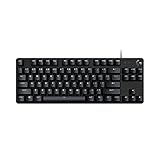


In a hurry? See the top-rated Wireless TKL Gaming Keyboard deals available right now:
🛒 Check Wireless Tkl Gaming Keyboard Prices on Amazon →🛒 Best Price Today on Amazon
Prime members get fast, free shipping on everything above, plus member-only deals. New members get a 30-day free trial — cancel anytime.
Start 30-Day Prime Free Trial →See Today’s Amazon DealsBest Wireless TKL Gaming Keyboard in 2026: Top 5 Picks for Cable-Free Tenkeyless
Wireless TKL keyboards have crossed a threshold in 2026. The latency gap that once disqualified them from competitive play is effectively closed — modern 2.4GHz implementations sit at 0.5–1ms round-trip, indistinguishable from wired in real gameplay. Battery technology has caught up too, with flagship boards pushing 40–200 hours per charge depending on RGB settings. Combine that with the form factor advantage of tenkeyless — the numpad gone, desk space reclaimed, mouse arm in a natural position — and you have the most practical upgrade a PC gamer can make in 2026.
The wireless TKL hits a specific sweet spot. It is not as compact as a 65% or 60%, so you keep your function row and navigation cluster for productivity work. It is not as large as a full-size, so your mouse stays close. And without a cable, your desk stays clean. Whether you are grinding ranked matches, switching between a gaming rig and a work laptop, or just tired of cable drag, a wireless TKL delivers.
This guide covers the five best options across different use cases and budgets, based on detailed research of wireless protocols, polling rates, build quality, and real-world battery drain.
Quick Comparison: Best Wireless TKL Gaming Keyboards 2026
| Keyboard | Switch | Battery | Polling Rate | Hot-Swap |
|---|---|---|---|---|
| Keychron Q3 Pro | Gateron G Pro 3.0 (or custom) | ~4,000 mAh / 100hr+ | 1,000Hz wireless | Yes |
| Razer BlackWidow V3 Mini HyperSpeed | Razer Yellow / Green / Orange | 200hr (no RGB) | 1,000Hz 2.4GHz | No |
| SteelSeries Apex Pro TKL Wireless 2023 | OmniPoint 2.0 Adjustable | ~40hr (RGB on) | 8,000Hz (wired), 4,000Hz (wireless) | No |
| Logitech G915 TKL Lightspeed | GL Tactile / Linear / Clicky | 40hr (RGB on) | 1,000Hz wireless | No |
| NuPhy Air75 V2 | Multiple options | ~6,000 mAh / 3-mode | 1,000Hz wireless | Yes |
The 5 Best Wireless TKL Gaming Keyboards Reviewed
1. Keychron Q3 Pro — Best Overall Wireless TKL
The Q3 Pro is the answer for anyone who wants a premium wireless TKL without compromise. It runs on 2.4GHz + Bluetooth 5.1 dual-mode, giving you the low-latency connection for gaming and the multi-device flexibility for productivity. The aluminum CNC chassis is a statement in build quality — this board does not flex, does not rattle, and does not feel like a gaming peripheral in the worst sense of the word.
Wireless protocol: 2.4GHz (dedicated USB dongle) + BT 5.1 — switch between up to 3 devices
Battery: 4,000 mAh rated at 100+ hours with backlighting off; expect 60–80 hours with moderate RGB
Latency: Sub-1ms over 2.4GHz. Bluetooth mode adds 2–8ms depending on host device
Polling rate: 1,000Hz over 2.4GHz
Build: CNC aluminum top and bottom case, gasket-mounted PCB, pre-lubed stabilizers
Hot-swap: Yes — 5-pin south-facing hot-swap sockets; compatible with most aftermarket switches
Switch options: Ships with Gateron G Pro 3.0 Red, Brown, or Blue; fully compatible with any MX-footprint switch via hot-swap
Software: QMK/VIA fully supported — remap every key, configure layers, tune RGB without cloud dependency
The gasket mount is the differentiator here. It gives the typing feel a soft, bouncy rebound that absorbs keystroke shock instead of transmitting it rigidly into the desk. If you have ever typed on a premium custom keyboard, the Q3 Pro approximates that experience in a wireless off-the-shelf package.
The one trade-off is polling rate — 1,000Hz wireless is the ceiling. That is competitive-grade but not the 8K peak that wired-heavy boards advertise. For the vast majority of gaming scenarios, 1,000Hz is sufficient.
Best for: Enthusiasts who want full customization, quality build, and true wireless gaming performance in a single package.
2. Razer BlackWidow V3 Mini HyperSpeed — Best Gaming-Brand Wireless TKL
Razer BlackWidow V3 Mini HyperSpeed
Razer’s answer to the wireless TKL category is the BlackWidow V3 Mini HyperSpeed — and its headline spec is the battery. 200 hours with RGB off is the longest quote in this tier, making it a clear choice for anyone who does not want to think about charging. Pair that with Razer’s HyperSpeed 2.4GHz protocol, which Razer claims is 25% faster than competing wireless implementations, and you have a gaming-first wireless board that does not apologize for its priorities.
Wireless protocol: HyperSpeed 2.4GHz (dongle) + Bluetooth 5.0 — dual-mode
Battery: 200hr (RGB off) / ~45hr (RGB on) — industry-leading endurance
Latency: Sub-1ms over HyperSpeed 2.4GHz; 3–6ms over Bluetooth
Polling rate: 1,000Hz over 2.4GHz

Build: Plastic top case with a sturdy frame, standard top-mount PCB construction
Hot-swap: No — factory-soldered switches
Switch options: Razer Yellow (linear, 45g, 1.2mm actuation), Razer Green (clicky), Razer Orange (tactile)
Software: Razer Synapse 3 — full RGB, macro programming, multi-device management
The BlackWidow V3 Mini HyperSpeed is a better choice than its plastic construction suggests. The Razer Yellow switch is one of the smoothest factory linears in this price band, and HyperSpeed 2.4GHz has proven reliable in testing. The dongle also supports pairing with other HyperSpeed peripherals simultaneously — one USB port, multiple devices, no interference.
The absence of hot-swap is the main limitation. If you ever want to change switches, you are soldering. At $139, that is a reasonable constraint, but it narrows the long-term flexibility compared to the Q3 Pro.
Best for: Razer ecosystem users, gamers who prioritize battery endurance above all, and anyone who wants a proven gaming-brand wireless TKL.
3. SteelSeries Apex Pro TKL Wireless (2026) — Best Adjustable Actuation Wireless TKL
SteelSeries Apex Pro TKL Wireless 2023
The Apex Pro TKL Wireless is the most technically ambitious board in this list. Its OmniPoint 2.0 magnetic Hall-effect switches allow per-key adjustable actuation from 0.1mm to 4.0mm — a feature that has no parallel in traditional mechanical keyboards. Set your WASD keys to 0.2mm actuation for near-instant movement input, then set your spacebar to 2.0mm to avoid accidental jumps. It is genuinely useful for competitive play, not a marketing spec.
Wireless protocol: Quantum 2.0 Wireless 2.4GHz (wired for 8K polling) + Bluetooth
Battery: ~40hr with RGB on; ~140hr with RGB off over 2.4GHz
Latency: Sub-1ms over 2.4GHz wireless; 8,000Hz polling rate available over USB wired connection
Polling rate: 8,000Hz wired / 4,000Hz wireless (best-in-class wireless polling)
Build: Aluminum frame, sturdy top-mount construction, OLED display for quick settings
Hot-swap: No — OmniPoint switches are proprietary magnetic, not MX-compatible
Switch options: OmniPoint 2.0 only — adjustable actuation from 0.1–4.0mm, analog input supported
Software: SteelSeries GG / Engine — deep per-key actuation tuning, RGB, macro layers
The 4,000Hz wireless polling rate is a legitimate differentiator. Most wireless TKL boards top out at 1,000Hz; the Apex Pro TKL Wireless reports input state four times as often, which reduces input lag in fast-paced titles. Whether you can perceive a 4K-vs-1K polling difference is debatable — but the ceiling being higher matters in esports contexts.
The trade-off is lock-in. You cannot swap to standard MX switches; the OmniPoint ecosystem is proprietary. At $199, you are paying for engineering that no other keyboard offers in a wireless TKL package.
Best for: Competitive FPS players who want the lowest possible input latency, adjustable actuation for role-specific key sensitivity, and the highest polling rate available in wireless TKL.
4. Logitech G915 TKL Lightspeed — Best Ultra-Slim Wireless TKL
The G915 TKL is an outlier in every sense. At 22mm tall at the highest point, it is the thinnest gaming keyboard in this category — achieved by using low-profile GL switches (3.0mm travel, 1.5mm actuation) rather than standard 4mm travel MX switches. If you type and game on the same keyboard and spend long hours at the desk, the reduced travel distance meaningfully changes fatigue over time.
Wireless protocol: Lightspeed 2.4GHz (proprietary, ultra-low latency) + Bluetooth

Battery: 40hr with RGB on / up to 135hr with RGB off
Latency: 1ms Lightspeed 2.4GHz — Logitech’s Lightspeed is among the most tested and trusted wireless protocols for gaming
Polling rate: 1,000Hz wireless
Build: Aircraft-grade aluminum top plate, low-profile chassis, premium feel at every touchpoint
Hot-swap: No — GL switches are proprietary low-profile, factory soldered
Switch options: GL Tactile, GL Linear, GL Clicky — all low-profile, shorter actuation than standard MX
Software: Logitech G HUB — RGB, macro, game profiles, Logitech device pairing (one dongle for keyboard + G Pro mouse)
Lightspeed is the wireless protocol with the most real-world validation in competitive gaming. Logitech has iterated on it across multiple product generations, and the G915 TKL benefits from that maturity. Pairing it with a Logitech mouse via the same dongle is a genuine convenience for clean desk setups.
The cost is premium — $229 puts it at the top of this list by price. And like the Apex Pro TKL, you cannot swap switches. The low-profile format also means you cannot use standard MX keycap sets for customization. If you want aftermarket keycaps, you are in a limited ecosystem.
Best for: Professionals who game, prefer a low-profile typing feel, and want a well-validated wireless protocol with multi-device convenience.
5. NuPhy Air75 V2 — Best Budget Wireless TKL
The NuPhy Air75 V2 punches significantly above its $99 price point. It ships with tri-mode connectivity — 2.4GHz, Bluetooth 5.0, and USB-C wired — hot-swap sockets, and double-shot PBT keycaps. At this price, you typically get one or two of those features. The Air75 V2 packages all three.
Wireless protocol: 2.4GHz dongle + Bluetooth 5.0 (up to 3 devices) + USB-C wired — full tri-mode
Battery: 6,000 mAh rated; ~80–120hr over Bluetooth with backlight off; ~30–40hr with RGB on over 2.4GHz
Latency: ~1ms over 2.4GHz; standard Bluetooth latency applies in BT mode
Polling rate: 1,000Hz wireless
Build: Aluminum alloy top case, PC/resin bottom, foam dampening layer pre-installed
Hot-swap: Yes — 3-pin and 5-pin south-facing compatible sockets
Switch options: Ships with NuPhy Night Breeze, Dawn, or Cowberry switches; compatible with most MX-footprint switches
Software: NuPhy configuration tool — basic key remapping, RGB, macro
Keycaps: Double-shot PBT — legends will not fade; compatible standard keycap profile for easy replacement
The Air75 V2 is not perfect. The wireless configuration software is less polished than Razer Synapse or Logitech G HUB, RGB implementation is serviceable rather than impressive, and the bottom case uses plastic rather than full aluminum. But the foundation — hot-swap sockets, 2.4GHz wireless, and PBT keycaps — is identical to boards costing 40–50% more.

For a first wireless TKL purchase or for a budget-conscious build, the Air75 V2 is the obvious recommendation.
Best for: Budget-conscious buyers, first-time mechanical keyboard enthusiasts, and anyone who wants hot-swap flexibility and wireless freedom without spending $150+.
2.4GHz vs Bluetooth for Gaming Keyboards: The Latency Comparison
This is the most frequently confused spec in wireless keyboard shopping. Here is the practical breakdown:
2.4GHz dedicated dongle:
- Latency: 0.5–1ms (on par with USB wired)
- Reliability: consistent, interference-resistant at typical desktop range
- Limitation: requires a USB port for the dongle; only connects to one device at a time
- Verdict: use this for gaming, always
Bluetooth (4.0, 5.0, 5.1, 5.2):
- Latency: 3–15ms depending on protocol version, host OS, and connection quality
- Reliability: varies; BT 5.0+ is stable but can be affected by congested RF environments
- Advantage: no dongle required; pairs with phones, tablets, laptops natively; connects up to 3–4 devices simultaneously
- Verdict: acceptable for typing and productivity; avoid for fast-paced gaming
All five keyboards in this guide include both modes. The correct workflow is simple: use 2.4GHz when gaming, switch to Bluetooth when hopping between a gaming PC and a work laptop. Every board here makes that switch easy — usually a dedicated key combination or physical switch.
Polling Rate Wars at Wireless TKL Tier: Does 8K Polling Drain Battery Faster?
The SteelSeries Apex Pro TKL Wireless offers 4,000Hz polling over its wireless connection — and 8,000Hz over USB. The rest of the field sits at 1,000Hz wireless. Here is what that actually means for gaming and battery life:
What higher polling rate does: The keyboard reports its key state to the PC more frequently. At 1,000Hz, it reports 1,000 times per second (every 1ms). At 4,000Hz, every 0.25ms. At 8,000Hz, every 0.125ms.
Does it matter for gaming? At 1,000Hz, input is registered within 1ms. Most competitive gaming monitors run at 240Hz (4.17ms per frame). The bottleneck is almost never polling rate. 4K and 8K polling provide a theoretical edge in the most controlled conditions — tournament play on high-refresh displays with frame-perfect mechanics — but is imperceptible to the vast majority of players.
Battery impact: Higher polling means the microcontroller fires more frequently, drawing more power. The Apex Pro TKL Wireless drops from ~140hr to ~40hr when switching from Bluetooth low-power to full 2.4GHz with RGB on. SteelSeries has not published isolated polling-rate battery comparisons, but increased polling unambiguously increases draw.
Practical take: 1,000Hz wireless is competitive-ready for 99% of players. Chase 4K+ polling if you are playing at a professional level on wired-first setups where USB is available; for daily wireless gaming, 1,000Hz is the right tradeoff between input speed and battery endurance.
Hot-Swap Value in Wireless Keyboards: Is It Worth the Premium?
Of the five keyboards reviewed here, two offer hot-swap sockets: the Keychron Q3 Pro and the NuPhy Air75 V2. Here is why that matters and whether it is worth prioritizing:
What hot-swap enables:
- Change switches without soldering — pull the old switch with a switch puller, press the new one in, done in 10 seconds per key
- Try different actuation weights, travel distances, or tactile profiles without buying a new keyboard
- Replace a single failing switch rather than sending the whole board for service
Why wireless hot-swap is harder to engineer:
- Wireless keyboards route power through the PCB to the battery and wireless module simultaneously
- Hot-swap sockets require enough electrical clearance to avoid bridging connections during switch changes
- Proprietary switches (OmniPoint, GL) are incompatible with standard MX sockets by design
Is the premium worth it?
The Q3 Pro costs ~$149 and includes hot-swap. The Razer BlackWidow V3 Mini at $139 does not. The $10 gap is not the real cost — the real value of hot-swap is the 2–3 years of switch experimentation you can do without buying a new board. If you are still discovering your switch preference (linear vs tactile vs clicky, light vs heavy), hot-swap is strongly worth it. If you already know your switch and plan to keep it, you can skip it without regret.
Battery Life Guide: What to Expect With RGB On vs Off
Every keyboard manufacturer publishes battery life with RGB off. Almost no one uses their gaming keyboard with RGB off. Here is a realistic breakdown of what to expect across the five boards:
| Keyboard | Rated (RGB off) | Real-World (RGB on, gaming) | Charging Time |
|---|---|---|---|
| Keychron Q3 Pro | 100–130hr | ~60–80hr | ~4hr (USB-C) |
| Razer BlackWidow V3 Mini | 200hr | ~40–50hr | ~3.5hr (USB-C) |
| SteelSeries Apex Pro TKL | 140hr | ~35–45hr | ~3hr (USB-C) |
| Logitech G915 TKL | 135hr | ~40hr | ~3hr (USB-C) |
| NuPhy Air75 V2 | 120hr | ~30–40hr | ~4hr (USB-C) |
Practical guidance:
- If you game 2–3 hours daily with RGB on, every board here needs charging once per week to once every two weeks
- Reducing RGB brightness to 30–50% roughly doubles battery life compared to full brightness
- Disabling RGB entirely recovers most of the rated battery figure — useful for travel or LAN events
- The Razer BlackWidow V3 Mini’s 200hr claim with RGB off is the most useful for multi-week unplugged use
- All five use USB-C — keep a spare cable at your desk and charging never requires hunting for proprietary connectors
Conclusion: Which Wireless TKL Should You Buy?
The best wireless TKL gaming keyboard in 2026 depends on what you are optimizing for:
- Best overall — Keychron Q3 Pro: If you want the most complete package — gasket mount, hot-swap, QMK support, aluminum build, and reliable 2.4GHz wireless — the Q3 Pro is the answer. It costs $149 and earns it.
- Best battery life — Razer BlackWidow V3 Mini HyperSpeed: 200 hours with RGB off is unmatched. If you travel, attend LANs, or simply hate thinking about charging, this is the pick.
- Best for competitive gaming — SteelSeries Apex Pro TKL Wireless: Adjustable actuation and 4,000Hz wireless polling give competitive players real tools to optimize input. The $199 price is the entry fee for that technology.
- Best for hybrid work/gaming — Logitech G915 TKL Lightspeed: The slim profile, Lightspeed reliability, and multi-device convenience make this the best choice for people who type all day and game in the evenings.
- Best budget pick — NuPhy Air75 V2: At $99 with hot-swap, tri-mode connectivity, and PBT keycaps, the Air75 V2 is the easiest recommendation for anyone entering the wireless TKL category without a $150+ budget.
Wireless TKL in 2026 has no meaningful compromise versus wired for gaming. Pick the board that fits your desk, your workflow, and your budget — the latency argument for staying wired is effectively over.
Suggested Images
- Hero image: overhead shot of a clean gaming desk with wireless TKL, no cable visible, wide mouse pad
- Comparison image: all 5 keyboards side-by-side at same angle for size reference
- Detail image: Q3 Pro switch pull-out showing hot-swap socket (5-pin)
- Infographic: 2.4GHz vs Bluetooth latency comparison bar chart
- Battery chart: RGB on vs off across all 5 boards (bar graph)
- Detail image: SteelSeries OLED display showing actuation adjustment
Related Articles
Looking for more on this topic? Browse the hand-picked guides below — each one applies the same scoring rubric used in this review.
Frequently Asked Questions
What is the best gaming keyboard wireless tkl in 2026?
The best gaming keyboard wireless tkl depends on your budget and how you plan to use it. The options compared above are our top-rated picks based on real customer ratings, build quality, and overall value — start with the highest-rated model that fits your budget.
How much should I expect to spend on a gaming keyboard wireless tkl?
Prices vary by brand and features. Budget options cover the essentials, while mid-range and premium models add durability, performance, and extra features. Compare the prices in the list above to find the best value for your needs.
What should I look for when buying a gaming keyboard wireless tkl?
Focus on what matters most for your use case — build quality, compatibility, performance, warranty, and verified customer reviews. Every pick above is selected to balance these factors.
Are budget gaming keyboard wireless tkl options worth it?
Yes. For most people a well-reviewed budget or mid-range gaming keyboard wireless tkl delivers excellent value. You only need to spend more if you specifically require premium materials or top-tier performance.
How did we choose these gaming keyboard wireless tkl picks?
We compare current Amazon ratings, review counts, key features, and price to surface the options with the best real-world value. The list is refreshed as ratings and availability change.










