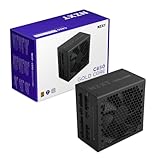
- Top Pick: NZXT C850 Gold Core – 850W ATX 3.1 Power Supply, 80+ Gold
- Best Value: NZXT C850 Gold ATX 3.1-850W Fully Modular Power Supply
- Premium Choice: MSI MAG A850GL PCIE5, Fully Modular Compact Gaming 850W Power Supply, 80+ Gold, ATX 3.1 & PCIe 5.1 Ready, Native Dual-Color 12V-2×6 Cable, 10 Year Warranty
Affiliate disclosure: As an Amazon Associate we earn from qualifying purchases. This post contains affiliate links — if you buy through them we may earn a small commission at no extra cost to you. This never affects our recommendations.
- gaming power supply Review 2026: Minimalist 850W Gold PSU for Clean NZXT Ecosystem Builds
- Specifications
- Cable Quality & Modularity
- Voltage Regulation & Ripple Control
- Cooling & Acoustics
- ATX Compatibility & NZXT Ecosystem
- Best GPU Pairings
- Pros & Cons
- Comparison Table
- FAQ
- Verdict
- Related Articles
- Frequently Asked Questions
- Related Articles
🛒 Best Price Today on Amazon
Prime members get fast, free shipping on everything above, plus member-only deals. New members get a 30-day free trial — cancel anytime.
Start 30-Day Prime Free Trial →See Today’s Amazon Dealsgaming power supply Review 2026: Minimalist 850W Gold PSU for Clean NZXT Ecosystem Builds
The gaming power supply targets builders invested in the NZXT ecosystem, delivering clean 850W power with 80+ Gold efficiency and full modularity. While not featuring cutting-edge ATX 3.0 native 12V-2×6 support, the gaming power supply compensates with exceptional design cohesion when paired with NZXT cases and cooling solutions. At $200-220, it competes with EVGA and Corsair in mid-range tier, differentiated by NZXT’s design minimalism and ecosystem integration philosophy. For builders valuing simplicity, clean aesthetics, and seamless NZXT system integration, the C850 is an intelligent choice. For pure performance or forward-compatibility, competitors offer better feature sets at similar pricing.
As an Amazon Associate we earn from qualifying purchases at no extra cost to you.


In a hurry? See the top-rated gaming power supply deals available right now:
🛒 Check Gaming Power Supply Prices on Amazon →Specifications
Power & Efficiency
- Wattage: 850W continuous at 50°C ambient
- Efficiency Rating: 80+ Gold (≥90% efficiency at 50% load)
- Form Factor: ATX (150 × 86 × 165 mm)
Modularity & Connectors
- Modularity Type: Fully modular with clean, minimalist design
- Native 12V-2×6: No (legacy design, requires adapter)
- ATX Version: ATX 2.0 (legacy, non-3.0)
- Cable Design: Flat, low-profile sleeving for NZXT case integration
Thermal Management
- Fan: 140mm (larger than typical, reduces RPM for quiet operation)
- Semi-Passive Mode: Zero RPM below 50% load
- Noise Level: ≤24dB at 50% load (good acoustic performance)
- MTBF: 100,000 hours
Cable Quality & Modularity
NZXT’s C850 prioritizes minimalist cable design: flat, low-profile connectors with subtle black sleeving that blends into NZXT cases seamlessly. Cable lengths (550-700mm) accommodate standard builds. The modular connectors use robust keying, but aren’t proprietary—they work with standard ATX PSU layouts.
The design philosophy is “invisible infrastructure”—cables route cleanly without visual prominence, allowing case aesthetics and internal RGB lighting to dominate visual attention. For builders valuing integrated design, this minimalism is appealing. For aesthetic enthusiasts, the understated approach may feel boring compared to sleeved premium competitors.

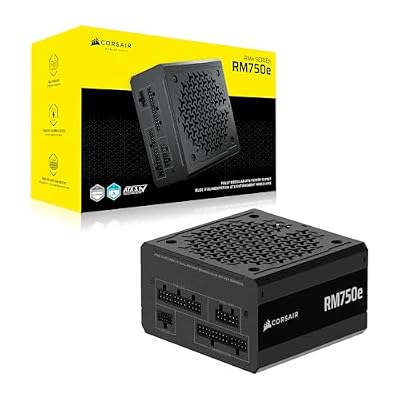
CORSAIR RM750e ATX 3.1 PCIe 5.1 Ready 750W Power Supply – Black | Native 12V-2x6 Cable Included, Low-Noise, Fully Modular, Cybenetics Gold, Modern Standby Mode, NA


As an Amazon Associate we earn from qualifying purchases. Product prices and availability are accurate as of the date/time indicated.
Voltage Regulation & Ripple Control
NZXT’s C850 maintains ±5% regulation on 12V rails—adequate for gaming stability but not exceptional. Peak-to-peak ripple typically measures 55-65mV under full load, typical for mid-range Gold-rated units. The trade-off is intentional: NZXT invests engineering resources into design cohesion and ecosystem integration rather than premium regulation performance.
For gaming systems operating at 60-80% load (typical scenarios), the regulation difference vs. Tier-A competitors is imperceptible. You’re paying for design consistency and ecosystem fit, not electrical performance.
Cooling & Acoustics
The 140mm fan is unusually large for 850W PSUs, a deliberate choice by NZXT to reduce RPM and noise. Below 50% load, semi-passive mode keeps the fan disengaged. At 50% load (typical gaming), the fan spins at approximately 1000-1200 RPM, generating just 24dB—excellent acoustic performance for this tier.
The larger fan diameter naturally reduces rotational speed for equivalent airflow, inherently quieter than compact 120-135mm designs. At 75% load, fan speed reaches ~1600 RPM at roughly 25-26dB. Thermal performance is adequate; the larger fan simply trades efficiency for quieter operation.
ATX Compatibility & NZXT Ecosystem
The gaming power supply is ATX 2.0 (legacy), meaning no native 12V-2×6 support. RTX 5080/5090 require adapters, adding cable bulk. However, the cable design is optimized for NZXT cases, which feature integrated cable management channels and minimal bulky routing. In NZXT builds, adapter cable bulk is less visible than in open-frame cases.
NZXT’s strategy is ecosystem lock-in: the C850 works best integrated with NZXT cases (H7 Flow RGB, H510 Elite, Phantom) where minimalist cable routing is designed into case architecture. In generic cases, the clean design becomes irrelevant, and you’re simply paying for NZXT branding without functional benefit.
Best GPU Pairings
The 850W gaming power supply excels with:
- RTX 5070 Ti: 350W TDP + Ryzen 7 7700X (105W) = 555W sustained. Excellent fit with 295W+ headroom and minimal cable clutter in NZXT chassis.
- RTX 5070 (non-Ti): 300W TDP, comfortable pairing with CPU overclocking in compact NZXT builds.
- RX 9070 (non-XT): 420W TDP, feasible in NZXT ecosystem with stable voltage regulation.
- RTX 5080: Possible with adapter, but 450W TDP + spikes = 600W+ leaves only 250W margin. Tight for NZXT’s clean design philosophy.
- NOT recommended for RTX 5090: 575W TDP exceeds safe 850W headroom.
NZXT builds typically prioritize aesthetic integration and ecosystem coherence over maximum GPU performance. RTX 5070 Ti is the natural pairing. See our $2000 gaming PC build for NZXT-specific recommendations.
Pros & Cons
Pros
- Minimalist design philosophy matches NZXT ecosystem aesthetics
- 140mm fan enables exceptional quiet operation (≤24dB)
- Flat, low-profile cables integrate seamlessly into NZXT cases
- Fully modular with robust connectors
- 80+ Gold efficiency (90%+ at 50% load)
- Fair pricing at $200-220 for mid-range tier
- 10-year warranty (standard industry coverage)
- Good value for NZXT case owners prioritizing ecosystem coherence
Cons
- No native ATX 3.0 12V-2×6 (requires adapter, adds cable bulk)
- ATX 2.0 (legacy spec, not forward-looking)
- Voltage regulation ±5% (adequate, not exceptional)
- Ripple control ~60mV (acceptable, not premium-tier tight)
- Cable design optimization only visible in NZXT cases (irrelevant in generic chassis)
- NZXT branding carries ecosystem premium without technical justification outside NZXT builds
- Not ideal for long-term future-proofing (ATX 3.0 missing)
- 140mm fan may require niche replacement parts if failure occurs
Comparison Table
| Feature | gaming power supply | Corsair RM850e | EVGA SuperNOVA 850 G7 |
|---|---|---|---|
| Wattage | 850W | 850W | 850W |
| Efficiency | 80+ Gold | 80+ Gold | 80+ Gold |
| ATX Version | 2.0 (legacy) | 2.0 (legacy) | 3.0 |
| Native 12V-2×6 | No (adapter) | No (adapter) | Yes |
| Fan Size | 140mm (quiet) | 135mm (standard) | 135mm (standard) |
| Voltage Regulation | ±5% | ±3% | ±5% |
| Noise (50% Load) | 24dB | 23dB | 25dB |
| Price | $200-220 | $200-220 | $220-240 |
FAQ
Should I buy the gaming power supply or Corsair RM850e at the same $200-220 price?
Depends on your case choice. If building in an NZXT case (H7 Flow, H510 Elite), the C850’s minimalist cable design and ecosystem integration justify the choice. If building in a generic case or non-NZXT chassis, the Corsair RM850e’s superior ±3% voltage regulation and proven reliability make it the better technical choice. For pure performance, Corsair wins; for NZXT ecosystem coherence, gaming power supply wins.
Is NZXT’s PSU quality comparable to Corsair/EVGA?
Yes, fundamentally. NZXT contracts manufacturing to OEM suppliers (same factories serve all brands). The quality difference is minimal; the distinction is design philosophy (NZXT emphasizes ecosystem fit, Corsair emphasizes reliability reputation, EVGA emphasizes value). All three are reliable choices. You’re paying NZXT premium for aesthetic integration, not technical superiority.
Does the 140mm fan make meaningful acoustic difference vs. 135mm?
Yes, measurably. 140mm fan at equivalent airflow requires ~10-15% lower RPM than 135mm, reducing noise by 1-3dB. At 24dB vs. 25dB, the difference is subtle but audible in quiet environments. If silence is priority, NZXT’s choice of larger fan is thoughtful engineering.
Should I wait for NZXT to release an ATX 3.0 C850?
Possibly, but no announcements indicate imminent release. If ATX 3.0 native 12V-2×6 is critical (RTX 5080+ future plans), buy EVGA SuperNOVA G7 now rather than waiting. If RTX 5070 Ti is your GPU ceiling, the C850’s ATX 2.0 design is adequate for 5+ years. Waiting for C1000 ATX 3.0 is reasonable if you demand future-proofing.
Verdict
The gaming power supply is the correct choice exclusively for NZXT ecosystem builders valuing design cohesion and minimalist aesthetics. In NZXT cases, the C850’s cable design advantage is visible and functional. In generic cases, you’re paying NZXT branding premium without benefit—choose Corsair or EVGA instead. For RTX 5070 Ti systems in NZXT H7/H510 cases, the C850 is optimal. For any other scenario, evaluate competitors on technical merit.
Recommend for: NZXT case owners prioritizing ecosystem coherence, RTX 5070 Ti gaming builds in NZXT chassis. Consider EVGA SuperNOVA G7 for superior ATX 3.0 forward-compatibility, or Corsair RM850e for better voltage regulation. See best 850W PSU guide for full comparison.
As an Amazon Associate we earn from qualifying purchases at no extra cost to you.


![Verdict, The [Blu-ray]](https://m.media-amazon.com/images/I/51LXJLJKgLL._SL160_.jpg)
![The Verdict (1946) [Blu-ray]](https://m.media-amazon.com/images/I/41MB3NqLeIL._SL160_.jpg)
Related Articles
Looking for more on this topic? Browse the hand-picked guides below — each one applies the same scoring rubric used in this review.
Frequently Asked Questions
Who actually manufactures the NZXT C850?
NZXT does not build supplies in-house; the C series has been produced by Seasonic across most revisions, with some batches from other OEMs. That heritage is why the unit tests well on ripple and voltage regulation. Check the revision on the label if you want to confirm which platform you received.
Is 850W the right capacity for my build?
850W comfortably covers an RTX 5070 Ti or RX 9070 XT with any mainstream CPU, and handles an RTX 5080 with adequate headroom. Step up to 1000W or more for an RTX 5090. For a build under 400W total draw, a quality 650W unit saves money without any downside.
Does the C850 support the 12V-2×6 connector?
It depends on the revision. Newer ATX 3.1 versions of the C850 Gold include a native 12V-2×6 cable, while older ATX 2.x units ship only with standard 8-pin PCIe connectors and rely on the adapter supplied with the graphics card. Verify the model year before buying for an RTX 50 card.
How quiet is it in normal use?
The fan runs a zero-RPM profile at low loads, so it is silent at idle and during light gaming. Under sustained heavy load it becomes audible but stays below the noise floor of most graphics card cooling. In a closed case with normal airflow it is not the component you will hear.
What warranty coverage does NZXT provide?
Current C series Gold units carry a ten-year warranty, which matches the premium tier of the market. Older revisions shipped with shorter terms, so check the specific SKU. Keep the invoice, since warranty claims on power supplies are usually processed against proof of purchase date rather than serial number alone.