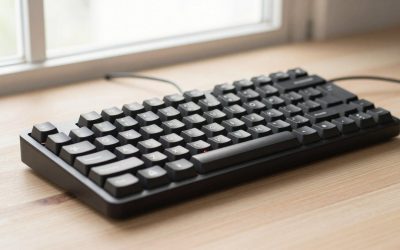
- Top Pick: AULA F75 Pro Wireless Mechanical Keyboard,75% Hot Swappable Custom Keyboard with Knob,RGB Backlit,Pre-lubed Reaper Switches,Side Printed PBT Keycaps,2.4GHz/USB-C/BT5.0 Mechanical Gaming Keyboards
- Best Value: Redragon S101M-KS Gaming Keyboard and Mouse Wireless with Tri-Mode, RGB Keyboard and 4800 DPI Gaming Mouse, 10 Independent Multimedia Keys for Wins, PC, Computer, Wireless S101 Ideal for Gamer
- Premium Choice: KLIM Chroma Wireless Keyboard – RGB Backlit Gaming, Rechargeable Battery, PC Keyboard, Durable & Water-Resistant, Compatible with PS4, PS5 & Mac – Black
Affiliate disclosure: As an Amazon Associate we earn from qualifying purchases. This post contains affiliate links — if you buy through them we may earn a small commission at no extra cost to you. This never affects our recommendations.
As an Amazon Associate we earn from qualifying purchases at no extra cost to you.


In a hurry? See the top-rated Wireless Gaming Keyboard deals available right now:
🛒 Check Wireless Gaming Keyboard Prices on Amazon →🛒 Best Price Today on Amazon
Prime members get fast, free shipping on everything above, plus member-only deals. New members get a 30-day free trial — cancel anytime.
Start 30-Day Prime Free Trial →See Today’s Amazon DealsQuick Picks
| Keyboard | Wireless Tech | Battery | Form Factor | Best For |
|---|---|---|---|---|
| Logitech G915 TKL | 2.4GHz LIGHTSPEED | 40 hrs | TKL | Best Overall |
| Keychron Q3 Max | 2.4GHz + BT 5.1 | 4,000 mAh | TKL | Enthusiasts |
| Razer BlackWidow V3 Pro | 2.4GHz HyperSpeed | 200 hrs | Full-size | Razer Ecosystem |
| SteelSeries Apex Pro TKL Wireless | 2.4GHz | 50 hrs | TKL | Premium/Pro |
| ASUS ROG Strix Scope II 96 Wireless | Tri-mode | 6,000 mAh | 96% | Budget Premium |
2.4GHz vs Bluetooth vs Triple-Mode: Which Wireless Tech for Gaming?
Not all wireless is the same. Understanding the difference before buying saves frustration later.
2.4GHz Dedicated Wireless
This is what every serious gaming keyboard uses. A proprietary USB dongle creates a dedicated radio channel between the keyboard and your PC. Latency sits at 1ms or below — effectively identical to wired in competitive play. Interference is minimal because the protocol prioritizes consistent timing over bandwidth. Logitech LIGHTSPEED, Razer HyperSpeed, and SteelSeries’ 2.4GHz implementation all operate this way.
The trade-off: you need a free USB-A port and the dongle within reasonable range (typically 10 meters). Lose the dongle and you need a replacement.
Bluetooth
Bluetooth 5.0 and 5.1 connections have improved significantly. Under ideal conditions you’re looking at 7–15ms of input lag — imperceptible for casual gaming, but potentially noticeable at 1000+ Hz polling rates where your system expects data every millisecond. Bluetooth shines for multi-device pairing (switch between your PC, tablet, and phone), longer cross-device range, and zero dongle dependency.
For competitive FPS or rhythm games: stick to 2.4GHz. For MMOs, strategy games, or productivity: Bluetooth is fine.
Triple-Mode (2.4GHz + Bluetooth + Wired)
Some keyboards, like the Keychron Q3 Max and ASUS ROG Strix Scope II 96, ship with all three modes. This is the most versatile option. Use 2.4GHz for gaming at your desk, Bluetooth to pair with your laptop on the couch, and plug in via USB-C when battery runs dry mid-session.
Latency Reality: Is Wireless Keyboard Lag Noticeable in Gaming?
Straight answer: with 2.4GHz at 1000 Hz polling, no. The input pipeline bottleneck in most gaming rigs is the display (frame timing at 144–240 Hz) and the game’s own input processing, not the keyboard’s 1ms radio hop.
The Apex Pro TKL Wireless at 8000 Hz polling is arguably overkill for keyboards, but it demonstrates the technology has headroom.
Where wireless latency actually matters: if you’re using Bluetooth on a congested 2.4GHz band (apartments with dozens of WiFi networks), you may experience packet drops. For 2.4GHz gaming dongles operating on 5GHz-adjacent channels with error correction, this is largely a non-issue.
The practical conclusion: buy wireless without guilt if you’re choosing a 2.4GHz model.
Top 5 Picks
1. Logitech G915 TKL — Best Overall
The G915 TKL has held a top slot in the best wireless gaming keyboard category since launch, and the 2026 market hasn’t displaced it. The combination of LIGHTSPEED 2.4GHz wireless, genuinely low-profile GL mechanical switches, and a 40-hour battery in a premium aluminum chassis remains hard to beat at this price tier.

Specs
- Wireless: LIGHTSPEED 2.4GHz (1ms report rate), Bluetooth
- Switches: GL Clicky, GL Tactile, or GL Linear (low-profile)
- Polling Rate: 1000 Hz
- Battery: 40 hours (backlight on), up to 135 hours (backlight off)
- Form Factor: TKL (no numpad)
- Connectivity: USB-C charging, Bluetooth 5.1 secondary
Pros
- LIGHTSPEED is among the fastest wireless protocols available
- Low-profile switches dramatically reduce actuation height — faster finger travel
- Robust aluminum top plate; doesn’t flex under load
- Bluetooth secondary mode for device switching
- LIGHTSYNC RGB is well-implemented without bloating the frame
Cons
- No hot-swap switch support
- Low-profile switches are polarizing — traditional typists may not like the feel
- Premium price for a board without QMK/Via customization
- RGB noticeably reduces battery life (40 hrs vs 135 hrs)
Who It’s For: FPS and competitive gamers who want the lowest wireless latency in a desk-friendly TKL form factor. Also strong for professionals who game and type heavily throughout the day.
2. Keychron Q3 Max — Best for Enthusiasts
Keychron built its reputation on enthusiast-tier keyboards at reasonable prices, and the Q3 Max is the wireless culmination of that effort. It runs QMK and Via firmware natively, supports hot-swap switches (both 3-pin and 5-pin), uses a gasket-mount design for improved typing feel, and connects via 2.4GHz or Bluetooth 5.1. This is the keyboard for someone who treats their peripheral as a hobby as much as a tool.
Specs
- Wireless: 2.4GHz + Bluetooth 5.1 (up to 3 devices) + USB-C wired
- Switches: Hot-swappable, compatible with MX-style switches
- Polling Rate: 1000 Hz (wireless), up to 8000 Hz (wired with firmware)
- Battery: 4,000 mAh (~weeks of use depending on backlight)
- Form Factor: TKL
- Firmware: QMK/Via (full keymap remapping)
Pros
- Hot-swap: swap switches without soldering — critical for switch experimenters
- Gasket mount absorbs typing vibration; sound profile is noticeably softer
- QMK/Via means fully programmable layers, macros, tap-hold, everything
- Solid aluminum CNC construction without the G915’s price premium
- Triple connectivity with reliable 2.4GHz implementation
Cons
- Heavier than the G915 TKL due to aluminum frame and gasket assembly
- QMK configuration has a learning curve for new users
- Battery life varies significantly based on RGB usage
- 2.4GHz latency is good but LIGHTSPEED-class optimized protocols edge it out marginally in consistency
Who It’s For: Mechanical keyboard enthusiasts who want wireless freedom without sacrificing customizability. If you’ve ever described yourself as a “switch collector” or modded a board before, this is your pick.
3. Razer BlackWidow V3 Pro — Best Razer Wireless
Razer’s HyperSpeed 2.4GHz technology matches LIGHTSPEED in tested latency, and the BlackWidow V3 Pro wraps it in a full-size layout with an exceptional 200-hour battery life at modest RGB settings. If you live in the Razer ecosystem — Synapse software, Chroma RGB sync, Razer peripherals — this keyboard integrates seamlessly.

Specs
- Wireless: HyperSpeed 2.4GHz + Bluetooth 5.0
- Switches: Razer Green (clicky), Yellow (linear), or Orange (tactile)
- Polling Rate: 1000 Hz
- Battery: 200 hours (Bluetooth, low backlight); ~10 hours (HyperSpeed, full RGB)
- Form Factor: Full-size (with numpad)
- Media Keys: Dedicated row with volume wheel
Pros
- 200-hour battery headline is achievable on Bluetooth with backlight dimmed
- Razer Green switches remain among the most satisfying clicky switches available
- Full-size layout for users who need the numpad
- Chroma RGB integration across all Razer devices is class-leading
- Dedicated media controls with physical volume dial
Cons
- Full-size footprint is large; takes significant desk real estate
- Razer Synapse software can be resource-heavy
- No hot-swap support
- 200-hour claim is Bluetooth + low RGB — HyperSpeed gaming mode drops this significantly
- Heavier than TKL competitors
Who It’s For: Gamers who use numpads regularly (spreadsheets, MMO keybinds, data entry) and are already invested in the Razer/Chroma ecosystem. Also strong for users who need multi-week battery life on business travel.
4. SteelSeries Apex Pro TKL Wireless — Premium Pick
SteelSeries Apex Pro TKL Wireless
The Apex Pro TKL Wireless is the most technically sophisticated keyboard on this list. Its OmniPoint 2.0 switches feature adjustable actuation distance from 0.1mm to 4.0mm per individual key — meaning you can set WASD to actuate at 0.2mm for maximum speed while setting the spacebar to 3.5mm to prevent accidental presses. The OLED display provides real-time layer and profile readouts. It’s expensive, but no other wireless keyboard offers this level of per-key customization.
Specs
- Wireless: 2.4GHz (Quantum 2.0 Wireless, up to 8000 Hz)
- Switches: Adjustable magnetic OmniPoint 2.0 (0.1–4.0mm actuation)
- Polling Rate: 1000 Hz wireless, 8000 Hz wired
- Battery: 50 hours (1000 Hz), lower at 8000 Hz
- Form Factor: TKL
- Display: OLED smart display for layer/profile info
Pros
- Adjustable actuation per key is genuinely unique and competitively relevant
- 8000 Hz polling wired is the highest available on any keyboard
- OLED display is useful, not gimmicky
- SteelSeries GG software is cleaner than most competitor suites
- Build quality is excellent; plate-mounted switches with solid chassis
Cons
- Most expensive board on this list
- OmniPoint switches have a different feel from traditional mechanicals — not universally loved
- No hot-swap (the OmniPoint design is proprietary)
- 8000 Hz polling only available wired; wireless maxes at 1000 Hz
- OLED display adds weight and a potential failure point
Who It’s For: Competitive FPS players who want every hardware advantage and are willing to pay for adjustable actuation. Esports-adjacent users who will actually tune per-key actuation distances.
5. ASUS ROG Strix Scope II 96 Wireless — Budget Premium
ASUS ROG Strix Scope II 96 Wireless
At the ~$130 price point, the ROG Strix Scope II 96 punches above its class. The 96% layout keeps the numpad while eliminating the gap between the main cluster and arrow keys — you get a compact footprint without losing keys. Tri-mode connectivity (2.4GHz, Bluetooth, USB-C) and hot-swap support complete a spec sheet that rivals boards $50 more expensive.

Specs
- Wireless: 2.4GHz + Bluetooth 5.0 + USB-C wired (tri-mode)
- Switches: Hot-swappable, ships with ROG NX Red or NX Snow linear switches
- Polling Rate: 1000 Hz
- Battery: 6,000 mAh (rated ~2,200 hours at no backlight; realistic gaming: ~100 hours)
- Form Factor: 96% (numpad retained, condensed layout)
- Software: ASUS Armoury Crate
Pros
- Excellent value — hot-swap + tri-mode under $130 is rare
- 96% layout is genuinely useful for users who need numpad
- 6,000 mAh battery is massive; longest real-world runtime on this list
- Hot-swap means you’re not locked into ROG NX switches
- Solid build quality for the price tier
Cons
- ASUS Armoury Crate software is the weakest in this roundup — slow and occasionally buggy
- 2.4GHz implementation is functional but not as finely tuned as LIGHTSPEED or HyperSpeed
- 96% layout requires relearning key positions from full-size or TKL muscle memory
- Slightly higher actuation force on NX Red vs other linear options
Who It’s For: Budget-conscious buyers who want hot-swap and tri-mode wireless without spending $170+. Solid first enthusiast keyboard, or a secondary board for travel/couch use.
Comparison Table
| Feature | G915 TKL | Q3 Max | BlackWidow V3 Pro | Apex Pro TKL | ROG Scope II 96 |
|---|---|---|---|---|---|
| Wireless Protocol | LIGHTSPEED 2.4GHz | 2.4GHz + BT 5.1 | HyperSpeed 2.4GHz | Quantum 2.0 2.4GHz | 2.4GHz + BT 5.0 |
| Form Factor | TKL | TKL | Full-size | TKL | 96% |
| Hot-Swap | No | Yes | No | No | Yes |
| Battery Life | 40 hrs (backlit) | 4,000 mAh | 200 hrs (BT low) | 50 hrs | 6,000 mAh |
| Polling Rate | 1000 Hz | 1000 Hz (wireless) | 1000 Hz | 1000 Hz (wireless) | 1000 Hz |
| QMK/Via | No | Yes | No | No | No |
| Adjustable Actuation | No | No | No | Yes | No |
| Approx. Price | ~$180 | ~$170 | ~$160 | ~$210 | ~$130 |
What to Look For in a Wireless Gaming Keyboard
Battery Life
Ignore the headline number — it’s always measured with backlighting off. In real gaming use with moderate RGB, divide manufacturer claims by 3–5. The G915 TKL’s 40-hour spec is actually ~12–15 hours with typical RGB settings. The ROG Scope II 96’s 6,000 mAh cell gives it a genuine multi-week advantage in daily use. A USB-C charging port (now standard) means you can top up from any modern charger.
Polling Rate
For keyboards, 1000 Hz (1ms report rate) is sufficient for all competitive gaming. The 8000 Hz spec on the Apex Pro matters more for mice, where 8000 Hz polling reduces micro-stutter on fast flick movements. Keyboard inputs are inherently limited by human finger actuation speed — spending money on polling rate above 1000 Hz for a keyboard is low-priority.
Switch Type
- Linear (Red, Speed Silver): Smooth travel, no tactile bump. Preferred for gaming. Faster actuation at lower force.
- Tactile (Brown, Orange): Physical bump at actuation point. Good balance of gaming and typing feedback.
- Clicky (Blue, Green): Audible click + tactile bump. Best typing feel; potentially disruptive in shared spaces.
Hot-swap capability (Q3 Max, ROG Scope II 96) means you’re not locked in at purchase — swap switches as your preference evolves.
Form Factor
- Full-size: All keys including numpad. Largest footprint. Best if you use numpad daily.
- TKL (Tenkeyless): Removes numpad. More mouse room. Most popular gaming layout.
- 96%: Keeps numpad in a compressed layout. Niche but practical.
- 75% and below: Maximum compactness, steeper learning curve.
Build Quality and Typing Feel
Gasket-mount designs (Q3 Max) add a layer of foam or rubber between the PCB and case, reducing typing noise and vibration. Plate-mounted boards (G915 TKL, Apex Pro) are more rigid — preferred by users who want a firmer feel. Neither is objectively better; it’s preference.
Verdict
The Logitech G915 TKL is the best wireless gaming keyboard for most people. LIGHTSPEED delivers wired-equivalent latency, the low-profile GL switches are genuinely fast to actuate, and the aluminum chassis feels premium without excess bulk. It does everything a competitive gamer needs without requiring firmware knowledge or peripheral ecosystem lock-in.
Step up to the Keychron Q3 Max if hot-swap and QMK matter to you. Step up to the Apex Pro TKL Wireless if adjustable actuation is worth the premium. Drop to the ROG Strix Scope II 96 if budget is the deciding factor and you want hot-swap without the Keychron price.
Wireless is no longer a compromise. Any 2.4GHz board on this list will outperform a cheap wired keyboard in consistency and feel — the technology is mature, and the gap between wireless and wired is now a marketing conversation, not a performance one.
Frequently Asked Questions
Do wireless gaming keyboards have input lag?
Modern 2.4GHz wireless gaming keyboards have very low latency, effectively imperceptible for gaming. Bluetooth has more delay, so dedicated gaming models include a 2.4GHz dongle.
How long does a wireless gaming keyboard battery last?
It ranges from days to weeks per charge, depending heavily on RGB lighting use. Turning the lighting down or off greatly extends battery life, and most charge over USB-C while in use.
Bluetooth or 2.4GHz for a wireless gaming keyboard?
Use 2.4GHz for gaming due to its low latency. Bluetooth is handy for connecting to laptops, tablets, and phones. The best keyboards offer both plus a wired mode.
Are wireless gaming keyboards good for competitive play?
Yes. A 2.4GHz wireless keyboard delivers latency on par with wired, so competitive players can use one without a penalty, gaining a cleaner, cable-free desk.
Related Articles
Looking for more on this topic? Browse the hand-picked guides below — each one applies the same scoring rubric used in this review.