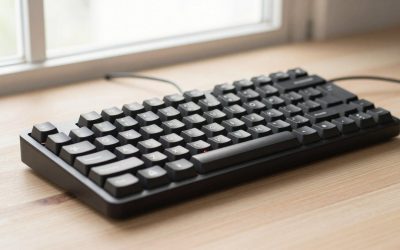
- Top Pick: ASUS ROG Strix Scope II X Wired USB Mechanical Gaming Keyboard – 100% Full-Size, Hot Swappable Pre-lubed ROG NX Snow V2 Linear Switches, PBT Keycaps, RGB, PC/Mac Support – Black
- Best Value: Logitech G515 Lightspeed TKL Wireless Gaming Keyboard (Linear) – Black
- Premium Choice: Razer Huntsman Mini 60% Gaming Keyboard, Linear Optical Switches, Black
Affiliate disclosure: As an Amazon Associate we earn from qualifying purchases. This post contains affiliate links — if you buy through them we may earn a small commission at no extra cost to you. This never affects our recommendations.
- Best Gaming Keyboard with Linear Switches in 2026: Top 5 Smooth-Stroke Picks
- Quick Comparison: Top 5 Linear Switch Gaming Keyboards
- Why Linear Switches Dominate FPS Gaming
- The 5 Best Gaming Keyboards with Linear Switches
- Linear Switch Comparison: Which Switch Is Best for Gaming?
- Actuation Force Guide: 35g vs 45g vs 62g for Gaming
- Speed Switches: Are 1.0mm Actuation Switches Worth It?
- Lubed vs Stock Linears: The Custom Keyboard Rabbit Hole
- Conclusion: Which Linear Keyboard Should You Buy?
- Related Articles
- Frequently Asked Questions
- Related Articles
As an Amazon Associate we earn from qualifying purchases at no extra cost to you.




In a hurry? See the top-rated Gaming Keyboard with Linear Switches deals available right now:
🛒 Check Gaming Keyboard With Linear Switches Prices on Amazon →🛒 Best Price Today on Amazon
Prime members get fast, free shipping on everything above, plus member-only deals. New members get a 30-day free trial — cancel anytime.
Start 30-Day Prime Free Trial →See Today’s Amazon DealsBest Gaming Keyboard with Linear Switches in 2026: Top 5 Smooth-Stroke Picks
Linear switches have become the default choice for serious gamers — and for good reason. No tactile bump, no audible click, just a clean, uninterrupted press from top to bottom. In fast-paced FPS titles where you’re spamming WASD dozens of times per second, that smoothness translates directly into faster input and less finger fatigue over a long session.
This guide covers the five best gaming keyboards with linear switches available in 2026. Whether you’re looking for the lightest possible actuation, a plug-and-play hot-swap board, or a custom-ready gasket-mount chassis, there’s a pick here for you.
Quick Comparison: Top 5 Linear Switch Gaming Keyboards
| Keyboard | Switch | Actuation | Bottom Out | Hot-Swap |
|---|---|---|---|---|
| SteelSeries Apex Pro | OmniPoint 2.0 | 0.1–4.0mm (adj.) | 4.0mm | No |
| Razer BlackWidow V4 Pro | Razer Yellow | 1.2mm | 4.0mm | No |
| Logitech G Pro X TKL | GX Red | 2.0mm | 4.0mm | Yes |
| Ducky One 3 | Cherry MX Red | 2.0mm | 4.0mm | No |
| Keychron Q1 Pro | Gateron Jupiter Red | 2.0mm | 4.0mm | Yes |
Why Linear Switches Dominate FPS Gaming
The argument for linears in competitive gaming is mechanical, not just preference. Tactile switches — Browns, Clears, anything with a bump — create a small point of resistance partway through the keystroke. For typing, that feedback helps you know when a character has registered. For gaming, it’s noise: a tiny interruption that can throw off rapid, rhythmic inputs.
Linear switches eliminate that bump entirely. The resistance curve is smooth and consistent from the top of the stroke to the bottom. When you’re stutter-stepping in a tactical shooter or holding down sprint for minutes at a time, that consistency matters.
The actuation force spectrum:
- 35g — feather-light, used in some speed-focused custom builds; high misfire risk for gamers with heavy hands
- 45g — the sweet spot; light enough for fast actuation, firm enough to avoid accidental presses
- 50g+ — approaching tactile territory in feel; better for typists who also game
Most of the best gaming keyboard linear switches options on the market cluster around 45g for exactly this reason. It’s the mass-market standard that works for the widest range of hand sizes and play styles.
The 5 Best Gaming Keyboards with Linear Switches
SteelSeries Apex Pro — Best Adjustable Linear
The Apex Pro is the most technically interesting keyboard on this list. SteelSeries’ OmniPoint 2.0 switches use hall-effect magnetic technology rather than physical contact, which eliminates debounce delay entirely. You can dial actuation anywhere from 0.1mm to 4.0mm per key — individually.
Switch specs:
- Switch: OmniPoint 2.0 (hall effect magnetic)
- Actuation point: 0.1–4.0mm, adjustable per key
- Actuation force: ~45g equivalent
- Total travel: 4.0mm
- Hot-swap: No
- Sound profile: Standard linear — moderate noise at bottom-out
The real-world advantage of hall effect here is responsiveness at extremely shallow actuation depths. Set it to 0.2mm and the key registers almost on contact. Set WASD to 0.5mm and your binds to 1.5mm to reduce misfires — most players land somewhere in between after a week of testing.
The Apex Pro is a full-size board with a premium aluminum frame. Build quality is exceptional. The OLED display and per-key RGB are extras that justify some of the price premium. If you want the absolute fastest, most configurable linear keyboard money can buy, this is it.
Best for: Competitive FPS players who want a mechanical edge and don’t mind spending for it.
Razer BlackWidow V4 Pro — Best Razer Linear
Razer’s Yellow switch is one of the most underrated linears in the gaming market. It’s completely clicky-free, smoother than the company’s Green and Orange options, and at 45g actuation force, it sits perfectly in the gaming sweet spot.
Switch specs:
- Switch: Razer Yellow (linear)
- Actuation point: 1.2mm
- Actuation force: 45g
- Total travel: 4.0mm
- Hot-swap: No
- Sound profile: Quiet for a non-silenced linear; minimal spring ping
At 1.2mm actuation, the Yellow sits between a standard linear (2.0mm) and a speed switch (1.0mm). You get most of the speed advantage without the hair-trigger sensitivity that makes speed switches frustrating for longer gaming sessions.

The BlackWidow V4 Pro is a full-size wireless board with Razer HyperSpeed 2.4GHz connectivity. Latency is negligible in practice — you won’t feel a difference from wired at the polling rates this keyboard supports. The magnetic wrist rest, multi-function dial, and macro keys round out a feature-rich package.
The one knock: no hot-swap. If you want to try different linears later, you’re stuck with what ships in the box. For most gamers that’s not a problem — Razer Yellow is good enough to live with permanently.
Best for: Razer ecosystem users and anyone who wants a fast linear with wireless freedom.
Logitech G Pro X TKL — Best Logitech Linear for Gaming
The G Pro X TKL is the tournament-standard compact linear keyboard. Tenkeyless format removes the numpad, shrinking the footprint so your mouse hand sits closer to center — a real ergonomic advantage in low-sensitivity FPS play.
Switch specs:
- Switch: GX Red (linear)
- Actuation point: 2.0mm
- Actuation force: 45g
- Total travel: 4.0mm
- Hot-swap: Yes
- Sound profile: Standard linear, moderate bottom-out thock
GX Red is a solid house-brand linear. It’s not the smoothest switch on this list — that distinction goes to the factory-lubed Gateron Jupiter — but it’s consistent, durable, and proven across millions of gaming hours. The 2.0mm standard actuation means you won’t misfire on accidental brushes.
Hot-swap support is a major differentiator at this price point. Logitech’s hot-swap socket is compatible with GX switches exclusively, which is more limiting than true 3-pin/5-pin universal hot-swap, but it means you can buy GX Speed switches separately and swap them in for a faster actuation profile without soldering.
The G Pro X TKL has a steel backplate, detachable USB-C cable, and a clean aesthetic that fits any desk setup. It’s the keyboard a lot of pro players have used, and the TKL format is the overwhelming favorite for travel and tournament bags.
Best for: FPS players who want a compact, proven board with hot-swap flexibility.
Ducky One 3 — Best Classic Linear Build
Ducky has been building enthusiast-grade keyboards longer than most gaming brands have existed. The One 3 is their mainstream flagship, and it ships with Cherry MX Red — the switch that defined “gaming linear” for an entire generation of keyboards.
Switch specs:
- Switch: Cherry MX Red
- Actuation point: 2.0mm
- Actuation force: 45g
- Total travel: 4.0mm
- Hot-swap: No
- Sound profile: Standard linear; Cherry’s characteristic clean, slightly hollow bottom-out
Cherry MX Red is not the smoothest linear available in 2026. Gateron Reds, Gateron Jupiter Reds, and Boba U4T variants all beat it on raw smoothness out of the box. What Cherry offers is reliability and consistency. These switches are manufactured to tight tolerances and have been tested across billions of keystrokes. You know exactly what you’re getting.
The One 3’s real strengths are its keycaps and build quality. Dye-sublimated PBT keycaps are thicker, more durable, and better-sounding than the ABS caps on most gaming boards. They won’t shine up after six months of heavy use. The aluminum top case and solid internal mounting keep flex and wobble to a minimum.
Available in full-size, TKL, 75%, and 65% layouts with a range of colorways. If you want a keyboard that’s built to last and looks like it belongs on a desk rather than a gaming product catalog, the One 3 is the call.

Best for: Gamers who want a clean, durable daily driver with proven switches and premium keycaps.
Keychron Q1 Pro — Best Custom-Feel Linear
The Q1 Pro is the gateway drug to the custom keyboard hobby, and it ships with some of the best stock linears available anywhere near its price point.
Switch specs:
- Switch: Gateron Jupiter Red (factory lubed)
- Actuation point: 2.0mm
- Actuation force: 35g (lighter than standard)
- Total travel: 4.0mm
- Hot-swap: Yes (5-pin, universal)
- Sound profile: Deep, dampened thock — the quietest standard linear on this list
Gateron Jupiter Red is factory lubed, which means Keychron applies a thin layer of lubricant during manufacturing. The difference is immediately audible and tactile: smoother travel, less spring noise, more consistent feel across all 87 keys. Most keyboards in this guide ship with dry switches. The Q1 Pro does not.
The gasket-mount chassis is the other major differentiator. Instead of the switch plate sitting rigidly on the case, gaskets made of silicone absorb the energy of each keystroke, giving the board a slight flex that many typists and gamers find more satisfying and less fatiguing. Combined with the south-facing RGB and QMK/VIA compatibility, the Q1 Pro is fully programmable down to the keycode level.
At 35g actuation, the Jupiter Red is notably lighter than the 45g switches on most of this list. For gamers with a lighter touch this is an advantage — less travel, less effort. For heavy-handed users it can lead to accidental activations until muscle memory adjusts.
Best for: Enthusiasts who want a custom-keyboard experience without building one from scratch, and gamers who will appreciate QMK programmability.
Linear Switch Comparison: Which Switch Is Best for Gaming?
Not all linears are equal. Here’s how the major options stack up:
Cherry MX Red — The original gaming linear. Consistent, durable, well-supported. Slightly scratchy compared to newer options without lubing.
Razer Yellow — One of the smoothest OEM linears available. 1.2mm actuation is a real speed advantage over standard 2.0mm Reds. Exclusive to Razer boards.
GX Red (Logitech) — Reliable and consistent. Not as smooth as Gateron but durable and well-tested for gaming workloads.
Gateron Red / Jupiter Red — Widely considered the smoothest budget linear. Factory lube on the Jupiter version makes it competitive with expensive custom linears. Loose tolerances relative to Cherry but this actually contributes to smoothness.
Speed switches (Cherry MX Speed Silver, Gateron Yellow) — 1.0–1.2mm actuation, reduced total travel. More on these below.
Actuation Force Guide: 35g vs 45g vs 62g for Gaming
Actuation force is the weight required to push a switch past its actuation point and register a keystroke.
35g — Feather-light. The Gateron Jupiter Red on the Q1 Pro sits here. Fast and effortless, but gamers who bottom out hard every keystroke may experience more accidental inputs during tense moments. Best for controlled, deliberate typists.

45g — The gaming standard. Cherry MX Red, Razer Yellow, GX Red — they all land at 45g. Enough resistance to prevent most misfires, light enough for rapid repeated inputs over hours of play.
62g+ — Found in heavier linears like Gateron Black or some Topre boards. Not common in mainstream gaming keyboards. Better suited to heavy-handed typists who game than dedicated FPS players.
For most gamers, 45g is the correct answer. The smoothness difference between 35g and 45g is minimal in practice, but the reduced misfire rate at 45g makes for a more consistent experience in competitive play.
Speed Switches: Are 1.0mm Actuation Switches Worth It?
Speed switches like Cherry MX Speed Silver (1.2mm) and Gateron Yellow (1.5mm) promise faster registration through reduced pre-travel. In theory, less distance to actuation means faster input. In practice, the benefit is measurable in milliseconds — well below human perception.
What speed switches actually change is feel. With 1.0–1.2mm pre-travel, the difference between resting your fingers on keys and registering a keypress narrows dramatically. This means accidental actuation becomes a genuine issue, especially during high-tension gaming where finger pressure naturally increases.
Experienced competitive gamers with precise control and lighter finger placement will adapt to speed switches and see real benefit. Casual and mid-level gamers tend to find them frustrating after the novelty wears off.
Verdict: Speed switches are worth trying if you already game well with standard linears and want marginal gains. They’re not worth the adjustment period if you’re still building muscle memory.
Lubed vs Stock Linears: The Custom Keyboard Rabbit Hole
Every switch on this list ships “stock” (dry, from the factory) except the Keychron Q1 Pro’s Gateron Jupiter Red, which comes factory lubed.
Lubing a linear switch involves removing each switch, opening the housing, and applying a thin layer of PTFE-based lubricant (typically Krytox 205g0 or Tribosys 3203) to the stem and housing rails. The result is a noticeably smoother keystroke, reduced spring noise, and a more satisfying sound profile.
A 65-key lube job takes most people 3–5 hours their first time. The improvement is significant enough that most enthusiasts consider it non-optional. If that sounds like too much commitment, buy the Q1 Pro — the factory lube gets you 70–80% of the way there for zero extra effort.
If you go down the custom road, the switch order of preference for lubing is: Cherry MX Red (biggest improvement), GX Red (medium improvement), Razer Yellow (already decent stock, lube pushes it further), Gateron Red (already smooth, diminishing returns).
Conclusion: Which Linear Keyboard Should You Buy?
For most competitive gamers, the Logitech G Pro X TKL is the best overall value — proven switches, hot-swap support, compact TKL format, and a price that doesn’t require a justification conversation. The SteelSeries Apex Pro is the pick if you want maximum configurability and are willing to pay for it.
If you’re in the Razer ecosystem, the BlackWidow V4 Pro with Yellow switches is genuinely excellent and underappreciated. For a typing-first board that also games well, the Ducky One 3 is the standard. And if you’re curious about the custom keyboard hobby, the Keychron Q1 Pro gives you a gasket-mount, QMK-programmable, factory-lubed experience that most enthusiast builds cost twice as much to achieve.
The best gaming keyboard with linear switches is the one that fits your layout preference, hand size, and the weight of your gaming sessions. Start with 45g, try standard actuation before speed switches, and don’t overlook hot-swap — you’ll probably want to experiment eventually.
Suggested Images
- Hero: Side-by-side of all five keyboards on a gaming desk
- Switch comparison: Macro shot of Cherry MX Red, Razer Yellow, GX Red, Gateron Jupiter Red stem cross-sections
- Actuation diagram: Force curve comparison chart (35g vs 45g linear profiles)
- G Pro X TKL: Hot-swap socket close-up
- Keychron Q1 Pro: Gasket mount exploded view
- Lubing section: Flat lay of switch opener, lubricant, brush, stems
Related Articles
Looking for more on this topic? Browse the hand-picked guides below — each one applies the same scoring rubric used in this review.
Frequently Asked Questions
What is the best gaming keyboard linear switches in 2026?
The best gaming keyboard linear switches depends on your budget and how you plan to use it. The options compared above are our top-rated picks based on real customer ratings, build quality, and overall value — start with the highest-rated model that fits your budget.
How much should I expect to spend on a gaming keyboard linear switches?
Prices vary by brand and features. Budget options cover the essentials, while mid-range and premium models add durability, performance, and extra features. Compare the prices in the list above to find the best value for your needs.
What should I look for when buying a gaming keyboard linear switches?
Focus on what matters most for your use case — build quality, compatibility, performance, warranty, and verified customer reviews. Every pick above is selected to balance these factors.
Are budget gaming keyboard linear switches options worth it?
Yes. For most people a well-reviewed budget or mid-range gaming keyboard linear switches delivers excellent value. You only need to spend more if you specifically require premium materials or top-tier performance.
How did we choose these gaming keyboard linear switches picks?
We compare current Amazon ratings, review counts, key features, and price to surface the options with the best real-world value. The list is refreshed as ratings and availability change.