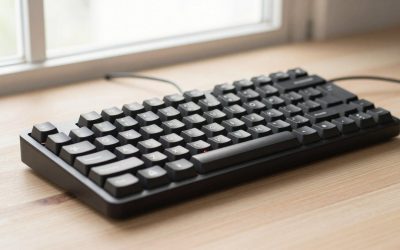
- Top Pick: ASUS ROG Strix Scope II X Wired USB Mechanical Gaming Keyboard – 100% Full-Size, Hot Swappable Pre-lubed ROG NX Snow V2 Linear Switches, PBT Keycaps, RGB, PC/Mac Support – Black
- Best Value: Redragon Mechanical Gaming Keyboard Wired, 11 Programmable Backlit Modes, Hot-Swappable Red Switch, Anti-Ghosting, Double-Shot PBT Keycaps, Light Up Keyboard for PC Mac
- Premium Choice: TMKB 60% Mechanical Gaming Keyboard, Red Linear Switch, Wired, White
Affiliate disclosure: As an Amazon Associate we earn from qualifying purchases. This post contains affiliate links — if you buy through them we may earn a small commission at no extra cost to you. This never affects our recommendations.
As an Amazon Associate we earn from qualifying purchases at no extra cost to you.


Linear switches are the gold standard for competitive gaming — smooth travel, zero tactile bump, and fast actuation that lets you press and release faster than any other switch type. But with Hall Effect technology, analog optical sensors, and polling rates hitting 8000Hz now commonplace, choosing the best linear switch gaming keyboard in 2026 is more nuanced than ever.
We compared the top five contenders across real-world FPS sessions, typing endurance runs, and latency benchmarks. Whether you need the tightest rapid-trigger response, the most premium feel, or the best value, there is an option here for you.
In a hurry? See the top-rated Linear Switch Gaming Keyboard deals available right now:
🛒 Check Linear Switch Gaming Keyboard Prices on Amazon →🛒 Best Price Today on Amazon
Prime members get fast, free shipping on everything above, plus member-only deals. New members get a 30-day free trial — cancel anytime.
Start 30-Day Prime Free Trial →See Today’s Amazon DealsQuick Comparison Table
| Keyboard | Switch | Actuation Force | Polling Rate |
|---|---|---|---|
| Logitech G Pro X TKL | GX Red Linear | 45g | 8000Hz |
| Razer Huntsman V3 Pro TKL | Razer Analog Optical | 45g | 8000Hz |
| SteelSeries Apex Pro TKL | OmniPoint Hall Effect | 10–100g (adjustable) | 8000Hz |
| Corsair K70 RGB Pro | Cherry MX Red | 45g | 1000Hz |
| Wooting 60HE+ | Lekker Hall Effect | ~45g effective | 8000Hz |
The 5 Best Linear Switch Gaming Keyboards in 2026
1. Logitech G Pro X TKL (2026 Edition)
Logitech G Pro X TKL
The G Pro X TKL has been a staple on pro gaming desks for years, and the 2026 edition ups the ante with an upgraded hot-swap socket and full 8000Hz polling support out of the box. Logitech built this keyboard around the competitive player — compact TKL form factor, tournament-proven build quality, and the buttery smooth GX Red linear switch that has earned trust at the highest levels of esports.
Specs Overview
- Switch: GX Red Linear (hot-swappable)
- Actuation Force: 45g
- Pre-Travel: 1.9mm
- Total Travel: 4.0mm
- Polling Rate: 8000Hz
- Form Factor: Tenkeyless (TKL)
- Connectivity: Wired USB-C
- RGB: Per-key, LIGHTSYNC compatible
- Weight: 980g
The GX Red is Logitech’s in-house linear switch, designed with a tighter manufacturing tolerance than most Cherry clones. The result is a switch that feels noticeably smoother out of the box without any lubing required. Hot-swap support means you can swap to GX Speed or GX Yellow switches in minutes if you want a lighter or faster feel.
The 8000Hz polling rate is a genuine competitive upgrade — input lag drops to sub-0.125ms per report cycle, which is measurably faster in games with tight registration windows like Valorant and CS2.
Pros:
- Genuinely smooth GX Red switch with no factory wobble
- Hot-swap sockets accept most MX-style switches
- 8000Hz polling is now standard on this model
- Compact TKL layout used by pro players globally
- Solid, dense build with minimal flex
Cons:
- No rapid trigger / analog actuation point adjustment
- Wired only — no wireless option
- Per-key RGB is bright but software (G HUB) can be bloated
- Premium price for what is still a traditional digital switch
Who It’s For: Competitive FPS players who want a proven, trusted linear switch with hot-swap flexibility and maximum polling rate — without the learning curve of analog or Hall Effect keyboards.
2. Razer Huntsman V3 Pro TKL
The Huntsman V3 Pro TKL is Razer’s most ambitious keyboard to date, and it earns its flagship price tag with a feature set that no mechanical switch can match. The Razer Analog Optical switch reads keystroke depth as a continuous value — not just pressed or not pressed — unlocking analog input modes and sub-0.1mm rapid trigger resolution.
Specs Overview
- Switch: Razer Analog Optical Linear
- Actuation Force: 45g
- Actuation Point: Adjustable 0.1mm–4.0mm
- Rapid Trigger Resolution: 0.1mm
- Polling Rate: 8000Hz
- Form Factor: Tenkeyless (TKL)
- Connectivity: Wired USB-C with magnetic detach
- RGB: Per-key Chroma RGB
- Weight: 826g
The optical actuation means there is no physical contact point wearing down over time — the beam passes through the switch stem at whatever depth you configure. At 0.1mm rapid trigger resolution, the keyboard re-arms after just a fraction of a millimeter of upward movement, letting you spam keys at speeds that mechanical switches physically cannot match.
Analog mode is where the V3 Pro separates itself entirely: games that support analog input (mapped to controller axis) can use keystroke depth to control movement speed — walk at 30% depth, sprint at 100%. This is still niche in 2026, but for supported titles it is a genuinely different way to play.

Pros:
- 0.1mm rapid trigger resolution — best in class
- Analog input mode for compatible games
- Exceptionally smooth optical linear action
- Magnetic-detach USB-C cable is premium detail
- 8000Hz polling with Razer HyperPolling
Cons:
- Most expensive keyboard on this list
- Analog mode requires per-game setup and is not universally supported
- Razer Synapse software is heavyweight
- Optical switches cannot be swapped for standard MX switches
- Some users find the linear feel slightly lighter than expected
Who It’s For: Tech-forward competitive players who want the absolute bleeding edge in actuation technology — and are willing to pay for the most configurable, fastest-responding linear switch keyboard available.
3. SteelSeries Apex Pro TKL (2026)
SteelSeries Apex Pro TKL
The Apex Pro TKL pioneered per-key adjustable actuation and it remains the most versatile keyboard on this list. The OmniPoint Hall Effect magnetic switch reads position without physical contact, and the 2026 revision ships with 8000Hz polling and improved rapid trigger down to 0.1mm — matching Razer’s optical solution while using a completely different sensor technology.
Specs Overview
- Switch: OmniPoint 2.0 Hall Effect Magnetic
- Actuation Force: Variable — approximately 45g at default 1.8mm setting
- Actuation Point: Adjustable 0.1mm–4.0mm per key
- Rapid Trigger Resolution: 0.1mm
- Polling Rate: 8000Hz
- Form Factor: Tenkeyless (TKL)
- Connectivity: Wired USB-C
- RGB: Per-key RGB with OLED widget display
- Weight: 890g
Hall Effect switches use a magnet and sensor rather than a leaf spring contact, meaning zero wear on the actuation mechanism over the keyboard’s lifespan. The ability to set each key to a different actuation point is genuinely useful: set WASD to 0.2mm for hair-trigger response, and set accidental-press-prone keys like Caps Lock to 3.5mm to prevent misfires.
The OLED display on the top-right corner is a minor luxury — it shows GIF animations, system stats, or Discord notifications — but it is a SteelSeries signature detail that adds character.
Pros:
- Per-key actuation adjustment from 0.1mm to 4.0mm
- Hall Effect means theoretically unlimited switch lifespan
- 0.1mm rapid trigger keeps pace with Razer’s optical
- OLED display is a fun differentiator
- Excellent SteelSeries GG software (lighter than competitors)
Cons:
- OmniPoint switches have a slightly different feel than traditional linears — some users miss the familiar MX travel character
- OLED display adds cost without competitive benefit
- Build feels slightly less premium than Razer or Wooting at this price
- No hot-swap for alternative switch styles
Who It’s For: Players who want maximum customizability — including the ability to tune every key’s actuation depth individually — and value Hall Effect durability over the feel of a traditional linear switch.
4. Corsair K70 RGB Pro
The Corsair K70 RGB Pro is the traditionalist’s pick. Cherry MX Red switches, a full-size aluminum frame, and 1000Hz polling — nothing exotic, nothing experimental. What you get instead is the most dependable, universally compatible linear keyboard on this list, with Cherry’s legendary switch longevity and the satisfying weight of an aluminum-top chassis that feels like it will outlast every other option here.
Specs Overview
- Switch: Cherry MX Red Linear
- Actuation Force: 45g
- Pre-Travel: 2.0mm
- Total Travel: 4.0mm
- Polling Rate: 1000Hz
- Form Factor: Full-size (100%)
- Connectivity: Wired USB-A (braided cable)
- RGB: Per-key dynamic RGB
- Weight: 1100g
Cherry MX Red switches are the reference point for linear gaming switches — 45g actuation, 2.0mm pre-travel, smooth enough from the factory, and rated for 100 million keypresses. They are not the smoothest switches in 2026 (that title goes to higher-end options), and 1000Hz polling is clearly behind the 8000Hz competition. But Cherry’s consistency is unmatched: every switch in this keyboard feels identical, which is harder to achieve than it sounds at scale.
The full-size layout is a deliberate choice for players who need the numpad — content creators, MMO players, or sim racers who use numpad macros. It is also the cheapest keyboard on this list by a meaningful margin.

Pros:
- Cherry MX Red is the most proven linear switch in gaming history
- Full-size layout with numpad for players who need it
- Heavy aluminum top plate eliminates any flex or rattle
- Most affordable option on this list
- No driver required — plug and play at 1000Hz
Cons:
- 1000Hz polling is a significant step behind 8000Hz competition
- No rapid trigger, no analog, no adjustable actuation
- No hot-swap support
- Heavier and larger footprint than TKL options
- iCUE software can be resource-intensive
Who It’s For: Players who want a reliable, no-nonsense full-size linear switch keyboard with a premium build and proven Cherry MX Red switches — without paying for advanced features they will never use.
5. Wooting 60HE+
Wooting 60HE+
The Wooting 60HE+ is the keyboard that forced every other manufacturer to take Hall Effect seriously. A small Dutch company built what is arguably the best rapid trigger implementation available, wrapped it in a 60% form factor, and kept the price competitive. The Lekker switch is smooth, the Wooting software is the most transparent and granular on this list, and the community around this keyboard is obsessive in the best way.
Specs Overview
- Switch: Lekker Hall Effect Linear (Wooting proprietary)
- Actuation Force: ~45g effective at 1.5mm default
- Actuation Point: Adjustable 0.1mm–4.0mm
- Rapid Trigger Resolution: 0.1mm
- Polling Rate: 8000Hz
- Form Factor: 60%
- Connectivity: Wired USB-C
- RGB: Per-key RGB
- Weight: 625g
The Lekker switch is Wooting’s own Hall Effect design, and it feels distinctly different from OmniPoint — slightly heavier in the upper portion of travel with a smoother, more damped bottom-out. Many users describe it as the most satisfying Hall Effect switch for extended typing, which matters for players who use their gaming keyboard for work too.
Rapid trigger at 0.1mm resolution means the key re-arms after barely any upward movement — enabling counter-strafe techniques in CS2 and Valorant that are genuinely faster than what mechanical switches allow. Wooting’s software lets you see your actuation waveform in real time, set per-key profiles, and even configure dynamic actuation that shifts based on game state.
The 60% layout is the main trade-off — no function row, no numpad, no arrow keys without a function layer. For dedicated gaming this is rarely an issue, but users who need a do-everything keyboard should look elsewhere.
Pros:
- Best-in-class rapid trigger implementation and software transparency
- Lekker switch is smooth with excellent tactile bottom-out feel
- 8000Hz polling and 0.1mm actuation resolution
- Compact 60% footprint — fits any desk setup
- Wooting’s open development and firmware updates are community-trusted
- Competitive price for Hall Effect technology
Cons:
- 60% layout removes function row and arrow keys
- Smaller company — support and availability less reliable than Corsair or Logitech
- No wireless option
- The unique Lekker switch cannot be replaced with standard MX switches
- Takes adjustment if coming from a standard layout
Who It’s For: Hardcore competitive players — particularly CS2 and Valorant mains — who want the most refined rapid trigger experience available and are comfortable with a 60% layout.
How to Choose the Best Linear Switch Gaming Keyboard
Switch Technology: Traditional vs Hall Effect vs Optical
Traditional mechanical linear switches (Cherry MX Red, GX Red) use a spring and leaf contact. They are proven, tactile in a familiar way, and widely compatible — but have a fixed actuation point and wear over time. Choose these if you want predictability and the classic mechanical feel.
Hall Effect switches (OmniPoint, Lekker) use magnetic sensing and never wear out. More importantly, they enable rapid trigger and adjustable actuation. In 2026, Hall Effect is the competitive standard for serious players. The trade-off is a slightly different feel that takes a session or two to get used to.

Analog optical switches (Razer) use a light beam for contactless sensing and add true analog input capability on top of rapid trigger. The finest resolution available, at the highest price.
Rapid Trigger: Do You Actually Need It?
Rapid trigger re-arms the key after a configured minimum upward movement rather than waiting for full key release. In practice, this means:
- CS2 / Valorant: Faster counter-strafes — the key re-arms while your finger is still moving, shaving frames off stop-to-shoot timing
- Osu! / rhythm games: Faster note input without waiting for full travel reset
- General gaming: Marginal benefit in most titles outside of competitive shooters
If you play competitive FPS games at any level above casual, rapid trigger is worth having. For RPGs, MMOs, or single-player games, it makes almost no measurable difference.
Polling Rate: 1000Hz vs 8000Hz
At 1000Hz, the keyboard sends input data 1,000 times per second (1ms intervals). At 8000Hz, it sends 8,000 times per second (0.125ms intervals). In blind tests, most players cannot perceive the difference — but at framerates above 240fps, the lower interval can align better with frame timing and reduce the occasional input-felt-late sensation. If you are playing at 240Hz+, 8000Hz polling is a meaningful specification. At 144Hz and below, 1000Hz is fine.
Form Factor: Which Layout Is Right for You?
- Full-size (100%): Numpad included. Best for productivity-heavy users, MMO players, sim racers.
- Tenkeyless (TKL): No numpad. More mouse space, same core key layout. Best for most gaming setups.
- 60%: No numpad, no F-row, no arrow keys (accessed via Fn layer). Most compact, best for travel or minimal desks.
Actuation Force: Light vs Standard
Most linear switches on this list actuate at 45g — a widely accepted middle ground. Lighter switches (35g, like GX Yellow) actuate faster but increase accidental keypresses during tense moments. Heavier switches (65g+) reduce misfires but fatigue fingers faster during long sessions. 45g is the right starting point for most players.
Final Verdict
Best overall: The Wooting 60HE+ is the keyboard we would recommend to the largest number of competitive players. Its rapid trigger implementation is the most refined available, its software is best-in-class, and the price is fair for Hall Effect technology. The only ask is comfort with a 60% layout.
Best for pros who want proven tech: The Logitech G Pro X TKL earns its spot on tournament desks for a reason. Hot-swap flexibility, 8000Hz polling, and GX Red’s smooth action make it the safest high-performance choice on this list.
Best cutting-edge tech: The Razer Huntsman V3 Pro TKL wins on raw specification — 0.1mm optical resolution, true analog input, and the highest-end feel. Worth every dollar if you want the absolute best and will use the analog features.
Best adjustability: The SteelSeries Apex Pro TKL is unmatched for per-key actuation tuning. Set each key exactly where you want it, and the Hall Effect mechanism ensures it stays accurate for years.
Best value / traditionalist: The Corsair K70 RGB Pro is the pick if you want Cherry MX Red reliability, a full-size layout, and a no-nonsense build without paying for features you do not need. The 1000Hz polling is the only meaningful compromise.
No matter which keyboard you choose from this list, you are getting a purpose-built linear gaming switch that will outperform any membrane or budget option. The differences between them are about your playstyle, preferred form factor, and how deep into competitive optimization you want to go.
Last updated: May 2026. Prices subject to change. Affiliate links support gamingpcguru.com at no additional cost to you.
Frequently Asked Questions
What is a linear switch?
A linear switch moves straight down smoothly with no tactile bump or click, offering a consistent, quiet keypress. Linear switches like Red and Speed types are popular for gaming.
Why are linear switches good for gaming?
Their smooth, consistent travel allows fast, repeated presses without a tactile bump to push past. Many gamers prefer linears for rapid inputs in fast-paced games.
Are linear switches quiet?
Linears are quieter than clicky switches since they have no click mechanism, though they still produce a bottom-out sound. Silent linear variants with dampening are the quietest option.
Linear or tactile switches for gaming?
Linear switches suit fast gaming with smooth, uninterrupted presses, while tactile switches give feedback that helps typing accuracy. Many gamers choose linear for play and tactile for mixed use.
Related Articles
Looking for more on this topic? Browse the hand-picked guides below — each one applies the same scoring rubric used in this review.