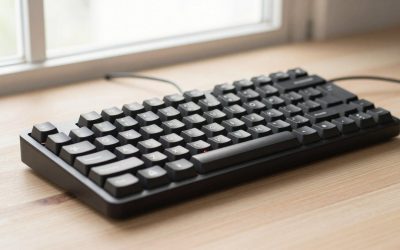
- Top Pick: Redragon S101-3 PRO Gaming Keyboard and Mouse, RGB Backlit Programmable Keyboard Mouse with Software, Independent Macro Record Keys, Value Combo Set, New Update Version
- Best Value: AULA WIN68 HE Mechanical Gaming Keyboard 60%, Hall Effect Magnetic Switch, Fast Trigger Mode Adjustable Actuation, 8000Hz Polling Rate, RGB Backlit, Wired Black Keyboard for Laptop/PC Gamer
- Premium Choice: RedThunder One Handed Gaming Keyboard RGB Backlit 35 Keys Portable Mini Gaming Keypad Ergonomic Game Controller for PC Gamer
Affiliate disclosure: As an Amazon Associate we earn from qualifying purchases. This post contains affiliate links — if you buy through them we may earn a small commission at no extra cost to you. This never affects our recommendations.
FPS gaming demands more from a keyboard than most genres. Counter-Strike 2, Valorant, Apex Legends, and similar titles require rapid, consistent keystrokes — particularly WASD movement inputs — executed at high speed under pressure. The critical keyboard features for FPS performance are: fast actuation (low gram force), linear switch travel (no tactile bump to slow the downstroke), high polling rate (1000 Hz minimum), and — increasingly — hall effect rapid trigger technology. Rapid trigger allows the keyboard to reset a key’s activation the instant you release it, even by fractions of a millimeter, enabling counter-strafing and peek-and-shoot mechanics that standard switches cannot replicate at the same speed. We’ve selected five keyboards across different price points that each excel in FPS gaming contexts.
In a hurry? See the top-rated Gaming Keyboards for FPS Games deals available right now:
🛒 Check Gaming Keyboards For Fps Games Prices on Amazon →🛒 Best Price Today on Amazon
Prime members get fast, free shipping on everything above, plus member-only deals. New members get a 30-day free trial — cancel anytime.
Start 30-Day Prime Free Trial →See Today’s Amazon DealsTop Picks at a Glance
| Product | Best For |
|---|---|
| HyperX Alloy Origins 60 | Premium linear compact FPS board |
| Redragon K556 Hot-Swap | Hot-swap linear for switch tuning |
| RedThunder K10 Wireless | Wireless FPS without cable drag |
| RK Royal Kludge S108 | Full-size typewriter-style linear |
| Redragon K617 GB Rapid Trigger HE | Hall effect rapid trigger FPS |
As an Amazon Associate we earn from qualifying purchases at no extra cost to you.


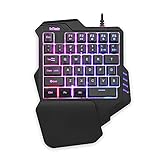

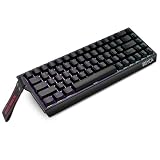


HyperX Alloy Origins 60
HyperX designed the Alloy Origins 60 with competitive gaming in mind. HyperX Red switches have a 45g actuation force, 1.8mm actuation point, and 3.8mm total travel — among the lightest and fastest standard mechanical switch profiles available. The 60% layout moves your mouse hand inward, reducing reach distance during high-speed flicks. The full aluminum frame eliminates chassis vibration that can subtly affect typing consistency at high speeds. At 1000 Hz polling and N-key rollover, every simultaneous keypress registers correctly. This is the FPS player’s premium mechanical pick.
- Pros: 45g linear switches, aluminum frame, 60% layout for mouse space, 1000 Hz, N-key rollover
- Cons: No rapid trigger hall effect, wired only, no hot-swap, around $79 price point
Redragon K556 Hot-Swap
The K556’s hot-swap capability matters for FPS players because it allows precise tuning of switch feel. Many competitive players prefer ultra-light switches (35g–40g actuation) like Gateron Yellow or Gateron Speed Silver, which can be installed into the K556 without soldering. This effectively turns the around $46 board into a customized light-actuation FPS tool. The aluminum top plate adds rigidity, the 1000 Hz polling is standard, and the full-size layout retains all keys. For players who know their preferred switch, the K556 is an excellent foundation.
- Pros: Hot-swap for switch customization, aluminum plate, full-size, budget price
- Cons: Stock switches are competent but not exceptional, no rapid trigger, wired only
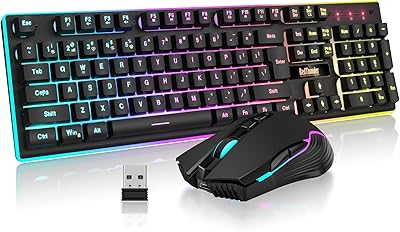
RedThunder K10 Wireless
Cable drag — the resistance created by a stiff wired cable during mouse movements — is a real consideration for high-sensitivity FPS players. While it primarily affects the mouse rather than the keyboard, going fully wireless with the RedThunder K10 combo eliminates any cable management friction on the desk and creates a cleaner gaming environment. The 2.4 GHz keyboard is reliable for gaming use. For FPS players who prioritize a clean desk setup and only compete at casual to mid-amateur levels, the wireless convenience is worthwhile.
- Pros: Wireless bundle, cable-free desk, TKL layout, functional for casual FPS play
- Cons: Not premium mechanical switches, no rapid trigger, mouse sensor is basic
RK Royal Kludge S108
The RK S108 takes a different visual approach with its typewriter-inspired cylindrical keycap profile, but don’t let the aesthetic fool you — the underlying switch performance is standard mechanical linear with competitive specs. The full-size 108-key layout means all keys are immediately accessible without function layers, which can matter in games that bind F-keys. At around $47 with aluminum reinforcement and 1000 Hz polling, it delivers reliable FPS-capable performance with a unique aesthetic that stands out on any desk setup.
- Pros: Unique cylindrical keycap profile, full-size access, aluminum reinforcement, good value
- Cons: Cylindrical keycaps require adjustment, typewriter profile is taller, no hot-swap
Redragon K617 GB Rapid Trigger Hall Effect
This is the FPS competitive pick of this entire roundup. Hall effect magnetic switches support rapid trigger — the key resets from active to inactive the instant you release it past a configurable threshold, down to 0.1 mm. In CS2 counter-strafing, this means your movement key deactivates almost instantaneously when released, allowing the game to register your stopped movement and enable accurate shooting faster than any standard mechanical switch can achieve. At around $39 with a 60% layout for mouse space, this is genuinely pro-level input technology at an entry-level price.

- Pros: Hall effect rapid trigger at around $39, 0.1mm reset sensitivity, 60% layout, 1000 Hz
- Cons: 60% requires Fn layer for F-keys, ABS case, software required for full config
Buying Guide
Why Rapid Trigger Matters for FPS
Standard mechanical switches have a fixed reset point — the key must travel back up past a physical threshold before it’s ready to activate again. This reset point typically sits 0.4–2.0 mm above the actuation point. Hall effect rapid trigger removes this fixed reset, allowing the key to activate and deactivate based on directional movement rather than fixed points. In practice, this means a CS2 player can counter-strafe (quickly tap opposite movement direction to stop momentum) and return to aiming position measurably faster. Professional CS2 players have publicly credited rapid trigger keyboards for improving their micro-movement precision.
Linear vs Tactile for FPS
Linear switches — smooth, consistent travel with no bump — are universally preferred for FPS gaming. The absence of a tactile bump means keystroke speed is limited only by your finger speed rather than switch resistance. Tactile switches add a bump that some players find distracting during rapid WASD inputs. Clicky switches are almost never recommended for competitive FPS due to the additional resistance at the click point and the noise. Always choose linear (Red, Speed Silver, Yellow, or similar) for dedicated FPS gaming.
Polling Rate for Competitive FPS
All keyboards in this list run at 1000 Hz, meaning they report input to the PC 1000 times per second (1 ms interval). Some newer hall effect boards support 2000 Hz or 4000 Hz polling. The practical difference between 1000 Hz and 2000 Hz in keyboard use is debatable — mouse polling rate matters more since mice move continuously while keyboards primarily register discrete keystrokes. 1000 Hz is sufficient for all competitive FPS gaming at any skill level.
Layout for FPS Optimization
60% and 65% layouts provide the most horizontal mouse space — critical for low-DPI FPS players who need wide-arc mouse sweeps. A 400 DPI player needs roughly 40 cm of mouse movement for a 180-degree turn, so every centimeter of desk space matters. If your DPI is 1600+ and mouse movements are small, layout choice has less impact on your play. Lower DPI players should strongly consider a 60% layout for the mouse space benefit.

FAQ
Does a gaming keyboard actually improve FPS performance?
Yes, within limits. Rapid trigger hall effect switches provide a measurable mechanical advantage in counter-strafing mechanics. Linear switches eliminate tactile resistance that can marginally slow repeated keystrokes. However, keyboard impact is smaller than crosshair placement, game sense, and reaction time. A better keyboard won’t carry you from Gold to Diamond, but it removes a potential mechanical limitation at the margins.
Is hall effect worth it over standard mechanical for CS2?
For dedicated CS2 competitive players, yes. Rapid trigger is widely regarded as a meaningful advantage in CS2’s movement mechanics. Many high-ranked and professional players have switched to hall effect boards specifically for this feature. At around $39 for the K617 GB, it’s a no-brainer upgrade over a standard mechanical board at similar pricing.
What polling rate do I need for FPS gaming?
1000 Hz is the baseline and is entirely sufficient for all competitive FPS play including professional-level Counter-Strike. 2000–4000 Hz polling is more relevant on mice than keyboards due to the continuous tracking nature of mouse movement versus the discrete keypress nature of keyboard input.
Should I use a wired or wireless keyboard for FPS gaming?
For competitive FPS, wired or 2.4 GHz wireless are both fine choices. Wired has zero latency variability. 2.4 GHz wireless at 1000 Hz is perceptually identical to wired for keyboard input. Avoid Bluetooth for competitive gaming — Bluetooth polling rates are lower and latency is slightly variable.
Verdict
For competitive FPS gaming in 2025, the Redragon K617 GB Rapid Trigger at around $39 is the most technically advantaged pick — hall effect rapid trigger at a budget price gives you a genuine competitive edge in CS2 and Valorant. The HyperX Alloy Origins 60 is the premium standard mechanical pick with exceptional build quality. Switch-customize the Redragon K556 with ultra-light Gateron Yellows for a sub-$60 competitive setup. All five boards comfortably meet the baseline requirements for serious FPS play.
Related Articles
Looking for more on this topic? Browse the hand-picked guides below — each one applies the same scoring rubric used in this review.
Frequently Asked Questions
Are Hall effect switches actually better than mechanical switches for FPS games?
Hall effect switches use magnets and sensors instead of metal contacts, so they support adjustable actuation points and rapid trigger, which resets the key the instant you lift a finger. For strafe-cancelling and counter-strafing in games like Valorant or CS2 that is a genuine advantage. For everything else, a good linear mechanical switch feels nearly identical.
What actuation point should I set for competitive shooters?
Most players land between 1.0mm and 1.5mm for movement keys such as WASD, which triggers faster without constant accidental presses. Keep less critical keys nearer 1.8mm to 2.0mm so resting your hand does not fire abilities. If you bottom out hard, start shallow and raise it until typos disappear.
Does polling rate above 1000Hz make a real difference?
8000Hz polling cuts worst-case input latency by roughly half a millisecond compared with 1000Hz. That is measurable on equipment but far below human reaction thresholds, so almost nobody will feel it in a match. It also raises CPU overhead slightly. Treat high polling as a bonus feature, not a buying reason.
Should I buy a full-size board or something smaller for FPS?
Competitive players overwhelmingly choose tenkeyless or 60 percent layouts because removing the numpad lets the mouse sit closer to centre, which allows wider low-sensitivity arm swings without hitting the keyboard. If you use the numpad for work or spreadsheets daily, full-size with a wider desk is the more practical compromise.
Do I need N-key rollover and anti-ghosting?
Yes, and virtually every modern gaming keyboard includes it. N-key rollover means every simultaneous keypress registers correctly, which matters when you hold forward, strafe, crouch, sprint and reload at once. Cheap membrane boards often cap at six keys or fewer and silently drop inputs during hectic firefights, costing you movement.