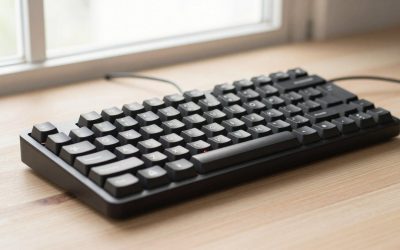
- Top Pick: RedThunder One Handed Gaming Keyboard RGB Backlit 35 Keys Portable Mini Gaming Keypad Ergonomic Game Controller for PC Gamer
- Best Value: GEODMAER 65% Gaming Keyboard, Wired Backlit Mini Keyboard, Ultra-Compact Anti-Ghosting No-Conflict 68 Keys Membrane Gaming Wired Keyboard for PC Laptop Windows Gamer
- Premium Choice: One Handed Gaming Keyboard and Mouse Combo for LOL/Wow/fortnite/Dota/PUBG
Affiliate disclosure: As an Amazon Associate we earn from qualifying purchases. This post contains affiliate links — if you buy through them we may earn a small commission at no extra cost to you. This never affects our recommendations.
📌 Part of our Wooting Keyboards Review 2026: Every Model Tested & Compared guide — see the full breakdown, comparisons, and top picks.
Keyboard ergonomics for smaller hands is a real concern that most gaming peripheral marketing ignores. Full-size keyboards stretch from left edge to numpad across roughly 44 cm — a significant distance that forces users with smaller hands to extend their right shoulder outward to position the mouse comfortably. This lateral shoulder extension, repeated over hours of gaming, contributes to shoulder tension and potential repetitive strain. Compact 60% keyboards reduce that width to approximately 29 cm, and 65% boards to around 31 cm, dramatically reducing the required mouse positioning distance. Additionally, compact layouts move function keys to layers accessed by the left hand, reducing right-hand reach. In 2025, excellent compact keyboards are available from $14 to $80, making the ergonomic upgrade accessible at any budget.
In a hurry? See the top-rated Gaming Keyboards for Small Hands deals available right now:
🛒 Check Gaming Keyboards For Small Hands Prices on Amazon →🛒 Best Price Today on Amazon
Prime members get fast, free shipping on everything above, plus member-only deals. New members get a 30-day free trial — cancel anytime.
Start 30-Day Prime Free Trial →See Today’s Amazon DealsTop Picks at a Glance
| Product | Best For |
|---|---|
| MageGee Mini 60% | Most affordable small-hand option |
| Portable 60% Blue Switches | Budget with clicky feel |
| Guiheng 60% Wired | Absolute lowest price 60% |
| Newmen GM611 Mechanical | Compact mechanical with reliability |
| GEODMAER 65% Combo | 65% with mouse bundle, arrow keys |
As an Amazon Associate we earn from qualifying purchases at no extra cost to you.




MageGee Mini 60%
The MageGee Mini 60% is one of the most popular compact keyboards at the entry-level price point. At 60% width, it significantly reduces the desk footprint and positions the mouse closer to the body’s centerline — the primary ergonomic benefit for small-handed users. Genuine mechanical switches (Blue clicky or Red linear) provide real keystroke feedback versus membrane. RGB lighting adds visual personality. Build quality is entry-level with a flexible ABS case, but the ergonomic benefit of the compact layout is genuine regardless of price point.
- Pros: Compact 60% layout, genuine mechanical switches, RGB, affordable at around $17
- Cons: ABS case flexes, rattly stabilizers, no hot-swap, basic build quality
Portable 60% Blue Switches
This portable 60% board emphasizes travel-friendliness alongside compactness, with a lighter build and Blue clicky switches. The 60% form factor translates directly to reduced hand reach, and the lightweight construction makes it easy to move between setups. Blue switches provide satisfying clicky feedback that helps users with smaller hands feel each keypress positively — reducing the tendency to bottom-out aggressively that can strain finger joints. Good for home gaming setups and LAN events alike.
- Pros: Lightweight and portable, clicky Blue switches, compact 60%, low price
- Cons: Loud in shared spaces, basic stabilizers, ABS build, limited RGB modes
Guiheng 60% Wired
The Guiheng 60% is the most affordable 60% keyboard on the market, and at around $13, it’s hard to argue against as an entry point for small-hand users investigating compact layouts. Mechanical switch feel is basic, build quality reflects the budget, and features are minimal — but the layout benefit is identical to boards costing four times as much. If you’re unsure whether a 60% layout suits you and don’t want to commit financially, this is the lowest-risk test purchase available.
- Pros: around $13 price — absolute lowest cost compact option, 60% layout benefit, basic RGB
- Cons: Basic switch quality, minimal build, no hot-swap, limited customization
Newmen GM611 Mechanical
The Newmen GM611 occupies the same price tier as the MageGee Mini but offers a slightly different compact layout that some users find more comfortable. The GM611’s key spacing and case design feel slightly more ergonomically considered. Genuine mechanical switches in Red or Blue variants provide consistent actuation. At around $17 it competes directly with the MageGee Mini — the choice between them comes down to layout preference and switch type availability.
- Pros: Genuine mechanical switches, compact footprint, affordable, RGB included
- Cons: Entry-level build quality, case flex, no hot-swap, basic software
GEODMAER 65% Combo
The GEODMAER bundle packages a 65% keyboard with a mouse for under $20 — making it the most complete small-hand setup available at this price. The 65% layout retains dedicated arrow keys, which 60% boards drop, making it more comfortable for users who navigate documents or use arrow-key shortcuts in games. The included mouse means you’re equipping both primary peripherals for your compact setup in a single purchase. Build quality is entry-level but the layout and value proposition are excellent for budget-conscious small-hand gamers.

- Pros: 65% with arrow keys, mouse included, under $20 for the bundle, compact footprint
- Cons: Not mechanical switches, basic mouse, entry-level build, limited RGB
Buying Guide
Why Compact Layouts Help Small Hands
The primary ergonomic benefit of compact keyboards for small-hand users is reduced mouse reach distance. With a full-size keyboard, the mouse must be positioned to the right of the numpad — far from the body’s center. A 60% keyboard moves the mouse significantly closer to the keyboard’s right edge, reducing shoulder abduction (outward arm angle) and allowing a more natural elbow-bent posture. Secondary benefits include shorter distances between keys — the Home and Delete keys, for example, require less finger extension on a 60% via Fn layers compared to the stretch to reach them on full-size boards.
60% vs 65% for Small Hands
Both 60% and 65% layouts provide meaningful ergonomic improvement over full-size. The 65% adds dedicated arrow keys (a 4-key cluster) that the 60% drops. If you navigate documents, spreadsheets, or use arrow keys in games, the 65% is more comfortable daily. If you’re purely a WASD-dominant FPS gamer and don’t use arrow keys, the pure 60% gives you maximum mouse space. The 65% width difference over 60% is approximately 2 cm — minor but present.
Key Switch Weight for Smaller Hands
Users with smaller, lighter fingers sometimes find heavy switches (65g+ actuation) fatiguing over long sessions. Linear switches in the 35g–45g range — like Gateron Yellow (35g), Gateron Red (45g), or HyperX Red (45g) — are more comfortable for extended gaming. Avoid Blue clicky switches (60g actuation force) if finger fatigue is a concern. Where hot-swap is available (like the Redragon K617), installing lighter switches is a worthwhile upgrade for small-hand users.
Keycap Profile and Smaller Hands
Keycap profile affects reach distance between rows. Low-profile (laptop-style) keycap keyboards reduce the vertical height of keys, which can reduce finger strain for users with shorter fingers who struggle to reach upper key rows. Standard OEM and Cherry profile keycaps are taller and more tilted toward the typist — this helps some users and hinders others. If keycap height is a concern, look for low-profile mechanical keyboards (common in budget compact options).

FAQ
What keyboard size is best for small hands?
60% and 65% layouts offer the best ergonomic fit for small hands by reducing keyboard width and moving the mouse closer to the body’s centerline. Low-profile keycap variants additionally reduce key height, which benefits users with shorter fingers.
Is a 60% keyboard good for gaming with small hands?
Yes, a 60% is the most popular competitive gaming layout precisely because it maximizes mouse space — a benefit for all users but especially pronounced for those with smaller hands and shorter arm reach. Adjustment to Fn layers for F-keys is needed but most users adapt within a week.
Do compact keyboards come in wireless options?
Yes, though wireless compact mechanical keyboards typically start around $40–$60. At the budget tier covered here ($14–$20), boards are wired. For wireless compact options at a low price, consider the RedThunder 60% wireless combo at around $39.
Are lighter switches better for small hands?
Generally yes. Linear switches with 35g–45g actuation force reduce the effort required per keystroke, which accumulates significantly over long gaming sessions. Users with smaller, lighter fingers benefit most from low-actuation-force linear switches compared to heavier tactile or clicky options.

Verdict
For small-hand gamers, the layout choice matters more than the price point — any 60% or 65% keyboard will provide meaningful ergonomic benefit over a full-size board. The MageGee Mini 60% and Newmen GM611 are the best mechanical picks under $20. The GEODMAER 65% Combo bundles everything needed for a compact setup under $20. For those willing to invest more, the Redragon K617 Fizz with hot-swap at around $26 delivers the best upgrade path for small-hand competitive gamers.
Related Articles
Looking for more on this topic? Browse the hand-picked guides below — each one applies the same scoring rubric used in this review.
Frequently Asked Questions
What is a one-handed gaming keyboard?
A compact gamepad-style keypad (such as the Razer Tartarus or Azeron) with around 20–30 keys for your left hand, leaving the right hand free for the mouse. It is popular with MMO and FPS players and anyone who wants fewer keys to reach.
Are compact keyboards better for small hands?
Often yes — 60%, 65% and TKL layouts shorten the reach to every key and free desk space for mouse movement, which suits smaller hands and can reduce wrist strain.