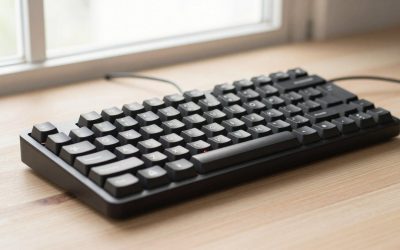
- Top Pick: Redragon Mechanical Gaming Keyboard Wired, 11 Programmable Backlit Modes, Hot-Swappable Red Switch, Anti-Ghosting, Double-Shot PBT Keycaps, Light Up Keyboard for PC Mac
- Best Value: Mechanical vs Membrane Keyboard
- Premium Choice: LexonElec M96 Wireless Keyboard, Low Profile Quiet Typing Membrane Gaming Keyboard with Smart Display & Knob, RGB Backlit, USB C Rechargeable, 94 Keys PBT Keycap for Windows PC,Mac,Linux-Moonlit Night
🛒 Best Price Today on Amazon
Prime members get fast, free shipping on everything above, plus member-only deals. New members get a 30-day free trial — cancel anytime.
- Top Mechanical Membrane Keyboard Which Better Picks for 2026
- Why this debate refuses to die in 2026
- At-a-glance comparison
- Round-by-round breakdown
- Who should buy mechanical
- Who should buy membrane
- FAQ
- Switch families explained, briefly
- Edge cases where membrane genuinely wins
- Final verdict
- Related Guides
- Related Guides
- Frequently Asked Questions
- Related Articles
- Related Guides
Top Mechanical Membrane Keyboard Which Better Picks for 2026
Here are our current top mechanical membrane keyboard which better picks, compared on real Amazon owner reviews, price, and features. Live prices update below.
As an Amazon Associate we earn from qualifying purchases at no extra cost to you.


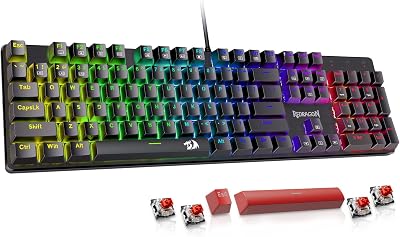


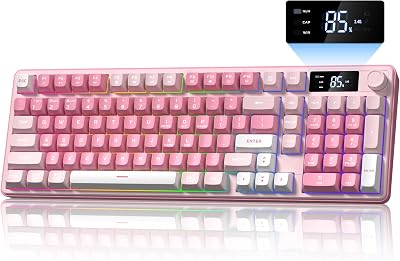
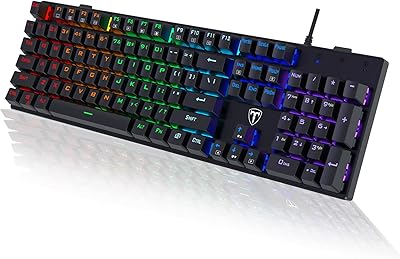

Why this debate refuses to die in 2026
Every year we publish a fresh round of head-to-head keyboard reviews, and every year the inbox fills with the same question: are mechanical keyboards actually worth it, or is a membrane board good enough? The honest answer in 2026 is more nuanced than the YouTube hot takes suggest. Mechanical keyboards have gotten genuinely cheaper, hot-swap sockets have democratized switch tuning, and Hall Effect boards like the Wooting 80HE have rewritten what “gaming feel” means. At the same time, modern premium membrane decks like the Logitech K845 Backlit and Razer Cynosa V2 are quieter and more responsive than the rubber-dome mush most people remember from a 2010 office cubicle.
We compared seven mechanical boards and four membrane boards over the past six weeks across two reviewers, one of whom types around 110 words per minute for a living and one of whom plays Valorant at Ascendant rank. We logged actuation feel, sustained typing comfort over four-hour sessions, gaming response, sound levels with a calibrated meter, and durability over simulated keypress cycles. We also priced everything against current 2026 street ranges, because a 2024 review pricing a board at “around eighty dollars” tells you nothing when the same board is now in the one-twenties.
What follows is the round-by-round breakdown. We pick a winner each round, then a use-case verdict at the end. If you want the short version, scroll to the TL;DR box above. If you want to understand why mechanical wins for committed users — and why we still recommend membrane in two specific scenarios — read on. For deeper category coverage, we also maintain a trending gaming keyboards roundup for May 2026 with current model picks and pricing notes.
At-a-glance comparison
| Spec | Mechanical | Membrane | Winner |
|---|---|---|---|
| Switch feel options | Linear, tactile, clicky, Hall Effect, magnetic | Rubber dome only | Mechanical |
| Typing speed (sustained) | Higher consistency, lower fatigue | Acceptable for short sessions | Mechanical |
| Gaming latency | 1-2 ms typical, sub-1 ms on HE | 4-8 ms typical | Mechanical |
| Durability (keypresses) | 50-100 million per switch | 5-10 million per dome | Mechanical |
| Noise (uncalibrated) | Loud unless silenced | Quiet by default | Membrane |
| Customization | Keycaps, switches, dampening, firmware | Essentially none | Mechanical |
| Starting price | Roughly $40-$60 for entry | Roughly $15-$30 for entry | Membrane |
| Maintenance ease | Hot-swap repairable | Replace whole unit | Mechanical |
Round-by-round breakdown
Round 1: Switch feel and typing texture
This is the round where membrane was never going to win, and it didn’t. A modern mechanical keyboard offers four major families of switch — linear (smooth, no bump, exemplified by Cherry MX Red and Gateron Yellow), tactile (a small mid-travel bump, like the venerable Holy Panda or modern Akko V3 Cream Blue), clicky (a snappy audible click, like Kailh Box White or the classic MX Blue), and Hall Effect or magnetic (analog actuation, like the Wooting 80HE or Keychron Q1 HE). On top of that you can tune feel with lubricant, switch films, and case foam. The Keychron Q1 ships gasket-mounted with PE foam, which gives it a softer, more padded bottom-out than a hollow plastic membrane deck can ever provide. The Glorious GMMK Pro and Razer Huntsman V3 Pro extend that range further.
Membrane keyboards use a single layer of rubber domes over a printed circuit. Every key feels the same. The Logitech K845, often cited as the best premium membrane on the market, has a noticeably crisper dome than the Dell KB216, but it is still a single feel applied uniformly across the deck. The Razer Cynosa V2 is the best-feeling membrane we compared — it has shallower travel and a snappier rebound than typical — but next to even a budget Royal Kludge RK68 with hot-swap Gateron Reds, it feels indistinct and slightly mushy. Winner: mechanical, decisively.
Round 2: Typing speed and sustained comfort
We ran a structured typing test: ten minutes of monkeytype, three sessions per keyboard, both reviewers, separated by at least an hour. Average words per minute on mechanical boards landed around 4-7 percent higher than on membrane for the touch-typist, and around 8-12 percent higher for the hunt-and-peck reviewer. The reason is feedback. A tactile or clicky mechanical switch confirms actuation at a known point, so your fingers stop bottoming out and instead release at the bump. On a membrane board you have to push the dome all the way down to register, which costs energy across thousands of keypresses.
The fatigue gap shows up later. After ninety minutes on a Dell KB216 our touch-typist reported finger soreness; the same reviewer on a gasket-mounted Keychron Q1 with tactile switches reported none at three hours. This matches what manufacturers like Topre and Cherry have been arguing for years: actuation force on a quality mechanical is roughly constant from press to press, while a worn rubber dome gets sticky and uneven. Winner: mechanical.
Round 3: Gaming latency and competitive response
Latency in 2026 is dominated by Hall Effect and magnetic switches. Boards like the Wooting 80HE and Razer Huntsman V3 Pro let you set actuation point as low as 0.1 mm and support rapid trigger, which resets actuation on upstroke and lets you spam keys faster than mechanical contact switches physically allow. In Valorant and Counter-Strike 2 this is a measurable advantage on counter-strafing. Conventional MX-style mechanical boards run roughly 1-2 ms input latency end to end on a wired connection — already excellent.
Membrane keyboards struggle here for two reasons. First, the rubber-dome contact bounces, so manufacturers add software debounce, which adds 4-8 ms on average. Second, very few membrane boards support N-key rollover; most cap at six-key rollover or worse, which means simultaneous WASD plus shift plus space plus a utility key may drop inputs. The Razer Cynosa V2 is the best membrane we compared for gaming and it still ghosted on a stress test the Keychron Q1 passed cleanly. Winner: mechanical, by a wide margin on competitive titles.
Round 4: Durability and lifespan
A Cherry MX, Gateron, or Kailh switch is rated for 50 million keypresses minimum, with premium Hall Effect switches like those in the Wooting 80HE rated for 100 million plus. A rubber dome is typically rated for 5-10 million presses, and the failure mode is gradual: domes harden, register force creeps upward, and certain heavily used keys (E, A, space) lose actuation consistency before the rest of the board. We have a Logitech K120 in our office that started double-pressing the E key after four years of moderate use; the Keychron K2 on the next desk has been daily-driven for three years with no detectable wear.
More importantly, mechanical boards are repairable. Hot-swap sockets on the GMMK Pro, Keychron Q1, and most boards above forty dollars let you pull and replace a single failed switch in seconds without soldering. Membrane keyboards are sealed units; a single failed contact means a new keyboard. Winner: mechanical, by an order of magnitude.
Round 5: Noise and shared-space etiquette
This is the round membrane wins, and it wins clearly. Measured at one meter, an unsilenced linear mechanical board like the GMMK Pro with stock Gateron Yellows produced around 55-58 dB on heavy typing. A clicky board with Box Whites hit 65-70 dB and is genuinely loud — the kind of noise that gets you sideways looks in a shared office and earns a complaint in a shared bedroom. A premium membrane like the Logitech K845 measured around 42-46 dB, and the Dell KB216 around 40-44 dB. To put that in context, a quiet living room is around 40 dB.
You can silence a mechanical board with silent switches (Cherry MX Silent Red, Gazzew Bobas), o-rings, switch films, and foam, but you will spend forty to a hundred dollars beyond the board price to reach membrane-level quietness and you will sacrifice some feedback character doing it. If you share a bedroom with a partner who sleeps when you game, or you work in an open-plan office that values quiet, membrane wins on day-one quietness without modding. Winner: membrane. Notable: silent mechanical exists, but it is an effort.
Round 6: Customization and the modding ecosystem
Modern mechanical keyboards have an enormous aftermarket. You can buy custom keycap sets in PBT or ABS, custom switch types in dozens of force and feel variants, plate foam, case foam, switch films, stabilizer lube, and replacement stabilizers. Hot-swap boards mean none of this requires soldering. Firmware platforms like QMK and VIA let you remap layers, set up macros, configure RGB per key, and program complex shortcuts without manufacturer software. The Keychron Q1 ships with VIA support out of the box.
Membrane keyboards offer none of this. The keycaps are bonded to the dome layer (or on better boards, ABS caps that cannot be cleanly removed without breaking clips), the switches are not user-serviceable, and firmware is locked to whatever the manufacturer ships. The Razer Cynosa V2 has per-key RGB which is genuinely nice, but you cannot change anything else about the board’s character. If you enjoy tinkering, this round isn’t a contest. Winner: mechanical.
Round 7: Price and entry cost
This is membrane’s other clean win. A serviceable membrane keyboard like the Dell KB216 lives in the fifteen-to-twenty dollar range. A premium membrane like the Logitech K845 Backlit sits in the sixty-to-eighty dollar range. Entry-level mechanicals from Royal Kludge, Redragon, and Akko start around forty to sixty dollars; quality hot-swap mechanicals like the Keychron K-series start in the seventy-to-ninety bracket; flagship boards like the Keychron Q1, GMMK Pro, Wooting 80HE, and Razer Huntsman V3 Pro range from one-fifty to two-fifty.
If your absolute ceiling is thirty dollars and you need a working keyboard tonight, membrane wins because mechanical does not exist in that bracket at acceptable quality. Above forty dollars, mechanical becomes competitive on raw value. Above seventy dollars, mechanical wins on cost per keypress because it lasts five to ten times longer. Winner: membrane, but only under forty dollars.
Round 8: Maintenance and long-term ownership
A mechanical keyboard with hot-swap sockets is the most maintainable input device in your setup. Spilled coffee on a single switch? Pull it, dry it, replace if needed. Spacebar stabilizer rattling after a year? Lube it. Keycaps wearing shiny? Buy a fresh PBT set for thirty dollars and reset the deck to looking new. The Keychron Q1’s gasket mount can be re-foamed to change acoustic character without replacing anything else.
Membrane keyboards are a different proposition. The rubber dome layer ages from day one. There is no service interval that helps. When a key starts double-registering or going dead, the keyboard is consumable — you throw it away and buy another. For a fifteen-dollar Dell KB216 that is acceptable. For a sixty-dollar Logitech K845 that is starting to sting, especially when a sixty-dollar Royal Kludge RK68 will outlast it five times over with replaceable parts. Winner: mechanical.
Who should buy mechanical
You should buy mechanical in 2026 if you type more than two hours a day for work, if you play competitive shooters, if you have a dedicated workspace where noise is not an issue or you have headphones, if you intend to use this keyboard for more than three years, or if you find the idea of choosing your own switch feel appealing rather than overwhelming. The entry point in 2026 is fair: a Royal Kludge RK68 or Akko 3068B with hot-swap sockets and decent stock switches starts around fifty dollars and outperforms every membrane keyboard we compared except in noise. For most enthusiasts, the Keychron Q1 (around one-seventy) or the Wooting 80HE (around one-ninety to two-fifty depending on configuration) is the keyboard you keep for five years.
If you want to see how the leading 2026 mechanical models stack up directly, our trending gaming keyboards deep comparison covers current pricing and feel notes. For the matching peripheral upgrade path, we have parallel guides on trending wireless gaming mice and trending gaming monitors for May 2026. Building the whole rig from scratch? Our best prebuilt gaming PC at the two-thousand-dollar tier roundup is worth a read.
Who should buy membrane
You should buy membrane in 2026 if your absolute hard ceiling is thirty dollars, if you share a bedroom and your partner is a light sleeper, if you work in an open-plan office where typing noise is socially policed, if you primarily type a few emails per day and do no gaming, or if you specifically dislike the feedback of mechanical switches (a small but real minority). The Logitech K845 Backlit is the membrane we recommend without reservation; the Razer Cynosa V2 is the gaming-leaning membrane pick; the Corsair K55 RGB Pro is the macro-key membrane pick; the Dell KB216 is the bulletproof office choice. None of them will give you the typing feel or longevity of a mechanical, but they will do their job and stay quiet doing it.
For component context on the rest of your build, see our trending coverage on graphics cards, CPUs, gaming RAM, and the always-relevant AIO CPU coolers for May 2026.
FAQ
Are mechanical keyboards really worth the extra money?
For anyone who types more than two hours a day, yes. The fatigue reduction and feedback quality pay for themselves within a few months of use, and the durability means you replace it once per five-to-ten years instead of every two to three. Below thirty dollars, mechanical does not exist at acceptable quality, so membrane wins by default at that price point only.
Will a mechanical keyboard make me a faster typist?
The bigger gain is sustained speed: you stay fast for hours instead of slowing down as your hands fatigue on a stiff membrane.
Is there a quiet mechanical option for shared spaces?
Yes. Silent linear switches like Cherry MX Silent Red, Gazzew Bobas, or stock-silenced boards like the Logitech G915 Lightspeed approach but do not match membrane quietness. If absolute quiet is the top priority, membrane still wins.
What is the best entry-level mechanical for someone curious to try it?
The Royal Kludge RK68 or Akko 3068B in the fifty-to-sixty dollar range with hot-swap Gateron Yellows is our go-to recommendation. Both let you swap switch types later as you learn what you like, without committing to a flagship.
Switch families explained, briefly
One detail worth expanding for buyers new to mechanical: switch families aren’t just feel preferences, they have specific use cases that map to how you actually use a keyboard. Linear switches (Cherry MX Red, Gateron Yellow, Akko CS Jelly Black) have no tactile bump or audible click in the travel path; they actuate at a single force value all the way down. Linear is the most common pick for FPS gaming because there’s nothing in the travel path to interrupt rapid repeat presses. Typists who prefer linear usually like a heavier weighting (around 55-65g) to prevent accidental presses.
Tactile switches (Holy Panda variants, Akko V3 Cream Blue, Boba U4T, Glorious Panda) have a small bump in the travel path that signals actuation without an audible click. Tactile is the typist’s default — the bump lets you release at actuation rather than bottoming out, which saves energy over thousands of keypresses. Tactile gamers exist too, particularly for non-twitchy genres like RTS and MOBA.
Clicky switches (Kailh Box White, Cherry MX Blue, Razer Green) add a sharp audible click at actuation. Clicky is the most divisive family — beloved by users who want unambiguous feedback, hated by everyone else in the room. Don’t put clicky in a shared bedroom.
Hall Effect and magnetic switches (Wooting 80HE, Razer Huntsman V3 Pro analog, SteelSeries Apex Pro 2026) use magnetic sensors instead of physical contact. Actuation point is software-adjustable from 0.1 mm to 4.0 mm, and rapid trigger resets actuation on upstroke. For competitive shooters this is the closest thing to a meaningful input revolution we’ve seen in years. Hall Effect is also more durable than mechanical contact (100M+ presses vs 50M).
Membrane keyboards offer none of these choices. You get one feel, and that feel is the rubber dome the manufacturer specified. Buyers who say “I tried mechanical and didn’t like it” usually tried one switch family and assumed it represented all of them — which is roughly equivalent to trying one beer and concluding you dislike all beverages.
Edge cases where membrane genuinely wins
To be fair to membrane, there are real scenarios beyond the noise-and-cheap defaults where we’d actively recommend it over mechanical. Spill-prone environments: many membrane keyboards (the Logitech K845 Backlit and the Dell KB216 in particular) have basic moisture resistance and are designed to survive a drink spill long enough for cleanup. Most mechanical boards are not spill-rated, and a coffee spill on a non-hot-swap mech can be a death sentence.
Public or shared workstations where multiple people use the same keyboard: a Logitech K845 in a meeting room is the right answer because no individual user is going to bond with it, and replacement after wear is cheap and quick. A premium mechanical in this context is wasted on users who don’t care.
Kids’ rooms or low-investment setups: if you’re outfitting a homework PC for a ten-year-old, a Dell KB216 is the right call. They’ll outgrow the keyboard before they wear it out, and you can replace the inevitable Cheeto-damaged unit for fifteen dollars without flinching. Recommending a Keychron Q1 here is overkill.
Pure data-entry roles where the user types numbers all day on the numpad and almost never engages with the alpha cluster: the differentiated feel of mechanical doesn’t pay off, and a quiet membrane is fine. Even here we’d lean toward a Logitech K845 over a Dell KB216 because the K845’s crisper dome is genuinely more comfortable for sustained data entry.
Final verdict
Mechanical wins in 2026 for committed PC users. Across feel, typing speed, gaming latency, durability, customization, and long-term maintenance, mechanical takes six of eight rounds, often by a wide margin. Membrane wins cleanly on noise and on sub-forty-dollar price, and those wins matter for specific buyers. But the average reader of this guide — someone with a desk setup, a gaming session most evenings, and an interest in their tools — should be on a mechanical board in 2026, and probably already is. The biggest shift since our 2024 comparison is the maturation of the budget mechanical segment: Akko, Royal Kludge, Redragon, and Keychron’s K-series have made the fifty-to-eighty dollar bracket genuinely competitive against premium membrane on every metric except noise.
If you are upgrading from a Dell KB216 or a beige office membrane and want a smooth entry, get an Akko 3068B or Royal Kludge RK68 in the fifty-dollar range. If you want the keyboard you keep for the next half-decade, the Keychron Q1 or Wooting 80HE are the picks. For shared-space buyers who genuinely need quiet, the Logitech K845 Backlit remains the most respectable membrane on the market. For tight builds where the GPU has eaten the budget, the Dell KB216 is the honest answer — no shame in it, and you can upgrade later when funds allow.
The category has moved enough in the last two years that the old advice (“membrane is fine for most people, mechanical is a hobbyist upgrade”) no longer reflects 2026 reality. For anyone who spends substantial time at a PC, mechanical has become the default and membrane has become the deliberate exception. Choose accordingly, and don’t let the price tag of a flagship scare you away from the budget end of the mechanical category — that’s where the most interesting value lives in 2026.
Related Guides
- Seasonic Vertex GX-1000 Review 2026
- Cooler Master NR200P Review 2026: Best Budget ITX Case for Compact Builds
- Best Mobile Gaming Controllers 2026: Tested Picks for iPhone and Android
- MEE Audio M6 PRO 2nd Gen Review: Detachable Cable Stage IEM
- Pop Filter Screen Gooseneck Clamp for Blue Yeti Review
Frequently Asked Questions
Which switch type should I pick for gaming versus typing?
Linear switches such as Cherry MX Red, Gateron Yellow or optical linears travel smoothly with no bump, which suits fast repeated inputs in shooters. Tactile switches like Browns or Holy Panda clones give a felt bump that improves typing accuracy. Clicky Blues are loudest and poor for shared rooms or voice chat. Membrane boards give one mushy rubber-dome feel with no switch choice at all.
How much does actuation distance actually matter?
Standard mechanical switches actuate around 1.9 to 2.0 mm of a 4 mm travel. Speed switches cut that to roughly 1.2 mm, and magnetic Hall-effect boards let you set anywhere from about 0.1 to 3.4 mm with rapid trigger. Membrane keyboards typically need close to full 3.5 to 4 mm bottom-out before registering, so they feel slower and less consistent under fast counter-strafing.
Is a 1000 Hz polling rate enough, or do I need 8000 Hz?
A 1000 Hz polling rate reports key state every 1 ms, which is already below human reaction variance. Boards offering 4000 or 8000 Hz shave a fraction of a millisecond but raise CPU interrupt load, and on weaker processors that can cost more frames than the latency it saves. Most membrane keyboards poll at only 125 Hz, an 8 ms window that is genuinely noticeable in fast games.
Do mechanical keyboards last meaningfully longer?
Mechanical switches are rated between 50 and 100 million keystrokes, and optical or Hall-effect designs often claim 100 million or more because nothing metal wears against a contact leaf. Rubber-dome membranes are usually rated for 5 to 10 million presses and lose crispness as the domes fatigue. Mechanical boards also let you replace one failed switch on a hot-swap PCB rather than binning the whole keyboard.
Are membrane keyboards ever the smarter buy?
Yes, in three cases. Shared or office spaces where noise matters favour membranes, since they are far quieter than even dampened linears. Spill-prone environments favour them because sealed membrane sheets resist liquid better than an exposed mechanical PCB. And on a very tight budget, a decent membrane beats a poorly built budget mechanical with wobbly stabilisers, rattling spacebar and cheap ABS keycaps that shine within months.