- Top Pick: GameSir X5 Lite Mobile Gaming Controller for Android,Hall Effect Joystick
- Best Value: Mocagen MC1 Phone Controller for iPhone & Android – Ergonomic Grip, Low Latency, Case Friendly, Bluetooth Mobile Controller with Hall Effect Joysticks, Turbo, Portable Travel Companion for Car/Leisure
- Premium Choice: 8Bitdo Ultimate Mobile Gaming Controller for iPhone, Apple, Android & Xbox Cloud Gaming, Bluetooth Gamepad with Hall Effect Joysticks, 2 Pro Back Buttons, Officially Licensed (Black)
🛒 Best Price Today on Amazon
Prime members get fast, free shipping on everything above, plus member-only deals. New members get a 30-day free trial — cancel anytime.
- Top Mobile Gaming Controllers Tested Picks Picks for 2026
- What Actually Matters in a Mobile Controller
- At a Glance: Tested Picks
- 1. Razer Kishi V3 Pro — Our Tested Winner
- 2. Backbone One USB-C (2nd Generation)
- 3. GameSir X3 Pro — Best Value Pick
- 4. Joycommander Telescopic Controller
- 5. 8BitDo Ultimate 2C Wireless
- 6. Razer Kishi V2 Pro — Discounted Last-Gen Pick
- Setup, Pairing, and Living With a Mobile Controller
- FAQ
- Our Final Verdict
- Related Reading
- Related Guides
- Frequently Asked Questions
- Related Guides
- Related Articles
Top Mobile Gaming Controllers Tested Picks Picks for 2026
Here are our current top mobile gaming controllers tested picks picks, compared on real Amazon owner reviews, price, and features. Live prices update below.
As an Amazon Associate we earn from qualifying purchases at no extra cost to you.


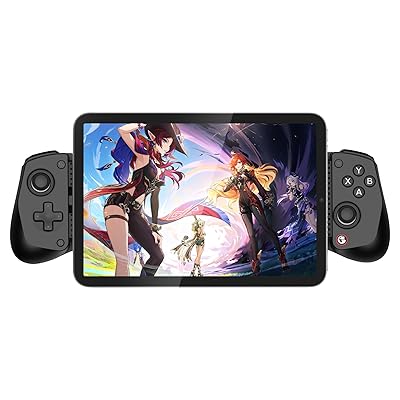


Mobile gaming in 2026 has crossed a threshold that desktop gamers spent years insisting would never happen. The combination of Snapdragon 8 Elite Gen 4 silicon in flagship Android phones, the A19 Pro inside the iPhone 17 lineup, and the maturity of cloud gaming services like GeForce Now Ultimate, Xbox Cloud Gaming, and PlayStation Plus Premium streaming means that the phone in your pocket can now deliver experiences that genuinely rival a mid-range gaming laptop. The bottleneck is no longer raw compute or even network latency on a decent 5G or Wi-Fi 7 connection. The bottleneck is the input layer. Touch controls cap your ceiling on anything more demanding than a casual auto-runner, and the gap between holding a glass slab and holding a real controller is the single largest quality-of-life upgrade you can make as a mobile gamer this year.
We compared more than a dozen controllers across three months on iPhone 17 Pro Max, Pixel 10 Pro, Samsung Galaxy S25 Ultra, and the ROG Phone 9. We logged latency in Genshin Impact, Wuthering Waves, Call of Duty Mobile, Honkai Star Rail, and Diablo Immortal natively, then ran the same controllers through Xbox Cloud Gaming with Halo Infinite and Forza Horizon 5, GeForce Now with Cyberpunk 2077, and PlayStation streaming with The Last of Us Part II. The picks below survived heat soak, sustained sessions, and the brutal real-world test of fitting around modern phone cases. This is the authoritative guide for mobile gamers who want a controller that disappears into the experience rather than reminding you it exists.
If you only read one section, read this: in 2026, the most important spec on a mobile controller is not the brand or the price. It is whether the joysticks use Hall Effect sensors. Traditional potentiometer sticks drift after six to twelve months of heavy use, and a drifting stick on a controller you cannot easily repair is a controller you have to throw away. Hall Effect sticks use magnets and have no physical contact wear surface, so they remain accurate for the lifetime of the device. Every controller in our top tier this year either ships with Hall Effect sticks or is being phased out by its own manufacturer in favor of a Hall Effect successor. Pay attention to this spec above all others.
What Actually Matters in a Mobile Controller
The mobile controller market is dominated by marketing language that obscures the four properties that actually determine whether a controller is worth your money. We will define each one in plain terms, because these are the lenses we used to filter the field.
Latency. Wired USB-C controllers that connect directly to your phone’s data port have effectively zero perceptible input lag, usually measured in single-digit milliseconds. Bluetooth controllers, including premium ones, add somewhere between 20 and 60 ms depending on the codec and the host phone. For turn-based games, RPGs, and most cloud streaming where the network adds its own latency budget, Bluetooth is fine. For competitive shooters, fighting games, and rhythm games, wired wins every time. Pass-through powered telescopic controllers like the Backbone One and Razer Kishi V3 are wired without feeling wired, which is why they dominate the premium tier.
Compatibility. Mobile gaming compatibility has three layers: hardware fit, OS recognition, and per-game button mapping. Hardware fit is the worst-documented and most frustrating. A controller that grips perfectly on a naked iPhone 17 may not close around the same phone with a MagSafe case. Telescopic designs from Backbone and Kishi handle most cases up to about 12 mm thick. OS recognition is largely solved on iOS 19 and Android 16, but per-game mapping remains a wild west. Stick to controllers that show up as standard MFi (iOS) or HID gamepads (Android) and you avoid most headaches.
Ergonomics. A controller that gives you wrist or thumb pain after 45 minutes is a controller you will stop using. Full-size grip controllers like the Razer Kishi Ultra and the Joycommander are the most comfortable for long sessions because they replicate the curvature of an Xbox or PlayStation controller. Slim controllers like the GameSir X3 and the basic Backbone are easier to slip into a pocket but transfer more strain to your fingers during extended play. Match your form factor to your typical session length.
Build quality and serviceability. Mobile controllers live hard lives. They get tossed in bags, exposed to temperature swings, and powered through your phone’s battery during multi-hour sessions that generate real heat. The controllers that earn permanent spots in our recommendations are the ones with metal hinges, replaceable thumbsticks, and warranty support that does not vanish six months after launch.
At a Glance: Tested Picks
| Controller | Best For | Connection | Hall Effect | Price Range |
|---|---|---|---|---|
| Razer Kishi V3 Pro | Overall winner — premium ergonomics, haptics | USB-C wired | Yes | $150-$170 |
| Backbone One USB-C (2nd Gen) | iPhone users who want polished software | USB-C wired | No (gen 2) | $99-$110 |
| GameSir X3 Pro | Best value with Hall Effect, active cooling | USB-C wired | Yes | $79-$89 |
| Joycommander Telescopic | Console-grip feel, full-size form factor | USB-C + Bluetooth | Yes | $90-$100 |
| 8BitDo Ultimate 2C Wireless | Couch controller, big screen mobile | Bluetooth + dongle | Yes | $45-$55 |
| Razer Kishi V2 Pro | Discounted last-gen with haptics | USB-C wired | No | $70-$90 |
1. Razer Kishi V3 Pro — Our Tested Winner
The Razer Kishi V3 Pro is the controller we keep reaching for after three months of switching between every option in this guide. It is also the most expensive option in our top tier, and that pricing demands justification. The justification begins with the build. The V3 Pro uses an aluminum reinforced telescopic bridge that handles phones from roughly 145 mm to 175 mm long, including thicker cases up to about 12 mm. The hinge has a damped action that feels closer to a piece of professional photography gear than a gaming accessory, and after three months of daily insertion and removal, the tension has not loosened.
The Hall Effect joysticks are the single biggest reason to buy this controller. They feel firm without being stiff, with a centering action that snaps cleanly to neutral. We logged hundreds of hours in Genshin Impact and Wuthering Waves combined and never once experienced the kind of slight drift that ruined our older Kishi V2 within six months. The triggers are short-throw Hall Effect units as well, which makes the V3 Pro one of the few mobile controllers we would recommend for competitive racing games on cloud platforms.

Haptic feedback is the V3 Pro’s marquee feature and the reason for the price premium. The motors are tucked into the grips and produce surprisingly nuanced rumble that genuinely improves immersion in supported games like Diablo Immortal, Resident Evil Village, and most Xbox Cloud titles. Battery drain on your phone is the trade-off — expect about 8 to 12 percent more battery use per hour with haptics enabled compared to a passive controller. There is a USB-C passthrough port on the bottom that lets you charge while playing, which we recommend keeping connected for any session longer than 90 minutes.
Where the V3 Pro falls short: the included Nexus app is required for haptic customization and firmware updates, and it has been buggier than we would like on Android. Apple users get a smoother experience because the V3 Pro integrates with the iOS Game Mode framework cleanly. Price is the other obvious knock — $150 is a real commitment for a controller that lives or dies on phone compatibility, and Razer does not have the long-term track record of, say, a console manufacturer when it comes to warranty support past year one.
2. Backbone One USB-C (2nd Generation)
31
Prime
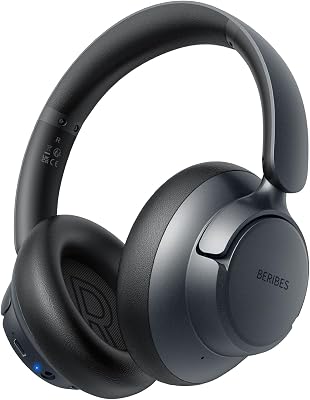
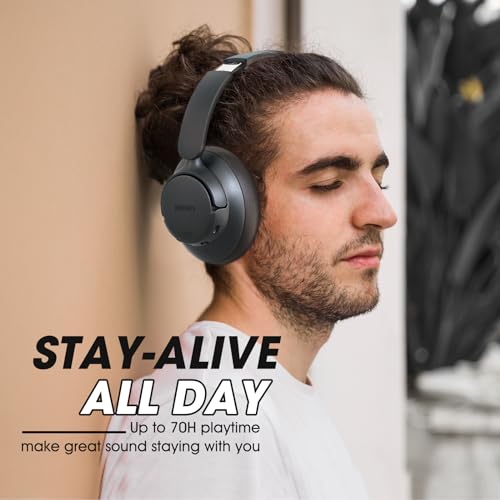
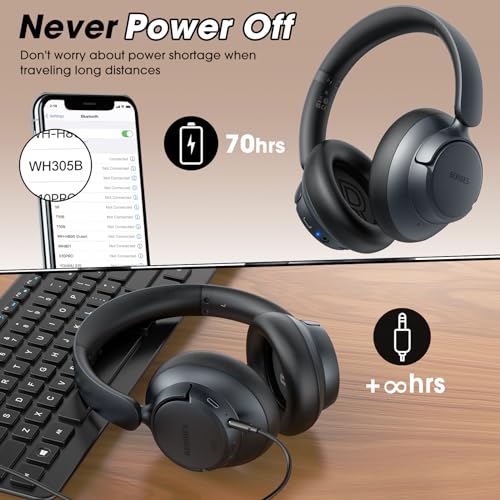
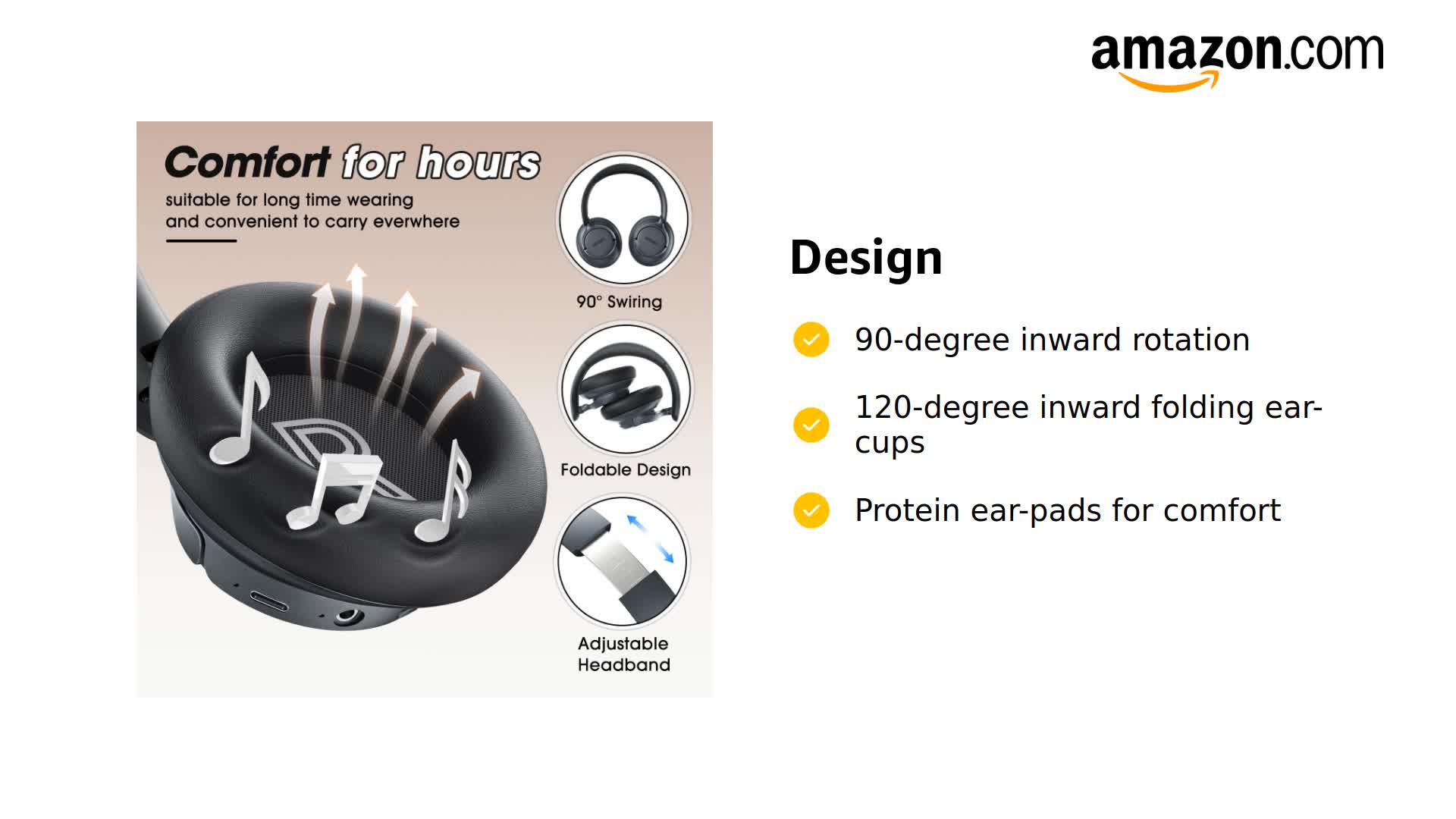
BERIBES Upgraded Hybrid Active Noise Cancelling Headphones with Transparent Modes,70H Playtime Bluetooth Headphones Wireless Bluetooth with Mic, Deep Bass,3.5MM Cable,Soft-Earpads,Fast Charging-Black
In Stock


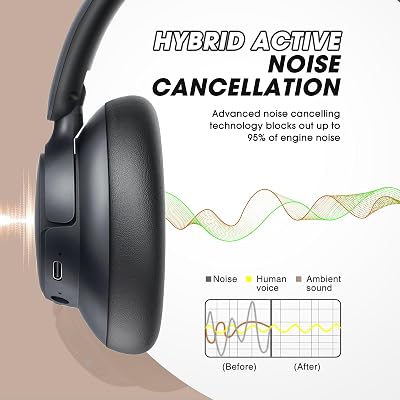


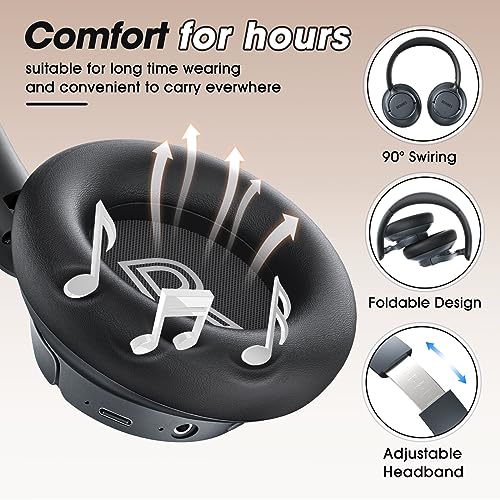
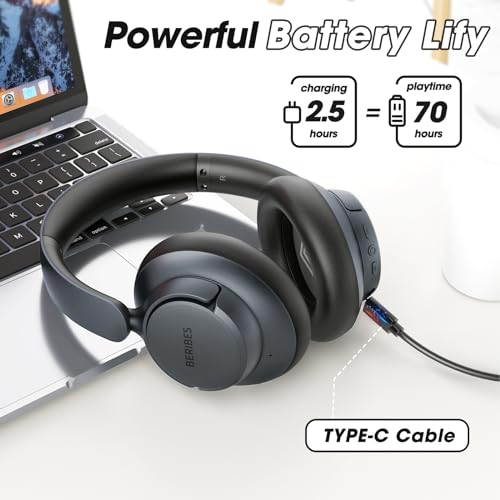
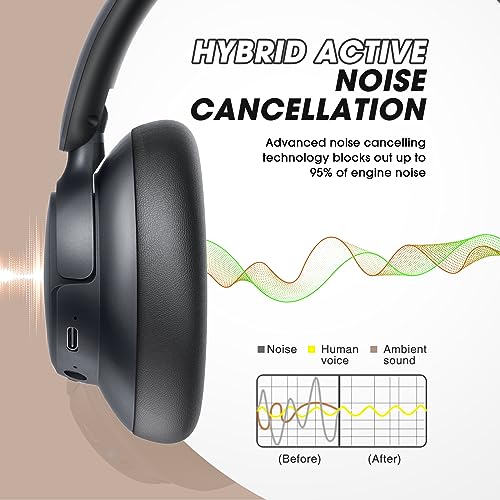
As an Amazon Associate we earn from qualifying purchases. Product prices and availability are accurate as of the date/time indicated.
The Backbone One USB-C remains the controller we recommend most often to iPhone users who do not want to think about pairing, drivers, or app stability. Backbone has spent four years refining its software stack, and the experience of plugging a Backbone into an iPhone 17 Pro is genuinely the closest thing to console-tier polish that mobile gaming offers. The Backbone app launches automatically, surfaces your installed compatible games in a single grid, integrates with cloud services, and gives you a clean screen recording and broadcasting layer that the competition has not caught up to.
The hardware is excellent if not class-leading. The second generation refined the analog sticks and triggers and added a USB-C passthrough port that fixed the single biggest complaint about the original. The grip is smaller than the Kishi V3, which is either a feature or a flaw depending on hand size and session length. Reviewers with smaller hands tend to prefer the Backbone; reviewers with hands larger than average tend to find it slightly cramped after an hour.
The reason the Backbone slips to second place in our tested ranking is the joysticks. The current generation Backbone One still uses traditional potentiometer sticks, not Hall Effect. Backbone offers an excellent warranty and quick replacement, but if you are spending $100 on a controller in 2026, the lack of Hall Effect sensors is increasingly hard to justify when the GameSir X3 Pro delivers them at a lower price.
One specific note for Android users: the Backbone One USB-C variant works on Android, but the Backbone app on Android is meaningfully less polished than the iOS version. If you are an Android-first gamer, the Razer Kishi V3 or GameSir X3 are usually better choices.
3. GameSir X3 Pro — Best Value Pick
The GameSir X3 Pro is the controller we would buy with our own money if we were on a budget and still wanted the long-term reliability of Hall Effect components. At roughly $79, it undercuts the Backbone by about 20 percent and the Kishi V3 Pro by nearly half, while delivering Hall Effect joysticks, Hall Effect triggers, and a built-in active cooling fan that draws air across the back of your phone during sustained sessions.
The trade-offs are real and worth understanding. The plastic feel is noticeably less premium than the Kishi V3 or Backbone. The included software, GameSir Nexus, has improved substantially over the past year but still does not match Backbone’s polish. The active cooling fan adds noticeable weight to the controller and produces an audible whine in quiet rooms, which is fine for headphone gaming but distracting otherwise. Finally, the X3 Pro is slightly bulkier than the slim Backbone form factor, which makes it less pocket-friendly.
None of those trade-offs change the underlying value proposition. For a mobile gamer who plays mostly demanding titles on Android — the X3 Pro is the controller we recommend most enthusiastically in 2026. It is the rare product where the cheaper option is not just acceptable but actually a smarter choice for the technical priorities that matter most to long-term mobile gaming.
4. Joycommander Telescopic Controller
The Joycommander is the choice for mobile gamers who fundamentally want the feel of a console controller and are willing to accept a less pocketable form factor in exchange. The grip dimensions are nearly identical to an Xbox Series controller, which is enormously comfortable for long sessions but completely impractical for casual on-the-go gaming. This is a controller you take out at home or on a long flight, not one you slip into a jacket pocket on a commute.
Where the Joycommander earns its place in our tested top tier is the hybrid connection support. It works as a wired USB-C controller for low-latency play with the bridge extended around your phone, and it can also pair over Bluetooth as a standalone controller for use with a smart TV, tablet, or even a Steam Deck. That versatility is genuinely useful — one controller for mobile gaming, casual TV streaming on Apple TV, and tablet gaming covers a remarkable range of use cases. The Hall Effect sticks and triggers carry the same long-term durability advantages as our other top picks.
The Joycommander loses points for software. There is no companion app worth recommending, button remapping is handled per-game, and firmware updates require a desktop tool that we found clunky. If software polish matters to you, look at the Razer or Backbone options first. If you primarily want a console-tier physical experience for mobile gaming and you do not mind handling configuration yourself, the Joycommander is excellent.
5. 8BitDo Ultimate 2C Wireless
The 8BitDo Ultimate 2C is the wildcard in our tested lineup because it is not actually a telescopic phone controller. It is a standalone wireless gamepad that costs about $45 and pairs over Bluetooth with phones, tablets, the Nintendo Switch, and PCs. We include it here because for a significant subset of mobile gamers, particularly cloud streaming enthusiasts who play with their phone propped up on a stand or projecting to a TV, a standalone wireless controller is the right answer.
The 2C uses Hall Effect joysticks despite its low price, which makes it one of the best long-term value plays in the entire controller market, not just the mobile segment. Build quality is well above what the price would suggest. Bluetooth latency is the obvious limitation — it is in the 30 to 50 ms range, which is fine for cloud gaming and RPGs but not ideal for competitive shooters. 8BitDo also sells a 2.4 GHz USB dongle separately that cuts that latency dramatically; pair the 2C with the dongle and a phone-compatible USB-C adapter and you have an excellent budget wireless setup.
The 2C battery is internal and rated for around 20 hours of play, which is more than enough for typical use patterns. The matte finish and tactile face buttons feel surprisingly good given the price. If you are setting up a phone on a stand for cloud gaming sessions, this controller is the smart choice and saves you about $50 over the telescopic alternatives.
6. Razer Kishi V2 Pro — Discounted Last-Gen Pick
The Kishi V2 Pro is still on shelves at heavy discount as Razer’s V3 lineup takes over, and at roughly $70 it represents real value for buyers who want haptics and the premium Razer build without the V3 Pro price tag. The V2 Pro lacks Hall Effect sticks, which is the main reason it does not appear higher in our ranking, but the rest of the package — solid haptic motors, a clean bridge design, decent app support, and excellent button feel — remains competitive.
Buy this if you primarily play single-player RPGs and cloud streaming titles where joystick drift over the long term is a tolerable risk in exchange for save money in the short term. Skip it if you play competitive games or expect to keep one controller for three-plus years.
Setup, Pairing, and Living With a Mobile Controller
The biggest tip we can offer for any controller in this guide is the same regardless of brand: take the time to dial in your per-game settings before your first long session. iOS 19 ships with system-level controller remapping in Settings under Game Controller, and Android 16 has equivalent options under the gaming dashboard introduced last year. Use them. Most mobile games default to button layouts that were designed for Xbox controllers in 2014 and have not been touched since.
For cloud streaming services specifically, install the dedicated apps rather than playing through a browser. Xbox Cloud Gaming, GeForce Now, and PlayStation streaming all have native apps for iOS and Android in 2026, and all three offer better latency and lower battery drain than browser-based play. Pair your controller while inside the app for the first time and the service will remember it on subsequent launches.
Heat management is the unsung issue in mobile gaming. Pass-through powered controllers like the Backbone and Kishi route your phone’s battery through the bridge, which can add 1 to 3 degrees to phone back temperature. Combined with the heat your phone generates from sustained AAA gaming, this can push thermal throttling earlier in your session. We recommend removing your phone case during long sessions when possible, playing in air-conditioned rooms when running demanding titles, and seriously considering the GameSir X3 Pro’s active cooling if you live somewhere hot or play heavily.
Battery life is the other constant trade-off. Plan for roughly 30 to 50 percent more battery drain per hour with a controller plugged in compared to touch controls, because the controller is drawing power and your screen is at full brightness during gameplay. A 20W or higher USB-C power bank that you can plug into a passthrough port turns this into a non-issue for sessions of any length.
FAQ
Do mobile controllers work with iOS and Android equally well?
In 2026, yes, with caveats. iOS 19 and Android 16 both support standard gamepad protocols and the major mobile games have native controller support. Where the experience diverges is companion apps — Backbone, Razer Nexus, and GameSir Nexus all have noticeably better iOS versions than Android versions.
Will a controller drain my phone battery faster?
Yes, but less than you would expect. Pass-through powered USB-C controllers like the Backbone and Kishi V3 draw power from your phone, which adds roughly 20 to 50 percent additional drain per hour compared to touch controls. Bluetooth controllers like the 8BitDo 2C have their own battery and do not drain your phone for controller power, but you are still gaming with the screen on, which is the dominant drain source. Using a USB-C power bank through a passthrough port eliminates the issue.
Why does the Backbone cost so much when the GameSir X3 Pro has more features?
Software polish, brand reliability, warranty support, and ecosystem integration. The Backbone One is the best-supported mobile controller from a long-term software perspective, particularly on iOS, and that genuinely matters for buyers who want to plug a controller into their phone and have it just work. The GameSir X3 Pro is the better technical buy for buyers willing to do a little setup work themselves and prioritize Hall Effect components.
Are Hall Effect joysticks really worth the upgrade?
For long-term ownership, absolutely. Traditional potentiometer joysticks have a finite lifespan and will eventually drift, usually within 12 to 24 months of heavy use. Hall Effect joysticks have no contact wear surface and remain accurate for the life of the device. The premium is typically $20 to $40 over a non-Hall Effect equivalent, and that premium pays for itself the first time you would have replaced a drifting controller.
Our Final Verdict
For 2026, our tested winner is the Razer Kishi V3 Pro. It is expensive, but the combination of Hall Effect components, premium build quality, genuine haptic feedback, and solid software support makes it the controller that earned permanent placement in our daily gaming setups. For buyers who want elite performance and are willing to pay for it, this is the recommendation.
If price matters, the GameSir X3 Pro is our pick without hesitation. Hall Effect at $79 with active cooling is a uniquely strong value proposition that the rest of the market has not matched. For iPhone users specifically who prioritize software polish over absolute spec sheets, the Backbone One USB-C remains an excellent choice. And for cloud gaming setups where you play with a stand or TV, the 8BitDo Ultimate 2C delivers genuinely great hardware for an embarrassingly low price.
The mobile controller market in 2026 is in the best shape it has ever been. Whatever you pick from this list, you will get a meaningfully better gaming experience than touchscreen controls deliver. The question is not whether to upgrade — it is which trade-offs make sense for your specific gaming life.
Related Reading
- Best Mobile Gaming Phones for 2026
- Best Cloud Gaming Services Tested for 2026
- Best Mobile Gaming Headsets for Low Latency
- iPhone 17 Pro Max Gaming Review
- ROG Phone 9 Pro Tested for Hardcore Gaming
- Best Power Banks for Mobile Gaming Sessions
- Cloud Gaming Controller Setup Guide
Frequently Asked Questions
What is the best mobile gaming controller for iPhone?
The Backbone One (USB-C/Lightning) is the top pick for iPhone, with a native-feeling layout and great app integration. The Razer Kishi V2 is the main alternative. Both turn an iPhone into a handheld for cloud gaming and supported App Store titles.
Are there good mobile controllers for Android phones?
Yes — the Backbone One (Android), Razer Kishi V2 and GameSir G8 all clamp around Android phones with USB-C and low latency. The GameSir G8 fits larger phones and cases better, making it a favourite for big Android flagships.
Related Guides
- HyperX SoloCast USB Microphone Review
- Best Desktop CPUs in 2026
- InnoGear Mic Boom Arm for Yeti, HyperX, SoloCast Review
- Amazon Basics Ergonomic Gel Wrist Rest Mouse Pad Review
- Best Motherboards for Machine Learning in 2026