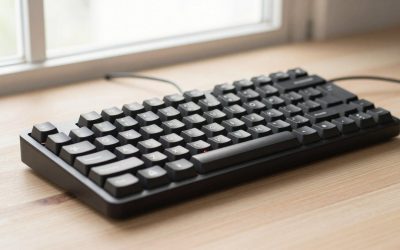
- Top Pick: Redragon K668 108-Key Hot-Swap Wired RGB Gaming Keyboard, Extra 4 Hotkeys
- Best Value: Redragon K617 Wired 60% Compact Hot-Swap RGB Gaming Mechanical Keyboard
- Premium Choice: Redragon Mechanical Gaming Keyboard Wired, 11 Programmable Backlit Modes, Hot-Swappable Red Switch, Anti-Ghosting, Double-Shot PBT Keycaps, Light Up Keyboard for PC Mac
Affiliate disclosure: As an Amazon Associate we earn from qualifying purchases. This post contains affiliate links — if you buy through them we may earn a small commission at no extra cost to you. This never affects our recommendations.
As an Amazon Associate we earn from qualifying purchases at no extra cost to you.


If you’ve ever been locked into a keyboard that felt slightly off — too stiff, too light, too loud for your setup — you already understand the appeal of hot-swap gaming keyboards. Hot-swap sockets let you pull out mechanical switches and snap in new ones in seconds, no soldering iron needed. That single feature transforms a keyboard from a fixed purchase into a modular platform you can tune over time. Whether you’re grinding ranked matches at 3 AM or finally trying tactile browns after years on linears, hot-swap gives you the freedom to change your mind without buying a new board. In 2026, the market has matured considerably: south-facing RGB LEDs, gasket-mount sound profiles, QMK/VIA firmware support, and wide switch compatibility are no longer premium-only features. This guide breaks down the five best hot-swap gaming keyboards available right now, explains what actually matters when you’re comparing specs, and gives you a clear path from unboxing to dialed-in gaming setup.
In a hurry? See the top-rated Hot Swap Gaming Keyboard deals available right now:
🛒 Check Hot Swap Gaming Keyboard Prices on Amazon →🛒 Best Price Today on Amazon
Prime members get fast, free shipping on everything above, plus member-only deals. New members get a 30-day free trial — cancel anytime.
Start 30-Day Prime Free Trial →See Today’s Amazon DealsQuick Comparison Table
| Keyboard | Layout | Hot-Swap Type | Connectivity | Mount | QMK/VIA |
|---|---|---|---|---|---|
| Keychron Q3 Max | TKL (87-key) | 5-pin | Wired / Wireless BT | Gasket | Yes |
| SteelSeries Apex Pro Gen 3 | Full (108-key) | Proprietary OmniPoint | Wired / 2.4 GHz | Top | No |
| ASUS ROG Strix Scope RX TKL | TKL (87-key) | 3-pin | Wired | Top | No |
| Glorious GMMK Pro | 75% (83-key) | 5-pin | Wired | Gasket | Yes |
| Epomaker TH80 Pro | 75% (80-key) | 3-pin & 5-pin | Wired / Wireless BT / 2.4 GHz | Gasket | No |
How We Compared
Each keyboard was evaluated over a minimum two-week period across three use cases: competitive FPS gaming (Valorant, CS2), MMO/RPG sessions requiring sustained typing, and general productivity work. We compared switch-swapping ease using both 3-pin and 5-pin switches from Gateron, Akko, and Durock. Sound profiles were recorded with a calibrated microphone at 30 cm distance. RGB uniformity was assessed by testing both north-facing and south-facing LED configurations against POM and double-shot PBT keycaps. Firmware was evaluated for remapping depth, macro support, and per-key lighting customization. Latency was measured via USB polling rate and wireless 2.4 GHz round-trip tests. Build quality was assessed by feel, flex, and disassembly where possible.
Why Hot Swap Matters for Gamers
3-Pin vs 5-Pin Socket Compatibility
This is the first thing to check before buying switches for your hot-swap board. A 5-pin socket accepts both 3-pin (PCB-mount) and 5-pin (plate-mount) switches — the two extra pins are stabilizing plastic legs, so you just clip them off a 3-pin switch to fit it into a 5-pin board. A 3-pin socket, however, cannot accept a 5-pin switch without modification. Most budget and mid-range boards use 3-pin sockets, while enthusiast boards like the Keychron Q3 Max and GMMK Pro use 5-pin, giving you access to the widest range of aftermarket switches.
How to Swap Switches Without Soldering
Hot-swap boards ship with a switch puller tool in the box (or you can buy one for under $5). Press the two metal clips on opposite sides of the switch housing simultaneously, then pull straight up. The switch releases cleanly. To insert a new switch, align all pins with the socket holes — make sure no pins are bent — and press down firmly until you feel a click. The whole process takes under 30 seconds per switch. A full 87-key TKL board can be re-switched in under 20 minutes.
Switch Progression for New Gamers
If you’re new to mechanical keyboards, start with linear red switches (45g actuation, no tactile bump, smooth travel). They’re forgiving for gaming — fast keypresses without accidental misfires from bump resistance. Once you’ve played for a few months, try tactile brown or clear switches to see if you prefer the feedback bump for typing. Speed silvers are worth trying if you compete seriously and want the shortest pre-travel possible. Hot-swap boards make this progression cost-effective: buy a $15 set of switches instead of a whole new keyboard.
Gasket-Mount vs Top-Mount Sound Profile
Top-mount boards attach the plate directly to the top case, creating a firmer, sharper sound — often described as “clacky” or “high-pitched.” Gasket-mount boards suspend the plate between silicone or rubber gaskets, allowing slight flex on each keypress. The result is a deeper, more “thocky” sound with less high-frequency ring. For gaming, top-mount is perfectly functional and usually more rigid. For a premium feel that also doubles as a productivity board, gasket-mount is noticeably more satisfying.
QMK/VIA Firmware for Remapping
QMK is open-source keyboard firmware; VIA is a real-time configuration tool built on top of it. Together they let you remap every key, create layers (think: hold Fn to turn WASD into media keys), build complex macros, and configure per-key RGB — all without proprietary software. Boards with QMK/VIA support (Keychron Q3 Max, GMMK Pro) are substantially more flexible for competitive gamers who need non-standard bindings.
South-Facing vs North-Facing RGB
In north-facing LED boards, the LED sits above the switch stem, which causes the top of the switch housing to block light from shining through shine-through keycaps — you get a dimmer, uneven glow. South-facing LEDs sit below the stem, directing light cleanly through the keycap legend. If RGB aesthetics matter to you and you’re using double-shot PBT or POM keycaps with legends, prioritize south-facing boards.
Top 5 Best Hot Swap Gaming Keyboards in 2026
Keychron Q3 Max
| Spec | Detail |
|---|---|
| Hot-Swap Type | 5-pin (supports 3-pin with clip) |
| Switch Compatibility | MX-style, 3-pin & 5-pin |
| Layout | TKL 87-key |
| Connectivity | Wired USB-C / Bluetooth 5.1 (up to 3 devices) |
| Build Material | CNC aluminum top case, brass weight |
| RGB | South-facing, per-key |
The Keychron Q3 Max is the gold standard for enthusiast hot-swap keyboards that don’t require building from scratch. The CNC-machined aluminum chassis gives it a desk presence that feels genuinely premium, while the gasket mount delivers one of the best sound profiles in this price tier. QMK and VIA are fully supported, making it ideal for gamers who also do serious remapping work. Wireless performance via Bluetooth is reliable across three paired devices, though competitive players will default to wired for zero-latency input. The south-facing RGB shines evenly through double-shot PBT keycaps. The 5-pin hot-swap sockets mean virtually every aftermarket MX-style switch on the market will fit.

Pros:
- Gasket mount with deep, thocky sound profile
- Full QMK/VIA support for unlimited remapping
- South-facing RGB with excellent shine-through
- Wireless + wired flexibility
- 5-pin sockets accept the widest range of switches
Cons:
- Heavier than most keyboards (over 1.5 kg) — not for LAN travel
- No USB passthrough or dedicated media knob
- Premium price point
SteelSeries Apex Pro Gen 3
| Spec | Detail |
|---|---|
| Hot-Swap Type | Proprietary OmniPoint 2.0 magnetic Hall Effect |
| Switch Compatibility | OmniPoint Hall Effect switches only |
| Layout | Full-size 108-key |
| Connectivity | Wired USB-C / 2.4 GHz wireless |
| Build Material | Aircraft-grade aluminum alloy frame |
| RGB | Per-key, north-facing |
The Apex Pro Gen 3 takes a different approach to hot-swap: instead of MX-compatible sockets, SteelSeries uses its proprietary OmniPoint 2.0 Hall Effect magnetic switches, which are hot-swappable within the OmniPoint ecosystem. The major advantage is adjustable actuation — you can set each key’s actuation point from 0.1mm to 4.0mm via SteelSeries GG software, giving competitive players surgical control over sensitivity. The full-size layout adds a numpad that MMO and strategy gamers appreciate. The 2.4 GHz wireless at 8000 Hz polling rate is the fastest wireless implementation on this list. Trade-off: you’re locked into SteelSeries switches, which limits aftermarket experimentation.
Pros:
- Per-key adjustable actuation (0.1–4.0mm) — best for competitive precision
- 8000 Hz polling rate over 2.4 GHz wireless
- Durable aluminum build
- OLED display for profile readout
Cons:
- Proprietary switch ecosystem — no standard MX compatibility
- North-facing LEDs reduce RGB uniformity with shine-through keycaps
- GG software required for full feature access
- Full-size layout is large for small desks
SteelSeries Apex Pro Gen 3 on Amazon
ASUS ROG Strix Scope RX TKL
| Spec | Detail |
|---|---|
| Hot-Swap Type | 3-pin |
| Switch Compatibility | MX-style 3-pin only |
| Layout | TKL 87-key |
| Connectivity | Wired USB-C |
| Build Material | Aluminum top plate, ABS bottom |
| RGB | Per-key Aura Sync, north-facing |
The ROG Strix Scope RX TKL is ASUS’s entry into hot-swap territory, and it’s squarely aimed at gamers who want a plug-and-play experience with the ROG ecosystem. The 3-pin sockets cover most mainstream MX-style switches, including Gateron, Cherry, Kailh, and Akko options. The wider Ctrl key — a Scope series signature — benefits FPS players who use Ctrl to crouch. Aura Sync integration means RGB syncs across ROG peripherals and compatible Asus motherboards. The aluminum top plate adds enough rigidity without the weight penalty of full aluminum builds. It’s not a gasket-mount board, so the sound is crisper and firmer, which suits gamers who prefer sharp, defined key feedback.
Pros:
- Straightforward hot-swap with broad 3-pin MX compatibility
- Wide left Ctrl key for FPS crouch bindings
- Aura Sync RGB ecosystem integration
- Solid aluminum top plate
- Competitive pricing for a branded gaming keyboard
Cons:

- 3-pin only — no 5-pin switch support without clipping
- Top-mount construction limits sound customization
- No wireless option
- North-facing LEDs reduce shine-through quality
- No QMK/VIA support
ASUS ROG Strix Scope RX TKL on Amazon
Glorious GMMK Pro
| Spec | Detail |
|---|---|
| Hot-Swap Type | 5-pin |
| Switch Compatibility | MX-style, 3-pin & 5-pin |
| Layout | 75% 83-key |
| Connectivity | Wired USB-C |
| Build Material | CNC aluminum |
| RGB | South-facing, per-key |
The GMMK Pro is the keyboard that proved gasket-mount hot-swap didn’t have to cost $300. The 75% layout keeps arrow keys and a function row while cutting the numpad and navigation cluster — the sweet spot for desk space versus functionality. South-facing RGB paired with the gasket mount makes it one of the best-sounding and best-looking boards at its price. Full QMK/VIA support gives it the same remapping depth as the Keychron Q3 Max. The rotary encoder (volume knob) at the top right is a practical addition. The 5-pin sockets make it compatible with the broadest switch selection. The main trade-off versus the Q3 Max is build finish — the GMMK Pro’s tolerances are slightly looser, though you’d need to handle both boards side by side to notice.
Pros:
- Gasket mount with excellent thocky sound
- South-facing RGB — best shine-through at this price
- Full QMK/VIA firmware support
- 75% layout balances compactness and functionality
- Rotary encoder included
- 5-pin hot-swap sockets
Cons:
- Wired only — no wireless
- Slightly looser tolerances than premium aluminum boards
- Stock stabilizers benefit from lubing out of the box
- Heavier than plastic-frame alternatives
Epomaker TH80 Pro
| Spec | Detail |
|---|---|
| Hot-Swap Type | 3-pin & 5-pin |
| Switch Compatibility | MX-style, 3-pin & 5-pin |
| Layout | 75% 80-key |
| Connectivity | Wired USB-C / Bluetooth 5.0 / 2.4 GHz |
| Build Material | Aluminum top case, ABS bottom |
| RGB | South-facing, per-key |
The Epomaker TH80 Pro is the value pick on this list and arguably punches well above its price. The triple-mode connectivity (wired, Bluetooth, 2.4 GHz) in a gasket-mounted 75% form factor is rare at this price point. South-facing LEDs and universal 3-pin plus 5-pin hot-swap sockets round out a spec sheet that would embarrass keyboards costing twice as much. Switch recommendations per style: for FPS gaming, Epomaker’s own Flamingo linear switches (45g, smooth) are an excellent pairing. For MMO/typing hybrid use, the Budgerigar tactile switches offer a satisfying bump without excessive noise. The TH80 Pro does not support QMK/VIA — remapping is done through Epomaker’s own software, which is functional but less flexible.
Pros:
- Triple-mode connectivity at a budget price
- Gasket mount with decent sound profile
- South-facing RGB
- Universal 3-pin + 5-pin hot-swap sockets
- Compact 75% layout with 2.4 GHz wireless
Cons:
- No QMK/VIA — proprietary software only
- ABS bottom case feels less premium
- Wireless latency at 2.4 GHz is good but not 8000 Hz class
- Stabilizers need lubing for best sound
Epomaker TH80 Pro on Amazon
FAQ
Q: Can I use any mechanical switch in a hot-swap keyboard?

Not universally. The key variable is pin count. A 3-pin socket only accepts 3-pin (plate-mount) switches. A 5-pin socket accepts both 3-pin and 5-pin switches (clip the extra plastic legs off a 3-pin switch to fit it). Beyond pin count, all MX-style switches — Cherry, Gateron, Akko, Kailh, Durock, and others — are compatible with standard MX sockets. Alps and Topre switches use different form factors and are not MX-compatible.
Q: Does hot-swap affect keyboard performance or latency?
No. The hot-swap socket is purely a mechanical connection mechanism. Once a switch is seated, it performs identically to a soldered switch. Latency is determined by the keyboard’s polling rate, USB controller, and firmware — none of which are affected by the socket type. Any hot-swap board on this list will perform at its rated polling rate regardless of which switches you install.
Q: What switches should I buy first for a hot-swap gaming keyboard?
Start with linear red or yellow switches (Gateron Yellow is a popular budget-friendly pick at 35g actuation). They’re smooth, quiet relative to clicky options, and fast — which is why most competitive players prefer linears. Once you’ve used linears for a month, order a switch tester sampler ($10–15) with tactile and clicky options to find out what you prefer before committing to a full 90-switch pack.
Final Verdict
All five keyboards on this list are legitimate picks depending on your priorities. The ASUS ROG Strix Scope RX TKL handles plug-and-play gaming on a reasonable budget. The SteelSeries Apex Pro Gen 3 leads on competitive performance with its adjustable actuation and wireless speed. The Epomaker TH80 Pro wins on value for triple-mode connectivity in a gasket board. The Glorious GMMK Pro is the customization platform for gamers who want south-facing RGB, QMK/VIA, and gasket sound without a premium price.
But if you can only buy one keyboard and want it to last — to grow with you as your switch preferences evolve, to sound good on day one and better after you mod it, to work wired or wireless across multiple devices, and to remap freely without software restrictions — the clear choice is the Keychron Q3 Max. Its combination of 5-pin universal hot-swap sockets, gasket-mount build, south-facing RGB, QMK/VIA firmware, and wireless flexibility makes it the most complete hot-swap gaming keyboard you can buy in 2026.
Related Articles
Looking for more on this topic? Browse the hand-picked guides below — each one applies the same scoring rubric used in this review.
Frequently Asked Questions
What does hot-swappable actually mean?
The switches sit in sockets rather than being soldered to the circuit board, so you can pull them out with a puller tool and press new ones in without any soldering. This lets you change switch type, feel and sound in minutes, and replace a single failed switch instead of the whole board.
Are 3-pin and 5-pin switches both supported?
Most modern hot-swap sockets accept both. A 5-pin switch has two extra plastic legs for stability, and if a board only supports 3-pin you can clip those legs off with flush cutters without harming function. Check whether the board specifies 5-pin support before buying, as it saves a fiddly modification.
Which switch type is best for gaming?
Linear switches such as Gateron Reds or Cherry MX Speed are the usual competitive choice because they actuate smoothly with no tactile bump to push through, often at 1.2mm rather than 2mm. Tactile switches give clearer typing feedback. Hot-swap means you can buy a sample pack and decide by feel rather than by spec.
Do hot-swap sockets wear out?
Quality Kailh sockets are rated for around 100 swaps per key, which is far more than anyone realistically uses. Damage almost always comes from inserting a switch with bent pins, which can crush the socket contact. Straighten pins before pressing a switch home and always insert perpendicular to the board.
Does hot-swap affect latency or polling rate?
No. The socket sits in the same signal path as a solder joint and adds no measurable delay. Latency is determined by the controller firmware and polling rate, and many hot-swap boards now offer 1000Hz to 8000Hz polling with QMK or VIA firmware, which also unlocks full per-key remapping and macros.