- Top Pick: ASUS TUF Gaming ARGB PWM Fan Hub (Connects six case Fans, PWM Fan and RGB Connector, Clear Power and Operation Indicators, Stable Dual SATA Power Support), 2 Year Warranty
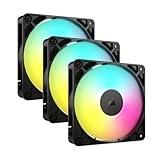
- Best Value: CORSAIR RS120 ARGB 120mm PWM Fans – Daisy-Chain Connection – Low-Noise – Magnetic Dome Bearing – Triple Pack – Black
- Premium Choice: ASUS TUF Gaming TF120 ARGB White Chassis Fan Customizable LEDs, Advanced Fluid Dynamic Bearing, 120mm PWM Control, Anti-Vibration Pads, Double-Layer LED Array, Aura Sync, 2 Year Warranty
Affiliate disclosure: As an Amazon Associate we earn from qualifying purchases. This post contains affiliate links — if you buy through them we may earn a small commission at no extra cost to you. This never affects our recommendations.
- ARGB vs aRGB vs RGB — What’s the Difference?
- Daisy-Chain Wiring vs Individual Headers
- Airflow vs Static Pressure Fans — Position Matters
- Ecosystem Lock-In Considerations
- Quick Comparison Table
- Top 5 Best ARGB Case Fans for Gaming PC in 2026
- How to Choose the Right ARGB Case Fans
- Final Verdict
- Frequently Asked Questions
- Related Articles
- Related Articles
As an Amazon Associate we earn from qualifying purchases at no extra cost to you.



Your build deserves fans that look as good as they perform. ARGB case fans have become the standard for any RGB gaming rig — but sorting through the specs, wiring nightmares, and software lock-ins takes real research. We did that work for you.
This guide covers the top five best ARGB case fans for gaming PC builds in 2026, with a focus on real airflow numbers, noise levels, daisy-chain capability, and ecosystem compatibility. Whether you’re building a clean all-white aesthetic or a full RGB showcase, there’s a pick here for you.
In a hurry? See the top-rated ARGB Case Fans for Gaming PC deals available right now:
🛒 Check Argb Case Fans For Gaming Pc Prices on Amazon →🛒 Best Price Today on Amazon
Prime members get fast, free shipping on everything above, plus member-only deals. New members get a 30-day free trial — cancel anytime.
Start 30-Day Prime Free Trial →See Today’s Amazon DealsARGB vs aRGB vs RGB — What’s the Difference?
Before buying, you need to know what header your motherboard actually has. RGB (sometimes called 4-pin RGB) is the old standard — all LEDs in a fan glow a single color simultaneously, set by voltage. ARGB and aRGB are the same thing: addressable RGB, using a 3-pin 5V ARGB header. Each LED is individually addressable, enabling animations, gradients, and reactive lighting. If your motherboard has a ARGB header labeled “ADD_GEN2” or “ARGB”, you’re good to go with any fan in this list.
Never connect a 5V ARGB fan to a 12V RGB header — you will fry the LEDs. Check your motherboard manual.
Daisy-Chain Wiring vs Individual Headers
This is where most builders make mistakes. Individual header fans each require their own ARGB header on the motherboard or a hub. A three-fan setup eats three headers — many mid-range boards only have two. Daisy-chain fans connect LED signals fan-to-fan using a pass-through connector, meaning all three fans plug into a single ARGB header. The result: cleaner cable management and zero hub dependency.
If your case has five or more fans, daisy-chain wiring is practically mandatory. The Lian Li UNI FAN and Arctic P12 PST both support this natively.
Airflow vs Static Pressure Fans — Position Matters
Not all fans should go in all positions. Airflow fans have wide, swept blades optimized for moving large volumes of air across open spaces — ideal for front intake and top exhaust. Static pressure fans have narrower, more aggressive blade profiles designed to push air through resistance — the right choice for radiators, heatsinks, and dense mesh front panels.
Using a static pressure fan as a rear exhaust wastes potential. Using an airflow fan on a radiator cuts cooling performance noticeably. Match the fan type to the position, not just the aesthetics.
Ecosystem Lock-In Considerations
Corsair iCUE, Lian Li L-Connect, NZXT CAM, and ASUS Aura Sync all want to be your single RGB controller — and they don’t always play nice together. If you’re running a Corsair motherboard with iCUE, the Corsair LL120 Pro is the obvious pick. Mixing brands across software ecosystems often means running two RGB apps simultaneously, which adds startup overhead and occasional conflict.
If you want true software-agnostic control, look for fans that work over standard ARGB headers without proprietary controllers.
Quick Comparison Table
| Product | Size | Airflow (CFM) | Noise (dBA) | Daisy-Chain | Price Range |
|---|---|---|---|---|---|
| Lian Li UNI FAN SL120 V2 | 120mm | 56.4 CFM | 28.7 dBA | Yes (up to 4) | $25–$30/fan |
| Corsair LL120 Pro RGB | 120mm | 43.25 CFM | 24.8 dBA | No (hub req.) | $25–$35/fan |
| NZXT F120 RGB Core | 120mm | 52.5 CFM | 28.0 dBA | No (CAM hub) | $18–$22/fan |
| be quiet! Light Wings | 120mm / 140mm | 53.7 CFM | 19.8 dBA | No | $20–$28/fan |
| Arctic P12 PWM PST ARGB | 120mm | 56.3 CFM | 22.5 dBA | Yes (PWM+ARGB) | $10–$14/fan |
Top 5 Best ARGB Case Fans for Gaming PC in 2026
#1 Lian Li UNI FAN SL120 V2 — Best Overall
The Lian Li UNI FAN SL120 V2 is the cleanest ARGB fan solution available in 2026. Each fan slots directly into the next via a physical daisy-chain connection, meaning a three-pack links together with a single USB and a single PWM cable running to the motherboard — no hub, no separate RGB splitter, no rat’s nest behind the motherboard tray. With 16 addressable LEDs per fan spread across the entire frame (not just the blades), the SL120 V2 produces uniformly bright, edge-lit lighting that stands out even through tinted glass.

Airflow performance at 56.4 CFM matches fans twice its price, and the 28.7 dBA noise floor stays inaudible at mid-speed. L-Connect 3 software is genuinely polished, supporting speed curves, lighting effects, and temperature sensors with no bloat. The physical daisy-chain also means units are interchangeable — add a fourth fan later and it snaps right in.
Pros:
- True physical daisy-chain: up to 4 fans on a single header
- 16 LEDs per fan with full-frame illumination
- 56.4 CFM airflow — top-tier for 120mm
- L-Connect 3 software is clean and stable
- Available in white and black to match any build aesthetic
Cons:
- Higher per-fan cost compared to budget alternatives
- L-Connect 3 adds another RGB app to manage
- Slightly bulkier connector block can crowd tight fan mounts
- Single-sided lighting (front face only) — rear LEDs are minimal
Shop Lian Li UNI FAN SL120 V2 on Amazon
#2 Corsair LL120 Pro RGB — Best Corsair Option
The Corsair LL120 Pro RGB remains one of the most visually striking 120mm fans on the market, thanks to its signature dual light loop design — two separate rings of 16 LEDs each (32 total per fan) that produce deep, layered RGB effects you simply cannot replicate with a single-ring design. If iCUE is already your RGB ecosystem because of a Corsair keyboard, mouse, or cooler, the LL120 Pro integrates without friction and allows temperature-reactive lighting tied to your CPU or GPU sensors.
Airflow sits at a modest 43.25 CFM, which makes the LL120 Pro better suited for intake positions or light radiator use rather than heavy static pressure applications. At 24.8 dBA, it’s notably quiet for a Corsair fan, and the build quality — reinforced blade tips, hydraulic bearing — is typical of Corsair’s premium tier. You do need the Corsair Lighting Node PRO or Commander Core controller to run multiple fans, which adds cost if you’re not already in the ecosystem.
Pros:
- Dual light loop with 32 LEDs per fan — best lighting depth in class
- Native iCUE integration for Corsair-heavy builds
- 24.8 dBA — quiet at cruise speeds
- Proven hydraulic bearing for long-term reliability
- Temperature-reactive RGB via iCUE sensor linkage
Cons:
- Requires Corsair Lighting Node PRO controller (sold separately)
- 43.25 CFM airflow is below average for 120mm
- Expensive when factoring in controller cost
- Deep iCUE dependency — poor choice for mixed-brand builds
Shop Corsair LL120 Pro RGB on Amazon
#3 NZXT F120 RGB Core — Best NZXT Option
The NZXT F120 RGB Core is built for builders who want clean, minimalist RGB without fighting complicated software. NZXT’s CAM platform controls lighting and fan curves from a single, uncluttered dashboard that takes minutes to set up — a genuine contrast to bloated alternatives. Each fan features 8 addressable LEDs arranged around the hub, producing a focused glow that pairs well with the F120’s translucent blade design.
At 52.5 CFM with a 28.0 dBA ceiling, the F120 RGB Core sits solidly in the mid-tier for both airflow and noise. Static pressure performance is adequate for thin radiators but not optimized for dense fin stacks — treat it as an airflow fan for best results. The fan requires NZXT’s RGB & Fan Controller or a compatible CAM hub to sync with other NZXT components, though it will also work on a standard ARGB header in basic mode without CAM.
Pros:

- CAM software is the cleanest RGB dashboard in the category
- 52.5 CFM — strong airflow for a mid-range fan
- Compatible with standard ARGB headers (no controller required for basic use)
- Fluid dynamic bearing for low-wear long life
- Consistent build quality across NZXT’s lineup
Cons:
- Only 8 LEDs — less visual impact than competing designs
- Full CAM features require NZXT controller accessory
- Limited lighting customization vs Lian Li or Corsair
- No physical daisy-chain — each fan needs its own cable run
Shop NZXT F120 RGB Core on Amazon
#4 be quiet! Light Wings — Best for Quiet Builds
The be quiet! Light Wings is the only fan on this list where silence is the primary engineering goal — and it delivers. With a noise floor of just 19.8 dBA at full speed, the Light Wings is functionally inaudible in a closed-panel case at anything below 70% RPM. That acoustic performance comes from be quiet!’s signature triple-layer motor dampening, anti-vibration pads on all four corners, and a fluid dynamic bearing rated to 80,000 hours MTBF.
Lighting uses 18 addressable LEDs distributed across both the blade edges and the hub, creating softer, more diffuse illumination compared to the sharp-ring look of competitors — a deliberate aesthetic choice for premium understated builds. Available in both 120mm and 140mm sizes, the Light Wings also supports PWM control down to near-zero RPM without stutter. It works on any standard ARGB header without proprietary software, making it the most ecosystem-agnostic option in this list.
Pros:
- 19.8 dBA — quietest fan in this roundup by a significant margin
- 18 LEDs with edge-and-hub distribution for diffuse, premium lighting
- Available in 120mm and 140mm — covers all case positions
- No proprietary software required — plug into any ARGB header
- Anti-vibration pads and triple-layer dampening eliminate chassis resonance
Cons:
- Premium price without daisy-chain support
- Softer lighting may disappoint buyers wanting maximum RGB punch
- Airflow (53.7 CFM) is good but not class-leading
- No dedicated companion software for effects beyond basic control
Shop be quiet! Light Wings on Amazon
#5 Arctic P12 PWM PST ARGB — Best Value ARGB
The Arctic P12 PWM PST ARGB is the undisputed value champion of ARGB case fans. At $10–$14 per fan, it delivers 56.3 CFM airflow and genuine ARGB lighting with a daisy-chain PWM feature (PST = PWM Sharing Technology) that lets you chain multiple fans to a single PWM header for synchronized speed control — a feature most budget fans skip entirely. The ARGB lighting uses a standard 3-pin 5V connector compatible with any motherboard ARGB header.
The P12’s blade profile is optimized for static pressure, making it particularly well-suited for radiator duty, mesh front panels, and dense intake positions where budget fans typically fall short. LED count is modest and the illumination is less polished than premium options, but at this price point, building a six-fan setup costs less than a single pack of premium alternatives. If your priority is functional cooling with working RGB on a tight budget, the Arctic P12 PST ARGB is the obvious answer.
Pros:
- Exceptional value — under $14 per fan at most retailers
- 56.3 CFM — matches premium fans on raw airflow
- PWM daisy-chain (PST) for synchronized speed on one header
- Static pressure-optimized for radiators and mesh panels
- Standard ARGB header — no proprietary software or hub
Cons:
- LED count and lighting uniformity below premium tier
- Build materials feel budget-grade (acceptable at this price)
- No dedicated RGB software — reliant on motherboard utility
- Less visual impact in a showcase build vs Lian Li or Corsair
Shop Arctic P12 PWM PST ARGB on Amazon
How to Choose the Right ARGB Case Fans
120mm vs 140mm Fans
120mm fans are the default for most cases — compatible with nearly every mount point, more fan options available, and easier to mix and match. 140mm fans move more air at lower RPM for the same noise output, making them the superior choice where your case supports them (typically front intake and top positions on mid-tower and full-tower cases). If you can run 140mm up front and 120mm everywhere else, do it. Don’t force 120mm fans into 140mm mounts with adapters — you lose the airflow advantage entirely.
Airflow vs Static Pressure Positions
Follow this simple rule: front intake and rear/top exhaust = airflow fans; radiator mounts and heatsink positions = static pressure fans. If your case has a dense mesh front panel (as most modern cases do), static pressure fans at the front out-perform airflow fans significantly — the mesh acts like a filter the fan has to breathe through. When in doubt, check your case manufacturer’s recommendation for the specific mount.
LED Count and Visibility
More LEDs means more visible, more uniform lighting — but only if the LEDs are positioned where they can actually be seen. 16+ LEDs spread across the fan frame (like the Lian Li SL120 V2) produce the most dramatic effect. Hub-only LEDs (like the NZXT F120) look great when the fan is directly visible but disappear at angle. Edge LEDs (like the be quiet! Light Wings) produce a softer glow suited to premium builds without RGB overkill. Consider your case’s glass panel angle before deciding LED count matters most.
Daisy-Chain vs Individual Wiring
Count your ARGB headers before buying. Most B650 and Z790 motherboards include 2–3 ARGB headers. A six-fan build without daisy-chain requires either a hub (extra cost, extra cable) or a motherboard with six ARGB headers (rare). If you’re running four or more fans, prioritize daisy-chain capability — the Lian Li SL120 V2 and Arctic P12 PST ARGB both deliver this without requiring a hub.
Software Ecosystem Compatibility
If you already run Corsair iCUE, stay Corsair — mixing brands means running two RGB apps. If you’re building fresh with an ASUS or MSI motherboard, any standard ARGB fan will sync with Aura Sync or Mystic Light without third-party software. If you want zero software overhead, the be quiet! Light Wings and Arctic P12 PST ARGB work on standard ARGB headers with no companion app required.
Budget per Fan
Set your budget per fan, not total. As a rough guide:
- Under $15/fan: Arctic P12 PST ARGB — functional RGB, excellent airflow, no frills
- $18–$25/fan: NZXT F120 RGB Core — clean aesthetic, good airflow, decent software
- $25–$30/fan: Lian Li SL120 V2, be quiet! Light Wings, Corsair LL120 Pro — premium performance, standout lighting
Don’t mix tiers in the same case if visual consistency matters. A three-pack of Arctic P12s looks more cohesive than two SL120 V2s paired with one LL120 Pro.
Final Verdict
For most builders in 2026, the Lian Li UNI FAN SL120 V2 is the correct answer. It eliminates the biggest pain points of ARGB fan installation — the wiring, the hub dependency, the software friction — while delivering top-tier airflow and the best full-frame lighting available in a 120mm form factor. The price premium over budget options is real, but the time saved on cable management alone justifies it for any serious build.
If you’re committed to the Corsair ecosystem, the LL120 Pro RGB is unmatched for depth of lighting and iCUE integration — just budget for the controller. For quiet-first builds where noise is a genuine priority and not just a marketing bullet point, the be quiet! Light Wings stands alone: nothing else in this category hits 19.8 dBA with real airflow numbers and proper RGB support.
Budget builders don’t need to compromise on airflow or lighting. The Arctic P12 PWM PST ARGB at under $14 per fan out-performs fans twice its price on CFM, supports daisy-chain PWM, and works on any standard ARGB header. Fill a six-fan case for less than the cost of a premium three-pack and spend the savings on your GPU instead.
Frequently Asked Questions
What is the difference between RGB and ARGB fans?
RGB fans display one color across the whole fan, while ARGB, or addressable RGB, controls each LED individually for effects like rainbows and gradients. ARGB is far more flexible for custom lighting.
Do ARGB case fans improve cooling?
The lighting itself does not, but good ARGB fans combine looks with strong airflow and static pressure. Buy fans rated for solid airflow first and treat the RGB as a bonus.
How many case fans do I need for a gaming PC?
Three is a practical minimum: two intake at the front and one exhaust at the rear. Larger cases benefit from extra top exhaust fans for improved airflow.
Do ARGB fans need a controller?
They need a 3-pin 5V ARGB header on your motherboard or an included hub. If your board lacks enough headers, a bundled controller lets you run and sync multiple fans.
Related Articles
Looking for more on this topic? Browse the hand-picked guides below — each one applies the same scoring rubric used in this review.