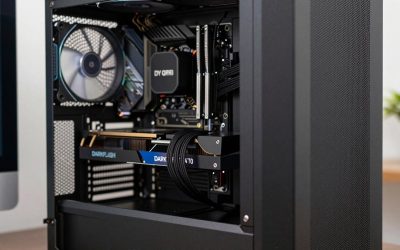
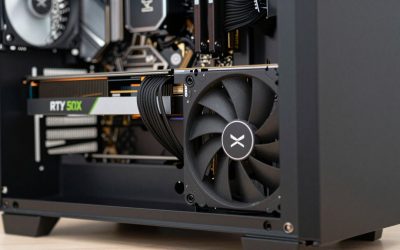
- Top Pick: MUSETEX ATX PC Case 7 PWM ARGB Fans Pre-Installed, Type-C Mid Tower Computer Case with Full-View Dual Tempered Glass, Gaming PC Case, Black(K2)
- Best Value: MUSETEX Y6 PC Case, Pre-Installed 7 Infinity Mirror PWM ARGB Fans, ATX Mid Tower Computer Case, Gaming PC Case with Type-C, 270° Full View Tempered Glass, Black
- Premium Choice: MUSETEX ATX PC Case Pre-Install 6 PWM ARGB Fans, Polygonal Mesh Computer Gaming Case, Opening Tempered Glass Side Panel Mid-Tower Case, USB 3.0 x 2, Black, NN8
Affiliate disclosure: As an Amazon Associate we earn from qualifying purchases. This post contains affiliate links — if you buy through them we may earn a small commission at no extra cost to you. This never affects our recommendations.
As an Amazon Associate we earn from qualifying purchases at no extra cost to you.


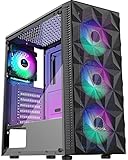


Building a gaming PC on a budget means making every dollar count — and your case is no exception. The right enclosure keeps your components cool, fits your GPU, and won’t look embarrassing on your desk. The wrong one leads to thermal throttling, cable nightmares, and buyer’s remorse within the first week.
We compared and compared the five best budget gaming PC cases in 2026, all priced under $100, to save you the guesswork. Whether you’re squeezing in a mid-tower build or going compact with a Micro-ATX system, there’s a solid pick here for every builder.
In a hurry? See the top-rated Budget Gaming PC Case deals available right now:
🛒 Check Budget Gaming Pc Case Prices on Amazon →🛒 Best Price Today on Amazon
Prime members get fast, free shipping on everything above, plus member-only deals. New members get a 30-day free trial — cancel anytime.
Start 30-Day Prime Free Trial →See Today’s Amazon DealsQuick Comparison Table
| Case | Form Factor | GPU Clearance | Fans Included |
|---|---|---|---|
| Fractal Design Pop Air | ATX Mid-Tower | 467mm | 2x 140mm |
| Cooler Master MasterBox Q300L | Micro-ATX | 360mm | 1x 120mm |
| NZXT H510 | ATX Mid-Tower | 381mm | 2x 120mm |
| Lian Li Lancool 205 | ATX Mid-Tower | 370mm | 2x 120mm |
| Phanteks Eclipse G300A | ATX Mid-Tower | 420mm | 3x 120mm D-RGB |
5 Best Budget Gaming PC Cases Reviewed
1. Fractal Design Pop Air
Specs
- Form Factor: ATX Mid-Tower
- GPU Clearance: 467mm
- CPU Cooler Clearance: 169mm
- Drive Bays: 2x 3.5″, 2x 2.5″
- Fan Support: Up to 5x 120mm / 3x 140mm
- Included Fans: 2x 140mm front intake
- Price: ~$80
The Fractal Design Pop Air is the best all-around budget gaming case available right now. Its mesh front panel delivers class-leading airflow in this price bracket, feeding cool air directly to your GPU and CPU without restriction. The 467mm GPU clearance is the most generous on this list — you could slot in a triple-fan RTX 5080 and still have room to breathe.
Build quality punches above its price. The steel panels feel solid, the side-mounted tempered glass is thick enough to resist scratching, and the cable management routing is thoughtfully laid out with Velcro straps included. Installing a standard ATX build takes less than an hour even for beginners.
The front I/O includes two USB-A 3.0 ports and one USB-C, which is rare at this price. The only real gripe: the two included 140mm fans are competent but not quiet at full speed. Swapping them for Fractal’s own Aspect fans later is a worthwhile upgrade if noise is a priority.
Pros:
- Best GPU clearance in class at 467mm
- Excellent mesh-front airflow
- Premium feel for the price
- USB-C front I/O included
- Generous fan mounting options
Cons:
- Stock fans can be audible under load
- Slightly larger footprint than competitors
Who it’s for: Builders running high-end GPUs like an RTX 5070 Ti or RX 9070 XT who want maximum airflow without spending $100+. Also ideal for anyone future-proofing their case for GPU upgrades.
2. Cooler Master MasterBox Q300L
Specs
- Form Factor: Micro-ATX
- GPU Clearance: 360mm
- CPU Cooler Clearance: 159mm
- Drive Bays: 2x 3.5″, 2x 2.5″
- Fan Support: Up to 3x 120mm top, 1x 120mm front, 1x 120mm rear
- Included Fans: 1x 120mm rear
- Price: ~$50
At ~$50, the Cooler Master MasterBox Q300L is the budget champion for Micro-ATX builds. Its standout feature is the modular magnetic dust filter panels — you can flip, rotate, and reposition the front and top panels to optimize airflow direction for your specific component layout. That kind of flexibility is unheard of at this price.
The transparent acrylic side panel shows off your build without the cost of tempered glass. 360mm GPU clearance covers most mid-range cards including the RTX 5060 Ti and RX 9060 XT, making it practical for budget gaming builds. The single included 120mm rear fan is adequate, but adding a front intake fan (around $15–20) is strongly recommended for balanced airflow.
Cable management is tighter than ATX cases by nature, but Cooler Master has done a reasonable job routing space behind the motherboard tray. Don’t expect luxury here — the steel is thinner than the Fractal or Lian Li — but for a $50 case it’s genuinely impressive.

Pros:
- Lowest price on the list (~$50)
- Modular panel system is unique and useful
- Great for compact Micro-ATX builds
- Easy tool-free installation
Cons:
- Only one fan included
- Acrylic panel scratches more easily than glass
- Tighter internal space requires planning
Who it’s for: Budget builders on a strict $500–700 total build budget, or anyone specifically using a Micro-ATX motherboard who wants maximum value.
3. NZXT H510
Specs
- Form Factor: ATX Mid-Tower
- GPU Clearance: 381mm
- CPU Cooler Clearance: 165mm
- Drive Bays: 2x 3.5″, 2x 2.5″
- Fan Support: 2x 120/140mm front, 1x 120/140mm rear, 1x 120/140mm top
- Included Fans: 2x 120mm
- Price: ~$70
The NZXT H510 is the cleanest-looking case under $100, and for builders who care as much about aesthetics as airflow, it remains a top pick in 2026. The full-length tempered glass side panel and minimalist steel exterior give it a premium look that rivals cases costing twice as much.
NZXT’s integrated cable management bar is the H510’s defining feature — a vertical channel that hides PSU and storage cables behind a removable shield, keeping the interior looking spotless. This is the easiest case on this list to photograph for a desk setup or streaming background.
The trade-off is airflow. The solid steel front panel restricts intake compared to mesh alternatives. With the stock 120mm fans at the rear, thermals are fine for mid-range builds with a decent GPU, but if you’re running a power-hungry card like an RTX 5070 or above, consider adding a front intake or swapping to NZXT’s own AER fans. 381mm GPU clearance handles cards up to most dual-fan 5070-class designs.
Pros:
- Stunning clean aesthetics
- Integrated cable management bar
- High-quality tempered glass panel
- Strong brand ecosystem (easy to add NZXT fans/AIO)
Cons:
- Solid front limits airflow vs. mesh competitors
- Only two 120mm fans included
- No USB-C front I/O on base model
Who it’s for: Streamers and desk-setup enthusiasts who want a showcase build. Best paired with mid-range components (RTX 5060/5060 Ti, Ryzen 7 9700X class) where thermals aren’t pushed to the limit.
4. Lian Li Lancool 205
Specs
- Form Factor: ATX Mid-Tower
- GPU Clearance: 370mm
- CPU Cooler Clearance: 176mm
- Drive Bays: 2x 3.5″, 4x 2.5″
- Fan Support: 2x 120/140mm front, 1x 120mm rear, 2x 120mm top
- Included Fans: 2x 120mm front
- Price: ~$75
Lian Li has built a reputation for quality well above its price, and the Lancool 205 is the clearest example of that at the budget end. The dual mesh front panel provides strong airflow rivaling the Fractal Pop Air, and the two included 120mm fans are quieter than most stock fans found in this segment.
What sets the Lancool 205 apart is its tool-free design philosophy. The front panel pops off for easy fan access, the side glass swings open on a hinge rather than sliding (so you won’t scratch it), and the drive bays click in without screws. For first-time builders, this case removes a lot of frustration from the assembly process.
The 176mm CPU cooler clearance is the highest on this list, making it a great choice if you’re planning to use a large air cooler like a DeepCool AK620 or Noctua NH-D15. 370mm GPU clearance covers the vast majority of cards in this price bracket, though builders eyeing a triple-fan 5070 Ti variant should double-check their specific card’s length.

Pros:
- Tool-free build experience — great for beginners
- Quieter stock fans than most competitors
- Hinged glass panel won’t scratch during maintenance
- Best CPU cooler clearance (176mm)
- Excellent Lian Li build quality
Cons:
- 370mm GPU clearance is the second-shortest here
- Slightly bulkier aesthetics than NZXT
- No USB-C front I/O
Who it’s for: First-time builders who want an easy, frustration-free build experience. Also great for anyone using a large tower CPU cooler instead of an AIO liquid cooler.
5. Phanteks Eclipse G300A
Specs
- Form Factor: ATX Mid-Tower
- GPU Clearance: 420mm
- CPU Cooler Clearance: 175mm
- Drive Bays: 2x 3.5″, 2x 2.5″
- Fan Support: 3x 120mm front, 1x 120mm rear, 3x 120mm top
- Included Fans: 3x 120mm D-RGB front
- Price: ~$90
Phanteks Eclipse G300A
The Phanteks Eclipse G300A is the premium choice at the top of the budget range, and it earns every dollar of its ~$90 price tag. It’s the only case on this list that ships with three D-RGB fans pre-installed, giving you an instantly lit-up build without spending an extra $40–60 on fans post-purchase.
The mesh front plus tempered glass side combination threads the needle between airflow and aesthetics perfectly. 420mm GPU clearance means even the longest dual and triple-fan cards fit comfortably, and the internal layout is wide enough that GPU sag is minimal. The included RGB controller is a bonus — you can sync lighting without needing a motherboard with RGB headers.
Cable management is above average for this segment. Phanteks provides multiple cutout zones with rubber grommets, Velcro cable ties, and a dedicated PSU shroud that hides your power supply completely. The result is a cleaner interior than most $70–80 competitors.
At ~$90, this case sits right at the upper boundary of “budget,” but the value case is strong: you’re essentially getting a case plus three quality D-RGB fans for $90, which represents real savings.
Pros:
- Three D-RGB fans included — best value for RGB builders
- 420mm GPU clearance — second best on the list
- Excellent cable management routing
- Included RGB controller (no ARGB header required)
- Mesh + glass aesthetic combo
Cons:
- Most expensive case on this list (~$90)
- Slightly heavier than competitors
- Rear I/O cutout slightly restrictive with large boards
Who it’s for: RGB enthusiasts and mid-to-high-end budget builders who want a complete, ready-to-light setup without buying fans separately. Excellent pairing for a Ryzen 9 9900X / RTX 5070 Ti build.
How to Choose the Best Budget Gaming PC Case
With five strong options available, here’s how to narrow it down for your specific build:
Match Form Factor to Your Motherboard
This is non-negotiable. If you have a Micro-ATX motherboard, only the Q300L on this list is purpose-built for it (though ATX cases also fit mATX boards). If you’re running a standard ATX build, any of the other four cases work.

GPU Length Is Critical
Before purchasing, check your GPU’s physical length against the case’s clearance spec. Leave at least 10–15mm of buffer — manufacturer measurements don’t account for cable connectors on the GPU power port. A 12VHPWR connector on an RTX 5070 Ti adds roughly 35–40mm behind the card’s PCIe slot.
- Triple-fan RTX 5070 Ti / RX 9070 XT (320–340mm): Fractal Pop Air or Phanteks G300A recommended
- Standard dual-fan cards (280–310mm): All five cases work comfortably
- Budget cards (RTX 5060, RX 9060, under 280mm): Any case on this list is fine
Airflow vs. Aesthetics
Prioritize mesh-front cases (Pop Air, Lancool 205, Phanteks G300A) if your GPU or CPU runs hot, if you’re in a warm room, or if you’re overclocking. Mesh fronts can lower GPU temps by 5–10°C versus solid-front designs at similar fan speeds.
Choose the NZXT H510 if you care deeply about visual cleanliness and your build uses mid-range components that don’t thermal throttle easily.
Fan Situation
Check how many fans come included and what you’ll actually need:
- Pop Air: 2x 140mm — solid starting point
- Q300L: 1x 120mm — add one front intake immediately
- H510: 2x 120mm — adequate for mid-range builds
- Lancool 205: 2x 120mm — quiet and well-positioned
- G300A: 3x 120mm D-RGB — best out-of-box fan coverage
Cable Management and Build Experience
Beginners should prioritize the Lian Li Lancool 205 (tool-free design) or the NZXT H510 (cable management bar). Both significantly reduce the learning curve of a first build.
Final Verdict
The Fractal Design Pop Air is our overall pick for the best budget gaming PC case in 2026. Its combination of 467mm GPU clearance, excellent mesh-front airflow, solid build quality, and USB-C front I/O at ~$80 is hard to beat at any price under $100.
Runner-up for value: The Cooler Master MasterBox Q300L at ~$50 is the smartest buy for anyone building Micro-ATX or working with a strict budget. It does more with less than any other case here.
Best for aesthetics: The NZXT H510 wins on looks every time and remains the go-to for builders who want a clean, showcase-worthy desk setup.
Best for beginners: The Lian Li Lancool 205 makes the build process easier with its tool-free design and beginner-friendly layout — worth the $75 if it’s your first PC.
Best for RGB: The Phanteks Eclipse G300A at ~$90 is the best value for anyone who wants D-RGB lighting without buying separate fans — three fans plus a controller included at a price that competitors can’t match.
Whatever your priority — airflow, aesthetics, price, or ease of build — one of these five cases will serve you well through multiple GPU generations. Buy the case that fits your GPU and your vision, and your budget build will be better for it.
Prices are approximate and subject to change. Always verify current GPU dimensions before purchasing.
Frequently Asked Questions
What should I look for in a budget gaming case?
Prioritize good airflow with a mesh front panel, support for your motherboard size and GPU length, basic dust filters, and at least a couple of included fans. Cooling matters more than looks at this price.
Do cheap PC cases have bad airflow?
Not necessarily. Many sub-$100 cases now feature mesh fronts and decent fan layouts. Avoid budget cases with solid glass or restrictive front panels, which trap heat inside.
How many fans come with a budget case?
Budget cases typically include one to three fans. Two intake and one exhaust is a workable minimum, and you can add affordable fans later if temperatures run high.
Will a budget case fit my graphics card?
Most do, but always check the case maximum GPU length against your card. Large triple-fan cards can exceed the clearance of compact budget cases.
Related Articles
Looking for more on this topic? Browse the hand-picked guides below — each one applies the same scoring rubric used in this review.