- Top Pick: ASUS Prime AP304 ARGB ATX PC Gaming Case Tempered Glass; x4 ARGB Fans
- Best Value: MUSETEX ATX PC Case 7 PWM ARGB Fans Pre-Installed, Type-C Mid Tower Computer Case with Full-View Dual Tempered Glass, Gaming PC Case, Black(K2)
- Premium Choice: MUSETEX PC CASE ATX 6 PWM ARGB Fans Pre-Installed, Type-C Mid Tower Computer Case with Full-View Dual Tempered Glass, Gaming PC Case,Black(K2)
Affiliate disclosure: As an Amazon Associate we earn from qualifying purchases. This post contains affiliate links — if you buy through them we may earn a small commission at no extra cost to you. This never affects our recommendations.
As an Amazon Associate we earn from qualifying purchases at no extra cost to you.


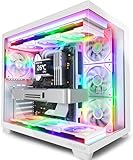
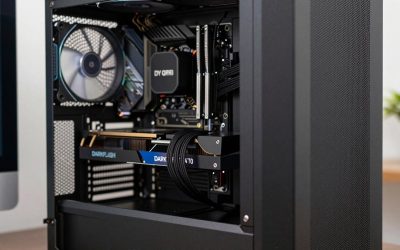
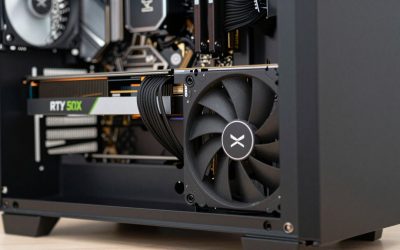
There is a reason PC builders spend hours on cable management, choose matching RAM sticks, and drop serious money on custom water cooling loops — a great build deserves to be seen. The right tempered glass gaming case turns your rig from a beige box into a centrepiece. Modern multi-pane designs wrap your components in thick glass on two, three, or even four sides, letting RGB lighting bloom outward into the room, putting custom loop tubing on full display, and making high-end air coolers look like sculpture rather than hardware. Choosing the right chassis matters: not every glass case moves enough air to keep temperatures healthy, not every layout supports a dual-pump custom loop, and budget options often cut corners on panel thickness or hinge quality. This guide covers the five best tempered glass gaming cases you can buy in 2026, what separates them, and how to pick the one that fits your build.
In a hurry? See the top-rated Tempered Glass Gaming Case deals available right now:
🛒 Check Tempered Glass Gaming Case Prices on Amazon →🛒 Best Price Today on Amazon
Prime members get fast, free shipping on everything above, plus member-only deals. New members get a 30-day free trial — cancel anytime.
Start 30-Day Prime Free Trial →See Today’s Amazon DealsQuick Comparison Table
| Case | Glass Panels | Chamber | GPU Clearance | Fan/Rad Support |
|---|---|---|---|---|
| Lian Li PC-O11D Evo | 3-side TG | Dual | 446 mm | 3×360 mm |
| NZXT H7 Elite | 3-side TG | Single | 400 mm | 2×360 mm |
| Phanteks Eclipse P500A DRGB | 2-side TG + mesh front | Single | 435 mm | 3×420 mm |
| Corsair iCUE 4000X RGB | 3-side TG | Single | 360 mm | 2×360 mm |
| Lian Li PC-O11D XL | 3-side TG | Dual | 480 mm | 4×360 mm |
Our Top 5 Tempered Glass Gaming Case Picks (2026)
1. [Best Overall] Lian Li PC-O11D Evo — Best Dual-Chamber Tempered Glass Case
The Lian Li PC-O11D Evo has earned its reputation as the go-to showcase chassis for enthusiast builders, and the 2026 refresh only strengthens that case. Three panels of 4 mm tempered glass — side, front, and top — give you an unobstructed view of your components from almost every angle, while the dual-chamber layout tucks the PSU, storage drives, and most cable runs into a sealed rear compartment so the main chamber stays clean and photogenic. Custom loop builders love it because you can mount radiators on the side, bottom, and top simultaneously, supporting a full 360 mm triple-rad setup on each surface; that means serious cooling headroom even for overclocked flagship GPUs pushing 450 W. The Evo revision added a reversible top panel for horizontal motherboard layouts and improved the hinge mechanism on the side glass, eliminating the loose-panel wobble that affected early O11D units — a welcome fix for anyone who opens their case frequently. Buy the Lian Li PC-O11D Evo on Amazon
2. [Runner-Up] NZXT H7 Elite — Best 3-Pane Glass Side + Front Case
The NZXT H7 Elite is the clean-desk minimalist’s answer to the showcase case, pairing three tempered glass panels with NZXT’s trademark understated industrial design. The front panel is full TG rather than mesh, which limits raw intake airflow but maximises visual impact — the interior feels like a display cabinet, especially when paired with NZXT’s own Aer RGB fans that ship pre-installed and pre-connected to the onboard CAM controller. Single-chamber construction keeps the footprint tighter than dual-chamber rivals, making the H7 Elite a better fit for mid-size desk setups where the O11D XL would simply be too large. GPU clearance reaches 400 mm, handling any card on the market through 2025, and the integrated cable management bar at the back makes cable routing fast enough that even first-time builders end up with a presentable result. The CAM software ecosystem also means your fan curves, RGB lighting, and pump headers are all managed from one interface without hunting for additional controllers. Buy the NZXT H7 Elite on Amazon
3. [Best Airflow + Glass] Phanteks Eclipse P500A DRGB — Best Glass Case with Mesh Option
The Phanteks Eclipse P500A DRGB is the answer to the most common complaint about glass cases: they look amazing but cook your components. Phanteks solves this with a modular front panel that ships in a high-airflow mesh configuration but includes a tempered glass front swap-out in the box — you choose aesthetics or thermals depending on the day, though most benchmarks show the mesh front keeps CPU and GPU temperatures 5–8°C lower under full load. The side glass is 4 mm tempered, and the top panel can be swapped to a second TG pane if you want maximum visual coverage at the cost of some exhaust capability. Radiator support is class-leading: the bottom mount alone accepts up to a 420 mm rad, and you can run three simultaneous radiators for an ambitious dual-loop or chiller-assisted setup. Five pre-installed DRGB fans come standard on the DRGB edition and connect to a built-in ARGB controller with a dedicated remote, making out-of-the-box lighting better than most competitors at this price. Buy the Phanteks Eclipse P500A DRGB on Amazon
4. [Best Budget Glass] Corsair iCUE 4000X RGB — Best Under $100 Tempered Glass Case
The Corsair iCUE 4000X RGB proves you do not need to spend $150+ to get a proper tempered glass showcase case. Three TG panels — full side, partial front window, and a smaller top panel — give the 4000X more visual coverage than most competitors at this price, and the three included 120 mm ARGB fans are genuinely bright and evenly lit rather than the dim budget fans often bundled in sub-$100 builds. GPU clearance of 360 mm covers the vast majority of retail graphics cards, though builders eyeing triple-slot flagship models should measure carefully. The iCUE ecosystem integration is the headline feature: all three fans plug directly into Corsair’s iCUE Commander Core XT controller (sold separately or included in higher-tier configs) and sync with keyboards, mice, coolers, and RAM via a single dashboard — a meaningful advantage if you are already invested in the Corsair ecosystem. Cable management is tighter than dual-chamber cases due to the single-chamber layout, but the routing channels and Velcro straps included in the box are more than adequate for a tidy result. Buy the Corsair iCUE 4000X RGB on Amazon
5. [Best Premium] Lian Li PC-O11D XL — Best Full-Tower Glass Showcase Case
When budget is not a constraint and you are building a flagship rig with a custom loop, an RTX 5090-class GPU, and a full E-ATX board, the Lian Li PC-O11D XL is the definitive glass showcase case. The XL scales every dimension of the standard O11D upward: GPU clearance reaches 480 mm, the main chamber accepts E-ATX motherboards natively, and you can install four simultaneous 360 mm radiators — two on the side intake wall, one on the bottom, one on the top — giving a custom loop builder more mounting real estate than virtually any competing chassis. All three glass panels are 4 mm tempered, and the dual-chamber design hides the PSU, cable runs, and reservoir behind a fully sealed dividing wall, so the display chamber contains nothing but the motherboard, GPU, fans, radiators, and tubing. The XL ships in black and white colourways, and Lian Li’s machined aluminium trim elevates the overall finish quality noticeably above similarly-priced steel competitors. It is genuinely a large case — measure your desk before ordering — but for builders who want to build a statement piece, nothing else on the market matches the combination of volume, visibility, and construction quality. Buy the Lian Li PC-O11D XL on Amazon
What Makes a Good Tempered Glass Gaming Case?
Not all glass cases are created equal. The difference between a $60 budget chassis with a thin acrylic “glass-look” panel and a proper tempered glass case is significant — both visually and structurally.

Tempered vs Acrylic Side Panels
Acrylic panels are lighter and cheaper to manufacture, which is why budget cases use them, but they scratch easily, yellow over time under UV from RGB lighting, and flex visibly when tapped. Tempered glass panels are heavier — a single full-size pane can add 1.5–2 kg to the case — but they are scratch-resistant, optically clearer, and maintain their appearance over years of use. The weight is a real consideration: shipping damage is more likely, and tipping a case with TG panels on a hard floor is a cracking risk. Handle them accordingly.
Single vs Dual Chamber Designs
Dual-chamber cases, popularised by Lian Li’s O11 series, separate the PSU, storage, and cable runs into a rear enclosure that is hidden from view. The result is that everything visible through the glass — the motherboard, GPU, fans, radiators, RAM — is intentionally displayed with no cable clutter. Single-chamber cases are more compact and often simpler to build in, but require more careful cable management to achieve the same clean result. If visual presentation is the primary goal, dual-chamber is the better starting point.
Glass Panel Thickness
Most quality cases use 4 mm tempered glass. Budget cases sometimes use 3 mm panels that are more prone to vibration rattle and feel noticeably cheaper to handle. Premium cases from Lian Li and Fractal occasionally use 4.5 mm or 5 mm glass on the main side panel for additional rigidity. Thicker glass also transmits less vibration from fans, reducing the subtle buzz that can develop on cases with thinner panels at high fan speeds.
Hinge vs Screw Mounting
Tempered glass panels are mounted via either thumbscrews (typical on budget and mid-range cases) or hinged mechanisms (common on premium cases). Hinged panels swing open like a door, making it far easier to access internals without risk of dropping a heavy glass pane. Thumbscrew mounting requires you to hold the panel while unscrewing — manageable but awkward. If you open your case frequently for maintenance or to show it off, a hinged panel is worth the price premium.

Smudge Visibility
This is the aspect most buyers overlook in reviews. Tempered glass shows fingerprints prominently, especially on untinted panels under bright room lighting or RGB. Most manufacturers now offer slightly tinted glass (smoke tint) which reduces smudge visibility considerably while maintaining transparency. A microfiber cloth becomes a standard piece of PC maintenance equipment when you own a glass case.
Airflow vs Aesthetics Trade-Off
Glass panels restrict airflow. A solid glass front panel blocks a significant portion of intake air compared to a mesh front, which is why cases like the P500A DRGB offer modular swappable fronts. If you are running a high-TDP platform — an i9-14900K or Ryzen 9 9950X paired with an RTX 5090 — the thermal penalty of an all-glass enclosure can be meaningful. Either choose a case with a mesh front option, invest in more or faster fans, or accept slightly higher temperatures as the price of visual purity.
How to Choose the Best Tempered Glass Gaming Case
Single Chamber vs Dual Chamber Glass Cases
Single-chamber cases are the right call for most standard ATX builds. They are typically more compact, easier to build in, and less expensive. A mid-tower like the NZXT H7 Elite or Corsair 4000X handles a high-end GPU, 360 mm AIO cooler, and full ATX board without any issue. The trade-off is that cable management requires more effort to look clean — plan your routing before the build, not after.
Dual-chamber cases are purpose-built for custom loop and showcase builds where every visible component has been chosen with aesthetics in mind. The O11D Evo and O11D XL are the reference implementations: the hidden rear chamber means you are never fighting to conceal a modular PSU cable or a SATA data run. If you are investing in a custom hardline loop, matching sleeved cables, or any build where visual impact justifies the extra cost, a dual-chamber case returns far more value per dollar than it might appear from the spec sheet alone.
How Many Glass Panels Do You Actually Need?
A single tempered glass side panel is the baseline — it shows you the left side of the motherboard and GPU in profile. Three-panel designs (side, front, top) dramatically expand visibility: you see the build from the front as you walk past, and the top panel turns overhead lighting and RGB diffusion into part of the display. Four-panel designs exist but are rare; the added weight and fragility make them niche products.
For most desk setups where the case sits to the left of a monitor, a three-panel case provides the maximum visual payoff. If the case is in a corner or under a desk, a single-panel case is perfectly adequate. Think about your actual viewing angles before choosing.

Airflow in Tempered Glass Cases: Managing Thermals
A glass front panel reduces intake airflow by as much as 15–25% compared to a high-airflow mesh front in controlled testing. The practical impact depends on your cooling configuration. An AIO or custom loop handles this well because the radiator is doing the heavy lifting independent of case airflow. Air-cooled builds relying on large tower coolers — a Noctua NH-D15 or Thermalright Phantom Spirit 120 — are more sensitive to restricted intake, and temperatures can climb noticeably in an all-glass enclosure at ambient temperatures above 24°C.
Mitigations: run three 120 mm or two 140 mm intake fans at the front rather than the minimum one, keep positive pressure in the case (more intake than exhaust), and ensure the top exhaust fans are sized to the radiator or fan header limits of your board. Do not seal the bottom of the case — many glass builds suffer from blocked bottom vents when placed on carpet or a desk mat.
RGB Integration: Addressable Headers and Controller Support
Most modern glass-showcase cases are designed around ARGB and DRGB (digital RGB) ecosystems. Before buying, confirm that the included fans use 5V ARGB headers (the standard for AMD and most Intel boards) rather than the older 12V RGB standard. Cases like the Corsair 4000X with iCUE integration, or NZXT’s H7 Elite with CAM, offer proprietary fan controllers that handle all your fan headers from a single cable run — useful if your motherboard has limited fan headers.
If you are building in a mixed ecosystem (Corsair fans, ASUS motherboard, Lian Li case), a third-party ARGB hub is often the tidiest solution. Confirm header compatibility before you build rather than discovering mismatches mid-assembly.
Final Verdict
For the majority of enthusiast builders, the Lian Li PC-O11D Evo remains the best tempered glass gaming case in 2026 — the dual-chamber layout keeps cables out of sight, three TG panels give genuine 270-degree visibility, and the radiator mounting flexibility makes it equally suitable for custom loops and premium AIO setups. Builders on a budget should seriously consider the Corsair iCUE 4000X RGB, which delivers three glass panels, solid ARGB fans, and iCUE integration for under $100 without meaningful compromises for standard ATX builds.
Related Articles
Looking for more on this topic? Browse the hand-picked guides below — each one applies the same scoring rubric used in this review.
Frequently Asked Questions
What is the best gaming case tempered glass in 2026?
The best gaming case tempered glass depends on your budget and how you plan to use it. The options compared above are our top-rated picks based on real customer ratings, build quality, and overall value — start with the highest-rated model that fits your budget.
How much should I expect to spend on a gaming case tempered glass?
Prices vary by brand and features. Budget options cover the essentials, while mid-range and premium models add durability, performance, and extra features. Compare the prices in the list above to find the best value for your needs.
What should I look for when buying a gaming case tempered glass?
Focus on what matters most for your use case — build quality, compatibility, performance, warranty, and verified customer reviews. Every pick above is selected to balance these factors.
Are budget gaming case tempered glass options worth it?
Yes. For most people a well-reviewed budget or mid-range gaming case tempered glass delivers excellent value. You only need to spend more if you specifically require premium materials or top-tier performance.
How did we choose these gaming case tempered glass picks?
We compare current Amazon ratings, review counts, key features, and price to surface the options with the best real-world value. The list is refreshed as ratings and availability change.