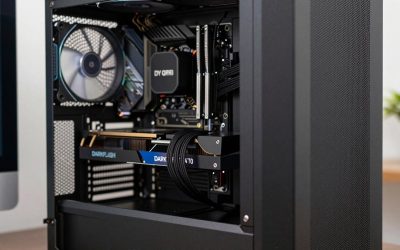
- Top Pick: Aluminum Mini ITX Case with PCIe 3.0 Riser, JOYJOM Mini PC Case, SFF Small Form Factor PC Case, TX Computer Gaming Case Supports GPU Graphics Card (Black)
- Best Value: Okinos Aqua 3, Micro ATX Case, MATX PC Case with 3 X 120mm 3-Pin ARGB Fan Pre-Installed, Panoramic View Tempered Glass Front & Side Panel, with Type C Port, White
- Premium Choice: Fractal Design North – Genuine Walnut Wood Front – Mesh Side Panels – Two 140mm Aspect PWM Fans Included – Type C USB – ATX Airflow Mid Tower PC Gaming Case,Charcoal Black
Affiliate disclosure: As an Amazon Associate we earn from qualifying purchases. This post contains affiliate links — if you buy through them we may earn a small commission at no extra cost to you. This never affects our recommendations.
As an Amazon Associate we earn from qualifying purchases at no extra cost to you.


In a hurry? See the top-rated Mini-ITX Gaming PC Case deals available right now:
🛒 Check Mini-Itx Gaming Pc Case Prices on Amazon →🛒 Best Price Today on Amazon
Prime members get fast, free shipping on everything above, plus member-only deals. New members get a 30-day free trial — cancel anytime.
Start 30-Day Prime Free Trial →See Today’s Amazon DealsQuick Picks
| Case | Volume | Best For | Difficulty |
|---|---|---|---|
| Lian Li A4-H2O | 11L | Best Overall ITX | Medium |
| NZXT H1 V2 | 13L | All-in-One Simplicity | Easy |
| Fractal Design Terra | 13.6L | Premium Aesthetics | Medium |
| Cooler Master NR200P | 18L | Easiest ITX Build | Easy |
| Velka 5 | 5L | Ultra-Compact Extreme | Hard |
If you want the short answer: the Lian Li A4-H2O is the best mini-ITX gaming PC case for most builders in 2026. It fits a 3-slot GPU, runs cool despite its 11L volume, and rewards builders who spend time planning their cable runs.
For everyone else, the right pick depends on how small you actually need to go, whether you want to deal with SFX PSUs, and how much build frustration you’re willing to accept.
Mini-ITX Build Challenges
Before you buy any ITX case, you need to understand the constraints that make small form factor (SFF) builds different from mid-tower builds. These aren’t dealbreakers — they’re just tradeoffs you need to plan around.
GPU Length Limits
Full-size GPUs like the RTX 5090 can exceed 340mm. Most ITX cases cap out between 280mm and 330mm. The Velka 5 at 5L limits you to around 200mm GPUs, which cuts out most high-end cards entirely. Always cross-reference your GPU’s exact dimensions with the case spec sheet before buying.
Cooler Height Restrictions
ITX cases are narrow, so CPU cooler clearance is tight. The NR200P is the most generous here at 155mm. The A4-H2O’s dual-chamber layout largely bypasses this issue since it’s designed around liquid cooling on one side. For air-cooled builds in smaller cases, you’ll likely be shopping for low-profile coolers or looking at AIO solutions.
SFX vs ATX PSU
Standard ATX PSUs (150mm deep) don’t fit in most sub-15L ITX cases. You’ll need an SFX or SFX-L unit instead. SFX PSUs are physically smaller but usually more expensive per watt. Budget an extra $30–60 over an equivalent ATX unit. The NZXT H1 V2 includes an SFX PSU in the box, which is one of its main selling points. The NR200P is the exception here — it accepts full ATX PSUs, which helps keep costs down.
Airflow Compromise
Physics doesn’t care how stylish your case is. Smaller enclosures mean fans are closer together, hot air has less room to dissipate, and heat-soaked components affect each other more than they would in a mid-tower. Managing thermals in an ITX build requires deliberate fan placement, cable routing that doesn’t block airflow, and sometimes accepting a few extra degrees Celsius compared to a full-size build.
Volume Guide: 5L vs 11L vs 18L ITX Cases
Case volume isn’t just a spec — it determines what hardware you can fit and how comfortable the build process will be.
5L cases (Velka 5 territory): You’re going for the absolute smallest footprint possible. GPU options are limited to shorter cards, you’ll be dealing with a riser cable by necessity, and cable management is more like cable origami. These are for builders who’ve done ITX builds before and know exactly what they want.
11–13L cases (A4-H2O, H1 V2, Terra): This is the sweet spot for most people who want a genuinely compact system without sacrificing GPU tier. You can fit flagship 3-slot GPUs, run a proper AIO, and still end up with a case that’s dramatically smaller than any mid-tower. Build difficulty is medium — tight, but manageable with patience.
18L cases (NR200P): Still significantly smaller than a standard mid-tower (typically 40–60L), but much more forgiving to build in. If you’re doing your first ITX build and want to avoid frustration, this is the volume range to target. You get ATX PSU compatibility, better airflow, and more room to maneuver during assembly.
Top 5 Mini-ITX Gaming PC Cases in 2026
1. Lian Li A4-H2O — Best Overall
Volume: 11L | GPU Support: Up to 3-slot, ~336mm | PSU: SFX/SFX-L | AIO: Up to 240mm
The A4-H2O earns its place at the top through engineering discipline. The dual-chamber layout separates the GPU from the CPU cooler and PSU, which does real work for thermals rather than just looking clever. Your GPU gets one chamber entirely to itself, fed by dedicated intake fans. The CPU cooling loop lives in the other chamber with the PSU.

GPU support is exceptional for the volume class — true 3-slot cards up to 336mm fit without modification. That means you can drop an RTX 5080 or RX 9070 XT in here without compromise on the GPU side.
The build process is not casual. Cable routing requires planning, and the two-panel disassembly process means you’ll want to get your component layout right before closing it up. But if you’re willing to put in that time, the result is an 11L system that performs like something in a much larger enclosure.
SFX or SFX-L PSU is required — budget for it. The case itself is pure aluminum construction, which keeps it light and looks premium on a desk.
Best for: Builders who want maximum GPU in minimum volume and don’t mind a methodical build process.
2. NZXT H1 V2 — Best All-in-One Solution
NZXT H1 V2
Volume: 13L | GPU Support: Vertical mount, up to ~325mm | PSU: SFX (included) | AIO: 280mm (included)
The H1 V2 is the only case on this list that ships with both a PSU and an AIO cooler included. That changes the buying calculus significantly — the higher sticker price looks different when you subtract what you’d spend on a quality SFX unit and a 280mm AIO.
The vertical GPU orientation is handled by a built-in PCIe riser, which means your GPU faces outward through a tempered glass panel. It looks intentional and clean rather than awkward. The 280mm AIO bracket is integrated into the case structure, which simplifies the build considerably compared to cases where you’re improvising cooler placement.
Build difficulty is the lowest of any case in this roundup because NZXT has pre-solved a lot of the decisions that trip up ITX builders. The tradeoff is that you’re locked into their cooling ecosystem — you can’t easily swap to a different AIO configuration without fighting the case’s design.
GPU clearance is good but not exceptional. At around 325mm max and a fixed vertical orientation, there are fewer GPU options compared to the A4-H2O’s more flexible layout.
Best for: First-time ITX builders who want a guided experience and don’t want to source PSU and AIO separately.
3. Fractal Design Terra — Best for Aesthetics
Volume: 13.6L | GPU Support: Vertical, up to ~332mm | PSU: SFX/SFX-L | AIO: Up to 120mm (top), 240mm (side)
The Terra is the outlier here on design. The bamboo side panel — actual bamboo, not printed texture — is a genuine differentiator in a category where most cases are variations on matte black aluminum panels. It ships with a PCIe 4.0 riser included, which matters for high-bandwidth GPUs and removes an annoying extra purchase.
Vertical GPU orientation keeps your graphics card visible through the glass panel on the opposite side from the bamboo. The layout is logical and the build process is reasonably straightforward, though you’ll need an SFX or SFX-L PSU like most cases in this volume class.

Thermal performance is competent but not class-leading. The 13.6L volume gives a bit more breathing room than the A4-H2O, but the airflow path is less optimized than the NR200P at 18L.
Where Terra excels is desk presence. If you’re building a workstation that doubles as a gaming rig and care about how it looks in your setup, this is the most distinctive option available.
Best for: Builders who want an ITX system that looks different from everything else on the market.
4. Cooler Master NR200P — Easiest ITX Build
Volume: 18L | GPU Support: Up to 330mm | PSU: ATX or SFX | AIO: Up to 280mm
The NR200P is where to start if you’ve never built an ITX system and want to avoid the frustration that drives people back to mid-towers. The 18L volume is still less than half a typical mid-tower, but the build experience is significantly more relaxed. Cables have room to route. Components aren’t fighting for space. And critically, it accepts standard ATX PSUs — you don’t need to buy an SFX unit.
Airflow is the best in this roundup. The mesh panel options (the P in NR200P stands for the included mesh panel alongside the acrylic alternative) allow the case to breathe properly, and fan placement options give you flexibility to tune thermals for your specific component load.
Cooler clearance at 155mm is the highest on this list, meaning a wider range of air coolers will fit. You’re not forced into liquid cooling if you prefer to keep the build simpler.
The only real con is size — at 18L it’s the largest case here, and the size advantage over a compact mid-tower is less dramatic. But it’s still desk-friendly and substantially smaller than a standard build.
Best for: First-time ITX builders, anyone who wants ATX PSU compatibility, and builders prioritizing thermals over absolute compactness.
5. Velka 5 — Ultra-Compact for Determined Builders
Velka 5
Volume: 5L | GPU Support: Up to ~200mm | PSU: Flex ATX | AIO: Not supported
The Velka 5 is for one specific type of person: someone who has already built several ITX systems, knows exactly what they’re getting into, and wants the most portable high-performance PC possible. At 5L, it can fit inside most backpacks and is small enough to disappear behind a monitor.
The sandwich layout stacks components in parallel planes rather than the L-shaped or side-by-side configurations of larger cases. This is efficient for volume but creates a difficult build environment. There’s no room for error on cable routing, component selection is tightly constrained, and airflow management requires running the fans properly or thermals will suffer.
GPU length is limited to around 200mm — that’s a GTX 1660 Super tier card or something like an RX 7600 XT. High-end gaming here means a powerful CPU with a mid-range GPU, not the flagship GPU setups the other cases support.

Flex ATX PSUs are required — these are even smaller than SFX units and typically noisier under load due to smaller fans spinning at higher RPMs.
Best for: Experienced SFF builders who need a portable LAN gaming system and are prepared to compromise on GPU tier.
Comparison Table
| Case | Volume | Max GPU Length | PSU Type | Max AIO | Build Difficulty | ATX PSU Option |
|---|---|---|---|---|---|---|
| Lian Li A4-H2O | 11L | 336mm | SFX/SFX-L | 240mm | Medium | No |
| NZXT H1 V2 | 13L | ~325mm | SFX (included) | 280mm (included) | Easy | No |
| Fractal Design Terra | 13.6L | ~332mm | SFX/SFX-L | 240mm | Medium | No |
| Cooler Master NR200P | 18L | 330mm | ATX or SFX | 280mm | Easy | Yes |
| Velka 5 | 5L | ~200mm | Flex ATX | None | Hard | No |
What to Look For When Buying an ITX Case
GPU clearance is non-negotiable. Measure your GPU’s length, width (slot count), and height before buying. A 3-slot card that fits the length limit may not clear the power connectors with the side panel closed.
PSU budget. SFX units add $40–80 to your build cost compared to equivalent ATX units. Factor this into your total budget before settling on a case that requires SFX.
Cooling strategy first. Decide whether you’re going air or liquid before picking a case. Not all ITX cases support 240mm AIOs. Not all have clearance for dual-tower air coolers. Lock in your cooling solution, then find a case that fits around it.
Panel access during build. ITX builds require more disassembly during the build process than mid-towers. Cases with tool-free panel removal or multiple access points save real time during assembly and future upgrades.
Future-proofing vs. current fit. If you plan to upgrade your GPU in 12–18 months, check whether a larger card will fit your chosen case before committing. A case that barely fits your current GPU may not accommodate the next generation.
Verdict
The Lian Li A4-H2O is the best mini-ITX gaming PC case for most builders in 2026. It handles flagship GPUs in a genuinely compact 11L enclosure, and the dual-chamber layout gives you real thermal headroom. It’s not the easiest build, but the result justifies the planning.
Go with the NZXT H1 V2 if you want a contained, guided build experience with PSU and AIO included — ideal for first-time ITX builders who don’t want to source cooling separately.
Choose the NR200P if this is your first ITX build, you want ATX PSU compatibility, or thermals are your top priority over absolute size reduction.
The Fractal Design Terra is for builders who want a premium, distinctive desk presence and are willing to pay for it.
And the Velka 5 is only for builders who know exactly what they’re doing and need the smallest footprint possible, GPU tier be damned.
GamingPCGuru may earn a commission from qualifying purchases through affiliate links at no additional cost to you.
Frequently Asked Questions
Can a Mini-ITX case fit a high-end gaming PC?
Yes. Modern Mini-ITX cases support full-size graphics cards and powerful CPUs, letting you build an RTX 4080/4090-class rig in a fraction of the desk space.
What are the downsides of a Mini-ITX build?
Tighter space makes assembly harder, cooling needs careful planning, and you are limited to one expansion slot and fewer drive bays. Component clearances must be checked closely.
Do I need a special PSU for a Mini-ITX case?
Most Mini-ITX cases require an SFX or SFX-L power supply rather than standard ATX. Always confirm the supported PSU form factor before buying.
How do I keep a Mini-ITX gaming PC cool?
Choose a case with good ventilation, use a capable cooler that fits the height clearance, and pick efficient components. Plan airflow paths carefully since interior space is limited.
Related Articles
Looking for more on this topic? Browse the hand-picked guides below — each one applies the same scoring rubric used in this review.