Atrial fibrillation is an intermittent problem. An episode can start and stop between clinic visits, which is why an in-office ECG so often comes back normal for people who genuinely have episodes at home. Consumer ECG monitors exist to close that gap: they let you record a tracing when symptoms happen, or wear a recorder long enough to catch episodes you never feel.
The word “continuous” covers three very different kinds of device. Handheld monitors record a short strip, usually 30 seconds, when you place your fingers on the electrodes. Wearable recorders sit on the chest and log the ECG continuously for hours at a time. Chest straps built for sport record a continuous ECG too, but as wellness devices rather than cleared medical products. The five devices below cover all three classes.
One boundary applies to every product here. None of these devices can diagnose atrial fibrillation or any other condition. Only a clinician can diagnose you, using recordings like these as one input among several. A tracing labelled “normal” is not proof that nothing is wrong, and none of these products detects a heart attack. If you have chest pain, severe breathlessness or fainting, seek emergency care rather than reaching for a home monitor.
As an Amazon Associate we earn from qualifying purchases.
The five monitors at a glance
| Device | Type | Longest recording | FDA status as the maker states it | Subscription |
|---|---|---|---|---|
| AliveCor KardiaMobile 6L | Handheld, six-lead | 30 seconds per recording | FDA-cleared | Optional (KardiaCare) |
| AliveCor KardiaMobile 1-Lead | Handheld, single-lead | 30 seconds per recording | FDA-cleared | Optional (KardiaCare) |
| Wellue AI ECG Monitor | Wearable chest recorder | Up to 24 hours continuous | AI analysis described by the maker as FDA-cleared | None for AI analysis and PC reports |
| EMAY 6L Portable ECG Monitor | Handheld with built-in screen | 30 seconds per recording | Marketed by EMAY as FDA-cleared | None |
| Fourth Frontier Frontier X2 | Chest strap, sport/wellness | Continuous during wear | Wellness device, not cleared to detect AFib | None |
AliveCor KardiaMobile 6L
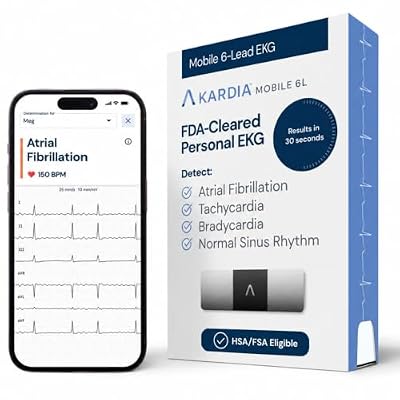
The KardiaMobile 6L is the most capable of the handheld spot-check devices. Two electrodes on top read Lead I from your fingers, and a third on the underside contacts your left knee or ankle to add the remaining limb leads, giving six views of the heart from a pocket-sized device. Each recording lasts 30 seconds, and AliveCor states that the built-in determinations cover atrial fibrillation, bradycardia, tachycardia and normal sinus rhythm.
AliveCor markets the 6L as FDA-cleared, and the Kardia app stores unlimited recordings and exports them as PDFs for your cardiologist. Basic use needs no subscription. The optional KardiaCare membership adds further determinations and clinician review of selected recordings through the service. The device runs on a replaceable CR2016 coin cell, so there is nothing to recharge, and it needs no gels or adhesives. AliveCor states it is not tested or recommended for people with pacemakers or implanted defibrillators.
Choose the 6L if your clinician wants the most detailed tracing a consumer handheld can produce, and you are comfortable recording when symptoms strike rather than wearing anything all day.
Specs
- Type: Handheld personal ECG, six-lead (six views of the heart)
- Recording length: 30 seconds per recording, unlimited recordings
- Determinations stated by AliveCor: AFib, bradycardia, tachycardia, normal sinus rhythm
- FDA status: FDA-cleared, as stated by AliveCor
- App and reports: Kardia app (iOS and Android), PDF export and sharing
- Subscription: Not required for basic use; KardiaCare membership optional
- Battery: Replaceable CR2016 coin cell
- Electrodes: Three built-in metal electrodes, no gels or adhesives
- Maker caution: Not tested or recommended with pacemakers or ICDs
AliveCor KardiaMobile 1-Lead

The original KardiaMobile is the simpler sibling. It has two finger electrodes and records a single-lead ECG in 30 seconds, with the same app, the same PDF export, and determinations that AliveCor states cover atrial fibrillation, bradycardia, tachycardia and normal sinus rhythm. It is also marketed by AliveCor as FDA-cleared, weighs 18 grams according to the listing data, and runs on a replaceable CR2016 coin cell.
What you give up against the 6L is information: one lead instead of six, a less complete picture for a clinician reviewing an unusual rhythm. What you gain is simplicity and a smaller, lighter device that is easy to carry everywhere — which matters, because a spot-check monitor only helps if it is within reach when symptoms start.
Choose the 1-Lead if you want the simplest symptom-triggered recorder from the most established name in this category, and your clinician is satisfied with single-lead strips.
Specs
- Type: Handheld personal ECG, single-lead
- Recording length: 30 seconds per recording, unlimited recordings
- Determinations stated by AliveCor: AFib, bradycardia, tachycardia, normal sinus rhythm
- FDA status: FDA-cleared, as stated by AliveCor
- App and reports: Kardia app (iOS and Android), PDF export and sharing
- Subscription: Not required for basic use; KardiaCare membership optional
- Battery: Replaceable CR2016 coin cell
- Weight: 18 grams (listing data)
- Maker caution: Not tested or recommended with pacemakers or ICDs
Wellue AI ECG Monitor

The Wellue AI ECG Monitor is the one device in this guide that records the way a clinic Holter monitor does: continuously, for up to 24 hours at a time. The 18-gram recorder clips to the supplied chest strap or sticks directly to the chest with adhesive electrode stickers, starts recording automatically when worn, and keeps logging through the day and night. That makes it the natural pick for episodes that are infrequent, happen during sleep, or never produce symptoms you notice.
Recordings are viewed in the ViHealth phone app in real time and transferred to Wellue’s ECG Browser software on Windows or Mac for the detailed AI analysis and report. Wellue states that the AI analysis screens for more than a hundred abnormal event types across 16 categories, that the analysis and PC reports are free rather than subscription-based, and it describes its AI ECG analysis as FDA-cleared. Reports can be saved and shared with your healthcare provider from the software. The rechargeable battery is rated by the manual for roughly 24 hours of monitoring per charge.
Choose the Wellue if catching elusive episodes matters more than handheld simplicity, and you accept wearing a small chest recorder and managing the PC software step.
Specs
- Type: Wearable chest ECG recorder (strap or adhesive electrodes)
- Recording length: Up to 24 hours continuous per session
- Analysis: AI analysis in ECG Browser PC software; maker states it screens 100+ event types in 16 categories
- FDA status: AI analysis described by Wellue as FDA-cleared
- App and reports: ViHealth app (iOS and Android) plus PC software for Windows and Mac, report export and sharing
- Subscription: None for AI analysis and PC reports, per Wellue
- Battery: Rechargeable lithium-ion, about 24 hours of monitoring per charge (manual)
- Weight: 18 grams (manual)
- In the box: Recorder, chest strap, electrode stickers, USB charging cable
EMAY 6L Portable ECG Monitor

The EMAY 6L builds the screen into the device. Its 2.4-inch colour display shows the waveform and heart rate on the unit itself, so it works without a phone at all, while Bluetooth and USB sync recordings to the EMAY phone and PC software when you want a stored report. Like the KardiaMobile 6L, it records six channels in 30-second measurements using finger and leg contact.
EMAY markets the 6L as FDA-cleared and sells it on a no-subscription model, which the listing states directly. The rechargeable lithium battery charges over USB, the unit weighs 85 grams per the listing data, and there are no consumable electrodes. The trade-off is ecosystem maturity: EMAY’s sharing path runs through its own app and PC software rather than a service with clinician review options.
Choose the EMAY 6L if you want six-lead spot checks with an on-device screen and no subscription of any kind.
Specs
- Type: Handheld personal ECG, six channels, built-in display
- Recording length: 30 seconds per measurement
- Display: 2.4-inch colour screen on the device
- FDA status: Marketed by EMAY as FDA-cleared
- App and reports: EMAY app and PC software via Bluetooth or USB, report saving and sharing
- Subscription: None, per the listing
- Battery: Rechargeable lithium, USB charging
- Weight: 85 grams (listing data)
- Electrodes: Built-in metal contacts, no gels or adhesives
Fourth Frontier Frontier X2

The Frontier X2 is a chest strap that records a continuous single-lead ECG while you wear it, aimed at athletes rather than clinic waiting rooms. Fourth Frontier pairs the trace with heart strain and breathing-rate metrics, real-time vibration alerts during exercise, and PDF reports you can export and hand to your own clinician.
The regulatory distinction deserves plain words: the Frontier X2 is a wellness device. It is not FDA-cleared to detect or diagnose atrial fibrillation, and Fourth Frontier sells its cleared offering as a separate product line. If your goal is AFib monitoring a cardiologist has asked for, the cleared handhelds and the wearable recorder above are the appropriate tools. The X2 is included because some people under a clinician’s care also train hard and want a continuous exercise trace to review afterwards with that clinician, fully aware of its wellness status.
Choose the X2 only for that exercise-recording role, with your eyes open about what it is not.
Specs
- Type: Chest-strap continuous ECG recorder for sport and daily wear
- Recording length: Continuous while worn
- Extra metrics stated by the maker: Heart strain, breathing rate, real-time vibration alerts
- FDA status: Wellness device; not FDA-cleared to detect or diagnose AFib
- App and reports: Fourth Frontier app, exportable PDF reports
- Subscription: None stated by the maker for core recording and reports
- Battery: Rechargeable over USB
- Electrodes: Chest strap with built-in electrodes
How to choose a continuous ECG monitor for AFib
Start with the pattern of your episodes. If symptoms are obvious and frequent, a handheld spot-check device is enough and far easier to live with: you record a clean 30-second strip at the moment it matters. If episodes are rare, silent or nocturnal, a spot check will keep missing them, and a wearable recorder logging up to 24 hours continuously is the class designed for that problem.
Next, read the FDA wording carefully. “FDA-cleared” means the FDA has cleared that specific device for the uses in its clearance; it is not the same as FDA approval, and it does not extend to anything the maker did not submit. Wellness devices such as sport chest straps sit outside that system entirely, however good their raw recordings look. Where this guide repeats an FDA claim, it is the maker’s own wording, and the exact scope is in each maker’s clearance documentation.
Then check ongoing costs and consumables. Handhelds with coin cells ask only for an occasional battery. The wearable recorder uses adhesive electrode stickers that need replacing. Subscription layers differ: AliveCor keeps basic determinations free and charges for its KardiaCare extras, while Wellue and EMAY state that analysis and reports carry no subscription.
Finally, agree the sharing path with your clinician in advance. All five devices export reports, but formats differ: AliveCor and EMAY produce PDF strips from their apps, Wellue’s full analysis lives in its PC software, and Fourth Frontier exports PDFs from its app. Long recordings are easier to review on a full-size screen than on a phone, and if your desk display is due an upgrade anyway, the panels in our guide to the best monitor for console make waveform PDFs just as easy to read as games.
Questions worth asking before you buy
Can any of these replace a prescribed Holter or patch monitor?
No. If your clinician prescribes a medical monitor, use that device. Consumer recorders are for supplementary home recordings, and their results should go back to your clinician for interpretation.
What does a “possible AFib” result mean?
It means the algorithm saw a pattern consistent with atrial fibrillation in that strip. It is a reason to share the recording with your clinician promptly, not a diagnosis in itself. Equally, a “normal” result during symptoms that worry you is a reason to seek care anyway, not reassurance to wait.
Do these devices work with a pacemaker?
AliveCor states its KardiaMobile devices are not tested or recommended for people with pacemakers or ICDs. Check the maker’s guidance for any device you consider, and ask your cardiology team before relying on home ECG recordings with an implanted device.
Which is best for overnight episodes?
Of these five, only the Wellue recorder logs continuously through the night. The handhelds record when you wake and use them, which can still capture a strip if an episode persists, but they cannot reconstruct one that ended while you slept.