Wedding and event work punishes a camera in ways a studio session never does. Light changes from a bright garden to a dim reception hall in minutes, key moments happen once, and a full day can run from morning preparations to a late-night send-off. A high-end mirrorless body earns its place through sensor performance, dependable autofocus, dual card slots, solid video options for hybrid shooters, and a power plan that lasts the whole assignment.
This guide compares four full-frame bodies currently sold on Amazon US: the Canon EOS R5 Mark II, the Sony a7R V, the Nikon Z 8, and the Sony a9 III. Two lean toward maximum resolution, one balances resolution with speed and video depth, and one trades resolution for a global shutter design built around fast, distortion-free capture. All specifications below come from manufacturer and listing information, so confirm the exact configuration before you buy, because body-only and bundle listings can differ in what is included.
As an Amazon Associate we earn from qualifying purchases.
How to Choose a High-End Body for Weddings and Events
Sensor and Resolution
Resolution shapes what you can do after the day is over. A 61-megapixel or 45-megapixel file gives room to crop a wide ceremony frame into a tighter composition and to produce large album spreads and wall prints. The trade-off is file size: higher resolution fills cards faster and demands faster storage and a more capable editing computer. A body in the mid-20-megapixel range produces smaller files that move through a workflow quickly, which matters when an event gallery runs to thousands of frames.
Sensor design matters as much as pixel count. Stacked sensors read out quickly, reducing rolling shutter distortion with the electronic shutter and supporting faster continuous shooting. A global shutter, as used in one pick below, reads the whole sensor at once and removes that distortion concern altogether.
Video Specs
Many event photographers now deliver short video clips alongside stills, and some shoot full hybrid coverage. Look at the maximum video resolution and frame rates documented for each body, whether high frame rate options support slow motion, and what card type those modes require. The highest modes often need the fastest card format the body supports, so the video plan and the media budget are linked decisions.
Connectivity
Connectivity affects how quickly images move from camera to client or backup. Wi-Fi and Bluetooth support remote control and transfer to a phone or tablet, USB supports tethered shooting and charging on some models, and HDMI matters if you use an external monitor or recorder. Also check the remote and flash connections you already own, because moving systems can mean replacing triggers as well as lenses.
Battery and Power
Manufacturers rate battery life under test conditions that rarely match a wedding day, where the screen, stabilization, and continuous autofocus run for hours. Treat any published figure as a reference point, not a promise. Plan on spare batteries for every body, a charger that can keep up overnight, and, where supported, USB power delivery or a battery grip for the longest days.
Required Accessories
A body alone does not shoot a wedding. Budget for fast cards in both formats the body accepts, spare batteries, a dual charger, fast lenses for the mount, flash, and a backup body. Dual slots only protect you if you record to both cards, so set a backup copy before the event starts. If you are comparing systems more broadly, our guide to mirrorless cameras suited to wedding photography covers more budgets and formats.
Comparison Table
| Body | Sensor as documented | Video as documented | Battery | Card slots as documented |
|---|---|---|---|---|
| Canon EOS R5 Mark II | 45MP full-frame back-illuminated stacked CMOS | 8K up to 60p | LP-E6P | Dual slots, including CFexpress |
| Sony a7R V | 61.0MP full-frame Exmor R CMOS | 8K video, 4K 60p | NP-FZ100 | Dual slots |
| Nikon Z 8 | 45.7MP full-frame stacked CMOS | 8K 60p, 4K 120p | Check listing for battery model | Dual slots |
| Sony a9 III | 24.6MP full-frame global shutter Exmor RS | 4K 120p | NP-FZ100 | Dual slots, CFexpress Type A and SD |
The Four Bodies in Detail
1. Canon EOS R5 Mark II

View the Canon EOS R5 Mark II on Amazon
Canon describes the EOS R5 Mark II around a brand-new 45MP sensor that is back illuminated and stacked, allowing fast read-out speeds and an electronic shutter at up to 30 frames per second. That pairs high resolution for portraits and group shots with enough speed for processionals and dance floor action. Canon states that 8K video up to 60 frames per second can be recorded internally to a CFexpress card, sold separately, so budget for that media from the start.
The body ships with the newer LP-E6P battery, which Canon notes is required because this model draws more power than earlier EOS R cameras, so check compatibility before relying on older batteries as spares. The listing also describes a 5.76 million dot OLED viewfinder, dust and weather resistance, and 5-axis in-body image stabilization.
2. Sony a7R V

The Sony a7R V is the resolution leader here. Sony documents a 61.0MP full-frame back-illuminated Exmor R CMOS sensor paired with the BIONZ XR engine, plus a dedicated AI processing unit supporting advanced subject recognition for autofocus. That resolution suits group portraits, venue wide shots that may need cropping, and large prints, while subject recognition aims to keep eyes and faces tracked through a ceremony or reception.
Sony describes it as a true hybrid, with up to 10 frames per second shooting with AF and AE tracking, plus 8K video and 4K 60p among its documented modes. It uses the NP-FZ100 battery shared across many Sony full-frame models, simplifying spares, and the body-only listing notes dual card slots.
3. Nikon Z 8
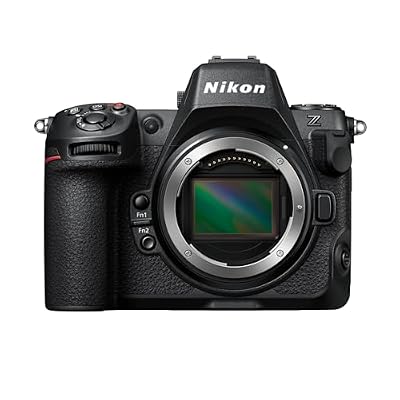
Nikon positions the Z 8 as a professional full-frame hybrid in a body notably smaller than its flagship sibling. Its documented specification centers on a 45.7MP stacked CMOS sensor, a silent, vibration-free electronic shutter, and fast burst shooting. Nikon describes video features including 12-bit 8K 60p and 4K 120p RAW options plus 10-bit internal recording, the deepest video toolkit here on paper, provided your cards and editing system can handle those formats.
The listing documents Bluetooth, HDMI, USB, and Wi-Fi connectivity and dual memory slots. Nikon also highlights autofocus with subject detection powered by deep learning, relevant to ceremonies where subjects move in uneven light. Plan accessories around the Z mount, and confirm the exact battery and included items on the listing, since configurations vary by seller.
4. Sony a9 III

View the Sony a9 III on Amazon
The Sony a9 III takes a different path. Sony describes it as featuring the world’s first full-frame image sensor with a global shutter system, built around a 24.6MP Exmor RS sensor. A global shutter exposes the whole frame at once, avoiding the skew a rolling shutter can produce with fast movement or certain artificial lighting, and Sony highlights blackout-free continuous shooting at up to 120 frames per second. For event photographers, the appeal is clean electronic capture in difficult venue lighting, not the burst rate itself.
Video is documented at up to 4K 120p, covering slow-motion clips, though it does not match the 8K modes of the other three. It uses the NP-FZ100 battery, shares the E mount, and its dual slots accept CFexpress Type A and SD cards.
Which Body Fits Your Work?
Choose the Sony a7R V if resolution is the priority, accepting larger files and a heavier editing load. Choose the Canon EOS R5 Mark II for high resolution and high speed in one RF body, with 8K video headroom. Choose the Nikon Z 8 for the broadest documented video options alongside a 45.7MP stacked sensor. Choose the Sony a9 III if your events involve fast action or stage lighting and you value the global shutter over pixel count.
The body decision locks in lenses, batteries, and flash triggers for years, so price the full kit, not the body alone, and keep a backup body plan for paid work.
Frequently Asked Questions
Is full-frame necessary for wedding photography?
Full-frame is the common professional standard because the larger sensor generally supports cleaner results in dim venues and shallower depth of field with fast lenses. Low-light ceremonies and large prints push in that direction, and every body in this guide is full-frame.
How many memory cards and batteries should an event photographer carry?
Carry enough card capacity for the full event in each slot when recording backup copies, plus spares, because swapping to a single-card setup mid-event removes your safety copy. For power, two to three batteries per body across a full day is a sensible baseline, adjusted for how much video you record.
Does higher resolution always mean better wedding photos?
No. Higher resolution helps cropping and large prints, but it enlarges files, fills cards faster, and can show camera shake and missed focus more clearly. A lower-resolution body with fast, accurate capture can deliver a more consistent gallery, which is why the a9 III remains relevant beside 45MP and 61MP options.
Can one of these bodies handle both stills and video coverage?
Yes. All four are documented hybrid bodies, with the Canon, Sony a7R V, and Nikon models offering 8K modes and the a9 III offering 4K at up to 120p. Check card formats and recording limits for the mode you plan to use, because the highest modes require the fastest media.
Conclusion
These bodies divide by priority, not by a single winner. The Sony a7R V maximizes resolution, the Canon EOS R5 Mark II balances resolution, speed, and 8K video, the Nikon Z 8 pairs a 45.7MP stacked sensor with the deepest documented video options, and the Sony a9 III offers a global shutter for distortion-free capture. Match the sensor, video, connectivity, and battery system to the way you shoot, budget for cards, spares, and lenses, and verify the exact listing configuration before ordering.