- Top Pick: be quiet! Silent Wings Pro 4 120mm PWM 3000 RPM Premium Low Noise Cooling Fan | 4-Pin | BL098
- Best Value: be quiet! Silent Wings Pro 4 140mm PWM High Speed 2400 RPM Premium Low Noise Cooling Fan | 4-Pin | BL099
- Premium Choice: be quiet! Silent Wings 4 Cooling Fan | 140mm PWM | 2400 RPM | White | BL119
The be quiet! Silent Wings Pro 4 140mm PWM is the high-speed variant of the brand’s flagship Silent Wings 4 family. It runs up to 2,400 RPM via PWM 4-pin control — substantially faster than most premium 140mm case fans — and is engineered specifically for builders who need real cooling headroom on AIO radiators, high-TDP CPUs and demanding GPU intakes. With more than 2,600 buyer reviews and the Silent Wings name behind it, it is the right Silent Wings to pick when high cooling performance is the priority. At around $30 it sits at the premium end of the 140mm market. This be quiet! Silent Wings Pro 4 140mm PWM review covers airflow profile, acoustics, connection, longevity and value.
- be quiet! Silent Wings Pro 4 140mm PWM at a Glance
- Size and Performance Profile (Airflow vs Pressure)
- Acoustics and Noise
- Connection: PWM, Daisy-Chain and Hub Support
- Bearing Quality and Longevity
- Who Is the Silent Wings Pro 4 For?
- Pros and Cons
- Is the Silent Wings Pro 4 Worth It?
- What to Look for in a Case Fan: Quick Buyer’s Guide
- Frequently Asked Questions
- More Case Fan Reviews
- Related Articles
- Related Articles
- Related Guides

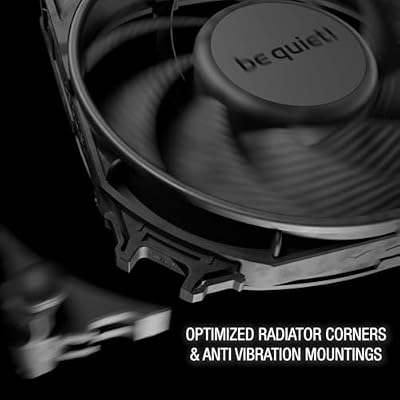
be quiet! Silent Wings Pro 4 140mm PWM High-Speed Gaming PC Case Fan, Black | Non-RGB 12V Computer Fan, up to 2400 RPM, Low Noise Cooling, 6-Pole Motor, Fluid Dynamic Bearing, Low Vibration, High Airflow




As an Amazon Associate we earn from qualifying purchases. Product prices and availability are accurate as of the date/time indicated.
🛒 Best Price Today on Amazon
Prime members get fast, free shipping on everything above, plus member-only deals. New members get a 30-day free trial — cancel anytime.
As an Amazon Associate we earn from qualifying purchases.


be quiet! Silent Wings Pro 4 140mm PWM at a Glance
| Component | Specification |
|---|---|
| Size | 140mm |
| Speed (RPM) | Up to 2,400 RPM |
| Airflow (CFM) | High-performance airflow and pressure |
| Connection | PWM 4-pin |
| Bearing | be quiet! premium long-life bearing |
| RGB | No |
| Noise level | Engineered for low noise at high speed |
| Best for | Radiators, high-TDP builds, demanding cooling loads |
| Price | Around $30 |
Size and Performance Profile (Airflow vs Pressure)
The Silent Wings Pro 4 140mm is built for high cooling performance. A 2,400 RPM ceiling is unusually high for a 140mm fan — most premium 140mm fans top out between 1,500 and 1,800 RPM — and that headroom translates into real performance on demanding cooling loads. The Pro 4 is engineered to deliver both airflow and static pressure, which makes it a strong choice for radiators (where pressure is needed to push air through fins) and for high-TDP CPU air coolers. As a 140mm fan it moves more air per revolution than a 120mm at the same speed, so at moderate RPM it remains quiet for the cooling work it does. For buyers building around an AIO liquid cooler with a 280mm or 420mm radiator, this is one of the best-judged premium options. The wider best radiator fans guide covers more radiator-focused picks.
Acoustics and Noise
A fan with a 2,400 RPM ceiling cannot be silent at full speed — physics will not allow it — but the Silent Wings Pro 4 is engineered to be substantially quieter at any given RPM than a budget fan of equivalent speed. The whole point of the Silent Wings line is acoustic refinement, and the Pro 4 applies that engineering to a high-speed product. With PWM control, the fan is normally far below its maximum speed: at idle and light load it can be slowed to a near-stop, and only ramps up when the cooling load demands it. For a high-performance fan, this is the right behaviour — quiet most of the time, loud only when it has to be. Buyers who want a fan that is quiet even at maximum should choose the slower Silent Wings 4 1100 in this guide or a Noctua A-series fan instead.
Connection: PWM, Daisy-Chain and Hub Support
The Silent Wings Pro 4 connects via a standard 4-pin PWM header. PWM control is essential for a high-speed fan: it allows the motherboard to slow the fan smoothly to very low RPM at idle, where 3-pin DC control would struggle. The Pro 4 does not include PST daisy-chain, so each fan uses its own header or a hub. For high-fan-count builds, a fan hub or be quiet!’s own controller hardware can consolidate the wiring. The Pro 4 is also often supplied with mounting accessories that allow it to be installed on radiators with M3 screws, which matters for AIO duty.
Bearing Quality and Longevity
be quiet! engineers the Silent Wings Pro 4 with a premium long-life bearing — and at a 2,400 RPM ceiling the bearing has to be good, because cheap high-speed fan bearings are the source of much premium-build buyer regret. The Pro 4 is built to keep running cleanly at speed across many years of use, which is exactly what is needed for a fan likely to spend its life on a radiator working hard. Combined with be quiet!’s brand reputation, this longevity is part of the value at the premium price point.
Who Is the Silent Wings Pro 4 For?
The Silent Wings Pro 4 140mm is for the builder running a high-TDP system who needs a 140mm fan with genuine high-speed headroom — typically an AIO liquid cooler with a large radiator, a high-end air cooler, or a case with restrictive intakes that must be overcome. It is also a good pick for builders who want one fan that can be quiet at idle and powerful at full load, rather than swapping fans between roles. It is not the right pick for low-thermal builds, where the slower Silent Wings 4 1100 or a Noctua A14 will be quieter for less money. For premium high-performance 140mm cooling, it earns its place.
Pros and Cons
Pros: 2,400 RPM ceiling gives real high-load cooling headroom; balanced airflow and pressure suit radiators and CPU coolers; PWM 4-pin control; premium be quiet! bearing; large positive review base.
Cons: Not quiet at maximum speed (physics) — the slower Silent Wings 4 1100 is quieter at the top; no RGB; no PST daisy-chain.
Is the Silent Wings Pro 4 Worth It?
At around $30 the be quiet! Silent Wings Pro 4 140mm PWM is one of the best premium picks when high cooling performance is the priority. The 2,400 RPM ceiling is unusually high for a 140mm fan and gives genuine headroom for AIO radiators and high-TDP CPUs, while the be quiet! acoustic engineering means it is far better mannered at speed than budget fans of the same RPM. The price sits above the slower Silent Wings 4 1100, but for a build that really needs the cooling, the Pro 4 is the right Silent Wings. For radiator and high-TDP duty, it earns a recommendation. Buyers comparing more options should also see our best radiator fans guide.
What to Look for in a Case Fan: Quick Buyer’s Guide
Size: 140mm fans move more air per revolution than 120mm at the same RPM, delivering equivalent cooling more quietly. Where a case supports 140mm mounts, larger is generally better.
PWM vs DC: A 4-pin PWM connection lets the motherboard control fan speed precisely via duty-cycle. A 3-pin DC fan uses voltage control only, which is less precise and tends to stall at low speeds.
Airflow vs static pressure: Open-path positions want airflow-biased fans; restrictive positions behind dust filters or radiators want pressure-biased fans. Many premium fans target a balanced profile.
Bearings: Fluid Dynamic Bearings, magnetic dome bearings and Noctua’s long-life designs all outlast cheaper sleeve bearings by years. Bearing wear is the source of most fan noise as fans age.
Frequently Asked Questions
How fast does the Silent Wings Pro 4 140mm spin?
It runs up to 2,400 RPM via PWM control, which is substantially faster than most premium 140mm fans — typically 1,500 to 1,800 RPM at the top end.
Is the Silent Wings Pro 4 good for AIO radiators?
Yes — it is one of the best 140mm picks for radiator duty. The high RPM ceiling and balanced airflow-and-pressure profile push air through radiator fins effectively, where slower fans struggle.
Is the Silent Wings Pro 4 quieter than the regular Silent Wings 4?
Not at maximum speed. The Pro 4 is engineered for high cooling performance with quiet operation under load, but the slower Silent Wings 4 1100 has a lower top speed and is therefore quieter at maximum.
Does the Silent Wings Pro 4 140mm have RGB?
No. For RGB from the same brand, look at the be quiet! Light Wings 140mm PWM ARGB also covered in this guide.
More Case Fan Reviews
- be quiet! Silent Wings 4 140mm PWM Fan Review
- ARCTIC P14 PWM PST Case Fan Review (140mm)
- ARCTIC P14 5-Pack Case Fan Review (140mm)
- Corsair RS120 ARGB 120mm PWM Fan Review
- Corsair iCUE Link RX120 RGB Fan Review (120mm)
- Noctua NF-P12 redux-1700 PWM Case Fan Review (120mm)
- Noctua NF-P14s redux-1500 PWM Case Fan Review (140mm)
- Noctua NF-A14 PWM Premium Quiet Fan Review (140mm Brown)
Affiliate Disclosure: As an Amazon Associate, we earn from qualifying purchases. If you click a link and make a purchase, we may earn a small commission at no extra cost to you. Prices and availability are accurate as of publication and may change.
Related Articles
Looking for more on this topic? Browse the hand-picked guides below — each one applies the same scoring rubric used in this review.