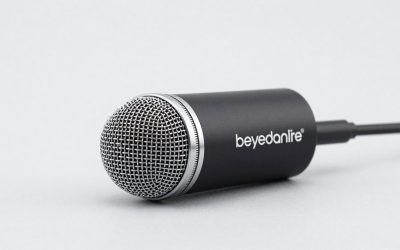
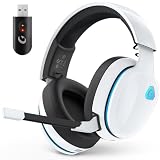
- Top Pick: YS-36D Dynamic Microphone – Premium Vocal Microphone, cardioid directional wired microphone, with 14 foot XLR to 1/4 inch audio cable, desktop tripod, extension rod, microphone storage bag (champagne)
- Best Value: Pyle Microphone, Dynamic Cardioid, XLR Cable Included, Unidirectional, Rugged Construction, Built-in Pop Filter, Perfect for Stage & Studio, High Gain, Ultra-Wide Frequency Response, 15ft Cable
- Premium Choice: FIFINE K6 Karaoke Microphone, Dynamic Vocal Microphone for Singing
Affiliate disclosure: As an Amazon Associate we earn from qualifying purchases. This post contains affiliate links — if you buy through them we may earn a small commission at no extra cost to you. This never affects our recommendations.
- The Legend: Why the Shure SM7B Is Industry Standard
- Professional Dynamic Design: 60 Years of Refinement
- Cardioid Isolation: Proven Broadcast Rejection
- Proximity Effect: Broadcast Authority
- Frequency Response: Speech-Optimized Broadcasting
- Switchable Filters: Professional Tailoring Options
- Output Impedance: Professional Interface Matching
- Build Quality: Professional Durability and Longevity
- XLR Connectivity: Professional Audio Path
- SM7B vs. Streaming-Specific Microphones: The Professional Difference
- Complete Professional Setup: SM7B + Audio Interface
- When the SM7B Is Right for Your Gaming Setup
- Setting Up Your SM7B Professional Stream
- The Professional Audio Path
- Shure SM7B FAQ
- Conclusion: The SM7B as Professional Broadcasting Standard
- Related Articles
- Frequently Asked Questions
- Related Articles
The Shure SM7B is legendary in broadcasting, recording, and professional audio. Used in radio stations, television studios, recording studios, and esports arenas worldwide, the SM7B represents the ultimate expression of dynamic microphone design. For gaming streamers willing to invest in truly professional equipment, the SM7B offers uncompromising audio quality and a voice character that’s become synonymous with broadcast excellence. This comprehensive guide explores why the SM7B is the gold standard, how its design compares to streaming-specific microphones, and whether a professional broadcasters’ microphone is right for your gaming setup.
In a hurry? See the top-rated Professional XLR Microphone deals available right now:
🛒 Check Professional Xlr Microphone Prices on Amazon →🛒 Best Price Today on Amazon
Prime members get fast, free shipping on everything above, plus member-only deals. New members get a 30-day free trial — cancel anytime.
Start 30-Day Prime Free Trial →See Today’s Amazon DealsThe Legend: Why the Shure SM7B Is Industry Standard
The Shure SM7B has been manufactured continuously since 1959. No other dynamic microphone has maintained relevance for over 60 years. This longevity isn’t accident—it’s evidence of uncompromising engineering and proven performance.
The SM7B is used by:
- Radio stations worldwide: The primary broadcast standard for on-air talent
- Recording studios: Vocals, drums, and instruments recorded with SM7Bs
- Television: News anchors, talk shows, sports commentary
- Podcasters: Professional podcasts rely on SM7B audio quality
- Esports organizations: Professional gaming teams use SM7Bs for broadcast
- Music production: Hip-hop, rock, and pop artists record on SM7Bs
If you’ve ever heard professional audio—radio, television, podcasts—you’ve heard an SM7B. The microphone is so ubiquitous in professional audio that it’s become invisible; people don’t notice it because it simply sounds like “professional.”
Professional Dynamic Design: 60 Years of Refinement
The SM7B is a pure dynamic microphone with no compromises. Every design decision serves professional broadcast use:
- Cardioid pickup pattern: Isolates voice while rejecting ambient noise
- Tailored frequency response: Engineered specifically for speech clarity
- Proximity effect: Bass boost when close creates broadcast presence
- Rugged construction: Professional-grade build for daily studio use
- Switchable presence peak: Optional bass and presence filters for various applications
- Proven reliability: Engineered for 24/7 broadcast use
Unlike streaming-specific microphones (which compromise on features to reduce cost), the SM7B makes no concessions. It’s engineered to be the best, period.
Cardioid Isolation: Proven Broadcast Rejection
The SM7B’s cardioid pattern has been perfected over decades of broadcast use. It captures voice from the front while rejecting side and rear noise with surgical precision.
For gaming broadcasts, this matters:
- Gaming peripherals to the side: Keyboard clicks and mouse movement are rejected
- Gaming rig behind: Cooling fans and rear port noise are suppressed
- Room reflections: Walls and hard surfaces reflect sound into the side/rear zones, where the SM7B rejects them
- Community noise: In LAN event environments, surrounding activity is rejected
The SM7B’s cardioid pattern is complemented by its dynamic design (lower sensitivity). The combination of polar pattern rejection plus insensitivity to soft sounds creates exceptional isolation. Your voice is captured with crystal clarity; everything else is suppressed.
Proximity Effect: Broadcast Authority
When you speak close to an SM7B (4-6 inches), proximity effect creates a natural bass boost. This isn’t a defect—it’s an intentional feature that professional broadcasters use to control their sound.
Radio personalities position the SM7B to exploit proximity effect:
- Closer positioning (3-4 inches): Maximum bass boost for deep, authoritative sound
- Normal positioning (6-8 inches): Moderate bass boost for natural voice
- Distant positioning (10+ inches): Minimal bass boost for bright, present sound
For gaming streams, proximity effect offers advantages. When you make critical callouts during intense moments, the natural bass enhancement makes you sound more commanding and confident. Your team trusts your calls because your voice carries authority.
Professional broadcasters have used this technique for 60 years because it works. The SM7B’s proximity effect is one of its defining characteristics—not a quirk to work around, but a feature to exploit.
As an Amazon Associate we earn from qualifying purchases at no extra cost to you.


Frequency Response: Speech-Optimized Broadcasting
The SM7B’s frequency response has been refined by decades of professional use. Its response curve is optimized for speech intelligibility and broadcast presence:
- Bass rolloff below 50 Hz: Eliminates subsonic rumble and room noise
- Presence peak 2-4 kHz: Natural warmth and vocal character
- Presence peak 4-5 kHz: The critical range where speech intelligibility lives
- Slight peak 10-15 kHz: Air and brightness without harshness
This response curve has been proven across millions of broadcast hours. When radio DJs sound professional, they’re using an SM7B (or a microphone copying the SM7B’s approach). When podcasters sound engaging, it’s often SM7B character. The frequency response is fundamentally about making speech sound professional and present.
Switchable Filters: Professional Tailoring Options
Unlike most microphones (which have fixed frequency response), the SM7B offers switchable filters on the microphone body:
- Bass filter switch: Flat or -4dB bass rolloff
- Presence peak switch: Flat or +4dB presence peak at 4 kHz
These switches allow professional tailoring of audio character:
- Flat/Flat setting: Most neutral; use when monitoring through mixing console
- Bass rolloff + Presence peak: Maximum broadcast aggression; used when direct recording
- Custom combinations: Tailor to your voice and environment
For gaming streamers, the Bass rolloff + Presence peak setting (standard for professional broadcasting) delivers the most engaging tone. Your voice will cut through game audio with broadcast authority.
Output Impedance: Professional Interface Matching
The SM7B has an output impedance around 300 ohms, which is the standard for professional dynamic microphones. This impedance is optimized for broadcast mixers, audio interfaces, and professional equipment.
When impedance is properly matched:
- Maximum signal transfer: No audio loss in the cable
- Minimal noise introduction: Clean signal path from microphone to interface
- Professional compatibility: Works with any professional audio equipment
This impedance matching matters for audio quality. Improper impedance can cause signal loss (quiet audio) or noise introduction. The SM7B’s standard impedance ensures compatibility with all professional equipment.
Build Quality: Professional Durability and Longevity
The SM7B is built to survive decades of professional use. Features include:
- All-metal construction: Hardened die-cast body resists damage
- Internal shock mount: Isolates capsule from mechanical vibration
- Reinforced XLR connector: Professional-grade connector for repeated connection cycles
- Sealed design: Dust and debris don’t damage internal components
- Replaceable parts: Grille, capsule, and internal components are replaceable
The SM7B is designed to function flawlessly for 20+ years of daily professional use. Budget microphones often fail or degrade within a year; the SM7B is expected to outlast its owner.
XLR Connectivity: Professional Audio Path
The SM7B is XLR-only, requiring an audio interface or mixing console. This isn’t a limitation—it’s by design. XLR connectivity offers advantages over USB:
- Balanced signal path: Rejects electrical noise and hum
- Long cable runs: Can run 50+ feet without signal degradation
- Professional preamps: Dedicated audio interfaces provide studio-grade amplification
- Hardware monitoring: Zero-latency headphone output through the interface
- Multi-source mixing: Add additional microphones, instruments, and line-level sources
For serious gamers building professional streaming setups, an audio interface is an investment that pays dividends. The Focusrite Scarlett 2i2 ($150-180) pairs perfectly with the SM7B.
SM7B vs. Streaming-Specific Microphones: The Professional Difference
| Feature | Shure SM7B | Shure MV7 | HyperX QuadCast S |
|---|---|---|---|
| Connectivity | XLR only | USB + XLR | USB only |
| Target User | Professional broadcasters | Streaming content creators | Gaming audience |
| Design Philosophy | Uncompromising broadcast | Streaming with professional path | Gaming-centric convenience |
| Switchable Filters | Yes (bass + presence) | No | No |
| Setup Complexity | High (requires interface) | Low (USB) to Moderate (XLR) | Minimal (plug and play) |
| Price | $300-400 | $200-250 | $130-150 |
| Professional Status | Industry gold standard | Professional-grade streaming | Gaming-grade quality |

Shure SM58 Pro XLR Dynamic Vocal Microphone | Cardioid dynamic vocal mic for studio and live performance, podcasting and recording; industry-standard sound


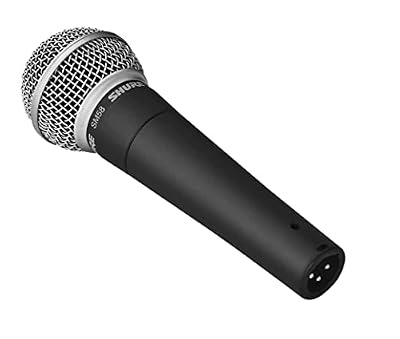
As an Amazon Associate we earn from qualifying purchases. Product prices and availability are accurate as of the date/time indicated.
Complete Professional Setup: SM7B + Audio Interface
Essential Components
- Shure SM7B ($300-400) — The microphone
- Audio interface ($150-300) — Focusrite Scarlett 2i2 recommended ($150-180)
- XLR cables ($15-30) — Professional 20 AWG cables
- Microphone shock mount ($40-80) — Isolates capsule from vibrations
- Boom arm ($40-100) — Positions microphone at mouth height
- Pop filter ($20-40) — Reduces plosives
Optional Professional Upgrades
- Preamp upgrade ($300+) — Premium interfaces with better preamps (Audient iD4, Universal Audio Apollo)
- Acoustic foam treatment ($100-300) — Treats room reflections
- Monitoring headphones ($100-300) — Professional headphones for critical listening
- XLR cable extensions ($30-50) — For flexible microphone positioning
Total professional setup: $600-1000+. This is expensive compared to consumer microphones, but you’re investing in tools that will function flawlessly for 20+ years. Professional equipment is a one-time investment; you’ll never replace it because it doesn’t break.
When the SM7B Is Right for Your Gaming Setup
The SM7B isn’t for everyone. Consider it when:
- You’re serious about streaming as a career — Planning to stream as primary income, not hobby
- You want uncompromising audio quality — Willing to invest for the best-sounding setup
- You understand audio fundamentals — Comfortable learning about impedance, preamps, and mixing
- You have room for professional equipment — Dedicated streaming space, not bedroom streaming
- You want to future-proof your investment — Equipment that lasts decades
- You plan to broadcast from professional environments — LAN events, esports venues, professional studios
Don’t choose the SM7B if:
- You’re just starting and might quit streaming in a year
- You want simplicity without learning audio fundamentals
- You’re budget-conscious and need minimal investment
- You have limited desk space and need compact equipment
- You want USB plug-and-play without interface complexity
The SM7B is for gamers who’ve decided streaming is serious business and want the tools that professional broadcasters use.
Setting Up Your SM7B Professional Stream
- Assemble shock mount: Thread shock mount onto microphone body
- Mount to boom arm: Attach shock mount to boom arm using 5/8″ adapter
- Position at mouth level: 6-8 inches away, directly in front of your voice source
- Install pop filter: Attach 2 inches in front of microphone
- Connect XLR cable: Balanced XLR cable from microphone to audio interface
- Set switchable filters: Set bass rolloff switch and presence peak switch to desired positions (most aggressive for broadcast: both engaged)
- Connect audio interface to computer: USB to gaming PC
- Install audio interface drivers: Download from manufacturer’s website
- Enable phantom power: (Not required for SM7B dynamic, but check interface documentation)
- Set input gain: In audio interface control panel, speak at normal volume and set gain so peaks reach -6dB to -3dB
- Enable hardware monitoring: Plug headphones into audio interface’s headphone jack for zero-latency monitoring
- Configure streaming software: Select audio interface as input in OBS/Streamlabs
- Test stream: Do a short test stream to verify everything works
The Professional Audio Path
When everything is set up correctly, here’s the signal flow:
- Your voice enters the SM7B’s cardioid pattern
- Dynamic capsule converts acoustic energy to analog electrical signal
- Switchable filters shape frequency response for broadcast presence
- XLR balanced cable carries signal to audio interface (noise rejection)
- Professional preamp amplifies cleanly without coloration
- Analog-to-digital converter captures at 48 kHz / 24-bit (studio quality)
- Digital audio sent to streaming software for broadcast
- Simultaneously, headphone output delivers zero-latency monitoring
This signal path is used in professional radio, television, and recording studios worldwide. You’re using industry-standard professional equipment—the exact same microphone used by NPR hosts, Sirius XM DJs, and Grammy Award-winning producers.
For more microphone guidance, check our articles on the best microphone for gaming, gaming microphones, budget gaming mics, cheap microphones, boom microphones, and our complete gaming setup guide.
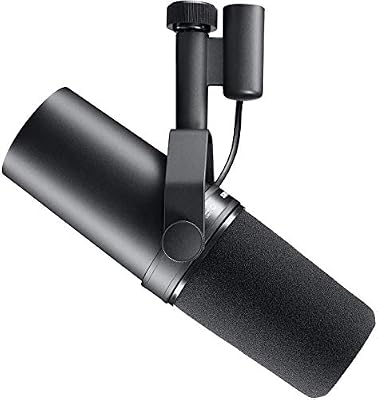
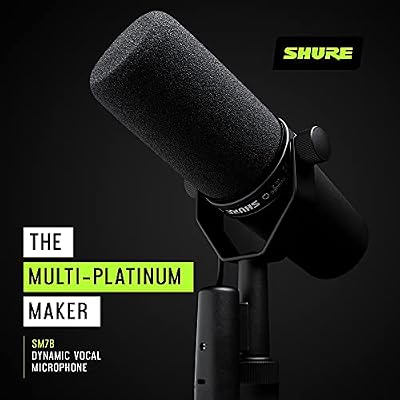
Shure SM7B Dynamic Vocal Microphone for Podcasting & Streaming | XLR studio dynamic mic for broadcast, podcast, recording, gaming and streaming; smooth warm vocals, rugged build




As an Amazon Associate we earn from qualifying purchases. Product prices and availability are accurate as of the date/time indicated.
Shure SM7B FAQ
Is the SM7B overkill for gaming streams?
Not if you’re serious about streaming. The SM7B is overkill for casual hobby streams, but perfect for anyone treating streaming as a professional endeavor. The audio quality difference between SM7B and budget microphones is substantial.
Why is the SM7B so expensive?
Because it’s been engineered to professional standards for 60+ years. The capsule design, build quality, and proven reliability command a premium. You’re investing in a tool that will last your lifetime.
Can I use the SM7B with USB?
No. The SM7B is XLR-only. If you want USB simplicity with professional audio, choose the Shure MV7 instead. The SM7B is for professionals building dedicated broadcasting setups.
Do the switchable filters make a big difference?
Yes. The presence peak engages the 4 kHz presence peak for more broadcast aggression; the bass rolloff removes low-frequency rumble. Professional broadcasters use both engaged for maximum presence. Experiment to find your preference.
Conclusion: The SM7B as Professional Broadcasting Standard
The Shure SM7B isn’t a microphone chosen lightly. It’s the tool of professional broadcasters because 60 years of use has proven it’s the best. For gaming streamers willing to invest in truly professional equipment, the SM7B delivers broadcast-quality audio that rivals any studio in the world. Combined with a quality audio interface, the SM7B creates a streaming setup that will function flawlessly for decades. If you’re building a professional broadcasting operation, the SM7B is the microphone that industry professionals would choose.
Related Articles
Looking for more on this topic? Browse the hand-picked guides below — each one applies the same scoring rubric used in this review.
Frequently Asked Questions
Why is the SM7B considered a broadcast standard?
It combines a smooth midrange voicing that flatters most voices, excellent rejection of off-axis room noise, internal shock isolation and built-in pop filtering, plus switchable bass rolloff and presence boost. Decades of radio, podcast and studio use have made its sound familiar to listeners, which is itself part of the appeal.
Do I definitely need a Cloudlifter with it?
Not definitely, but usually. The microphone needs roughly 60dB of clean gain, and only better interfaces provide that without audible hiss. If your interface has high-quality preamps rated well above 60dB, you can run it directly. Otherwise an inline booster supplying about 25dB is the standard, well-proven solution.
Does the SM7B need phantom power?
The microphone itself is dynamic and requires no phantom power. However, if you use an inline gain booster such as a Cloudlifter or FetHead, that device draws its power from 48V phantom, so you must enable phantom power on the interface for the booster to function. The mic is unaffected either way.
What do the switches on the back do?
One is a bass rolloff that reduces low-frequency buildup from close-miking or a rumbling room. The other is a presence boost that lifts the upper midrange for added clarity and intelligibility. Many users leave both flat and shape the sound in software, but the presence boost helps darker voices cut through.
Is it worth the price over cheaper dynamic microphones?
The gap has narrowed considerably, with several dynamic mics offering similar rejection and pleasant voicing for a fraction of the cost. The SM7B still justifies itself through build quality, resale value, consistency and its integrated mount and windscreen. If your budget is tight, spend on treatment and a boom arm first.