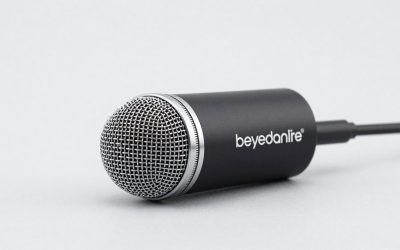
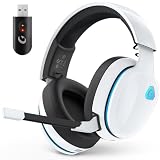
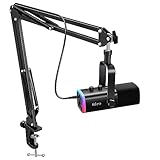
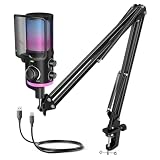
- Top Pick: TONOR Gaming Microphone Set with Boom Arm, Vocal Condenser Microphone for Content Creators, USB Mic for PC with Stand, RGB, Tap Mute, Gain Control, Gaming Equipemnt, Twitch, Streaming, TC310+
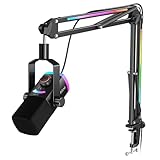
- Best Value: FIFINE AmpliGame AM8T XLR/USB Gaming Microphone Set, Dynamic PC Mic
- Premium Choice: FIFINE AM6T Gaming USB Condenser Mic for PC
Affiliate disclosure: As an Amazon Associate we earn from qualifying purchases. This post contains affiliate links — if you buy through them we may earn a small commission at no extra cost to you. This never affects our recommendations.
- Why the Shure MV7 Dominates Professional Streaming
- Understanding Shure’s Microphone Engineering Heritage
- Supercardioid Polar Pattern: Maximum Noise Isolation
- Dual USB/XLR Connectivity: The Streaming Upgrade Path
- Hardware Monitoring: Zero-Latency Headphone Output
- Frequency Response: Broadcast-Tuned Presence
- Sample Rate and Bit Depth: Professional Recording Quality
- Dynamic vs. Condenser: The Shure MV7’s Design Choice
- Build Quality: Professional Durability
- Comparison Table: Professional Streaming Microphones
- Complete Setup: Shure MV7 (USB Mode)
- Setting Up Your Shure MV7
- Why Professional Streamers Choose the Shure MV7
- Shure MV7 Frequently Asked Questions
- Conclusion: The Shure MV7 as Your Streaming Standard
- Related Articles
- Related Articles
The Shure MV7 represents the pinnacle of streaming microphone design by offering both USB and XLR connectivity in a single unit. This dual-mode approach means you can start streaming with USB simplicity on day one, then upgrade to an audio interface for professional mixing without replacing the microphone. The Shure MV7 has become the industry standard for serious gaming streamers, podcasters, and content creators who refuse to compromise on audio quality. This comprehensive guide explores the Shure MV7’s professional features, dual connectivity, and why it’s the top choice for streamers who want to grow their setup over time.
In a hurry? See the top-rated Professional Streaming Microphone deals available right now:
🛒 Check Professional Streaming Microphone Prices on Amazon →🛒 Best Price Today on Amazon
Prime members get fast, free shipping on everything above, plus member-only deals. New members get a 30-day free trial — cancel anytime.
Start 30-Day Prime Free Trial →See Today’s Amazon DealsWhy the Shure MV7 Dominates Professional Streaming
The Shure MV7 is objectively the most popular streaming microphone among professional gamers and streamers. Here’s why:
- Dual USB/XLR connectivity: Start simple, upgrade professional without replacing microphone
- Broadcast-quality audio: Engineered by Shure, the company that literally invented the microphone
- Supercardioid isolation: Aggressive noise rejection designed for streaming
- Hardware monitoring: Built-in headphone jack for zero-latency monitoring
- Professional build quality: Metal construction that lasts years of daily streaming
- Community trust: Used by top streamers on Twitch, YouTube, and professional broadcasts
- Proven reliability: Thousands of streamers report zero issues after years of use
The Shure MV7 isn’t just another gaming microphone. It’s a professional broadcast tool that happens to be perfect for gaming streams. Shure has spent decades perfecting microphone design for radio and TV—the MV7 represents the culmination of that expertise applied to streaming.
Understanding Shure’s Microphone Engineering Heritage
Shure has been manufacturing microphones since 1925. The company invented the dynamic microphone and has engineered microphones used in virtually every broadcast studio, concert venue, and recording studio worldwide. When Shure enters the streaming market with the MV7, they bring decades of expertise.
This heritage matters because:
- Frequency response is scientifically tuned: Engineers spent months perfecting how the MV7 sounds for broadcast voice
- Build quality is uncompromising: Every component chosen for durability and reliability
- Microphone capsule is professional-grade: Same technology as Shure’s broadcast microphones
- Support is professional: Shure provides drivers, documentation, and customer support
- Upgrade path is clear: If you want professional equipment, Shure makes everything you’d need
When you choose the Shure MV7, you’re not buying a gaming gadget. You’re buying professional broadcast equipment that happens to be perfect for streamers.
Supercardioid Polar Pattern: Maximum Noise Isolation
The Shure MV7 uses a supercardioid polar pattern—more aggressive than standard cardioid. This means the pickup zone is tighter, providing stronger rejection of side and rear noise.
For gaming streams, supercardioid isolation is essential:
- Keyboard to the side: Supercardioid rejects keystroke noise more aggressively than cardioid
- Gaming rig fans behind: Strong rear rejection minimizes cooling fan noise
- Room reflections: Aggressive side/rear rejection prevents hollow room sound
- Background activity: Someone walking behind you won’t be picked up by the microphone
The trade-off with supercardioid is there’s a small pickup zone directly behind the microphone (180 degrees). For desk microphones, this matters little since nothing is directly behind it. The aggressive side rejection more than compensates for this minor limitation.
Positioning the MV7 correctly maximizes its supercardioid advantages. Keep it 6-8 inches from your mouth, directly in front of your voice source. This centering ensures your voice stays in the optimal pickup zone while surrounding noise is rejected.
As an Amazon Associate we earn from qualifying purchases at no extra cost to you.





Dual USB/XLR Connectivity: The Streaming Upgrade Path
The Shure MV7’s unique feature is dual connectivity. It connects via both USB and XLR simultaneously, meaning you have options:
USB Mode (Day 1 Setup)
- Plug USB cable into gaming PC
- Select as input device in OBS/Streamlabs
- Start streaming immediately—no interface required
- Built-in gain control on the microphone for level adjustment
- Use included headphone adapter for basic monitoring
XLR Mode (Professional Upgrade)
- Purchase an audio interface (Focusrite Scarlett, PreSonus Quantum, etc.)
- Connect MV7’s XLR output to audio interface input
- Gain professional preamps, hardware mixing, and zero-latency monitoring
- Add additional microphones, instruments, or line-level sources
- Maintain complete backward compatibility—USB still works if needed
This flexibility is why the Shure MV7 is the most recommended streaming microphone. You’re not forced to choose USB simplicity OR professional XLR flexibility—you get both. Start streaming tomorrow with USB, upgrade to professional mixing next year without replacing the microphone.
Hardware Monitoring: Zero-Latency Headphone Output
The Shure MV7 includes a 3.5mm headphone jack for direct hardware monitoring. Plug your headphones into the microphone and you hear yourself with zero computer latency. This is critical for gaming.
Why zero-latency monitoring matters:
- Natural communication: Hearing yourself without delay makes team communication feel natural
- Competitive advantage: In fast-paced games, latency-free callouts are sharper
- Voice modulation: You adjust your voice naturally if you hear it immediately
- Confidence: Not hearing yourself (or hearing delayed audio) causes performance anxiety
USB microphones without hardware monitoring force your audio through your computer’s audio stack, introducing 10-100ms latency depending on driver settings. The MV7’s direct monitoring bypasses the computer entirely, delivering true zero latency.
In competitive gaming, this matters. Professional esports teams use headsets with hardware monitoring for this exact reason. The MV7 provides the same capability in a studio microphone.
Frequency Response: Broadcast-Tuned Presence
The Shure MV7’s frequency response has been carefully engineered for broadcast voice. It features:
- Bass rolloff below 100 Hz: Eliminates rumble and desk vibrations
- Slight presence peak 1-2 kHz: Natural, warm vocal presence
- Strong presence peak 4-6 kHz: Clarity and presence for broadcast quality
- Gentle rolloff above 12 kHz: Avoids sibilance and harshness
This frequency response is the result of Shure’s broadcast engineering expertise. Every peak and rolloff serves a purpose—making your voice sound professional, present, and engaging on streams.
The presence peak at 4-6 kHz is particularly important for gaming. This frequency range is where speech intelligibility lives. When you make critical callouts during intense action, this presence peak makes your voice cut through game audio and music, ensuring your team hears you clearly.
Sample Rate and Bit Depth: Professional Recording Quality
The Shure MV7 supports:
- USB: 48 kHz / 24-bit (professional broadcast standard)
- XLR: Analog signal (audio interface handles conversion)
In practice, configure your streaming software for:
- Stream audio: 48 kHz / 16-bit MP3 or AAC (Twitch compresses further)
- Local VOD recording: 48 kHz / 24-bit WAV (archive quality for YouTube)
The advantage of the MV7’s 24-bit USB support is that you capture studio-quality audio while streaming. Even though Twitch compresses your stream audio heavily, your local recordings (for YouTube VODs) maintain professional quality.
Dynamic vs. Condenser: The Shure MV7’s Design Choice
The Shure MV7 is technically a hybrid design—it uses dynamic microphone characteristics with some condenser-like sensitivity. This hybrid approach provides:
- Dynamic’s noise rejection: Lower sensitivity means room noise isn’t picked up
- Dynamic’s proximity effect: Bass boost when close creates warmth
- Condenser-like clarity: Extended frequency response captures vocal detail
- Condenser-like presence: Detailed presence peak for broadcast clarity
This hybrid design gives the MV7 the best of both worlds. You get dynamic microphone character (warmth, proximity effect, noise rejection) combined with clarity that rivals much more expensive condenser microphones.
Build Quality: Professional Durability
The Shure MV7 is built like broadcast equipment because it IS broadcast equipment. Features include:
- All-metal body: Won’t crack or degrade from daily use
- Reinforced USB/XLR connectors: Professional-grade connections that last
- Internal shock suspension: Isolates microphone capsule from vibrations
- Sealed construction: Dust and debris won’t damage internal components
- Replaceable parts: If something fails, Shure provides replacement components
This build quality matters for streamers who use their microphone daily. Budget microphones often develop issues (crackling, connection failures, mechanical wear) within a year. The Shure MV7 is engineered to last years with proper care.
Comparison Table: Professional Streaming Microphones
| Feature | Shure MV7 | Audio-Technica AT2020USB+ | HyperX QuadCast S |
|---|---|---|---|
| Dual Connectivity | Yes (USB + XLR) | Yes (USB + XLR) | No (USB only) |
| Polar Pattern | Supercardioid | Cardioid | Supercardioid |
| Headphone Monitor | Yes (zero-latency) | No | No |
| Sample Rate | 48 kHz / 24-bit | 48 kHz / 16-bit | 48 kHz / 16-bit |
| Build Quality | Professional-grade | Professional-grade | Gaming-grade |
| Price | $200-250 | $150-200 | $130-150 |
| Upgrade Path | Professional (add interface) | Professional (add interface) | Limited |

Shure MV7 USB Podcast Microphone for Podcasting, Recording, Live Streaming & Gaming, Built-in Headphone Output, All Metal USB/XLR Dynamic Mic, Voice-Isolating Technology, TeamSpeak Certified - Black


As an Amazon Associate we earn from qualifying purchases. Product prices and availability are accurate as of the date/time indicated.
Complete Setup: Shure MV7 (USB Mode)
Day 1 streaming setup with the MV7:
What You Need
- Shure MV7 ($200-250) — Includes USB cable and basic accessories
- Pop filter ($15-30) — Reduces plosive sounds
- Shock mount ($20-40) — Isolates microphone from vibrations
- Desk stand or boom arm ($30-80) — Positions microphone at mouth height
Total: $265-400. You have a complete professional streaming setup ready to go.
Optional Professional Upgrade (Later)
- Audio interface ($150-300) — Focusrite Scarlett 2i2 recommended
- XLR cables ($10-20) — Usually included with interface
When you’re ready, add the interface and switch to XLR mode. Your existing MV7 setup scales seamlessly to professional.
Setting Up Your Shure MV7
- Unbox and inspect: Check all components are included (microphone, USB cable, stand adapter, pop filter, documentation)
- Install shock mount: Thread the shock mount onto the microphone body using the provided 5/8″ adapter
- Position the microphone: Mount at mouth height 6-8 inches away. Supercardioid pattern requires proper centering.
- Install pop filter: Attach the pop filter 2 inches in front of the microphone
- Connect USB cable: Plug into your gaming PC. The MV7 will be recognized automatically (no drivers needed on modern Windows/macOS)
- Select in streaming software: In OBS, Streamlabs, or your platform, select the Shure MV7 as your audio input
- Set input gain: In your streaming software’s audio settings, adjust levels so your voice peaks at -6dB to -3dB
- Test monitoring: Plug headphones into the MV7’s 3.5mm jack to test zero-latency monitoring
- Do a test stream: Run a short test (even just to yourself) to verify audio sounds professional
Why Professional Streamers Choose the Shure MV7
Across streaming platforms, the Shure MV7 is objectively the most popular microphone among top-tier streamers. This isn’t hype—it’s evidence. When serious gamers invest in audio equipment, they choose the MV7 because:
- It sounds incredible: Professional tuning and Shure’s expertise deliver broadcast-quality audio
- It scales with you: Start with USB, upgrade to professional without replacing the microphone
- It’s reliable: Professional build quality means years of trouble-free streaming
- It’s supported: Shure’s reputation means documentation, drivers, and customer support
- It’s the standard: Other streamers use MV7, making it easy to get advice and troubleshooting help
If you’re serious about streaming and willing to invest in quality, the Shure MV7 is the microphone to choose. It’s the standard for a reason.
Learn more about microphone selection from our guides on the best microphone for gaming, gaming microphone roundups, budget gaming mics, cheap microphones, boom microphones, and our comprehensive gaming setup guide.
Shure MV7 USB Podcast Microphone for Podcasting, Recording, Live Streaming & Gaming, Built-in Headphone Output, All Metal USB/XLR Dynamic Mic, Voice-Isolating Technology, TeamSpeak Certified - Black
As an Amazon Associate we earn from qualifying purchases. Product prices and availability are accurate as of the date/time indicated.
Shure MV7 Frequently Asked Questions
Should I start with USB or XLR mode?
Start with USB. It’s simpler and requires no additional hardware. After a few months of streaming, if you want to upgrade to professional mixing, add an audio interface and switch to XLR. The MV7’s dual connectivity makes this transition seamless.
Can I use both USB and XLR simultaneously?
The MV7 can deliver audio via both connections at the same time. However, you’ll typically use one or the other depending on your setup. You can switch between them without replugging the microphone.
Does the MV7 require special drivers?
Modern Windows and macOS recognize the MV7 without drivers. Optional Shure drivers are available if you want advanced features, but they’re not required for basic USB functionality.
How does the MV7 compare to the original Shure SM7B?
The SM7B is a legendary broadcast microphone used in radio and recording studios worldwide. The MV7 is designed specifically for streamers and includes USB connectivity. The SM7B requires an audio interface and is more expensive, but both are exceptional microphones.
Conclusion: The Shure MV7 as Your Streaming Standard
The Shure MV7 is the culmination of a century of Shure microphone engineering applied directly to streaming. Dual USB/XLR connectivity, supercardioid isolation, zero-latency monitoring, and professional build quality combine to create the ultimate streaming microphone. Whether you’re just starting your gaming channel or building a professional streaming setup, the Shure MV7 is the microphone that will scale with your ambitions. It’s the industry standard for a reason—invest in professional audio, and your viewers will notice the difference immediately.
Related Articles
Looking for more on this topic? Browse the hand-picked guides below — each one applies the same scoring rubric used in this review.