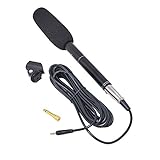
- Top Pick: Movo X3-II Shotgun Microphone for Camera – 11” XLR Supercardioid Boom Mic for Filmmaking, DSLR Video, Interviews & Content Creation – Includes Rycote Shockmount, Grip & XLR Cables
- Best Value: Pyle Microphone, Dynamic Cardioid, XLR Cable Included, Unidirectional, Rugged Construction, Built-in Pop Filter, Perfect for Stage & Studio, High Gain, Ultra-Wide Frequency Response, 15ft Cable
- Premium Choice: LyricLoom Professional XLR Microphone Wired Set, Metal Vocal Dynamic Microphone with 16.4 XLR Male to XLR Female Cable, Mic with Switch Set. Corded Microphone for Karaoke, Speaker, Singing, Recording
Affiliate disclosure: As an Amazon Associate we earn from qualifying purchases. This post contains affiliate links — if you buy through them we may earn a small commission at no extra cost to you. This never affects our recommendations.
- Dynamic Microphones vs. Condenser: Which Is Better for Streaming?
- Understanding the Rode Procaster’s Design Philosophy
- Cardioid Pickup Pattern: Rejecting Gaming Environment Noise
- Proximity Effect: The Secret to Broadcast Warmth
- Frequency Response: Broadcast-Optimized Presence
- XLR Connectivity: Professional Audio Path
- Output Impedance and Audio Interface Matching
- Rugged Construction for Daily Streaming
- Sample Rate and Recording Quality
- Zero-Latency Hardware Monitoring
- Comparison: Dynamic Microphones for Gaming Streams
- Complete Setup: Procaster + Audio Interface
- Dynamic Microphone FAQ
- Conclusion: Dynamic Microphones for Professional Streaming
- Related Articles
- Frequently Asked Questions
- Related Articles
Dynamic microphones represent a different approach to professional streaming audio. Unlike condenser microphones that capture every subtle nuance, dynamic microphones use a moving coil design that’s more forgiving and natural-sounding for voice. The Rode Procaster is specifically engineered for broadcast and streaming, offering XLR connectivity, cardioid rejection of room noise, and the warm, present tone that professional broadcasters have used for decades. This comprehensive guide explores dynamic microphones for streaming, why professionals choose them, and how the Rode Procaster delivers broadcast-quality audio.
In a hurry? See the top-rated Professional Dynamic Microphone for Streaming deals available right now:
🛒 Check Professional Dynamic Microphone For Streaming Prices on Amazon →🛒 Best Price Today on Amazon
Prime members get fast, free shipping on everything above, plus member-only deals. New members get a 30-day free trial — cancel anytime.
Start 30-Day Prime Free Trial →See Today’s Amazon DealsDynamic Microphones vs. Condenser: Which Is Better for Streaming?
The condenser vs. dynamic choice is one of the most important decisions in microphone selection. Each approach has distinct advantages:
Condenser Microphones
- Exquisitely sensitive — Capture subtle vocal nuances and room ambience
- Extended frequency response — Natural highs and lows
- Perfect for high-fidelity recording — Music, voiceovers, studio quality
- Require phantom power — Need audio interface or mixer power supply
- Pick up room noise — Isolation and treatment critical
Dynamic Microphones
- Rugged and forgiving — Handle loud voices without distortion
- Natural proximity effect — Bass boost when close, warm tone
- Inherent noise rejection — Less sensitive to room noise
- No phantom power required — Work with any XLR input
- Professional broadcast standard — Used in radio and TV for decades
- Coloring of the voice — Add character and presence naturally
For gaming streams specifically, dynamic microphones have advantages. Your gaming environment is loud (keyboard, mouse, fans). A dynamic microphone’s lower sensitivity means it rejects this ambient noise naturally. Additionally, dynamics’ proximity effect (bass boost when close) creates a more engaging, present tone that cuts through game audio during important callouts.
The Rode Procaster is specifically designed for broadcast use. It’s engineered to sound incredible on podcasts, radio, and livestreams—exactly your use case.
Understanding the Rode Procaster’s Design Philosophy
Rode manufactures the Procaster in Australia and has engineered it specifically for online content creation. Unlike general-purpose microphones, the Procaster’s every design choice serves streaming:
- Cardioid pattern: Rejects side and rear noise while capturing voice clearly
- Presence peak at 4 kHz: Makes your voice cut through game audio and music
- Bass rolloff below 100 Hz: Eliminates rumble and desk vibrations from appearing in your stream
- Output impedance: Matched for broadcast mixers and audio interfaces
- Rugged construction: Professional-grade build quality for daily streaming
Every characteristic is intentional. The Procaster doesn’t try to capture a “true” sound of your voice; it captures a broadcast-optimized version that sounds professional and present.
As an Amazon Associate we earn from qualifying purchases at no extra cost to you.




Cardioid Pickup Pattern: Rejecting Gaming Environment Noise
The Procaster uses a cardioid pattern—it captures sound primarily from the front while rejecting side and rear noise. For gaming streams, this is crucial:
- Your keyboard sits to the side — Cardioid rejection minimizes keystroke noise
- Your gaming rig’s fans are behind or above — Cardioid rejects rear noise
- Room reflections come from sides and back — Cardioid pattern provides isolation
- Your voice is captured from the front — Maximum presence and clarity
Dynamic microphones like the Procaster have an additional advantage: their lower sensitivity means they don’t pick up as much ambient noise even from the front. This double benefit—polar pattern rejection plus inherent insensitivity to soft sounds—makes dynamics exceptionally good at isolating your voice in noisy environments.
Proper positioning maximizes the cardioid pattern’s benefits. Keep the microphone 6-8 inches from your mouth, directly in front of your voice source. Position your keyboard to the side of the microphone’s pickup pattern, not directly in front.
Proximity Effect: The Secret to Broadcast Warmth
Proximity effect is the bass boost that occurs when you speak very close to a dynamic microphone. Get 2-3 inches away and you’ll hear significant bass enhancement. Back up to 8 inches and the bass is more subtle.
Professional broadcasters use proximity effect intentionally. By positioning the microphone slightly closer than you would a condenser, you get natural bass that makes your voice sound warmer, deeper, and more authoritative. This is why radio DJs sound so captivating—they’re using proximity effect to enhance their natural tone.
For gaming, proximity effect offers advantages:
- Deeper voice authority — Leadership and confidence in your tone
- Separation from high-frequency game audio — Your bass-enhanced voice doesn’t compete with game treble
- Natural sound coloring — Not artificial processing, just physics
- Engage viewers emotionally — Warmth and presence keep audiences invested
To use proximity effect with the Procaster, position it closer to your mouth (4-6 inches instead of 8) and let the microphone’s physics do the work. You’ll notice your voice gains body and presence naturally.
Frequency Response: Broadcast-Optimized Presence
The Procaster’s frequency response is specifically tuned for broadcast speech. It features:
- Bass rolloff below 100 Hz: Eliminates rumble, desk vibrations, and HVAC noise
- Slight presence peak at 2 kHz: Makes voices sound natural and warm
- Presence peak at 4 kHz: The “air and clarity” range that makes you sound broadcast-quality
- Gentle rolloff above 10 kHz: Avoids harshness without losing brilliance
This response curve has been proven over decades of radio broadcasting. It’s not trendy or experimental—it’s the frequency response that professional broadcasters know works. When you use a Procaster, you’re using the same microphone philosophy that major broadcasters rely on.
XLR Connectivity: Professional Audio Path
The Procaster connects via XLR, requiring an audio interface or mixer. This is the professional standard because XLR’s balanced connection rejects electrical noise and hum that would contaminate USB audio.
With an XLR microphone, you get:
- Professional preamps that color your voice favorably
- Balanced cable connection that rejects interference
- Multiple source mixing through an audio interface
- Hardware monitoring with zero-latency headphone output
- Expandability to add multiple microphones or instruments
- Professional-grade routing for advanced setups
The trade-off is complexity. You’ll need to purchase an audio interface ($150-300) and learn basic mixing concepts. For serious streamers who want professional quality and flexibility, this investment is worthwhile. For casual streamers, USB microphones offer simplicity at the cost of upgrade potential.
Popular audio interfaces for the Procaster include the Focusrite Scarlett 2i2 ($150), PreSonus Quantum 2 ($200), and Behringer U-Phoria series ($100-150). Any of these interfaces will pair excellently with the Procaster.
Output Impedance and Audio Interface Matching
The Procaster has an output impedance around 200-300 ohms, which is standard for dynamic microphones. This impedance is optimized for professional audio interfaces and mixers designed for broadcast use.
When your microphone impedance matches your audio interface’s input impedance, you get maximum signal transfer and minimal noise. Most professional audio interfaces are designed for microphones in the 200-300 ohm range, so the Procaster pairs perfectly with any professional interface.
This is a technical consideration but matters for audio quality. Impedance mismatch can cause signal loss (quiet audio) or noise introduction. The Procaster’s standard impedance ensures compatibility with all professional equipment.
Rugged Construction for Daily Streaming
The Procaster is built like broadcast equipment—because it is broadcast equipment. It features:
- Solid metal body — Won’t crack or break from desk bumps
- Reinforced XLR connector — Professional-grade connection that won’t fail
- Internal shock suspension — Isolates the microphone capsule from vibrations
- Sealed construction — Dust and debris won’t damage internal components
- Replaceable parts — If you need to service it, components are available
This build quality matters if you stream daily. Budget microphones often develop crackling, connection issues, or mechanical failures within a year of heavy use. The Procaster’s construction means it will reliably function for years, making it a worthwhile investment.

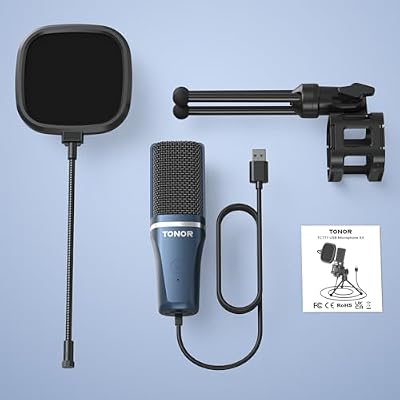
TONOR Podcast Microphone, USB Computer Mic, Cardioid Condenser PC Microfono


As an Amazon Associate we earn from qualifying purchases. Product prices and availability are accurate as of the date/time indicated.
Sample Rate and Recording Quality
Dynamic microphones like the Procaster don’t specify sample rate or bit depth—those are determined by your audio interface. However, the Procaster’s signal is so clean that it rewards high-quality recording:
- Stream audio: 48 kHz / 16-bit MP3 or AAC (Twitch compresses further anyway)
- Local archive: 48 kHz / 24-bit WAV (for YouTube VOD uploads)
- Professional recording: 96 kHz / 24-bit for archival quality
The Procaster’s dynamic design means it captures voice cleanly without the subtle noise that condenser microphones might pick up. Your recordings will sound pristine because you’re capturing a clean signal path from the start.
Zero-Latency Hardware Monitoring
When you use an XLR microphone with an audio interface, you get direct hardware monitoring—hearing your microphone signal directly through the interface’s headphone jack without computer latency. For competitive gaming, this is critical.
Here’s the signal flow:
- Your voice enters the Procaster
- XLR cable carries balanced audio to the interface
- Interface’s preamp amplifies it cleanly
- Headphone jack outputs it directly (zero latency)
- Simultaneously, interface sends to computer for streaming
This dual-path means you hear yourself with no delay while your stream broadcasts perfect audio. USB microphones can’t achieve this—they must route through the computer’s audio stack, introducing 10-100ms latency.
For team communication in competitive games, hearing yourself with zero latency makes a measurable difference in callout clarity and communication quality.
Comparison: Dynamic Microphones for Gaming Streams
| Feature | Rode Procaster | Condenser Microphones |
|---|---|---|
| Sensitivity | Moderate (lower = less room noise) | High (picks up everything) |
| Proximity Effect | Strong (natural warmth) | Minimal (transparent) |
| Phantom Power Required | No | Yes |
| Broadcast Sound | Warm, present, engaging | Natural, detailed, accurate |
| Gaming Environment Handling | Excellent (rejects noise naturally) | Good (requires room treatment) |
| Durability | Rugged, professional-grade | Fragile, sensitive to damage |
Complete Setup: Procaster + Audio Interface
To use the Rode Procaster, you’ll need:
Essential Components
- Rode Procaster ($200-250)
- Audio interface ($150-300) — Focusrite Scarlett 2i2 recommended
- XLR cables ($10-20) — Usually included with interface
- Microphone shock mount ($20-40)
- Boom arm or desk stand ($30-80)
- Pop filter ($15-30)
Optional Upgrades
- Acoustic foam treatment ($50-150) — Improves room acoustics
- XLR cable extensions ($20-40) — For flexible positioning
- Microphone isolation shield ($40-80) — Reduces reflections from your monitor
Total investment: $425-820. This is more expensive than USB microphone setups but provides professional flexibility and scalability. As your streaming career grows, you’ll appreciate the expandability—add a second microphone for guests, add instruments, add line-level sources without replacing components.
For more microphone guidance, check our articles on the best microphone for gaming, gaming microphones, budget gaming mics, cheap microphones, boom microphones, and our complete gaming setup guide.

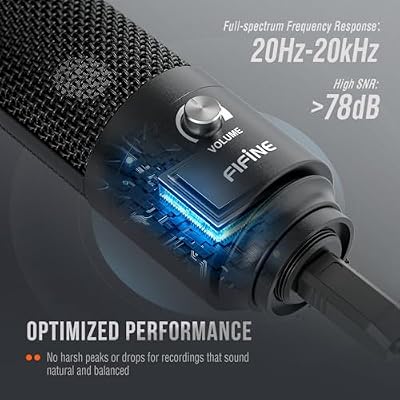
FIFINE K669B USB Microphone, Condenser Recording Mic for Vocals, Meeting


As an Amazon Associate we earn from qualifying purchases. Product prices and availability are accurate as of the date/time indicated.
Dynamic Microphone FAQ
Why do professional broadcasters use dynamic microphones?
Because they’ve spent decades proving that dynamics sound better for voice on broadcast. The proximity effect, inherent noise rejection, and warm tone are perfect for keeping listeners engaged. Radio engineers didn’t choose dynamics by accident—they work.
Will a dynamic microphone require more gain than a condenser?
Yes, slightly. Dynamics have lower output sensitivity, so you’ll need more preamp gain. However, modern audio interfaces have plenty of gain available. You might dial your interface’s gain to 50-60% instead of 30-40%, but the difference is negligible.
Can I use a dynamic microphone with USB?
The Rode Procaster is XLR-only, so it requires an audio interface. However, Rode makes the Procaster USB (the Wireless GO system) for simplified USB usage. For true professional XLR quality, you need an interface.
Do I need a pop filter with a dynamic microphone?
Yes. While dynamics are more forgiving of plosive sounds than condensers, a pop filter still improves audio quality and protects the microphone from saliva spray. Consider it essential.
Conclusion: Dynamic Microphones for Professional Streaming
The Rode Procaster represents the professional standard for broadcast and streaming microphones. Its dynamic design, cardioid rejection, and broadcast-optimized frequency response deliver warm, present audio that engages viewers. Combined with a quality audio interface, the Procaster creates a professional streaming setup that scales as your channel grows. If you’re serious about streaming audio quality and willing to invest in professional equipment, the Rode Procaster is the correct choice.
Related Articles
Looking for more on this topic? Browse the hand-picked guides below — each one applies the same scoring rubric used in this review.
Frequently Asked Questions
Why choose a dynamic microphone over a condenser for streaming?
Dynamic microphones are far less sensitive to background noise, so keyboard clatter, fan hum and room reverb stay largely out of the recording. Condensers capture more detail but also capture everything else in an untreated room. For a typical bedroom or office setup, a dynamic mic delivers a cleaner broadcast sound.
Does the Procaster need extra gain or a preamp booster?
Yes, it is a low-output dynamic microphone and typically wants around 60dB of clean gain. Many budget audio interfaces run out of headroom before that and add hiss. An inline gain booster such as a Cloudlifter or FetHead adds roughly 25dB of clean gain and solves the problem on modest interfaces.
What do I need besides the microphone itself?
An XLR cable, an audio interface or mixer with phantom power available for other mics, a sturdy boom arm rated for the weight, and a shock mount. Heavy dynamic mics strain cheap arms, causing droop. Budget roughly as much for the supporting hardware as for the microphone in a first XLR setup.
How close should I speak into it?
Around five to ten centimetres, slightly off-axis to reduce plosives. That distance exploits the proximity effect, which boosts low frequencies and produces the warm broadcast tone the mic is known for. Backing away significantly thins the sound and forces you to raise gain, which brings the room back into the mix.
Is XLR worth the complexity compared with a USB microphone?
XLR gives you separate, upgradeable components, better preamps, real-time hardware monitoring and the ability to add processing before the signal reaches your PC. That flexibility matters if audio quality is central to your channel. If you want a single cable and no configuration, a good USB microphone remains the sensible choice.
Ready to decide? Our #1 pick for 2026 is the Sensitivity.
Live price & availability on Amazon.