Vestaria Saga II: The Sacred Sword of Silvanister is the second half of Shouzou Kaga’s strategy RPG duology, released by Vestaria Project with DANGEN Entertainment and Gamirror Games on 28 July 2022. It continues Zade’s campaign across grid-based, permadeath-tinged tactical maps, and it is a separate store record from Vestaria Saga I, which has its own listing and paperwork. Anyone searching for a Linux version starts from that record, and the record is unambiguous.
Steam’s listing for app 1811600 flags one platform: Windows. There is no Linux build for sale, no Linux depot in the package, and no Linux requirements tab. Linux players therefore run the Windows build through Proton, and the practical questions are narrower: how Valve rates that build on Steam Deck, how much evidence ProtonDB holds, and whether the DRM-free GOG copy changes the platform picture. It does not, but the details are worth reading before you buy.
As an Amazon Associate, we earn from qualifying purchases.
Quick answer
No. Vestaria Saga II sells no native Linux build: Steam’s record flags Windows only, its Linux requirements field is absent, and every depot is a Windows depot. Linux players run the Windows build through Proton; ProtonDB’s file is thin (two reports, tier pending), and Valve rates the game Playable on Steam Deck against the build still live today.
What Steam’s record actually lists
Start with the platform flags, because everything else agrees with them. The record for 1811600 reads windows true, mac false, linux false. The Windows requirements tab is genuinely populated, minimum tier only: Windows 7, a Pentium 4 2.0 GHz equivalent, 512 MB of RAM, a 1024 by 768 resolution, and 430 MB of storage. The Mac and Linux requirements fields are absent fields — empty lists, no tab in any form, a cleaner absence than the empty-shell headings some records carry.
The depot census is decisive in the same direction. SteamDB’s table lists five depots, every one a Windows depot: 1811601 Windows English at 1.29 GiB, 1811602 Windows English at 649.90 MiB, 1811603 Windows Unused English with no size, 1811604 Windows Steam Deck English with no size, and 1811605 Windows 64-bit Simplified Chinese at 648.25 MiB. The Steam Deck depot deserves a pause: despite the name it is a Windows depot, delivery metadata for the handheld, not a Linux build. No Linux, Mac or shared depot exists, and the registered assets — clienticon, clienttga, icon, logo — include no LinuxClientIcon, neither live nor fossil.
The family around the game is equally plain. The record exposes no DLC array at all — no soundtrack app, no artbook, no expansion — so the soundtrack all-true trap that fires on so many records here had nothing to attach to; the base game is the whole family. One field the record does carry is controller support, rated partial in the app’s own data and matched by the store’s Partial Controller Support category.
The ProtonDB picture: two reports and a wrong heading
ProtonDB’s summary was read in full, and the honest headline is how little of it there is. The file holds exactly two reports. The settled tier is pending, the trending tier is pending, and confidence is inadequate; the best-reported tier is Platinum, meaning the strongest filing graded the game at the top — but two reports cannot settle a tier, and ProtonDB does not pretend otherwise. Any article quoting a firm medal for this game is inventing one.
The filings are mildly encouraging and mildly cautionary at once. A desktop report on Proton 10.0-3 (Bazzite) found the game ran with a potential hiccup in the controls but was otherwise fine, noting mouse input was disabled — the game expected a controller or the keyboard. A second filing, on the older Proton 8.0-2, reported a fullscreen resolution downgrade compared with windowed mode. Neither describes a launch failure, crash pattern or save problem: a Windows build that appears to run under Proton with input and fullscreen quirks, on evidence too thin to grade.
The heading check was completed, and it is wrong in the now-familiar way. The game page carries the stray “Natively Supports:” heading above its requirements panel, a label Steam’s record contradicts on every layer checked here: false flag, absent requirements, all-Windows depots, no Linux client icon. The article follows Steam; read that heading as a native promise and the store record is the correction.
Steam Deck: Playable, tested against the build you still download
Valve rates Vestaria Saga II Playable on Steam Deck, the middle category, with SteamOS separately listed as Compatible and proton-stable as the recommended runtime. One evidence note: Valve’s own compatibility endpoint returned unusable output this session, so the verdict and its paperwork were read through SteamDB’s republication of Valve’s record for this app, the fallback route this project has used before.
The sheet’s passes are the two that matter most for a tactics game: all functionality is accessible with the default controller configuration, and the default graphics perform well. The single deduction is small text — some in-game text is small and may be difficult to read, a real consideration in a genre built on stat screens. One note, not a deduction: the game does not default to external Bluetooth or USB controllers, and may require manually switching the active controller through the Quick Access Menu.
The paperwork has an unusual virtue. Valve tested the game on 4 October 2022 against build 9337154, and 9337154 is still the public branch build today — the branch has not moved since August 2022. Most Deck badges grade a build long since replaced; this one grades exactly the build a buyer downloads now, so the Playable rating needs no currency caveat.
The other storefront: GOG sells it too, Windows only
GOG does carry this game, worth establishing properly because GOG’s embed search returns zero results for the title — the known blind spot in that surface. Ruled from GOG’s own product API record instead, product 2111440064 lists compatibility as windows true, osx false, linux false, and the live page is in stock. A DRM-free edition exists, and it is the same Windows build: the GOG copy changes the launcher and the DRM, not the platform. Anti-cheat is a non-issue in both copies — the game is single-player, none is named on the record, and the Are We Anti-Cheat Yet database, read in full at its repository root, holds no entry for it in either direction: documentation silence, not a clearance.
Gear that fits the record
The gear below follows the record’s shape: the handheld the badge was written for, two pads for a controller-first game, a mouse for desktop sessions, and library storage.
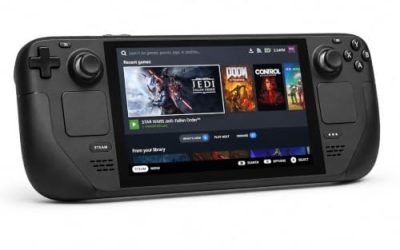
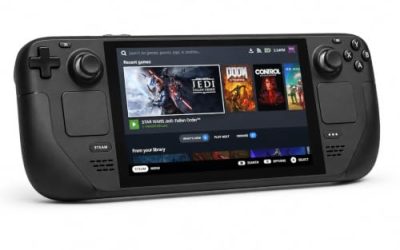
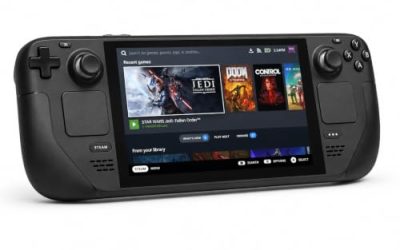
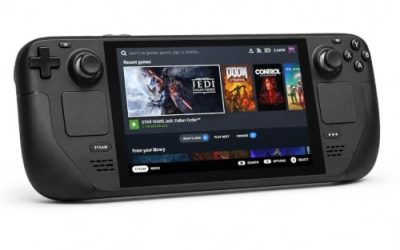
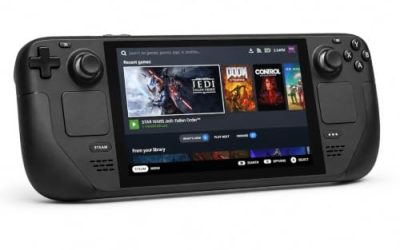
Valve Steam Deck OLED 512GB

The handheld in Valve’s test sheet. The published minimum requirements are trivial next to the Deck’s APU, and the badge was earned against the exact build still on the public branch, so the rating describes the download you get today.
Specs
- Display: 7.4-inch HDR OLED, 1280 by 800, up to 90 Hz
- Processor: AMD Zen 2 and RDNA 2 custom APU
- Memory: 16 GB LPDDR5
- Storage: 512 GB NVMe, plus a microSD slot
- Wireless: Wi-Fi 6E and Bluetooth
- Channel note: Valve sells the Deck mainly through its own store, so Amazon listings are third-party sellers
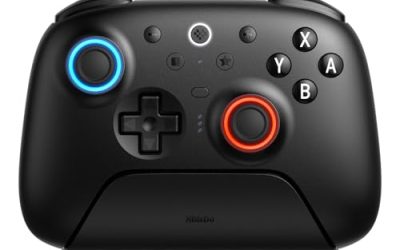
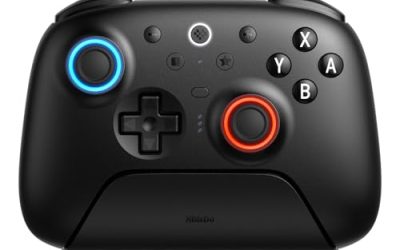
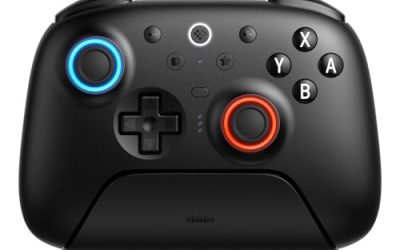
8BitDo Ultimate 2 Bluetooth Controller
The docked and desktop pad pick. The record lists partial controller support and the filings describe a controller-first game, so modern sticks, Hall effect triggers and back buttons match how the game is actually played.
Specs
- Connectivity: Bluetooth wireless and USB-C wired
- Joysticks: TMR electromagnetic, anti-drift design
- Triggers: Hall effect, with mode switching
- Extras: two remappable back buttons, motion control
- In the box: charging dock included
Xbox Wireless Controller, Carbon Black
The safest guest pad in PC gaming: Steam Input support is universal and the glyphs match what most games display. On the handheld, Valve’s note applies — an external pad may need a manual Quick Access Menu switch before it takes over.
- Connectivity: Xbox Wireless and Bluetooth
- Port: USB-C for wired play
- Controls: hybrid D-pad, dedicated Share button
- Power: AA batteries or optional rechargeable pack
Logitech G502 HERO
For desktop players who prefer driving menus and map cursors with a mouse, eleven programmable buttons cover the confirm, cancel and camera inputs a long tactics session repeats, even in a pad-first game.
Specs
- HERO optical sensor, up to 25,600 DPI
- 11 programmable buttons
- Adjustable weight system
- Wired USB connection
- On-board memory profiles
Samsung T9 Portable SSD 2TB
For moving a Linux game library between machines, or keeping an offline backup of installers, a fast USB-C drive is the simple answer. The headline figure needs a Gen 2×2 host port; on a lesser port the drive runs at that ceiling instead.
Specs
- Capacity: 2 TB portable SSD
- Interface: USB 3.2 Gen 2×2, USB-C connector
- Maker-rated speeds: up to 2,000 MB per second read, 1,950 MB per second write
- Features: Dynamic Thermal Guard, maker-rated drop resistance
How to choose
Choose the Steam copy if you want the build both compatibility records describe, with the Deck badge and the ProtonDB file attached. Choose the GOG copy if a DRM-free installer matters more; it is the same Windows build, so the Proton route is identical and no Linux advantage comes with it. On desktop, leave the compatibility tool at its default first — the filings suggest quirks rather than blockers — and if fullscreen looks soft, try windowed mode, the workaround the older filing implies. On Steam Deck, install and launch: the badge’s only deduction is small text, so judge the stat screens yourself before committing to a long campaign. Either way, a gamepad is the input both records centre on.
Who should skip
Skip this one if you are shopping for a native Linux tactics game: this is not it, and neither storefront sells a Linux build. Skip it if a two-report ProtonDB file is not evidence enough — tier pending, confidence inadequate — and you prefer to wait for a thicker file. Skip the Deck plan if small in-game text is a hard problem, the badge’s one named deduction in a text-heavy genre. And skip it expecting the first game’s paperwork to carry over: Vestaria Saga I is a separate record, and nothing here rules on it.
FAQ
Is there a native Linux version of Vestaria Saga II?
No. Steam’s record flags Windows only, the Linux requirements field is absent, every depot is a Windows depot, and GOG’s edition is Windows only as well. Linux play means the Windows build under Proton.
How does it run on Steam Deck?
Valve rates it Playable, with SteamOS Compatible and proton-stable as the recommended runtime. The default controller configuration is fully functional and the default graphics perform well; the one deduction is small in-game text, and external controllers may need a manual Quick Access Menu switch. The test ran against build 9337154, still the current public build.
What does ProtonDB say about it?
Very little, and that is the honest answer. The summary holds two reports, the settled and trending tiers are pending, confidence is inadequate, and the best-reported tier is Platinum. The filings describe a game that runs with disabled mouse input on one report and a fullscreen resolution quirk on the other.
Is the GOG version any different for Linux users?
Only in packaging. GOG’s product record lists Windows as the sole compatible system, so the DRM-free copy is the same Windows build — it removes the launcher requirement, not the need for Proton.
Final verdict
Vestaria Saga II is a Windows game on every layer of its record — flags, requirements, depots, icons and its GOG edition all agree, with no trap, fossil or stranded build complicating the ruling. Linux players get a Proton route two thin but non-alarming reports describe, and Deck players get a Playable badge whose paperwork, unusually, still matches the build on sale. Buy it on whichever storefront you prefer, gamepad in hand, with no expectation of a native port.
Product and ASIN Reference
| Product | ASIN |
|---|---|
| Valve Steam Deck OLED 512GB | B0CQ3RWQQZ |
| 8BitDo Ultimate 2 Bluetooth Controller | B0F194QFT2 |
| Xbox Wireless Controller, Carbon Black | B08DF248LD |
| Logitech G502 HERO | B07GBZ4Q68 |
| Samsung T9 Portable SSD 2TB | B0CHFS9K14 |