Vestaria Saga I: War of the Scions is the strategy RPG from Vestaria Project, the team led by Fire Emblem creator Shouzou Kaga, published in English by DANGEN Entertainment in December 2019. It was built in SRPG Studio, a Windows toolkit, and that origin shows in every layer of its Steam record: the Linux question is not whether a native port exists but how the one build that exists behaves under Proton.
The record has one trap worth naming early. The base game flags Windows alone, yet a family-level scan lights up for Linux, because the game’s soundtrack app flags all three platforms. Read app by app, the picture is clean: no Linux depot, no Linux requirements tab, no Linux client icon, and a Steam Deck verdict of Unsupported issued against the build still current today.
As an Amazon Associate, we earn from qualifying purchases.
Quick answer
Vestaria Saga I: War of the Scions is not native on Linux. Steam’s record flags Windows alone, both depots are Windows builds, and the only Linux flag in the family sits on the soundtrack app. Valve rates the game Unsupported on Steam Deck, tested against the build still current today. ProtonDB settles at Silver across 11 reports, trending Platinum on current Proton builds. GOG sells the same Windows build.
The Steam record: Windows at every layer
Start with the flags. Steam’s platform fields for app 694770 read Windows true, Mac false, Linux false. The requirements tabs match: the Windows tab is genuinely populated, with a minimum specification so light it is almost a period piece — a Pentium 4 class processor at 2.0 GHz, 512 MB of RAM and 430 MB of storage — while the Mac and Linux requirement fields are absent, returned as empty lists rather than tabs. There is no recommended Windows tier at all.
The depot census closes the question. The sold package holds exactly two content depots: depot 694771, the English Windows build at 427.40 MiB, and depot 694772, the Simplified Chinese Windows build at 407.19 MiB. Both are labelled Windows, both sit inside the package Steam sells, and there is no third depot of any kind — no Linux build, no Mac build, no ghost. The registered store assets tell the same story: clienticon, clienttga, icon, logo and logo_small are present, and no LinuxClientIcon is registered in any form, neither live nor as a leftover fossil. SteamDB’s technology detection names the SRPG Studio engine, a Windows-only authoring tool. Every layer of the record agrees.
The one Linux flag in the family belongs to the soundtrack
The base game’s record exposes a single add-on app, and it is the trap this project watches for. App 1216180, the Vestaria Saga I Soundtrack PIANO ARRANGEMENT & 8-BIT MUSIC VERSION, is a music product whose platform flags read Windows, Mac and Linux all true — the only Linux flag anywhere in the family. A scan that stops at flag level can make the game look Linux-supported when the flag belongs to an audio package with no game code at all.
The soundtrack’s flags describe where its audio files can be delivered; the game’s own record describes where the game runs, and it says Windows. The ruling follows the game’s record: a true flag on the wrong app.
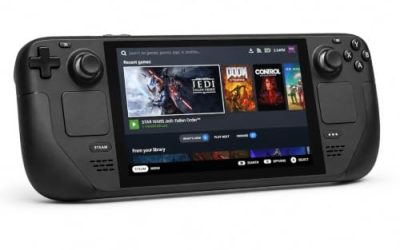
Steam Deck: Unsupported, and the test is not stale
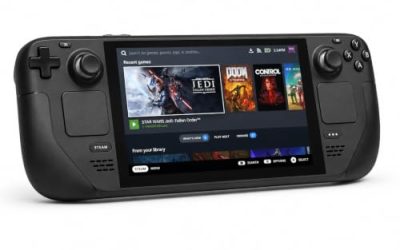
Valve’s compatibility endpoint resolves this game to category 1, Unsupported, with the single resolved item stating that SteamOS does not support the title; the separate SteamOS rating is Unsupported as well. That is the weakest verdict Valve publishes, and it would be easy to dismiss as old paperwork. Here it cannot be: the test sheet dates the check to 31 March 2022, against build 5224474 — and build 5224474, published in June 2020, is still the current public build today. The game has not changed since Valve reviewed it, so the badge grades exactly the build a buyer would install now.
Two details from the same sheet matter for desktop readers. Valve’s test configuration records gamepad as the supported input shape and proton-stable as the recommended runtime, matching the store record’s own controller line: Steam lists partial controller support for this game, on the store page and in the underlying record alike. Partial is the operative word — the record promises a pad works, not that every menu is pad-driven, and the filings below steer players toward keyboard input.
ProtonDB: a Silver settlement with a Platinum trend
The full ProtonDB summary was read for this piece. The settled tier is Silver, the best-reported tier is Platinum, the trending tier is Platinum, across 11 reports, with confidence rated moderate.
Reports from the Proton 4, 5, 6 and 7 generations describe a game that installs and opens, then crashes as the first chapter or the first battle begins, with Windows Script Host failures named again and again. The recurring fix is a one-time installation of the script host component, wsh57, through winetricks. From Proton 8.0-1 onward the tone changes completely: filings report those errors gone, and the newest report, written on Proton 10.0-3, describes a flawless run with no tinkering at all. The settled Silver averages both eras; the trending Platinum is what a player installing today should expect.
One caution from the filings applies on every operating system, Windows included: several reports warn that mouse input can occasionally crash the game, and recommend keyboard or pad play instead. That is an engine quirk, not a Proton defect. A piece of page furniture needs naming too: the ProtonDB game page carries a “Natively Supports:” heading. Against a Steam record that is Windows-only at every layer, that heading is wrong — a stray platform tag — and this article follows Steam’s record.
Anti-cheat and the GOG ruling
There is no anti-cheat question to settle. The game is single-player only, its record names no anti-cheat, and the AreWeAntiCheatYet catalogue, read in full, holds no entry for it in either direction — documentation silence, not a clearance.
GOG’s own pages were checked directly rather than through search. GOG does sell Vestaria Saga I: its live product page is in stock, and its compatibility line reads Windows alone. A DRM-free edition exists, but it is the same Windows build Steam sells. No storefront sells a Linux copy in any form.
Gear for a desktop-only tactics game
With the Deck badge at Unsupported and no native build, this is a desktop and laptop game on Linux, played under Proton. The record lists partial controller support, so a pad is a legitimate second input rather than the primary one.
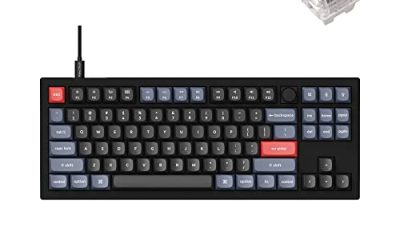
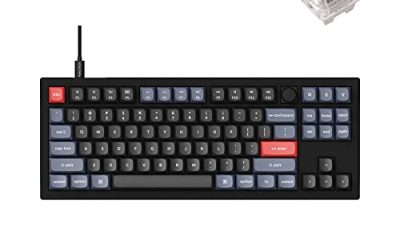
Keychron V3
The keyboard pick for desktop sessions: a tenkeyless board with QMK and VIA support lets you remap keys at the keyboard level, which keeps working across every Linux install you plug it into. For a game whose own filings recommend keyboard play, the board is the main input.
Specs
- Tenkeyless layout with rotary knob
- QMK and VIA remapping support
- Hot-swappable K Pro Brown switches
- Wired USB-C connection
- Maker-rated 1,000 Hz polling
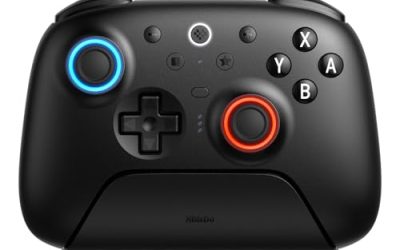
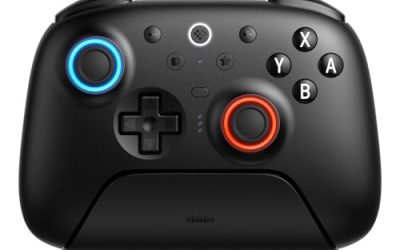
8BitDo Ultimate 2 Bluetooth Controller

The desktop pad pick. Steam lists partial controller support for the game, and this pad covers the map-cursor case with modern sticks and triggers plus back buttons for the confirm and cancel inputs a tactics session repeats.
Specs
- Connectivity: Bluetooth wireless and USB-C wired
- Joysticks: TMR electromagnetic, anti-drift design
- Triggers: Hall effect, with mode switching
- Extras: two remappable back buttons, motion control
- In the box: charging dock included
Xbox Wireless Controller, Carbon Black
The safest guest pad in PC gaming: Steam Input support is universal, the glyphs match what most games display, and it pairs over Bluetooth or its own wireless standard. Against this game’s partial-support listing, expect it to drive what it can reach, with the keyboard covering the rest.
- Connectivity: Xbox Wireless and Bluetooth
- Port: USB-C for wired play
- Controls: hybrid D-pad, dedicated Share button
- Power: AA batteries or optional rechargeable pack
Logitech G502 HERO
A tactics game lives in its menus, and a precise wired mouse turns unit inspection and shop trips into single clicks — used with the filings’ caution in mind, since mouse input is the one route players report occasional crashes from.
Specs
- HERO optical sensor, up to 25,600 DPI
- 11 programmable buttons
- Adjustable weight system
- Wired USB connection
- On-board memory profiles
Samsung T9 Portable SSD 2TB
For moving a Linux game library between machines, or keeping an offline backup of installers, a fast USB-C drive is the simple answer. The headline figure needs a Gen 2×2 host port; on a lesser port it runs at that ceiling.
Specs
- Capacity: 2 TB portable SSD
- Interface: USB 3.2 Gen 2×2, USB-C connector
- Maker-rated speeds: up to 2,000 MB per second read, 1,950 MB per second write
- Features: Dynamic Thermal Guard, maker-rated drop resistance
How to choose
Choose the Steam copy if you want the build both compatibility records describe; choose the GOG copy if a DRM-free installer matters more, knowing it is the identical Windows build. On the Linux side, the Proton version is the whole decision: install with a current release, in the 8 series or newer, and the script host failures filling the older half of the file should not appear. If an older Proton is forced, expect to add the wsh57 component once through winetricks. Plan on the keyboard as primary input and treat the pad as partial support in the literal sense. Do not buy expecting the Deck badge to improve: the tested build is the current build.
Who should skip
Skip this one if you are shopping for a native Linux tactics RPG: there is no Linux build here, and the family’s only Linux flag sits on a soundtrack. Skip it if Steam Deck play is the point of the purchase, because Valve’s verdict is Unsupported on the current build. Skip it if you are unwilling to run a current Proton version, since the older-Proton experience in the file is a crash at the first battle. And skip it if you want full controller support: the record itself only promises partial.
FAQ
Is Vestaria Saga I native on Linux?
No. Steam flags the game Windows only, its Linux requirements field is an absent empty list, both depots in the sold package are Windows builds, and no LinuxClientIcon is registered. The only Linux flag in the family belongs to the soundtrack app, a music product with no game code.
Why does Steam show a Linux flag anywhere near this game?
Because the soundtrack add-on, app 1216180, flags Windows, Mac and Linux all true. Music apps commonly flag every platform their audio can be delivered to. The base game’s own record is Windows only at every layer, and the ruling follows the game, not the add-on.
Can I play it on Steam Deck?
Valve rates the game Unsupported, tested in March 2022 against build 5224474, which is still the current public build. Some ProtonDB filings from Deck owners run well on Proton 8 and newer, so the badge and the file disagree — but the official verdict is Unsupported, and Deck play is unguaranteed.
Which Proton version should I use?
A current one. The file splits by generation: builds before the 8 series repeatedly crash at the first chapter with Windows Script Host errors, while Proton 8.0-1 and later filings, up to a clean Proton 10.0-3 report, describe a game that simply runs.
Final verdict
Vestaria Saga I: War of the Scions is a Windows-only release with no native Linux build hiding anywhere in its record — not in the flags, not in the depots, not in the requirements fields, and not on GOG, which sells the same Windows build DRM-free. The soundtrack’s all-platform flag is a mirage, and Valve’s Unsupported badge is unusually trustworthy here because the build it graded in 2022 is the build still on sale. The honest Linux route is a desktop, a current Proton, and a keyboard: on that setup the recent filings describe Kaga’s tactics game running the way its trending Platinum tier suggests.
Product and ASIN Reference
| Product | ASIN |
|---|---|
| Keychron V3 | B0B2DMMMG2 |
| 8BitDo Ultimate 2 Bluetooth Controller | B0F194QFT2 |
| Xbox Wireless Controller, Carbon Black | B08DF248LD |
| Logitech G502 HERO | B07GBZ4Q68 |
| Samsung T9 Portable SSD 2TB | B0CHFS9K14 |