Our Short List of 3

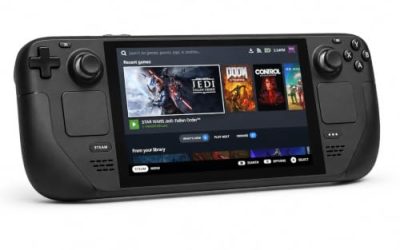
- Display: 7.4-inch HDR OLED, 1280 by 800, up to 90 Hz
- Processor: AMD Zen 2 and RDNA 2 custom APU
- Memory: 16 GB LPDDR5
- Storage: 512 GB NVMe, plus a microSD slot

- Connectivity: Bluetooth wireless and USB-C wired
- Joysticks: TMR electromagnetic, anti-drift design
- Triggers: Hall effect, with mode switching
- Extras: two remappable back buttons, motion control

- Connectivity: Xbox Wireless and Bluetooth
- Port: USB-C for wired play
- Controls: hybrid D-pad, dedicated Share button
- Power: AA batteries or optional rechargeable pack
All 5 Picks at a Glance
| Product | Specs | Action |
|---|---|---|
| Steam Deck OLED |
| Check price on Amazon |
| 8BitDo Ultimate 2 Bluetooth Controller |
| Check price on Amazon |
| Xbox Wireless Controller, Carbon Black |
| Check price on Amazon |
 Logitech G502 HERO |
| Check price on Amazon |
 Samsung T9 Portable SSD 2TB |
| Check price on Amazon |
Scott Pilgrim vs. the World: The Game – Complete Edition is the 2023 return of the 2010 comic-book beat-’em-up, developed by Engine Software with Ubisoft Montreal, Ubisoft Chengdu and Ubisoft Pune Production, and published by Ubisoft. It bundles the original game with the Knives Chau and Wallace Wells add-on packs, and its Steam release on 5 January 2023 put the once-delisted brawler back on sale on PC.
For Linux players the question has two halves: whether any native Linux build exists, or only a Windows game for Proton to carry; and what the wrapper demands, since this edition ships with a Ubisoft Connect account requirement and activation DRM. Both halves are answered from the game’s own Steam record, Valve’s Deck test sheet and the full ProtonDB summary.
As an Amazon Associate, we earn from qualifying purchases.
Quick answer
No. Scott Pilgrim vs. the World: The Game – Complete Edition has no native Linux build: Steam sells a Windows build only, with no Linux depot, requirements tab or client icon. On Linux it runs through Proton — ProtonDB settles at Gold from 19 reports — and Valve rates it Playable on Steam Deck. A Ubisoft Connect account and an internet connection are required.
The record: one Windows depot and nothing else
Every layer of the record points the same way. The platform flags read windows true, mac false and linux false. The requirements section carries a populated Windows minimum tier only — Windows 10, an i5-2500K or FX-6350 class processor, 8 GB of memory and a GTX 660 or Radeon R9 270X class graphics card — while the mac and linux requirements fields are empty lists behind them.
The depot census is decisive: the game’s content sits in a single Windows-configured depot of 1.51 GiB, beside a sizeless depot labelled Windows Unused and a shared depot carrying the Ubisoft Connect PC client content. The only redistributables are the Windows Visual C++ 2019 and DirectX packages. No Linux depot, macOS depot or ghost depot exists anywhere; the registered assets are the standard client icons only, with no Linux client icon in any form, and the extended-OS field is empty.
The record’s DLC field is empty too, and that is not a data gap: the Knives Chau and Wallace Wells packs are bundled inside the Complete Edition rather than sold as separate apps, so no DLC array exists to audit and no soundtrack app disguises the platform picture.
The Ubisoft Connect layer around the build
The record carries two notices, stated here exactly as Steam lists them. The account notice reads Ubisoft Connect Account, and the DRM notice reads Denuvo Anti-tamper with a limit of five machine activations a day. SteamDB’s technology detection names the Ubisoft Launcher, and the Connect client ships as a depot above, so the launcher is part of the install, not an optional extra. Ubisoft has also marked the game ineligible for Steam Family Sharing.
Those notices have practical teeth. Valve’s Deck test sheet, covered next, records that singleplayer requires an active internet connection. ProtonDB filings describe the same behaviour from the player’s side: the launcher will not start the game while offline, even after a previous activation, and returning online at the prompt is not enough — the game has to be restarted fully through Steam. None of this is a Linux defect; it is the account layer behaving as designed.
On anti-cheat, the record names none. The AreWeAntiCheatYet database, read in full, holds no entry for this game in either direction — documentation silence, not a clearance. The Denuvo notice above is anti-tamper DRM, a different thing from an anti-cheat system.
Steam Deck: Playable, and tested on the build you still get
Valve’s verdict — read here through SteamDB’s republication of Valve’s own compatibility record — is Playable, tested on 8 March 2025 against build 10135169. That matters: the public branch still stands at that build, unchanged since December 2022, so the paperwork grades exactly what a buyer downloads now. The sheet also marks the game Compatible for SteamOS, names Proton Experimental as the recommended runtime, and lists gamepad as the supported input.
Its passes are the two a brawler needs: interface text is legible on the Deck screen, and the default graphics configuration performs well. Three deductions keep it at Playable rather than Verified: some functionality is not accessible with the default controller configuration, so some screens need the touchscreen, the virtual keyboard or a community configuration; the game sometimes shows mouse, keyboard or non-Steam-Deck icons instead of Deck glyphs; and singleplayer requires an active internet connection.
One record-keeping point: Steam’s page carries no controller-support field of its own, so no store promise exists to quote. Valve’s sheet is the document that treats the gamepad as the supported input, and filings match it — one describes four-controller local co-op working once a gamepad layout had been set for each pad, which otherwise defaulted to keyboard and mouse.
ProtonDB: a Gold headline with split tiers underneath
The full ProtonDB summary was read directly, and it is less tidy than a single medal suggests. The settled tier is Gold across 19 reports with good confidence. The best-reported tier is Platinum, so the strongest filings run it flawlessly, but the trending tier is Silver — recent reports run cooler than the settled average. Nineteen reports is a moderate base: enough to trust the shape, thin enough to respect the trend.
The filing colour explains the split. Reports describe the game running well once in, with a stable frame rate on the Deck at low settings and sleep and wake resuming play correctly. The friction is the launcher: the offline-start refusal above, an Ubisoft overlay that opens accidentally from an in-game menu and drains battery in the background, and one filing with online matchmaking errors while local play worked. The build under Proton is not the problem; the account layer is where the Silver trend comes from.
A heading check on the ProtonDB game page could not be completed this session: the page rendered as report text only, without the summary block where platform headings appear, so no claim about that heading is made here. The native ruling rests on Steam’s record, which is unambiguous.
No GOG edition
GOG sells no edition of this game: its store search returns no product for it, and the natural product address redirects to the generic catalogue, so no GOG record with platform data exists to rule from.
Hardware picks for this brawler
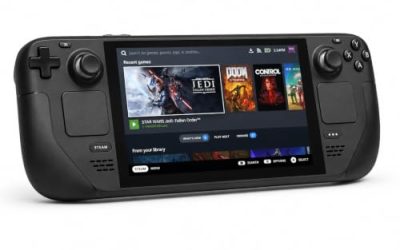
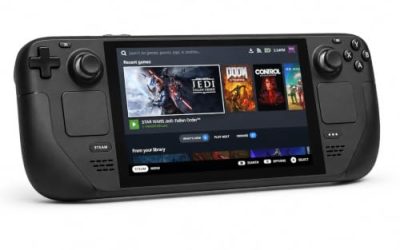
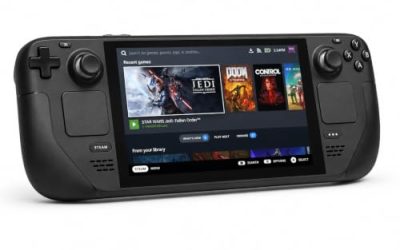
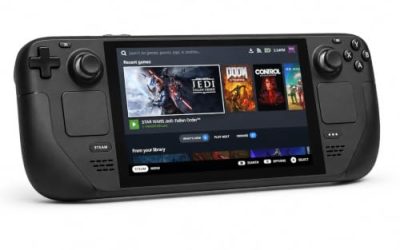
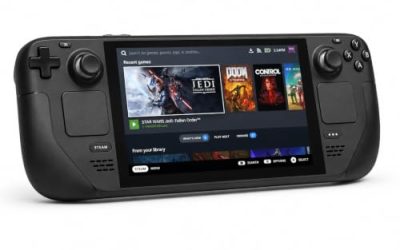
Steam Deck OLED
- Display: 7.4-inch HDR OLED, 1280 by 800, up to 90 Hz
- Processor: AMD Zen 2 and RDNA 2 custom APU
- Memory: 16 GB LPDDR5
- Storage: 512 GB NVMe, plus a microSD slot
The handheld Valve tested is the natural home for a four-player pixel-art brawler, and its Playable sheet grades the current build — what it describes is what installs today. Remember two deductions: a community layout may beat the default on some screens, and the game needs a connection even alone.
8BitDo Ultimate 2 Bluetooth Controller
- Connectivity: Bluetooth wireless and USB-C wired
- Joysticks: TMR electromagnetic, anti-drift design
- Triggers: Hall effect, with mode switching
- Extras: two remappable back buttons, motion control
Local co-op is the heart of this game, and a pad living on a charging dock keeps extra controllers ready. The back buttons give launcher and menu navigation a shortcut the default Deck configuration lacks.
Xbox Wireless Controller, Carbon Black
- Connectivity: Xbox Wireless and Bluetooth
- Port: USB-C for wired play
- Controls: hybrid D-pad, dedicated Share button
- Power: AA batteries or optional rechargeable pack
The guest pad standard. Filings note that extra pads can arrive wearing keyboard and mouse layouts until a gamepad layout is set for each one; Steam Input handles that assignment, and these are the glyphs most PC players read without thinking.
Logitech G502 HERO
- HERO optical sensor, up to 25,600 DPI
- 11 programmable buttons
- Adjustable weight system
- Wired USB connection
On desktop Linux, what fights back is the launcher screens and menus, and a precise wired mouse makes short work of both. Eleven programmable buttons cover the confirm, cancel and menu inputs a session repeats; wired USB skips the pairing queue.
Samsung T9 Portable SSD 2TB
- Capacity: 2 TB portable SSD
- Interface: USB 3.2 Gen 2×2, USB-C connector
- Maker-rated speeds: up to 2,000 MB per second read, 1,950 MB per second write
- Features: Dynamic Thermal Guard, maker-rated drop resistance
The game itself is small — the content depot is 1.51 GiB — so this pick is about the library around it. A fast USB-C drive moves a whole Proton collection between machines or backs up installers for dual-boot setups.
How to choose
Choose the Steam copy: it is the only PC edition on sale, and the exact build both records describe. Before buying, clear the record’s two prerequisites: a Ubisoft Connect account, and an internet connection demanded even for singleplayer. On desktop, install under Proton and start with the default compatibility tool; Valve’s sheet names Proton Experimental as the recommended runtime if the default gives trouble. On a Steam Deck, set a gamepad layout for every extra pad before a co-op session rather than during one. Pads are the game’s native input shape; a mouse earns its place for launcher work at a desk.
Who should skip
Skip this edition if you play offline by habit: the record states that singleplayer requires the internet, and filings say the launcher refuses offline starts even after activation. Skip it if a Ubisoft Connect account or a five-activations-a-day Denuvo limit is a line you do not cross; neither is optional here. Skip it if online matchmaking is the main draw — local co-op’s record is strong, but one filing reports matchmaking errors while local play worked. And skip it if you are holding out for a native build: one Windows depot and a branch untouched since 2022 leave no port to wait for.
FAQ
Is there a native Linux version of Scott Pilgrim vs. the World?
No. Steam’s flags read linux false, the mac and linux requirements fields are empty, the only content depot is Windows-configured, and no Linux client icon is registered. Linux play means the Windows build under Proton.
How does it run on Steam Deck?
Valve rates it Playable, tested on 8 March 2025 against build 10135169, still the current public build. Interface text is legible and the default graphics configuration performs well; the deductions are a default controller configuration leaving some functionality unreachable, occasional non-Deck icons, and the singleplayer internet requirement.
Can I play it offline?
No. Valve’s test sheet states that singleplayer gameplay requires an active internet connection, and filings report that the Ubisoft launcher will not start the game offline even after a previous activation. Plan on being connected at launch.
Do I need a Ubisoft Connect account, and is it on GOG?
Yes: the record’s account notice names Ubisoft Connect, and the client ships inside the install. The same record carries a Denuvo Anti-tamper notice with a limit of five machine activations a day, and Ubisoft has excluded the game from Steam Family Sharing. There is no GOG edition; Steam is the only PC storefront selling it.
Final verdict
As a Linux proposition this is a Proton game with an unusually honest paper trail. The build question is settled at every layer: one Windows depot, empty Linux fields, no native port. The play question is nearly as clear — a Gold settled tier and a Playable sheet graded on the very build sold today say the brawler runs well. What decides the purchase is the wrapper: a Ubisoft Connect account, a Denuvo activation limit and a connection demanded even when playing alone. If that wrapper is acceptable, the Steam copy is a sound buy for local co-op on desktop or Deck. If not, no compatibility tool will fix it, because the obstacle was never compatibility.
Product and ASIN Reference
| Product | ASIN |
|---|---|
| Steam Deck OLED | B0CQ3RWQQZ |
| 8BitDo Ultimate 2 Bluetooth Controller | B0F194QFT2 |
| Xbox Wireless Controller, Carbon Black | B08DF248LD |
| Logitech G502 HERO | B07GBZ4Q68 |
| Samsung T9 Portable SSD 2TB | B0CHFS9K14 |