Our Short List of 3

- Tenkeyless layout with rotary knob
- QMK and VIA remapping support
- Hot-swappable K Pro Brown switches
- Wired USB-C connection

- Connectivity: Bluetooth wireless and USB-C wired
- Joysticks: TMR electromagnetic, anti-drift design
- Triggers: Hall effect, with mode switching
- Extras: two remappable back buttons, motion control

- Connectivity: Xbox Wireless and Bluetooth
- Port: USB-C for wired play
- Controls: hybrid D-pad, dedicated Share button
- Power: AA batteries or optional rechargeable pack
All 5 Picks at a Glance
| Product | Specs | Action |
|---|---|---|
| Keychron V3 |
| Check price on Amazon |
| 8BitDo Ultimate 2 Bluetooth Controller |
| Check price on Amazon |
| Xbox Wireless Controller, Carbon Black |
| Check price on Amazon |
 Logitech G502 HERO |
| Check price on Amazon |
 Samsung T9 Portable SSD 2TB |
| Check price on Amazon |
Dawn of the Monsters is the manga-styled kaiju beat-’em-up from 13AM Games and WayForward, released on Steam on March 15, 2022: giant Nephilim stomp through cities while up to two players, in shared-screen co-op, stomp back as monsters and mechs of their own. It is exactly the kind of couch brawler Linux players ask about.
The record says it travels only as far as Proton. Steam flags the game Windows-only, the single content depot is a Windows build launched by a Windows executable, and neither the Mac nor the Linux requirements field carries a single line of specification. What follows is the full record check: the depot census, the ProtonDB file, Valve’s complete silence on the Steam Deck, and the one other PC storefront that sells the game.
As an Amazon Associate, we earn from qualifying purchases.
Quick answer
No native Linux build exists. Steam’s record for Dawn of the Monsters flags Windows only, ships one Windows depot and lists no Linux requirements, so Linux play runs through Proton. ProtonDB’s summary reads Platinum on just three reports, Valve has not tested the game on Steam Deck at all, and GOG sells a Windows-only edition.
What Steam’s record actually ships
Start with the platform flags, because on this record every other layer agrees with them. Steam lists Windows as true and both Mac and Linux as false, and the app’s own oslist field reads windows, full stop.
The depot census is as plain as the flags. The game has exactly one content depot, numbered 1642171, carrying a current public manifest of about 7.5 GB. The configuration holds a single launch entry: an executable named DotM.exe, scoped to Windows, with no Linux or Mac sibling beside it. The registered assets are the ordinary client icon and its variants; there is no Linux client icon in any form. The extended record’s only Linux mention is an h264 dependency note, which attaches no depot, no launch entry and no executable — paperwork about video playback, not a build.
The requirements tabs tell the same story by omission. The Windows tab is populated at both tiers, while the Mac and Linux fields are empty shells: the standard headings printed over lists that contain nothing. Here there is not even a copied-over tab to argue with, just the honest blank of a game that never shipped a second platform.
One more record item deserves separating out, because add-on apps are where Linux flags sometimes hide. The game’s only DLC app, numbered 2330620, is the Arcade + Character DLC Pack, released in August 2023, and its own record flags Windows only as well. It is a content pack, not a soundtrack app, so the familiar trap — a soundtrack or artbook app carrying all-true platform flags and making a Windows-only game look native — has nothing to attach to here. Across the base game and its one add-on, the Linux flag count is zero of two records.
What the record does promise, it promises clearly: the controller-support field reads full, and the store categories list single-player, shared and split-screen co-op, Remote Play Together, Steam Cloud and achievements. This is a local co-op brawler with full pad support, and that shape matters for the gear section below.
The Proton file: Platinum on three reports
ProtonDB’s summary for this app was read in full, and its headline is flattering: the settled tier is Platinum, the best-reported tier is Platinum, and the trending tier is Platinum. Unanimity like that usually closes the argument. Here it should not, because the file underneath the headline is three reports deep, and ProtonDB grades its own confidence as low, with a score of 0.44. Three players had an excellent time; that is genuinely encouraging, and it is not the same thing as a settled verdict on every distribution and GPU.
So the honest reading is narrow: nothing in the Proton record suggests a blocker — no anti-cheat wall, no launcher problem, no codec failure — and the reports that exist describe the game running at the highest tier ProtonDB awards. But a Linux player buying on this evidence is buying on a thin file, not a settled one.
One check could not be completed and is worth naming. The ProtonDB game page itself rendered as a script shell during this review, so the page’s own headings could not be read and no claim is made about them either way. Every Proton figure above comes from the summary record, which answered in full.
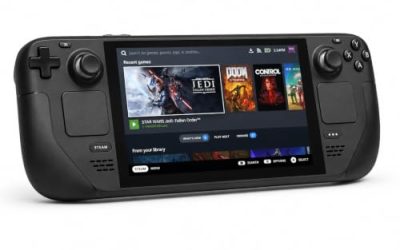
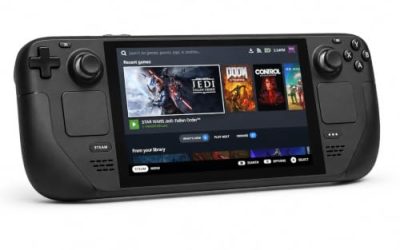
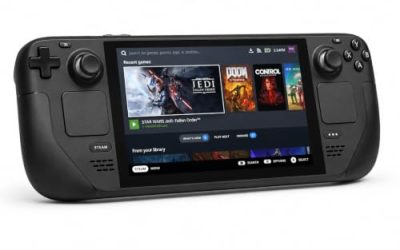
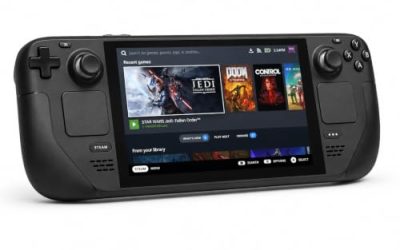
Steam Deck: Valve has not reviewed this game
Most games in this series of checks carry some Deck paperwork — a Verified badge, a Playable sheet, an Unsupported verdict with reasons. Dawn of the Monsters carries none. Valve’s compatibility record for the app resolves to category 0, which is the untested state: no resolved items, no test date, no build graded, and the same zero for the SteamOS, machine and frame categories. The store page’s own compatibility label, which reads Unknown, agrees with the endpoint exactly.
Category 0 is not a quiet no. It is the absence of a verdict, and this article claims none. A Windows build this light, with full controller support and a Platinum Proton headline, may well run on the Deck through Proton. But “may well run” is a guess, and the difference between a guess and a badge is the whole point of checking the record. Until Valve tests the game, the gear below is framed for the desktop, where the Proton file actually applies.
Anti-cheat, and the other storefront
There is no anti-cheat question to settle. The game has no online competitive mode — its multiplayer is local, shared-screen, with Remote Play Together as the network option — and Steam’s record names no anti-cheat and no third-party account requirement. The Are We Anti-Cheat Yet tracker was read in full, all 1,167 entries, and holds no entry for this game in either direction. That is documentation silence, stated as such: the tracker does not clear the game, it simply has nothing to say about a title with no anti-cheat surface.
GOG is the one place besides Steam where the game is genuinely on sale, and its record was read directly rather than through search. The GOG product record, id 2057536907, lists content system compatibility as Windows true, Mac false and Linux false, with a Windows installer as the only download. The Arcade + Character DLC Pack is sold there too, likewise Windows-only. So a DRM-free edition exists for Windows players, and it changes nothing for Linux: the GOG copy is the same Windows build, with no Linux installer behind either storefront.
Gear for a desktop kaiju brawler
With no Deck verdict to build around, the kit below is desktop kit: a keyboard, two pads for the co-op that is this game’s whole point, and fast storage for a library that travels.
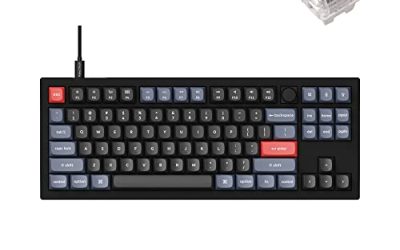
Keychron V3
- Tenkeyless layout with rotary knob
- QMK and VIA remapping support
- Hot-swappable K Pro Brown switches
- Wired USB-C connection
The keyboard pick for desktop sessions: a tenkeyless board with QMK and VIA support lets you remap keys at the keyboard level, which keeps working across every Linux install you plug it into.
8BitDo Ultimate 2 Bluetooth Controller
- Connectivity: Bluetooth wireless and USB-C wired
- Joysticks: TMR electromagnetic, anti-drift design
- Triggers: Hall effect, with mode switching
- Extras: two remappable back buttons, motion control
Player one’s pad. Steam lists full controller support for the game, and this pad covers the couch case with modern sticks and triggers plus back buttons for the inputs a long co-op session repeats.
Xbox Wireless Controller, Carbon Black
- Connectivity: Xbox Wireless and Bluetooth
- Port: USB-C for wired play
- Controls: hybrid D-pad, dedicated Share button
- Power: AA batteries or optional rechargeable pack
Player two’s pad, and the safest guest pad in PC gaming: Steam Input support is universal, the glyphs match what most games display, and it pairs over Bluetooth or its own wireless standard.
Logitech G502 HERO
- HERO optical sensor, up to 25,600 DPI
- 11 programmable buttons
- Adjustable weight system
- Wired USB connection
A beat-’em-up lives on a pad, but the desk around it still runs on a mouse: menus, settings and the Steam client itself are all faster with a precise wired pointer.
Samsung T9 Portable SSD 2TB
- Capacity: 2 TB portable SSD
- Interface: USB 3.2 Gen 2×2, USB-C connector
- Maker-rated speeds: up to 2,000 MB per second read, 1,950 MB per second write
- Features: Dynamic Thermal Guard, maker-rated drop resistance
For moving a Linux game library between a desktop and a laptop, or keeping an offline backup of installers, a fast USB-C drive is the simple answer. The headline figure needs a Gen 2×2 host port; on a lesser port the drive runs at that ceiling instead.
How to choose
Choose the Steam copy if you play on a Linux desktop: it is the build the Proton file describes, it carries the Steam Cloud saves the record lists, and its full controller support is the game’s native input shape. Install it, leave the compatibility tool at its default to begin with, and treat the Platinum headline as a good sign rather than a guarantee — if your run misbehaves, the small report base means community fixes will be thin on the ground too.
Choose the GOG copy only if a DRM-free Windows installer is the thing you want; for Linux play it offers nothing the Steam copy does not, and it steps outside the Proton reporting loop. Either way, buy one pad per player before you buy anything else: shared-screen co-op is the reason this game exists, and the record’s full controller support means any modern pad is already the right tool.
Who should skip
Skip this one if you are shopping for a native Linux beat-’em-up: there is no Linux build here, on either storefront, in either the base game or its DLC. Skip it if the Steam Deck is your only machine and you need Valve’s word before you spend — Valve has not tested the game at all, so there is no word to give. And skip it if a three-report Proton file, however unanimous, is not evidence enough for you — a defensible standard this game does not yet meet.
FAQ
Is Dawn of the Monsters native on Linux?
No. Steam flags Windows only, the oslist reads windows, the sole content depot is launched by a Windows executable, and the Linux requirements field is an empty shell. The one DLC app flags Windows only too.
How well does it run under Proton?
ProtonDB’s summary reads Platinum across its settled, best-reported and trending tiers — on a total of three reports, with confidence graded low. The direction is encouraging; the sample is small, and this article reports both halves of that sentence.
Can I play it on Steam Deck?
Valve has not reviewed it. The compatibility record resolves to category 0, the untested state, with no badge, no test date and no graded build, so there is no official verdict to rely on either way.
Is there a GOG version for Linux?
No. GOG sells the game and its DLC pack, and its own product record lists Linux as false with a Windows installer only — the same Windows build Steam sells, without a Linux edition behind it.
Final verdict
Dawn of the Monsters is a Windows game that Linux desktop players can approach with cautious optimism: no native port anywhere on the record, no anti-cheat or account obstacle, full controller support for the co-op it was built for, and a Proton file that reads Platinum while resting on just three reports. The Deck chapter is blank — untested, not failed. Buy it for a Linux desk and a second pad; wait on it if you need a badge, a native build, or a deeper Proton record than three voices.
Product and ASIN Reference
| Product | ASIN |
|---|---|
| Keychron V3 | B0B2DMMMG2 |
| 8BitDo Ultimate 2 Bluetooth Controller | B0F194QFT2 |
| Xbox Wireless Controller, Carbon Black | B08DF248LD |
| Logitech G502 HERO | B07GBZ4Q68 |
| Samsung T9 Portable SSD 2TB | B0CHFS9K14 |