

Ryzen 9950X3D CPU Review 2026
The Ryzen 9 9950X3D is AMD’s most complete desktop processor for buyers who want gaming performance and serious multi-core power in one chip. It has sixteen cores and thirty-two threads, and it places 3D V-Cache on both compute chiplets, bringing the total L3 cache to 128MB. Few desktop chips offer that combination, which makes this one of the most demanding purchases in the consumer lineup.
This article is a buying guide. It covers what the 9950X3D is built to do, where its premium is justified, and where a cheaper chip is the smarter buy. The listing below is the closest match for this query. Verify the exact model, the included cooler, if any, and the current price on the card before buying.

AMD Ryzen 9 9950X3D 16-Core Processor
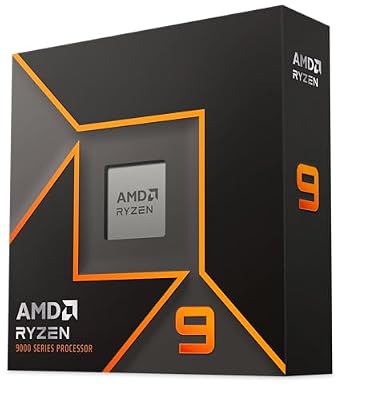

AMD Ryzen 9 9900X3D 12-Core Processor


Why Both Chiplets Carry Cache
The most important difference between the 9950X3D and the 9900X3D is the cache layout. The 9950X3D places 3D V-Cache on both chiplets, so every core has access to the larger cache pool. This removes the thread placement question that the dual-chiplet 9900X3D raises. A game can run on either side and still benefit from the extra cache.
For most buyers this is a quality-of-life improvement rather than a dramatic jump in every game. It means the processor is less dependent on the operating system making the right scheduling decision, which is a practical advantage for a machine that runs a mix of software every day.
Specs That Matter for a Sixteen-Core Gaming Chip
The published specification is sixteen cores and thirty-two threads, with a base clock around 4.3GHz, a maximum boost up to 5.7GHz, 128MB of total L3 cache and a 170W TDP rating. That power figure is higher than the eight-core and twelve-core X3D chips, which has two effects. The cooler must be chosen with care, and the motherboard’s power delivery must be strong enough for sustained all-core work.
Cooling and power delivery
A 360mm AIO or a large high-end air cooler is the normal recommendation for this chip. A smaller cooler will work for light gaming, but it may throttle or get loud during long renders. The motherboard should have a robust VRM and good airflow over the socket area. Choosing a board with poor power delivery is the most common mistake with this class of processor.
Memory and platform
The 9950X3D uses AM5 and DDR5. A 600-series or 800-series board is needed, and a quality DDR5 kit with a stable profile is recommended. Memory speed matters more for productivity than for gaming, so buyers who run only games can choose a more modest kit without losing much.
Comparison Table: 9950X3D and Its Closest Rivals
| Processor | Cores / Threads | L3 Cache | Best For | Typical Price Range |
|---|---|---|---|---|
| Ryzen 9 9950X3D | 16 / 32 | 128MB with 3D V-Cache on both chiplets | Gaming plus heavy production work | Top tier, check current price |
| Ryzen 9 9900X3D | 12 / 24 | 128MB with 3D V-Cache on one chiplet | Hybrid use on a lower budget | Premium tier, check current price |
| Ryzen 9 9950X | 16 / 32 | 64MB standard | Multi-core work without the cache premium | Upper tier, check current price |
| Ryzen 7 9800X3D | 8 / 16 | 96MB with 3D V-Cache | Pure gaming builds | Premium tier, check current price |
Read this table as a list of trade-offs. The 9950X3D is the most capable chip in the group, but it is only the right purchase if you use the extra cores. If you do not, the 9800X3D or 9900X3D delivers most of the gaming benefit for less money and less heat.
AMD Ryzen 9 9950X3D 16-Core Processor


As an Amazon Associate we earn from qualifying purchases. Product prices and availability are accurate as of the date/time indicated.
Who Should Buy the 9950X3D
Developers and creators with a gaming habit
Developers who compile large codebases, creators who render video and engineers who run simulations all benefit from sixteen cores. The same machine can run a demanding game in the evening without a separate gaming PC. This is the buyer the chip was designed for, and it is the strongest argument for the premium.
Enthusiasts who want one machine for everything
Some builders want a single desktop with no compromises. The 9950X3D is the closest thing AMD offers to that goal in the desktop lineup. The price is high, but the machine can serve for a long time as workloads change, which reduces the number of upgrades you need to make.
Who Should Skip It
Pure gamers
If you only play games, the extra cores add cost and heat without a matching gain in frame rate. The Ryzen 7 9800X3D review covers the eight-core option that is more efficient for gaming alone, and the 9600X versus 9800X3D comparison shows how much the cache matters on a budget.
Buyers on a moderate budget
A sixteen-core premium chip paired with a mid-range graphics card produces an unbalanced build. The money is usually better spent on the GPU, the power supply and the cooler. The best gaming CPU list for 2026 helps match a processor to a realistic budget.
Build Notes for a 9950X3D System
A sixteen-core X3D chip works best on a board with a strong power stage and good memory support. The X870 motherboard guide for the 9950X3D lists boards that handle this class of processor well. For general AM5 choices, the AM5 motherboard overview applies.
Cooling is the next priority. The AIO cooler guide for Ryzen 9 covers the 360mm options that suit this chip, and the 360mm AIO list is a useful shortlist. Keep the case airflow balanced, because a sixteen-core processor under all-core load adds real heat to the case.
Power is also worth planning ahead. A high-quality 850W or 1000W unit from a reputable brand gives headroom for a high-end graphics card and a sustained multi-core workload. The power supply guide for gaming PCs explains how to size the unit.
AMD Ryzen™ 9 9950X 16-Core, 32-Thread Unlocked Desktop Processor


As an Amazon Associate we earn from qualifying purchases. Product prices and availability are accurate as of the date/time indicated.
How It Compares With Intel’s Top Chips
Intel’s Core Ultra 9 285K is the closest high-end competitor, but it uses a different socket and a different platform. The comparison depends on whether you want the stronger productivity-per-dollar story or the gaming cache advantage. Our Ryzen 9 9950X versus Core Ultra 9 285K piece and the Core Ultra 9 285K review show the main trade-offs.
Frequently Asked Questions
Is the 9950X3D worth the premium over the 9800X3D?
Only if you use the extra cores. For games alone, the 9800X3D delivers most of the benefit for less money and lower power draw. For work that scales across sixteen threads, the 9950X3D is the more logical purchase.
Does the 9950X3D need a 360mm cooler?
A 360mm AIO or a large high-end air cooler is the normal recommendation for sustained heavy workloads. Light gaming can run on a smaller cooler, but expect more noise and heat under long renders.
Will the 9950X3D bottleneck a high-end graphics card?
It is unlikely. At higher resolutions the graphics card is usually the limit, and the processor’s cache and core count leave plenty of headroom for current games. CPU bottlenecks show up mostly at low resolutions with very fast cards.
Can I use the 9950X3D on an AM4 board?
No. It requires AM5, which means a 600-series or 800-series motherboard and DDR5 memory. A platform upgrade is needed for any AM4 system.
Final Verdict
The Ryzen 9 9950X3D is the most complete gaming and productivity processor in AMD’s desktop lineup. It earns its premium when the machine does real multi-core work in addition to gaming, and it is wasted on a pure gaming build. Pair it with a strong AM5 motherboard, a 360mm class cooler and a reliable power supply, and it will serve a demanding user for years. For everyone else, a smaller X3D chip is the better value.







