

Ryzen 9900X3D CPU Review 2026
The Ryzen 9 9900X3D sits in an awkward but useful spot in AMD’s lineup. It has twelve cores and twenty-four threads, which is enough for serious multi-core work, and it carries 3D V-Cache, which is the feature that makes the gaming-focused X3D chips special. It is a hybrid processor for people who refuse to pick between a fast gaming machine and a capable workstation.
This guide is a buying guide. It explains how the 9900X3D is built, what its cache layout means in day-to-day use, and which buyers should choose it over a gaming-only chip or a sixteen-core part. The listing below is the closest match for this query. Confirm the exact model, cooler and current price on the card before ordering.

AMD Ryzen 9 9900X3D 12-Core Processor
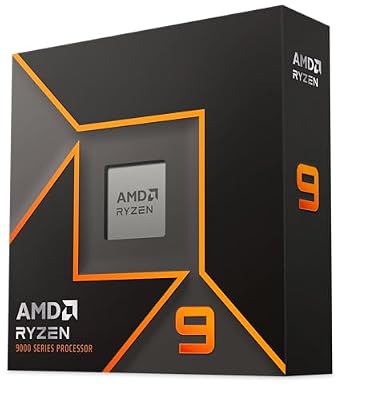
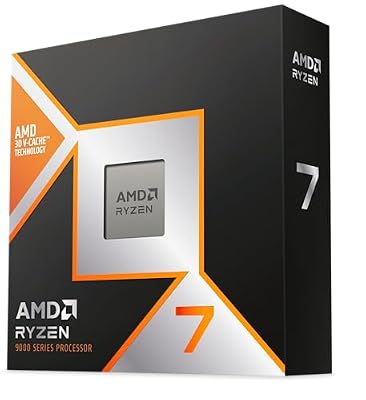


How the 9900X3D Is Built
The 9900X3D uses two compute chiplets. Only one of them carries the extra 3D V-Cache, so the processor has a cache-rich side and a standard side. This is the defining detail of the chip. Games that benefit from cache can be steered toward the cache-rich chiplet, while heavy multi-threaded tasks can use both sides for raw throughput.
The total L3 cache is 128MB across the processor, but the important point is that not every core has the same cache access. That design rewards users who understand scheduling, because the operating system and the chipset driver decide where a game runs. Most users will get the default behavior without changing anything, but enthusiasts who want the most consistent result should read AMD’s current driver and scheduling notes before tuning.
Key Specs and What They Mean
The published specification is twelve cores and twenty-four threads, a base clock of 4.4GHz with a maximum boost of 5.5GHz, and a 120W TDP rating. It uses the AM5 socket, so it needs a 600-series or 800-series motherboard and DDR5 memory. Cooling is straightforward at this power class: a high-end air cooler or a 240mm AIO will handle it in most cases.
Why the core count matters for a hybrid chip
Twelve cores is a practical middle ground. It is enough for a game, a voice chat, a stream encoder and background tasks running at the same time. For a gaming machine that also compiles code or exports video, twelve cores finish those tasks faster than an eight-core chip, and the extra cache still helps the game side of the workload.
Why the cache layout is a trade-off
A dual-chiplet design can make a single game sensitive to thread placement. If the game ends up on the standard chiplet, you lose some of the cache advantage. This is why the 9900X3D is not the simplest choice for a pure gaming PC. A single-chiplet X3D chip avoids the question altogether, which is why many gamers choose the eight-core 9800X3D instead.
Comparison Table: 9900X3D Against Related Processors
| Processor | Cores / Threads | L3 Cache | Best For | Typical Price Range |
|---|---|---|---|---|
| Ryzen 9 9900X3D | 12 / 24 | 128MB with 3D V-Cache on one chiplet | Hybrid gaming and productivity | Premium tier, check current price |
| Ryzen 7 9800X3D | 8 / 16 | 96MB with 3D V-Cache | Gaming-first builds | Premium tier, check current price |
| Ryzen 9 9950X3D | 16 / 32 | 128MB with 3D V-Cache on both chiplets | Maximum multi-core plus gaming | Top tier, check current price |
| Ryzen 9 9900X | 12 / 24 | 64MB standard | Productivity without the X3D premium | Upper mid tier, check current price |
The table shows the real decision. The 9900X3D competes with the 9950X3D for a dual-use buyer, and with the 9900X for a buyer who wants twelve cores but does not care about cache for games. Read the table as a set of trade-offs rather than a ranking, because the right answer depends on how many hours a week the machine spends in each mode.
AMD Ryzen 9 9900X3D 12-Core Processor


As an Amazon Associate we earn from qualifying purchases. Product prices and availability are accurate as of the date/time indicated.
Who Should Buy the 9900X3D
Creators who game after work
If you edit video, run simulations or compile large projects during the day and play games in the evening, the 9900X3D gives you a single machine that handles both without compromise. You get strong multi-core speed for the work and cache-assisted frame rates for the game, which is more balanced than a gaming-only chip.
Streamers who run encoders and games together
Streaming while gaming asks a lot of the processor. The game, the encoder and the chat overlay all compete for resources. Twelve cores leave room for those tasks, and the cache helps the game keep its frame timing steady. For a streamer who wants one machine, this is a strong choice.
Who Should Skip It
Gamers who only play games
If the machine does nothing but play games, the 9800X3D is the cleaner choice. It has a single cache-rich chiplet, so there is no scheduling question, and the price is usually easier to justify. Our Ryzen 7 9800X3D review explains that trade-off.
Budget-limited builders
A premium X3D chip only makes sense when the graphics card and memory are also in the right tier. A budget build gets more from a cheaper six-core or eight-core processor and a better GPU. The Ryzen 5 9600X review covers a sensible entry option on the same platform.
Platform, Memory and Cooling Notes
Build the 9900X3D on a platform that can deliver stable power and handle the heat. A good AM5 motherboard with a solid VRM design is important, and the AM5 motherboard guide lists boards by tier. For the most demanding dual-use work, an X870 or X670 board gives more room for future upgrades, as discussed in our X870 board overview, which applies to the 9900X3D as well.
Memory is a major factor for productivity. A fast DDR5 kit with a stable profile helps both the game side and the workstation side. The DDR5 6000MHz guide is a good starting point, and how much RAM you need for gaming helps decide whether to buy 32GB or 64GB for creative work.
Cooling needs more thought than on an eight-core chip if you run long renders. A 240mm or 360mm AIO, or a large dual-tower air cooler, keeps the processor steady under sustained load. The AIO cooler guide for Ryzen 9 covers the options in that range.
AMD Ryzen™ 9 9950X 16-Core, 32-Thread Unlocked Desktop Processor


As an Amazon Associate we earn from qualifying purchases. Product prices and availability are accurate as of the date/time indicated.
How It Stacks Up Against Intel
Intel’s high-end options are a different platform, with different sockets, memory and motherboards. The fair comparison is therefore about the whole system. For a head-to-head on a comparable high-end setup, see our Ryzen 9 9950X versus Core Ultra 9 285K comparison, and the Intel versus AMD gaming overview for the wider picture.
Frequently Asked Questions
Is the Ryzen 9900X3D a good gaming CPU?
Yes. It handles games well, especially those that benefit from the cache. Its main limitation is that only one chiplet carries the extra cache, so it is not as simple as the 9800X3D for pure gaming. For a gamer who also works on the machine, it is an excellent choice.
Do I need to change settings to get the best gaming performance?
Most users will get good results at default settings with current AMD drivers and a current operating system. Enthusiasts who want maximum consistency can review AMD’s scheduling and chipset driver notes, because the placement of a game on the cache-rich chiplet affects how well the cache is used.
Is the 9900X3D better than the 9900X for games?
Usually, yes. The 9900X3D has the 3D V-Cache layer that the 9900X lacks, and that cache helps in many CPU-bound games. The 9900X is still a capable chip for productivity and a reasonable choice when the budget is tighter.
Does the 9900X3D need a 600-series or 800-series board?
Yes. It uses the AM5 socket, so a compatible 600-series or 800-series motherboard is required. Confirm the board’s BIOS version supports the chip before installing it.
Final Verdict
The Ryzen 9 9900X3D is the right processor for a dual-use machine that spends real time on both creative work and games. It is not the simplest gaming chip in the AMD line, because the dual-chiplet cache layout asks for more attention. If the machine is mostly for games, the 9800X3D is cleaner. If the machine is mostly for heavy work, the 9950X3D may be the better fit. For a balanced build that does both, the 9900X3D is a strong, sensible middle choice.







