

Best Single-Core CPU for Esports Gaming in 2026
Esports players usually care about one thing above all else: consistent frame times at high refresh rates. Many popular competitive titles run hundreds of frames per second on a suitable system, and they lean heavily on a few fast threads rather than on a large number of cores. That is why single-thread speed, cache behaviour and frame pacing matter more to esports buyers than the headline core count. This guide explains what to look for and how to choose a processor for competitive play.
This is a buying guide. It does not state benchmark figures, because frame rates depend on the specific game, map, settings, memory and graphics card. The patterns described here come from processor design and from the general behaviour that independent reviewers report for CPU-limited esports scenarios. Confirm the details against current review charts for your target title.
The listings below were returned for this search. The first is the primary pick and the others are close alternatives. The listing above may not be the exact model you had in mind, so check the card for the precise model, socket and price before ordering.
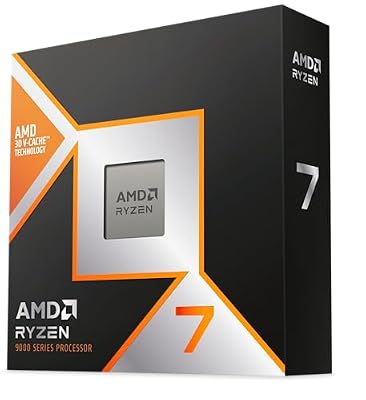
Why Single-Thread Speed Still Matters in Esports
An esports game often has a main game thread that handles simulation, input and draw calls, plus a few supporting threads. When that main thread slows down, the frame rate drops even if the graphics card has capacity to spare. At lower resolutions and high refresh rates, the processor becomes the limit much sooner, so the chip’s single-thread speed decides how smooth the experience feels.
Clock Speed, IPC and Real-World Behaviour
Clock speed and instructions per cycle, often shortened to IPC, both shape single-thread performance. A chip with a high boost clock and strong IPC can keep the main thread moving quickly. In practice, the real-world result depends on how the processor manages power and temperature during a match. A chip that boosts well on a good cooler may behave differently in a small case with limited airflow, so cooling is part of the choice.
Cache and Frame Pacing
Large cache helps esports titles because it keeps frequently used data close to the cores. Many competitive games reward chips with a big cache, since the game spends more time waiting on memory than doing raw arithmetic. This is one reason 3D V-Cache processors attract so much attention in esports coverage. Frame pacing, meaning the evenness of frame delivery, often matters more than the average frame rate for a smooth feel.
Platform and Memory
Esports builds benefit from fast, stable DDR5 memory. Enable the memory profile in BIOS, and use two matched sticks in dual-channel mode. If you play at very high refresh rates, the memory and board choice can matter almost as much as the processor, so do not treat the chip as the only variable.
Comparison Table: Esports-Focused Processor Options
The table compares the listings by their role in an esports build. It avoids prices and ratings, because those change and vary by seller and region.
| Option | ASIN | Best for | Price guidance | Trade-off to check |
|---|---|---|---|---|
| Primary pick (hero) | B0DP4WV49V | High-refresh competitive play at 1080p or 1440p | Check current price | Exact model, cooler bundle, warranty |
| Alternative 1 | B0DKFMSMYK | Players wanting a cache-focused option | Check current price | Socket and motherboard cost |
| Alternative 2 | B0FXBBRQ69 | Budget-minded esports builders | Check current price | Boost behaviour in your case |
| Alternative 3 | B0DFK2P311 | Upgraders on an existing board | Check current price | BIOS support list |
| Alternative 4 | B0G22MHYQL | Players who also use the PC for work | Check current price | Memory and platform requirements |
The table is a shortlist, not a ranking. Your game list and your refresh rate decide which row fits. If you play several different titles, check reviews for each one before settling on a chip.
Esports Settings That Shift the CPU Load
Resolution and Refresh Rate
Lower resolutions and high refresh rates push more of the load onto the processor. If you play at 1080p on a 360Hz monitor, the CPU is far more likely to limit your frame rate than it is at 1440p with high graphics settings. Decide your target resolution first, then choose the chip that matches that load.
Background Apps and Overlays
Voice chat, recording tools and overlays use processor time. Close unused background apps and keep recording software configured for hardware encoding if your graphics card supports it. A clean system helps a single-thread-bound game keep its main thread free.
Which Chip Fits Your Esports Game List
For Valorant and Counter-Strike Players
Tactical shooters with high frame rate targets reward strong single-thread performance and cache. If these are your main games, start with the best CPU for Valorant and the best CPU for Counter-Strike 2, then compare the chips on the listing card against those picks.
For Battle Royale and Team Shooters
Large-map battle royale titles and team shooters can load the CPU in different ways. The best CPU for PUBG guide shows another large-map example. The best CPU for Fortnite, the best CPU for Apex Legends and the best CPU for Overwatch 2 guides break down the differences by title.
For MOBA and Sports Titles
MOBAs and sports games have their own CPU profiles. If you also play Dota 2 or Rocket League, check those guides to see whether the same chip suits both. A chip that works for one genre may not be the best fit for another.
Frequently Asked Questions
Do esports games need the fastest CPU?
Not always. Many esports titles run very well on a midrange processor with strong single-thread speed and good cache. The fastest chip helps most when your target refresh rate is high and your game is clearly CPU-limited. Check reviews for your title before paying for a flagship.
Is more cache better for esports?
Often, yes, for games that rely on memory access. Cache is one of the most useful traits for esports, but it is not the only one. Clock speed, cooling and memory configuration also matter.
Should I choose an Intel or AMD chip for esports?
Both families have strong esports options. Compare the specific chips on current reviews for your games, then weigh platform cost and upgrade path. The processor choice matters less than matching the rest of the build to your target refresh rate.
Final Verdict
The best single-core CPU for esports in 2026 is the one that keeps your main game thread fast and your frame pacing steady at your target resolution and refresh rate. Prioritise single-thread speed and cache, cool the chip well and tune your memory profile. Start with the primary pick if it matches your game list and budget, then confirm the exact model, cooler and price on the listing card.







