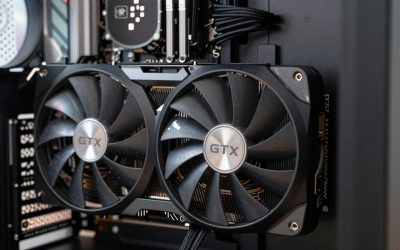
- Top Pick: msi Gaming GeForce RTX 3060 Ventus 2X 12G OC V1 Graphics Card – 15 Gbps GDRR6 Boost Clock: 1807 MHz 192-Bit HDMI/DP PCIe 4 Torx Twin Fan Ampere
- Best Value: msi Gaming RTX 3050 Ventus 2X 6G OC Graphics Card (NVIDIA RTX 3050, 96-Bit, Boost Clock: 1492 MHz, 6GB GDDR6 14 Gbps, HDMI/DP, Ampere Architecture)
- Premium Choice: ASUS Dual NVIDIA GeForce RTX 5060 8GB GDDR7 OC Edition (PCIe 5.0, 8GB GDDR7, DLSS 4, HDMI 2.1b, DisplayPort 2.1b, 2.5-Slot Design, Axial-tech Fan Design, 0dB Technology), 3 Year Warranty
Resident Evil 5 arrived on PC on September 15, 2009 as a port of the Games for Windows – Live version, and it remains one of the lightest action games in the Resident Evil line-up. It is a linear, chapter-based third-person action game running on Capcom’s MT Framework engine — not an open world — and its official Steam listing asks for a quad-core CPU, 4GB of RAM, a 512MB graphics card from the GeForce 9800 / Radeon HD 7770 era, and 15GB of free drive space. By 2026 standards that bar is extremely low: virtually any desktop, gaming laptop or handheld built in the last decade clears it, and the Gold Edition content — sold on Steam as the Untold Stories Bundle, which is the same as upgrading to Resident Evil 5 Gold Edition — does not raise it. If you already own a PC from the last several years, you have more than enough for this game.
- Resident Evil 5 Official PC System Requirements
- How Demanding Is Resident Evil 5 in 2026?
- Best GPU for Resident Evil 5 by Resolution
- CPU, RAM and Storage Notes for Resident Evil 5
- Example PC Builds for Resident Evil 5 in 2026
- Laptop and Handheld: Can You Play Resident Evil 5 on Steam Deck and ROG Ally?
- Best Settings to Raise FPS in Resident Evil 5
- FAQ
As an Amazon Associate we earn from qualifying purchases at no extra cost to you.


Resident Evil 5 Official PC System Requirements
| Component | Minimum (official) | Recommended (official) |
|---|---|---|
| Processor | Intel Core™ 2 Quad 2.4GHz or better, AMD Phenom™ II x4 3.4GHZ or better | Intel Core™ i5-3570 or better, AMD Phenom™ II x4 3.4GHZ or better |
| Memory | 4GB or better | 4GB or better |
| Graphics | 512 MB VRAM, NVIDIA® GeForce 9800 series or better, ATI Radeon HD 7770 or better | 512 MB VRAM, NVIDIA(R) GeForce® GTX 650 or better, ATI Radeon HD 7770 or better |
Source: the official Resident Evil 5 Steam store listing (app 21690), checked October 2026. Publishers can update these specs after patches.
That table is Capcom’s own listing on the Resident Evil 5 Steam page, and it has not been modernised since the 2009 Games for Windows – Live release was brought to Steam. Everything about it is DirectX 9.0c-era: Windows 10, 4GB of memory, a 512MB VRAM graphics card, DirectSound-compatible audio and 15GB of free drive space. The minimum display resolution is 800 x 600 and the recommended display is 1280 x 720, with keyboard and mouse listed for both tiers and controller support added at the recommended tier.
Two details are worth noticing. Minimum and recommended agree on memory (4GB) and storage (15GB), so the gap between the two tiers is almost entirely CPU and GPU: an Intel Core 2 Quad at 2.4GHz or AMD Phenom II X4 at 3.4GHz versus a Core i5-3570, and a GeForce 9800 series / Radeon HD 7770 versus a GeForce GTX 650 / Radeon HD 7770. And the recommended tier still only asks for 720p, which means running at 1080p or above is already beyond what the official specs describe.
How Demanding Is Resident Evil 5 in 2026?
Resident Evil 5 is not a demanding game, and it has not become one with age. MT Framework was built for the PlayStation 3 and Xbox 360 generation: levels are small and linear, lighting is largely pre-baked, textures are modest even at maximum settings, and there is no ray tracing, no large-scale world streaming and no heavy simulation running in the background. It is an Action/Adventure title with short chapters, not a strategy game or a large-scale multiplayer game, and nothing in it scales with core count.
The PC version is designed around 60 FPS, with a frame-rate option that can be set to a fixed or a variable (uncapped) mode, so on a high-refresh monitor the engine can run above the 60 FPS the game was authored for. The official recommended hardware — a Core i5-3570 and a GeForce GTX 650 — is the realistic floor for a smooth 720p–1080p experience, and anything newer has headroom to spare. Because the game is so light, the practical question is not “what do I need to buy” but “will the hardware I already own run it”, and for almost any discrete GPU made in the last decade the answer is yes.
Best GPU for Resident Evil 5 by Resolution
Since the official recommended card is a GeForce GTX 650 or Radeon HD 7770, GPU advice for Resident Evil 5 is mostly about what you already own rather than what you need to buy. Do not purchase a high-end graphics card for this game alone.
1080p (Full HD)
The officially recommended display is only 1280 x 720, so 1080p is already above the spec Capcom lists. Any of the following will run the game at 1080p with the frame-rate cap as the only limit:
- Older discrete cards that comfortably exceed the official spec: NVIDIA GeForce GTX 1050 Ti, GTX 1650, GTX 1660 Super; AMD Radeon RX 5500 XT, RX 6400, RX 6600.
- Current entry-level cards: NVIDIA GeForce RTX 3050 6GB or RTX 5060; AMD Radeon RX 9060 XT. All of these sit far above what the game asks for and only make sense if you also play modern titles.
- Integrated graphics: modern iGPUs such as AMD’s Radeon 780M or Intel’s Arc integrated graphics are more capable than the old 512MB cards this game was written for, but the official requirements call for a dedicated 512MB graphics card, so integrated graphics remain outside the supported spec even when the game happens to run.
1440p (QHD)
1440p is well beyond the officially recommended 1280 x 720 and still easy for the hardware. A GeForce GTX 1660 Super, RTX 2060 or Radeon RX 5600 XT / RX 6600 is more than enough, and current cards such as the GeForce RTX 4060, RTX 5060 or Radeon RX 7600 will run the game at 1440p without the GPU ever becoming the limiting factor.
4K (Ultra HD)
4K is the one resolution where Resident Evil 5 asks a little more than the official minimum, simply because you are pushing far more pixels while the frame-rate cap stays the same. A GeForce RTX 3060, RTX 4060 or RTX 5060, or a Radeon RX 6600 XT, RX 7600 or RX 9060 XT, is plenty; slightly older mid-range cards such as the RTX 3060 Ti or RX 6700 XT also handle it comfortably. There is no reason to go beyond a card like the GeForce RTX 5070 or Radeon RX 9070 for this game alone — those make sense only if you are also playing current AAA releases.
CPU, RAM and Storage Notes for Resident Evil 5
CPU
The official minimum lists a quad-core — an Intel Core 2 Quad at 2.4GHz or an AMD Phenom II X4 at 3.4GHz — and the recommended part is a Core i5-3570. That is a very low bar in 2026. The game is lightly threaded and does not scale much beyond a few cores, so a modern quad-core or six-core chip is far more than enough: an Intel Core i3-12100 or Core i5-12400, or an AMD Ryzen 5 5600 or Ryzen 5 7600, all sit well above the recommended CPU. You do not need eight cores, and there is no benefit to an X3D chip here. Resident Evil 5 is not a CPU-heavy title; the only CPU-adjacent concern is online co-op, where a stable connection matters far more than the processor.
RAM
Both official tiers ask for 4GB, which is roughly what the game itself uses. Windows 10 and 11 are the real reason to go higher: 8GB is a sensible practical baseline for a modern system, and 16GB is the comfortable standard if you keep a browser, Discord and other apps open while playing. Memory speed and DDR4 versus DDR5 make no meaningful difference to Resident Evil 5.
Storage
The official listing asks for 15GB of free space at both minimum and recommended, and that figure covers the base game together with its Gold Edition content — the Untold Stories Bundle on Steam is the same as upgrading to Resident Evil 5 Gold Edition. Any hard drive meets the requirement, but an SSD is worth having: chapter and Mercenaries load times are noticeably shorter on solid-state storage, and there is no shader-compilation or DirectStorage-related stutter to worry about.
Example PC Builds for Resident Evil 5 in 2026
Because the game is so undemanding, neither of these builds is really about Resident Evil 5 — they are general-purpose 1080p and 1440p machines that happen to run it effortlessly. Treat them as reference points rather than requirements.
Budget Build – 1080p and Beyond
Comfortably above the official recommended spec and suitable for esports and older AAA titles at 1080p.
- CPU: AMD Ryzen 5 5600 / Intel Core i3-12100F
- GPU: AMD Radeon RX 6600 / NVIDIA GeForce RTX 3050 6GB
- RAM: 16GB DDR4 (2x8GB)
- Storage: 512GB NVMe SSD
This class of PC runs Resident Evil 5 at 1080p and 1440p with the game’s 60 FPS cap as the only limit, and it has no trouble at 4K either.
Mid-Range Build – 1440p / 4K High Refresh
Unnecessary for Resident Evil 5 on its own, but a sensible choice if you also play modern Capcom releases and other current AAA games.
- CPU: AMD Ryzen 5 7600 / Intel Core i5-14400F
- GPU: AMD Radeon RX 9060 XT / NVIDIA GeForce RTX 5060
- RAM: 16GB or 32GB DDR5
- Storage: 1TB NVMe SSD
Resident Evil 5 will run at 4K on this without the GPU breaking a sweat; the extra performance is there for the rest of your library.
Laptop and Handheld: Can You Play Resident Evil 5 on Steam Deck and ROG Ally?
Yes. A 2009 MT Framework title is an excellent fit for laptops and handhelds, because its official requirements top out at a 512MB graphics card and a recommended display of 1280 x 720.
- Steam Deck / Steam Deck OLED: runs the game well through Proton at its native 800p screen. Capping the frame rate and lowering the TDP will stretch battery life further, since the game does not need full power.
- ASUS ROG Ally / ROG Ally X and Lenovo Legion Go: these exceed the official recommended hardware by a wide margin and will run the game at 1080p without the fans becoming intrusive.
- Gaming laptops: any laptop with a discrete GPU from the GTX 1050 Ti / GTX 1650 class upwards comfortably beats the recommended spec at 1080p. Thin-and-light laptops relying on integrated graphics are outside the official spec, but many of them will still run the game acceptably at reduced resolution and settings.
On handhelds, capping the frame rate and lowering the power limit is the best way to save battery, since the game was authored around 60 FPS and gains nothing from running faster on a small screen.
Best Settings to Raise FPS in Resident Evil 5
On any hardware that meets the official spec you probably will not need to change much, but if you are running on older or integrated graphics, or you want the highest possible uncapped frame rate, these are the areas that matter most:
- Shadows: usually the biggest single performance lever. Moving from the highest shadow setting down a step or two is the first thing to try on older cards.
- Motion blur: costs performance on weak hardware and can smear the image; turning it off is a small gain and a clearer picture.
- Anti-aliasing: the game offers MSAA-style smoothing, which is expensive at higher resolutions on older cards. Reducing or disabling it is the second-largest gain after shadows, and at 4K it is barely needed.
- Texture quality: has very little cost as long as you stay within the card’s VRAM. Only cards at or near the official 512MB figure need to lower it.
- Frame rate option: the game ships set up for 60 FPS, with an option to run variable/uncapped. Uncapping only helps on a high-refresh monitor; on a 60Hz screen or a handheld it is better to cap, which also keeps power draw down.
There is no ray tracing, no upscaling requirement and no heavy post-processing to disable, so resolution plus the settings above account for essentially all of the performance scaling available in this game.
FAQ
Does Resident Evil 5 Gold Edition need better hardware than the original?
No. Gold Edition is the 2009 game plus the Lost in Nightmares and Desperate Escape episodes, extra Mercenaries content and costumes. On Steam it is sold as the Untold Stories Bundle, which is the same as upgrading to Resident Evil 5 Gold Edition, and the engine and system requirements are identical to the base game.
Can I run Resident Evil 5 without a graphics card?
The official requirements ask for a dedicated graphics card with 512MB of VRAM (GeForce 9800 series or Radeon HD 7770 or better), so a system relying on integrated graphics sits outside the supported spec. In practice many modern iGPUs will run the game at reduced resolution and settings, but if your CPU has no integrated graphics at all, you do need a discrete card.
Does Resident Evil 5 support 120 FPS or ultrawide?
The game is designed around 60 FPS and 16:9. A frame-rate option lets you run variable/uncapped on a high-refresh monitor, but the animation and timing are built for 60 FPS. Ultrawide is not natively supported, so 21:9 displays will show black bars unless you use a community patch.
Is the PC version still Games for Windows Live?
The Steam release is built from the 2009 Games for Windows – Live version, but you do not need the old GFWL client to install or play it: achievements and online co-op are handled through Steam. Very old GFWL save files are not carried over automatically and may need manual conversion.