Pummel Party is Rebuilt Games’ board-game and minigame hybrid for up to eight players, mixing a turn-based board race with real-time minigames between rounds, in local shared-screen play and online. It launched on Steam on 20 September 2018 as a Windows title, and nothing on its record has changed that since: there is no native Linux build on any layer of the store file.
That makes the Linux question a Proton question. The compatibility evidence is unusually deep for a party game of this size: more than a hundred community reports, a formal Steam Deck test from Valve, and a store record clean enough to read in one pass. This article walks the record layer by layer, separates the three anti-cheat sources, and flags the one place where a compatibility page claims more than Steam does.
As an Amazon Associate, we earn from qualifying purchases.
Quick answer
Pummel Party has no native Linux build: Steam flags Windows only, publishes no Linux requirements and ships a single Windows depot. Linux play runs through Proton, where 107 reports give a Gold headline with Platinum best-reported and trending tiers. Valve rates the game Playable on Steam Deck, with small text and manual keyboard notes.
The Steam record, layer by layer
Start with the flags. Steam’s platform block for app 880940 reads windows true, mac false, linux false. The requirements fields match the flags exactly: the Windows minimum is fully written (Windows 7, a dual-core processor at 2.4 GHz, 3 GB of RAM, a DirectX 11 graphics card of the GeForce 8800 GT generation or above, 1 GB of storage), while the Mac and Linux requirement fields are empty lists outright. There is no shell tab with headings over nothing and no copied Windows text wearing a Linux label; the fields are simply absent, the honest shape of a Windows-only release.
The depot table agrees. SteamDB lists exactly one content depot, 880941, configured as Windows content at 2.16 GiB, plus the shared DirectX redistributable. No Mac depot and no Linux depot exist. The package layer closes the question: the store package a purchase delivers, sub 279758, grants the game app alone and reads windows true, mac false, linux false on Steam’s own package record, so a purchase can only ever deliver the Windows build. The public branch is still maintained, serving build 20246854 from October 2025, so the Windows build itself is current even though no port has ever joined it.
The family sweep is the shortest in this cluster: the record carries no DLC array at all. There is no soundtrack app, no artbook, no supporter pack and no demo wearing a misleading three-platform flag, because there are no sibling apps of any kind. Workshop support and a level editor ride inside the same single Windows depot. Every trap shape this series usually hunts for needs a family to hide in, and this game has none.
Anti-cheat: three sources, three negatives
For an online party game the anti-cheat question matters, so the three sources are kept separate. Steam’s own record names no anti-cheat, carries no DRM notice and shows no external-account requirement. SteamDB’s detected-technology list is engine plumbing only: Unity, Mono, SteamworksNET, UnityBurst and cURL, with no anti-cheat component detected. The Are We Anti-Cheat Yet dataset, all 1,167 games on its master branch, carries no entry for this title by name or by app id. Three negatives from three independent directions: nothing on the record suggests an anti-cheat stands between a Linux player and the online modes, whose categories, online PvP included, are stated here exactly as Steam states them.
ProtonDB: Gold headline, Platinum momentum, one stray heading
The summary API read in full: headline tier Gold, best-reported tier Platinum, trending tier Platinum, across 107 reports, with strong confidence. The settled rating is Gold while the recent and best filings run a tier higher, the profile of a game current Proton versions handle better than its lifetime average suggests.
The report texture underneath is consistent. Filing after filing marks online and local multiplayer as excellent, and most describe an install-and-play experience on recent Proton releases. The recurring caveat is narrow: a handful of reports describe heavy slowdowns inside particular minigames, the sand-vacuuming round named most often, with one reporter calling that mode unplayable on their machine. Those are individual reports at report weight, not a consensus break, but they are specific enough to repeat rather than smooth over.
One heading needs correcting. The game’s ProtonDB page heads its requirements block with the words Natively Supports, the stray-tag pattern this series keeps meeting: the label implies a native build that Steam’s record contradicts on every layer, flag, field, depot and package alike. Every report beneath it is filed under a named Proton version, the page’s own quiet admission of how the game actually runs. Follow Steam, not the heading.
Steam Deck: Playable, on paperwork from 2022
One evidence note first: Valve’s own compatibility endpoint returned an empty result this session, so the verdict and its paperwork below were read through SteamDB’s republication of Valve’s compatibility data for this app, the fallback route this project has used before.
Valve rates Pummel Party Playable on Steam Deck, with SteamOS separately Compatible. The passing items are the functional ones: all functionality is accessible with the default controller configuration, the game shows Steam Deck controller icons, and the default graphics configuration performs well. Two note items hold the grade below Verified: some in-game text is small and may be difficult to read, and entering text requires manually invoking the on-screen keyboard. The recommended runtime is proton-stable, exactly right for a Windows-only game: the badge certifies the Windows build under Proton, and Proton is the route, not a fallback.
The paperwork, though, is old. Valve’s test is dated 19 March 2022 and was run on build 7564960, while the public branch now serves build 20246854 from October 2025. The verdict has never been reissued against the current build, so this file joins the standing list of Deck-paperwork supplement candidates: until a fresh test appears, the Playable grade describes a 2022 build of the game.
The storefront ruling
There is no second PC edition to weigh. GOG’s catalogue and embed searches both return no Pummel Party product, and the game’s natural GOG product address resolves away to the general catalogue rather than to a product page, so no GOG edition exists to verify. The Steam copy is the only PC edition, and it is the build both compatibility records describe.
Gear that fits the record
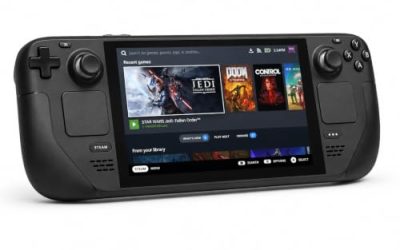
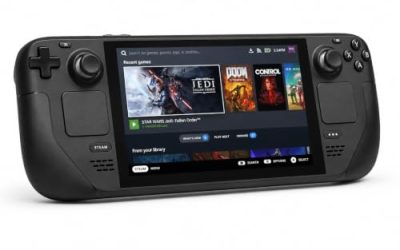
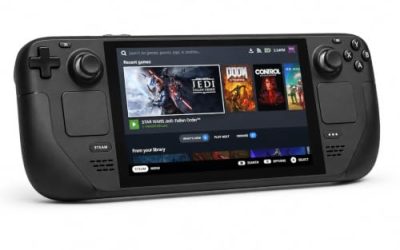
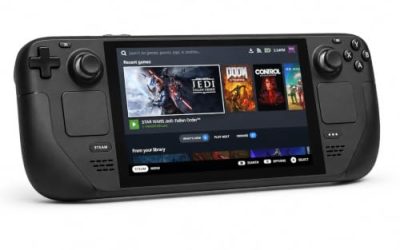
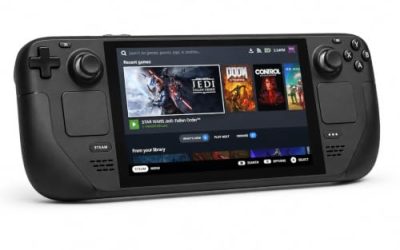
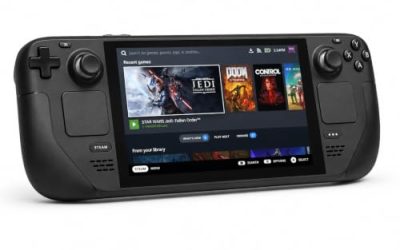
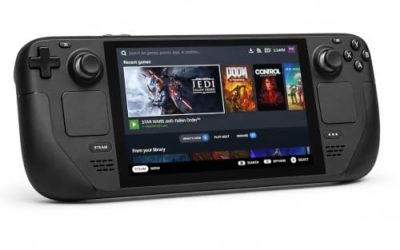
Valve Steam Deck OLED 512GB

The handheld on Valve’s own test sheet. The game’s published requirements sit far below the Deck’s APU, and the Playable grade’s only deductions are small text and manual keyboard calls, both easier on the larger OLED panel.
Specs
- Display: 7.4-inch HDR OLED, 1280 by 800, up to 90 Hz
- Processor: AMD Zen 2 and RDNA 2 custom APU
- Memory: 16 GB LPDDR5
- Storage: 512 GB NVMe, plus a microSD slot
- Wireless: Wi-Fi 6E and Bluetooth
- Channel note: Valve sells the Deck mainly through its own store, so Amazon listings are third-party sellers
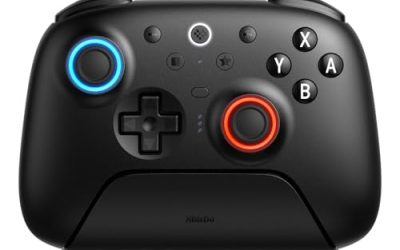
8BitDo Ultimate 2 Bluetooth Controller
A party game built around shared-screen and online matches lives on pads, and Steam lists full controller support on the record. This one covers the couch case with modern sticks and triggers, back buttons, and a dock that keeps it charged between sessions.
Specs
- Connectivity: Bluetooth wireless and USB-C wired
- Joysticks: TMR electromagnetic, anti-drift design
- Triggers: Hall effect, with mode switching
- Extras: two remappable back buttons, motion control
- In the box: charging dock included
Xbox Wireless Controller, Carbon Black
The safest guest pad in PC gaming: Steam Input support is universal, the glyphs match what most games display, and it pairs over Bluetooth or its own wireless standard.
- Connectivity: Xbox Wireless and Bluetooth
- Port: USB-C for wired play
- Controls: hybrid D-pad, dedicated Share button
- Power: AA batteries or optional rechargeable pack
Logitech G502 HERO
At a desk, the board map, item shops and workshop menus are pointer work, and a precise wired mouse makes a long session’s repeated clicks single ones. Eleven programmable buttons cover the confirm, cancel and camera inputs.
Specs
- HERO optical sensor, up to 25,600 DPI
- 11 programmable buttons
- Adjustable weight system
- Wired USB connection
- On-board memory profiles
Samsung T9 Portable SSD 2TB
For moving a Linux game library between machines, or keeping an offline backup of installers, a fast USB-C drive is the simple answer. The headline figure needs a Gen 2×2 host port; on a lesser port the drive runs at that ceiling.
Specs
- Capacity: 2 TB portable SSD
- Interface: USB 3.2 Gen 2×2, USB-C connector
- Maker-rated speeds: up to 2,000 MB per second read, 1,950 MB per second write
- Features: Dynamic Thermal Guard, maker-rated drop resistance
How to choose
Choose the Steam copy, because it is the only PC edition and the exact build both records describe. On a desktop or laptop, install and let Steam apply its default Proton; the Gold headline with Platinum best-reported and trending tiers says current builds run the game well, and the report pool’s online marks are consistently excellent. Keep one caveat in view: a few reports describe severe slowdowns in specific minigames, so treat one as a known rough edge rather than a broken install. On Steam Deck, expect the Playable experience Valve documented: fully functional controls, some small text, and an on-screen keyboard you open yourself when typing is needed.
Who should skip
Skip this route if you only buy native Linux builds on principle; this record offers none and shows no sign of one. Skip it if your group’s sessions depend on every minigame running perfectly, since the report pool’s one recurring complaint targets individual minigames. Skip the Deck as your only screen if small in-game text is a deal-breaker, because that note is written into Valve’s own sheet. And skip it if you wanted a DRM-free copy, because no second storefront sells this game.
FAQ
Is Pummel Party native on Linux?
No. Steam flags the game Windows only, its Linux requirements field is an empty list, its only content depot is Windows-configured, and the store package is Windows only. Every Linux session runs the Windows build through Proton.
Why does the ProtonDB page say Natively Supports?
That heading is a stray label on the page’s requirements block, contradicted by Steam’s record on every layer; every report under it is filed under a named Proton version. The summary figures, Gold headline with Platinum best-reported and trending tiers across 107 reports, are the part worth trusting.
Does the online multiplayer work on Linux?
Nothing on the record blocks it. Steam lists online PvP among the game’s categories, no anti-cheat appears on any of the three sources, and ProtonDB reporters consistently rate the online play excellent. Individual reports do flag slowdowns in particular minigames, online sessions included.
Is the Steam Deck verdict current?
The Playable grade itself stands, but its paperwork is dated 19 March 2022 and was tested on build 7564960, while the public branch now serves build 20246854. Treat it as a 2022 test, not a fresh certification of the current build.
Final verdict
Pummel Party is a clean Windows-only file with a strong Proton record behind it. No layer of Steam’s record pretends otherwise: one flag set, one depot, one package, no DLC family to hide a trap in, and no anti-cheat named by any of the three sources. Against that, 107 community reports settle at Gold with Platinum momentum, and Valve’s Playable badge confirms the Deck route. The two honest cautions are the stray native heading on the ProtonDB page and the minigame slowdowns a minority of reports describe. For a Linux player who wants this party game, Proton on the Steam copy is the whole answer, and on the evidence it is a good one.
Product and ASIN Reference
| Product | ASIN |
|---|---|
| Valve Steam Deck OLED 512GB | B0CQ3RWQQZ |
| 8BitDo Ultimate 2 Bluetooth Controller | B0F194QFT2 |
| Xbox Wireless Controller, Carbon Black | B08DF248LD |
| Logitech G502 HERO | B07GBZ4Q68 |
| Samsung T9 Portable SSD 2TB | B0CHFS9K14 |