Keep Talking and Nobody Explodes is a local co-op party game built around a split job: one player faces a procedurally assembled bomb on screen, and everyone else holds the defusal manual and talks them through it. Steel Crate Games released it in October 2015, and its Steam record carries the full local-multiplayer set — co-op, shared and split screen, full controller support, Workshop support for community modules, and Remote Play Together.


For a Linux player, the question is whether that record includes a real Linux build or only a Windows game that Proton carries. This one answers cleanly at almost every layer: the flags, requirements text, depot table and purchase packages all describe a native Linux edition still maintained a decade after release. The single oddity sits in Valve’s own Deck paperwork, named below.
As an Amazon Associate, we earn from qualifying purchases.
Quick answer
Yes — Keep Talking and Nobody Explodes has a genuine native Linux build. Steam flags all three platforms, the Linux minimum is written out for Ubuntu with an OpenGL requirement, a full-size Linux depot sits alongside the Windows and macOS depots, and the ordinary purchase package delivers it. The Steam Deck badge reads Verified, though its paperwork carries one quirk covered below.
The Steam record: flags and a written Linux minimum
Steam’s record for app 341800 flags Windows, macOS and Linux all true, and the Linux requirements field backs the flag with real text rather than a copied block or an empty shell. The Linux minimum names Ubuntu 16.04 or later, a 1.5 GHz Intel processor, and graphics with OpenGL 3.2 support and 256 MB or more. The notes line is platform-aware in a way copied text never is: it requires a printed manual or a second device to view it, and states plainly that virtual reality is not supported on this platform, even though the Windows side of the same record advertises VR support.
Two honest thin spots belong in the open. The Linux minimum never states a memory or storage figure, where the Windows minimum lists both, so the text is genuine but lighter. And there is no recommended tier on any platform — Windows and macOS stop at a minimum too — so that absence is an unfinished form across the record, not a Linux gap. The app config also holds a Linux client icon with its own file hash, distinct from the Mac icon’s: the genuine article, not a leftover.
Depots and packages: a build a purchase actually delivers
SteamDB’s depot table lists four content depots: two Windows builds (64-bit at 880.04 MiB, legacy 32-bit at 873.46 MiB), a macOS depot at 664.41 MiB, and a Linux depot, 341803, at 702.17 MiB — larger than the macOS build and plainly a full port, not a stub. The public branch is alive, currently serving build 24265614 from July 2026, so the Linux build rides on a record the developer still updates.
Delivery matters as much as existence, and Steam’s own package records settle it. Both packages on the record — the ordinary store package and the Commercial License package — grant the game app alone, and both read Windows, macOS and Linux true at the package layer. A normal purchase installs the Linux depot through the normal route: the anti-stranded shape, with no build sealed in a key-only package.
The family: one soundtrack wearing a bare flag
The full DLC array is exactly one app: the soundtrack, app 515240, released in August 2016 and credited to Liam Sauvé. It wears the family’s classic paperwork shape — it flags all three platforms true while every requirements field on its record, Windows included, is an empty list outright. An audio package has no executable to port, so its flag describes nothing playable in either direction.
It is counted here as evidence neither way, and it does not need to be: the base game’s verdict rests on its own populated field, full-size depot and packages. The soundtrack is named so that a family-level scan is not mistaken for the game’s own record.
Steam Deck: Verified, with a Proton-flavoured quirk
Valve’s compatibility record, read from Valve’s own endpoint with SteamDB’s republication agreeing, grades the game Verified: all four checks pass, covering the default controller configuration, matching glyphs, legible interface text and a default graphics configuration that performs well. SteamOS compatibility is listed separately as Compatible, and the configuration records gamepad input with no internet required for setup or single-player play.
Two paperwork details deserve plain statement. First, the sheet’s recommended runtime reads proton-experimental — on a game with a native Linux build. The checks were evidently written against a Proton configuration, so the Verified grade certifies a route that works rather than the native build itself; the native build exists independently of what the sheet recommends. Second, the test was run in March 2022 on build 5842708, while the public branch now serves build 24265614. The paperwork predates the current build, making this Deck sheet a supplement candidate for the factual paperwork list: the badge is real, and it was earned on an older build of a still-maintained game.
ProtonDB: an unread file this session
ProtonDB’s summary record for this game could not be read in this session: the summary endpoint returned an error page on repeated attempts, and the game’s ProtonDB page itself did not load, so no headline tier, report count or confidence figure is claimed anywhere in this article, and the page’s classification heading could not be checked. The gap is disclosed rather than filled. It matters less here than for a Windows-only title, because the route a Linux player takes is the native build documented above, not a compatibility layer.
Anti-cheat and the GOG question
Three sources, kept separate, all come back negative on anti-cheat. Steam names none, with neither a DRM notice nor an external-account notice on the record. SteamDB detects engine and VR plumbing only — Unity, Mono, and the Oculus and OpenVR plugin SDKs. The Are We Anti-Cheat Yet dataset, all 1,167 games on its master branch, carries no entry for this title by name or by app id. That is the expected shape for a local co-op game with no online competitive mode.
On GOG, there is no edition to buy: GOG’s catalogue search returns no product for this game, and its natural GOG product address resolves to the general catalogue rather than a product page. The Steam copy is the only PC edition, and it is the build every record above describes.
The gear that fits a manual-and-bomb co-op setup
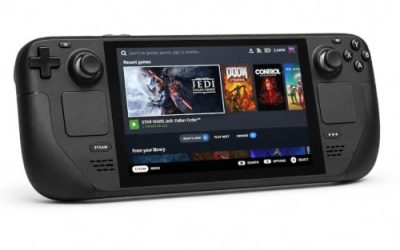
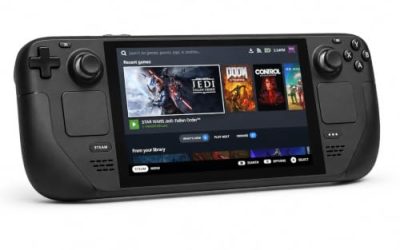
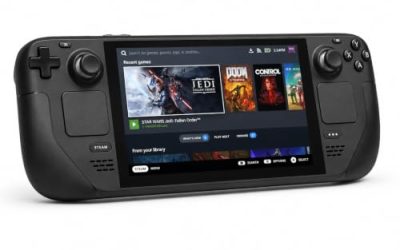
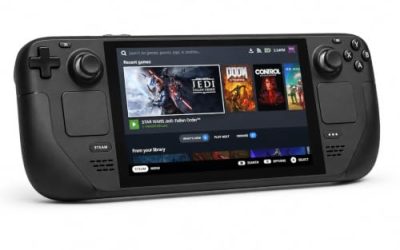
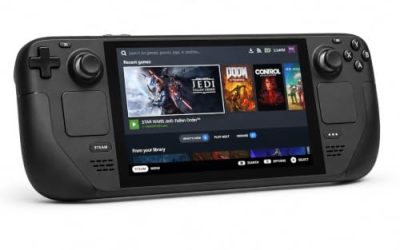
Valve Steam Deck OLED 512GB
The handheld carries a Verified badge for this game, and the co-op shape suits it: the Deck holds the bomb while a partner reads the manual from a phone or a printed copy across the room.
Specs
- Display: 7.4-inch HDR OLED, 1280 by 800, up to 90 Hz
- Processor: AMD Zen 2 and RDNA 2 custom APU
- Memory: 16 GB LPDDR5
- Storage: 512 GB NVMe, plus a microSD slot
- Wireless: Wi-Fi 6E and Bluetooth
- Channel note: Valve sells the Deck mainly through its own store, so Amazon listings are third-party sellers
8BitDo Ultimate 2 Bluetooth Controller
The defusal side is all communication, but the bomb side is gamepad work, and Steam lists full controller support. This pad covers the couch case with modern sticks and triggers plus back buttons.
Specs
- Connectivity: Bluetooth wireless and USB-C wired
- Joysticks: TMR electromagnetic, anti-drift design
- Triggers: Hall effect, with mode switching
- Extras: two remappable back buttons, motion control
- In the box: charging dock included
Xbox Wireless Controller, Carbon Black

The safest guest pad in PC gaming: Steam Input support is universal, the glyphs match what most games display, and it pairs over Bluetooth or its own wireless standard. A natural spare for a game built around shared and split screen.
- Connectivity: Xbox Wireless and Bluetooth
- Port: USB-C for wired play
- Controls: hybrid D-pad, dedicated Share button
- Power: AA batteries or optional rechargeable pack
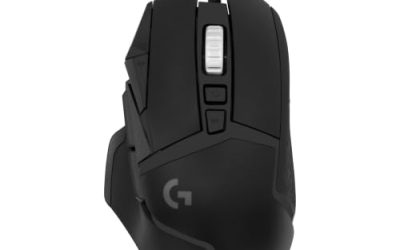
Logitech G502 HERO

At a desk, the mouse earns its place in the menu-heavy moments between bombs: module selection, settings and Workshop browsing turn into single clicks. Eleven programmable buttons cover the confirm and cancel inputs.
Specs
- HERO optical sensor, up to 25,600 DPI
- 11 programmable buttons
- Adjustable weight system
- Wired USB connection
- On-board memory profiles
Samsung T9 Portable SSD 2TB

For moving a Linux game library between a desktop and a laptop, or keeping an offline backup of installers, a fast USB-C drive is the simple answer. The headline figure needs a Gen 2×2 host port; on a lesser port the drive runs at that ceiling.
Specs
- Capacity: 2 TB portable SSD
- Interface: USB 3.2 Gen 2×2, USB-C connector
- Maker-rated speeds: up to 2,000 MB per second read, 1,950 MB per second write
- Features: Dynamic Thermal Guard, maker-rated drop resistance
How to choose
Choose the Steam copy, because it is the only PC edition on sale and the exact build every record above describes. On a Linux desktop or laptop, install it and launch the native build; there is no compatibility tool to configure. On a Steam Deck, the Verified badge means the default configuration is expected to work as installed — the one awareness point is that Valve’s sheet was written against a Proton runtime on an older build, so if the native build ever misbehaves, the sheet’s own route is the documented fallback rather than a downgrade. For the second half of the co-op pair, budget for the manual before the hardware: a printed manual or a spare tablet matters more to a session than any controller upgrade.
Who should skip
Skip the VR framing on Linux: the record supports VR on Windows and states outright that virtual reality is not supported on the Linux build. Skip it if your group plays online rather than in one room — the record’s multiplayer is local and Remote Play Together, with no online mode listed. Skip it if you want a DRM-free offline installer, because no GOG edition exists. And skip it as a solo purchase: the design needs at least one voice reading the manual, and the categories describe a co-op game, not a single-player one with a co-op extra.
FAQ
Is Keep Talking and Nobody Explodes native on Linux?
Yes. Steam flags Linux true, the Linux minimum is written out for Ubuntu with an OpenGL 3.2 requirement, a 702.17 MiB Linux depot sits in the depot table, and the purchase package flags all three platforms, so a normal purchase delivers the native build.
Why does the Steam Deck sheet mention Proton for a native game?
Valve’s sheet lists its recommended runtime as proton-experimental even though a native Linux build exists. The four Verified checks all pass, so the badge reflects a tested configuration rather than the only working one; the native build is documented independently by the flags, requirements field and depot table.
Does the soundtrack’s Linux flag mean anything?
No. The soundtrack is a music package that flags all three platforms while every requirements field on its record is an empty list. It carries no executable, so its flag is evidence neither way; the game’s status rests on the game’s own record.
Can I buy the game on GOG instead?
No. GOG’s catalogue search returns no product for this game and its natural GOG address resolves to the general catalogue. The Steam copy is the only PC edition on sale.
Final verdict
Keep Talking and Nobody Explodes is one of the clean native files in this cluster: a written Ubuntu minimum, a full-size Linux depot inside the packages a purchase delivers, a public branch still updated in 2026, and a family of one soundtrack whose bare flag cannot inflate the scan. The blemishes are paperwork-grade — a Linux minimum that omits memory and storage figures, and a Deck sheet that recommends a Proton runtime from a 2022 test. Neither touches the build itself. Buy the Steam copy, install the native version, and put the manual in a second pair of hands.
Product and ASIN Reference
| Product | ASIN |
|---|---|
| Valve Steam Deck OLED 512GB | B0CQ3RWQQZ |
| 8BitDo Ultimate 2 Bluetooth Controller | B0F194QFT2 |
| Xbox Wireless Controller, Carbon Black | B08DF248LD |
| Logitech G502 HERO | B07GBZ4Q68 |
| Samsung T9 Portable SSD 2TB | B0CHFS9K14 |