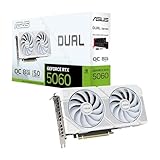
- Top Pick: ASUS Dual NVIDIA GeForce RTX 5060 Ti 16GB GDDR7 OC Edition Graphics Card, (PCIe 5.0, DLSS 4, HDMI 2.1b, DisplayPort 2.1b, 2.5-Slot, Axial-tech Fan, 0dB Technology), 3 Year Warranty
- Best Value: GIGABYTE GeForce RTX 5060 WINDFORCE OC 8G Graphics Card, Cooling System, 8GB 128-bit GDDR7, PCIe 5.0, Manufactured by NVIDIA, DisplayPort & HDMI – Video Output Interface, GV-N5060WF2OC-8GD Video Card
- Premium Choice: ASUS SFF-Ready Prime NVIDIA GeForce RTX 5060 Ti 16GB GDDR7 OC Edition Graphics Card (PCIe 5.0, 16GB GDDR7, HDMI/DP 2.1, 2.5-Slot, Axial-tech Fans, Dual BIOS), 3 Year Warranty
The landscape of PC gaming hardware is constantly evolving, and with the introduction of NVIDIA’s RTX 50-series, gamers are naturally wondering about the capabilities of newer mid-range offerings. For those aiming for the sweet spot of visual fidelity and performance, 1440p resolution remains a popular target. This guide will delve into whether the RTX 5060, in its various configurations, is a suitable contender for a smooth 1440p gaming experience in 2026, considering the advancements in game development and graphics technologies.
- RTX 5060 for 1440p: The Performance Baseline
- Understanding VRAM: 8GB vs. 16GB RTX 5060 Ti
- DLSS 4 and its Impact on Frame Rates
- Cooling and Clock Speeds: Ensuring Sustained Performance
- System Integration: CPU and RAM Considerations
- Tips for Maximizing 1440p Performance
- Ready to Buy a Complete System?
- Frequently Asked Questions
- Conclusion
- Related Articles
- Related Guides
We’ll break down the key specifications, explore the impact of features like DLSS 4, and discuss how VRAM and clock speeds influence performance at this resolution. By the end of this article, you’ll have a clear understanding of what to expect from the RTX 5060 for 1440p gaming and whether it aligns with your performance goals and budget.
As an Amazon Associate we earn from qualifying purchases at no extra cost to you.





🎮 Get More From Your Setup — Free
Prime Gaming gives you free PC games every month, in-game loot, and a free Twitch sub — plus fast free shipping on the gear above. New members get a 30-day free trial.
RTX 5060 for 1440p: The Performance Baseline
In 2026, with many modern AAA titles pushing graphical boundaries, a card like the RTX 5060 is positioned as a capable mid-range option. For 1440p gaming, it aims to deliver a balance between high frame rates and good visual settings. While it might not consistently hit ultra settings at 144Hz in every single demanding title, it’s expected to provide a very enjoyable experience at 60Hz+ with high to very high settings in most games. The inclusion of GDDR7 memory, a significant upgrade from previous generations, will be crucial for handling the larger textures and more complex assets common in current games at 1440p.
Understanding VRAM: 8GB vs. 16GB RTX 5060 Ti
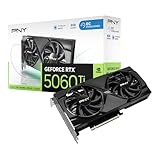
A critical differentiator for 1440p gaming is VRAM. The RTX 5060 Ti typically comes in 16GB variants, while the standard RTX 5060 might be found with 8GB. For 1440p, especially with higher texture settings and ray tracing enabled, 16GB of GDDR7 VRAM is a significant advantage. Games released in 2026 will likely benefit greatly from this larger buffer, preventing stuttering and texture pop-in that can occur when an 8GB card struggles to load all necessary assets. Models like the ASUS Dual NVIDIA GeForce RTX 5060 Ti 16GB GDDR7 OC Edition and the ASUS SFF-Ready Prime NVIDIA GeForce RTX 5060 Ti 16GB GDDR7 OC Edition offer this ample VRAM, making them strong choices for future-proofing at this resolution.
DLSS 4 and its Impact on Frame Rates
NVIDIA’s Deep Learning Super Sampling (DLSS) technology is a game-changer, and DLSS 4 promises even more significant improvements in performance and image quality. For 1440p gaming on an RTX 5060, DLSS 4 will be instrumental in achieving high frame rates. By rendering games at a lower internal resolution and using AI to upscale them to your native 1440p, DLSS can provide a substantial performance boost with minimal perceived loss in visual fidelity. This means you can often enjoy smoother gameplay and enable more demanding graphical features without sacrificing performance. Keep an eye out for games that heavily support DLSS 4, as they will showcase the RTX 5060’s strengths at 1440p.
Cooling and Clock Speeds: Ensuring Sustained Performance
When pushing a GPU for demanding tasks like 1440p gaming, effective cooling is paramount to prevent thermal throttling and ensure sustained performance. Cards with robust cooling solutions, such as dual or triple-fan designs like the GIGABYTE GeForce RTX 5060 WINDFORCE OC 8G or the PNY NVIDIA GeForce RTX™ 5060 Ti OC Dual Fan, are better equipped to handle sustained loads. Higher boost clock speeds on OC (Overclocked) editions can also offer a slight edge in frame rates. However, it’s essential to balance clock speed with effective cooling; a hotter card will eventually throttle its clock speed, negating any initial advantage.
System Integration: CPU and RAM Considerations
While the RTX 5060 is the star of the show for graphics, it’s important to remember that a balanced system is key to optimal gaming performance. A capable CPU, such as the AMD Ryzen 7 9700X found in the ZOTAC MEK Gaming PC Desktop, is necessary to avoid bottlenecks, especially at higher frame rates. Sufficient system RAM (16GB is the minimum, with 32GB recommended for future-proofing) will also contribute to smoother gameplay and faster loading times. Ensure your motherboard supports PCIe 5.0 to take full advantage of the RTX 5060’s bandwidth capabilities, though PCIe 4.0 will still offer very strong performance.
Tips for Maximizing 1440p Performance
- Prioritize titles with strong DLSS 4 support for the best frame rate improvements.
- Experiment with in-game graphics settings; often, dropping a few demanding settings from Ultra to High can yield significant FPS gains with little visual difference.
- Ensure your graphics drivers are always up to date for the latest performance optimizations.
- Consider a monitor with adaptive sync technology (G-Sync or FreeSync) to eliminate screen tearing and provide a smoother visual experience.
Frequently Asked Questions
Is the RTX 5060 good for 1440p gaming in 2026?
Yes, the RTX 5060 is generally considered a good card for 1440p gaming in 2026, especially with its GDDR7 memory and DLSS 4 support. It should provide a solid experience at high settings in most titles.
Should I get the 8GB or 16GB RTX 5060 Ti for 1440p?
For 1440p gaming in 2026, the 16GB RTX 5060 Ti is strongly recommended over an 8GB model due to increasing VRAM demands in modern games.
Will the RTX 5060 run Cyberpunk 2077 at 1440p?
With DLSS 4 enabled and settings adjusted appropriately, the RTX 5060 should be capable of running Cyberpunk 2077 at 1440p with a playable frame rate, though achieving ultra-high settings might require compromise.
What is the benefit of GDDR7 memory on the RTX 5060?
GDDR7 offers significantly higher bandwidth and lower latency compared to previous memory types, which is crucial for faster data transfer to the GPU, leading to improved performance in demanding games, especially at higher resolutions like 1440p.
Conclusion
The RTX 5060, particularly in its 16GB Ti variant with GDDR7 memory, stands as a compelling option for gamers looking to enjoy 1440p resolution in 2026. While it may require some thoughtful settings adjustments in the most graphically intensive titles, its combination of VRAM, DLSS 4 capabilities, and the underlying Blackwell architecture makes it a strong performer that balances performance, features, and cost effectively for this popular gaming resolution.