Our Short List of 3

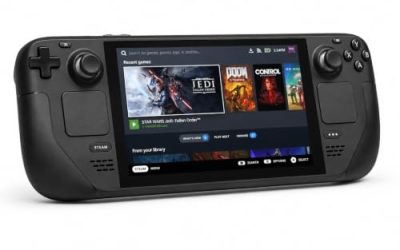
- Display: 7.4-inch HDR OLED, 1280 by 800, up to 90 Hz
- Processor: AMD Zen 2 and RDNA 2 custom APU
- Memory: 16 GB LPDDR5
- Storage: 512 GB NVMe, plus a microSD slot

- Connectivity: Bluetooth wireless and USB-C wired
- Joysticks: TMR electromagnetic, anti-drift design
- Triggers: Hall effect, with mode switching
- Extras: two remappable back buttons, motion control

- Connectivity: Xbox Wireless and Bluetooth
- Port: USB-C for wired play
- Controls: hybrid D-pad, dedicated Share button
- Power: AA batteries or optional rechargeable pack
All 5 Picks at a Glance
| Product | Specs | Action |
|---|---|---|
| Valve Steam Deck OLED 512GB |
| Check price on Amazon |
| 8BitDo Ultimate 2 Bluetooth Controller |
| Check price on Amazon |
| Xbox Wireless Controller, Carbon Black |
| Check price on Amazon |
 Logitech G502 HERO |
| Check price on Amazon |
 Samsung T9 Portable SSD 2TB |
| Check price on Amazon |
Deepest Sword is a tiny free-to-play physics climber from Cosmic Adventure Squad, released on 9 June 2021: one knight, one absurdly long sword, and a pit to pole-vault out of. Its store record looks more generous than it is. Steam flags two platforms for this game, and one of them is not Windows — it is macOS. Linux is the platform left out, and every deeper layer agrees with that omission.
So the Linux question is not whether a native build exists. It does not. The question is how the Windows build behaves under Proton, what Valve’s Deck test says, and whether any other storefront sells the Linux copy Steam never shipped.
As an Amazon Associate, we earn from qualifying purchases.
Quick answer
Deepest Sword has no native Linux build: Steam’s record flags Windows and macOS only, the depot list holds two Windows builds and one Mac build, and the Linux requirements field is empty. The Windows build is the Linux route — ProtonDB rates it Platinum across 15 reports, and Valve rates it Playable on Steam Deck.
The record, layer by layer
Start with the flags, because everything else lines up behind them. The full Steam record for app 1647160 reads windows true, mac true, linux false. The requirements tabs agree. The Windows tab is genuinely populated, minimum tier only: Windows 7 or newer, an Intel Core i3 M380, 2 GB of RAM, Intel HD 4000 graphics and 100 MB of storage. The Mac tab is likewise populated: High Sierra 10.13 or newer, the same processor and memory, OpenGL 3.0 support and the same 100 MB. The Linux requirements field is an empty list — the absent-field form, with no tab and no placeholder text.
The depot census settles the matter. SteamDB lists exactly three content depots: 1647161, the 64-bit Windows build at 70.31 MiB; 1647162, a 32-bit Windows build at 63.00 MiB; and 1647163, the macOS build at 92.49 MiB, carrying the macos64 marker. No Linux depot exists in any form — no dedicated depot, no shared depot, no zero-byte ghost. The registered assets are clienticon, clienttga, icon, logo and logo_small, with no LinuxClientIcon in any form, so neither the fossil-icon nor the inverse-icon shape arises.
Two smaller points complete the picture. The record exposes no DLC array at all, so the family is the base game alone and the usual add-on traps have nothing to attach to. And the store record carries no controller-support field and no controller category — worth remembering when the Deck sheet talks about gamepads, because that claim comes from Valve’s test configuration, not a store-page promise. The detected technology is Unity with the Mono SDK, usually the least dramatic kind of Proton passenger.
A Mac build is not a Linux build
The likeliest misreading of this record is the Mac leg. A scan that counts platforms would report Deepest Sword as a two-platform game and might round that up to broad support. It should not. The macOS depot is real — properly flagged, full-size, with a populated requirements tab — but a Mac build is a separate compiled artifact. It contains nothing a Linux system can run, and it says nothing about Linux beyond the fact that the developer compiled for two of the three desktop platforms and stopped there.
This is the Mac mirage: a genuine second platform makes a record look cross-platform in a way that quietly implies the third. The honest summary is narrower. Deepest Sword is a Windows and macOS game. On Linux, the only copy that exists is the Windows build, and the only way to run it is a compatibility layer. Everything below is about how good that route is — and it is unusually good.
The Proton file
ProtonDB’s summary API answers in full, and the file is about as strong as a 15-report file gets: settled, best-reported and trending tiers all Platinum, confidence good at 0.62. The count is modest, but for a free game that takes minutes to finish it is a reasonable sample, and the recent end is clean — the newest filings, on Proton 10.0-3 and a recent GE-Proton build, run it perfectly with no tweaks.
The older faults are real but dated, and none is repeated by newer reports. A Proton 7.0-4 filing found that alt-tabbing froze the game until it was force-quit. Two 2022 filings on integrated Intel HD 530 graphics failed to initialise graphics at all. A Proton 6.3-era filing needed the Wine D3D renderer, set with the PROTON_USE_WINED3D launch option, to avoid a black screen after losing focus. Current behaviour is a plain install-and-play.
One heading on the ProtonDB page needs naming. The page carries the stray “Natively Supports:” heading above its requirements panel, and it is wrong here: Steam’s record has no Linux flag, no Linux depot and no Linux requirements. The heading is a template artefact; this article follows Steam’s record. The Platinum tier itself is a Proton classification — it describes the Windows build running through the compatibility layer, exactly the route recommended here.
The Steam Deck sheet
Valve’s compatibility report, read from the Deck ajax endpoint, resolves to category 2: Playable, with SteamOS separately marked Compatible. The passes are the three that matter for a game this small: all functionality is accessible with the default controller configuration, interface text is legible, and the default graphics configuration performs well. The configuration names gamepad as the supported input, requires no manual keyboard invocation and sets the small-text flag to zero. The recommended runtime is proton-stable, which independently confirms the ruling — Valve graded the Windows build, because there is no other build to grade. The single deduction is cosmetic: the game sometimes shows mouse, keyboard or non-Deck controller icons instead of Deck glyphs. That is the whole gap to Verified.
The paperwork is also current, which is rare. SteamDB’s republication of Valve’s sheet — the route used here for the test metadata, disclosed as such — records the test on 17 May 2022 against build 6863376, and the public branch still serves that build today, unchanged since June 2021. The badge grades the exact copy on sale, so this is explicitly not one of the supplement candidates older paperwork usually produces.
The storefront ruling
No second storefront rescues the native case. The natural GOG product address redirects to the general games catalogue, and the catalogue surfaces only unrelated titles for the name. Ruled on the absent page plus the catalogue records — not on search silence alone, a known blind spot — GOG holds no edition of this game. Steam is the only PC storefront carrying it. Anti-cheat is a non-issue: the game is single-player, names none on its record, and the AreWeAntiCheatYet file, read in full at 1,167 entries, holds no entry for it in either direction — documentation silence, not a clearance.
Gear that fits the record
The gear below follows the record’s shape: the handheld Valve tested, two pads, a mouse, and fast library storage.
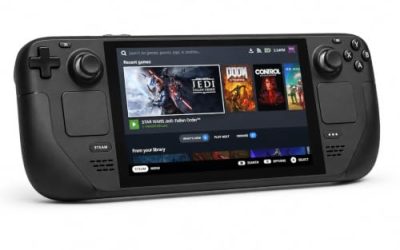
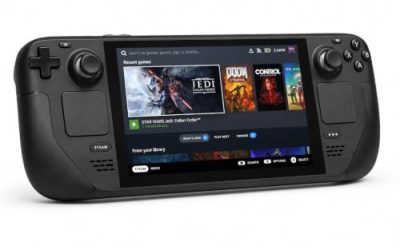
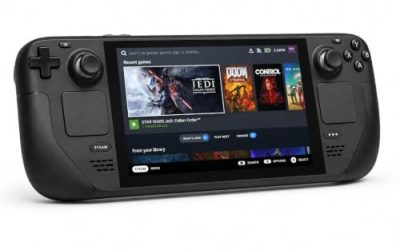
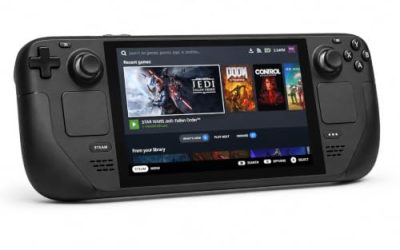
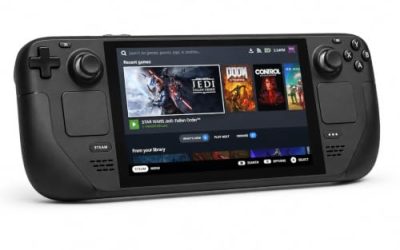
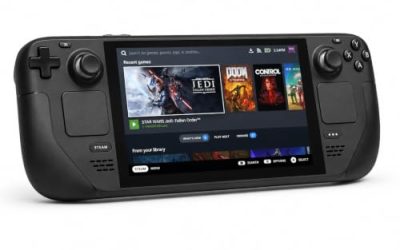
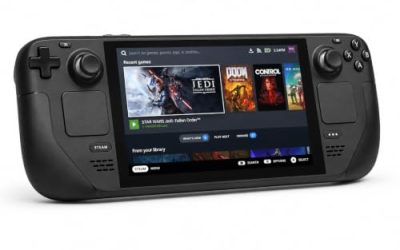
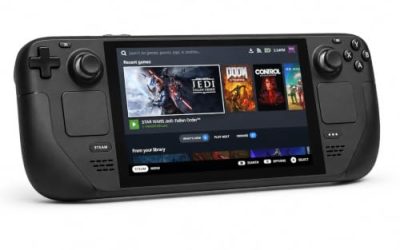
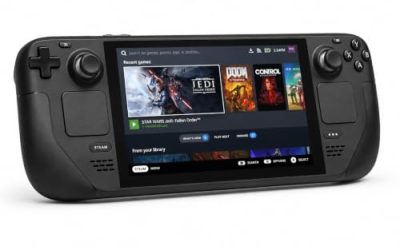
Valve Steam Deck OLED 512GB
- Display: 7.4-inch HDR OLED, 1280 by 800, up to 90 Hz
- Processor: AMD Zen 2 and RDNA 2 custom APU
- Memory: 16 GB LPDDR5
- Storage: 512 GB NVMe, plus a microSD slot
The handheld this Playable badge was written for. The game’s minimums sit far below the Deck’s APU, and Valve’s sheet confirms the default configuration performs well.
8BitDo Ultimate 2 Bluetooth Controller
- Connectivity: Bluetooth wireless and USB-C wired
- Joysticks: TMR electromagnetic, anti-drift design
- Triggers: Hall effect, with mode switching
- Extras: two remappable back buttons, motion control
The docked pad pick. Valve’s test configuration for this game is a gamepad, and this pad covers docked and desktop play with modern sticks, triggers and back buttons.
Xbox Wireless Controller, Carbon Black
- Connectivity: Xbox Wireless and Bluetooth
- Port: USB-C for wired play
- Controls: hybrid D-pad, dedicated Share button
- Power: AA batteries or optional rechargeable pack
The safest guest pad in PC gaming: Steam Input support is universal, the glyphs match what most games display, and it pairs over Bluetooth or its own wireless standard. On the handheld, an external pad may need a manual Quick Access Menu switch before it takes over.
Logitech G502 HERO
- HERO optical sensor, up to 25,600 DPI
- 11 programmable buttons
- Adjustable weight system
- Wired USB connection
Deepest Sword is a one-button game at heart, but desktop players often still prefer a mouse for menus, and eleven programmable buttons cover whatever a session repeats.
Samsung T9 Portable SSD 2TB
- Capacity: 2 TB portable SSD
- Interface: USB 3.2 Gen 2×2, USB-C connector
- Maker-rated speeds: up to 2,000 MB per second read, 1,950 MB per second write
- Features: Dynamic Thermal Guard, maker-rated drop resistance
For moving a Linux game library between machines or backing up installers, a fast USB-C drive is the simple answer. The headline figure needs a Gen 2×2 host port; on a lesser port the drive runs at that ceiling.
How to choose
Choose the Steam copy: it is the only PC edition sold anywhere, it is free to play, and it is the exact build both records describe. On a Linux desktop or laptop, install it and leave the compatibility tool at its default — the Platinum file says current Proton runs it without tweaks, and the old WINED3D workaround belongs to Proton 6.3-era reports. On Steam Deck, install and play; the badge’s only deduction is icon artwork, which costs nothing in play. If you pair an external pad, expect the usual Quick Access Menu switch before it takes over. Only players on very old integrated graphics have a genuine decision: the 2022 failures were all on Intel HD 530-class hardware.
Who should skip
Skip the search for a native version entirely — there is none, on any storefront, and the Mac build changes nothing for a Linux system. Skip the game itself if a one-joke physics climber measured in minutes is not your shape of fun; the Linux route is excellent, but it cannot lengthen the game. Skip it, too, if you are holding out for a GOG release.
FAQ
Is Deepest Sword native on Linux?
No. Steam flags Windows and macOS only, the Linux requirements field is an empty list, and the depot census holds two Windows builds and one Mac build with no Linux depot of any kind. The Mac build is real, but a Mac build is not a Linux build.
How does Deepest Sword run on Linux through Proton?
Very well on current reports. ProtonDB’s full summary reads Platinum on the settled, best-reported and trending tiers across 15 reports, with good confidence, and the newest filings run it with no tweaks.
What does the Steam Deck Playable badge leave out?
Only polish. Valve’s sheet passes the default controller configuration as fully functional, the text as legible and the default graphics as performant; the sole deduction is that the game sometimes shows mouse, keyboard or non-Deck controller icons. The May 2022 test used the same build the store still serves today.
Can I buy Deepest Sword on GOG instead?
No. The GOG product address redirects to the general catalogue, which holds no edition of the game. Steam is the only PC storefront carrying it, and it is free to play there.
Final verdict
Deepest Sword is not a native Linux game, and its record shows why the layers must be read separately: a real Mac build makes the flags look broader than they are, while the Linux field, the depot list and the asset register all say the same plain no. What rescues the article is the quality of the fallback — a unanimous Platinum ProtonDB file, a Playable badge whose test still matches the build on sale, and a game that costs nothing. For a Linux player this is the easiest kind of non-native title: install the Steam copy, leave Proton alone, and climb.
Product and ASIN Reference
| Product | ASIN |
|---|---|
| Valve Steam Deck OLED 512GB | B0CQ3RWQQZ |
| 8BitDo Ultimate 2 Bluetooth Controller | B0F194QFT2 |
| Xbox Wireless Controller, Carbon Black | B08DF248LD |
| Logitech G502 HERO | B07GBZ4Q68 |
| Samsung T9 Portable SSD 2TB | B0CHFS9K14 |