
DDR5-6000 vs DDR5-8000 Gaming Performance
DDR5-6000 and DDR5-8000 are two data rates that often appear side by side on memory shelves. The number refers to the rated transfer speed in megatransfers per second, and a higher figure suggests more bandwidth. On paper, DDR5-8000 looks like a clear step up. In a real gaming system, the difference depends on the processor, the motherboard, the stability of the profile and the games you play. Higher speed is not automatically better if it forces a less stable configuration.
This is a buying and tuning guide. It explains what the rated speed means, why a faster kit may not perform as expected on every platform, what it costs in stability and tuning effort and which buyers are likely to benefit. It does not provide benchmark frame rates, because those vary widely by game and system, and it does not claim a specific gain for either speed.
The listing below is the primary pick for this search. It is a DDR5 kit from the speed class in the comparison, and it may not be the exact kit you intend to buy. Check the card for the precise model, rated speed, capacity and price before ordering.


What the Rated Speed Really Means
DDR5 speed ratings describe how fast the memory can transfer data under a given profile. A kit rated at 8000 MT/s can, in principle, move more data per second than one rated at 6000 MT/s. The rated speed is a target that the kit’s profile requests, and the motherboard and processor must support it. Reaching the rating depends on the memory controller, the board’s power delivery and the modules’ quality.
Bandwidth is only one part of memory behaviour. Latency, measured through timings, determines how long each access takes. A higher data rate with looser timings does not always beat a lower data rate with tighter timings, so compare kits on the full specification rather than the headline number alone.
Why the platform matters
On AM5, the relationship between the memory clock and the internal fabric clock influences how the system behaves at different speeds. Many builders find that a speed in the DDR5-6000 range keeps the fabric and memory in a convenient ratio, while higher speeds can change that relationship in ways that affect latency. On Intel platforms, memory behaviour depends on the board and processor generation. Check the platform’s memory guidance and the board’s qualified list before buying a higher-speed kit.

CORSAIR Dominator Titanium RGB DDR5 RAM 32GB (2x16GB) DDR5 6000MHz CL30 Intel XMP iCUE Compatible Computer Memory - White (CMP32GX5M2B6000C30W)


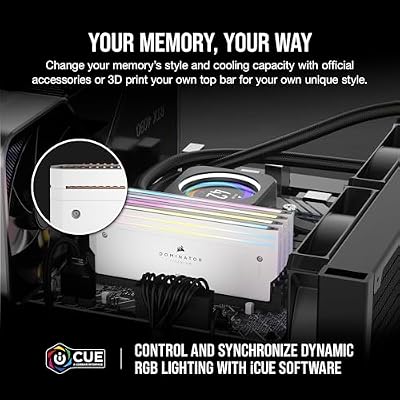


As an Amazon Associate we earn from qualifying purchases. Product prices and availability are accurate as of the date/time indicated.
Gaming Impact: Where the Gap Shows
Memory speed matters most in games that depend heavily on the processor, such as large strategy titles, simulation games and some open-world titles with heavy background activity. In these games, faster and tighter memory can increase the amount of data the processor receives without waiting. In games that are mostly limited by the graphics card, the difference is often small, because the GPU sets the frame rate regardless of memory speed.
Test the games you actually play. Use reviews that compare memory speeds on the same board and processor, and look for results that report both average frame rate and the lower end of frame delivery. A small average gain can still feel meaningful if it reduces stutter, and a larger headline gain can mean little if the frame times are uneven.
Stability and tuning effort
A higher rated speed usually asks more of the memory controller and the board. Stability may require careful voltage and timing work, and the amount of testing grows with each step up. A kit that crashes during play loses more value than it gains in frame rate. For many builders, a stable DDR5-6000 profile is a better outcome than a faster profile that needs constant attention.
The guide to overclocking DDR5 RAM safely explains how to step through speeds without risking instability, and the DDR5-6000 versus DDR5-7200 analysis covers the next step in a similar way. Both are useful before you decide whether a higher rating is worth the effort.
Choosing a Speed for Your Build
Most gaming builds benefit from a well-chosen DDR5-6000 kit with a stable profile. It is widely available, suits many AM5 configurations and balances cost, stability and performance. If your board’s qualified list includes a higher-speed kit and your processor supports it, a faster kit can make sense, particularly for CPU-heavy games.
Buy a higher-speed kit only if you plan to test it, your motherboard supports it, and you accept that tuning may take time. Do not buy a higher rating just to see a larger number on the spec sheet. A kit that runs at its rated profile on your board is worth more than a faster kit that runs at a lower stable speed.
For a wider view of kit options, the best DDR5 RAM for gaming guide compares the main categories, and the best DDR5-6000 RAM for 2026 article focuses on the speed class most builders consider first. If you are comparing older platforms, the DDR4 versus DDR5 guide explains when the generation change matters.

G.SKILL Trident Z5 Series DDR5 RAM (Intel XMP 3.0) 64GB (2x32GB) 6000MT/s CL32-38-38-96 1.40V Desktop Computer Memory U-DIMM - Matte Black (F5-6000J3238G32GX2-TZ5K)


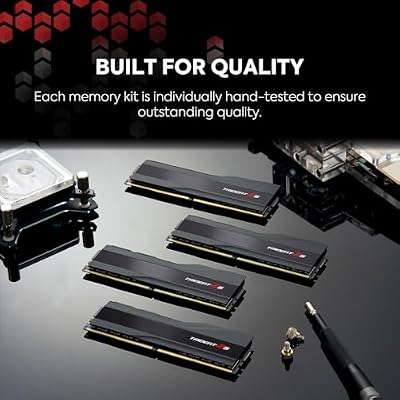


As an Amazon Associate we earn from qualifying purchases. Product prices and availability are accurate as of the date/time indicated.
Comparison Table: DDR5 Speed Classes
The table compares the speed classes by the role they are likely to play in a build. It avoids specific prices and performance numbers, which change often and depend on the platform.
| Option | Best for | Price tier | Trade-off to check |
|---|---|---|---|
| Primary pick (hero listing) | Builders who want a high-speed kit for a capable board | Premium tier | Confirm the profile and qualified board list before buying |
| Alternative 1 | Builders who want a mainstream high-speed kit | Mid tier | Stability may need tuning on some boards |
| Alternative 2 | Users who want a balanced speed for everyday gaming | Mid tier | Check whether the kit runs at its rating on your board |
| Alternative 3 | Budget-focused builders who want a stable profile | Entry tier | Lower rated speed and fewer headroom options |
| Alternative 4 | Builders who want a premium speed class with a larger capacity | Premium tier | Higher cost and more demanding tuning |
Capacity and kit choice also shape the decision. The best amount of RAM for gaming guide explains how much capacity to buy, the best RAM for gaming PC article covers broader options, and the G.Skill Ripjaws S5 DDR5-6400 review shows how a mid-speed kit performs in practice.
Frequently Asked Questions
Is DDR5-8000 always faster than DDR5-6000 in games?
No. Higher rated speed does not guarantee higher frame rates. The result depends on the game, the processor, the board and whether the kit runs stably at its rating. In graphics-limited games the difference is often small.
Do I need to manually tune an 8000 kit?
Many high-speed kits require some tuning to reach their rating on a given board, though the level of effort varies. Check the kit’s profile, the board’s qualified list and reviews from testers using your platform before deciding.
Is DDR5-6000 enough for gaming?
For most gaming builds, a stable DDR5-6000 kit is a strong choice that balances cost, stability and performance. It suits many AM5 systems and is widely available.
Does a faster kit help with stutter?
It can in some CPU-limited games, because faster memory may improve how quickly the processor receives data. Stutter has many causes, though, including storage, drivers and background activity, so memory is rarely the only factor.


