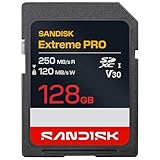
- Top Pick: SanDisk 128GB Extreme PRO SD UHS-I Card, Up to 250MB/s Read and 120MB/s Write, 4K UHD, Full HD, U3, V30, SDSDXXJ-128G-GSCIN
- Best Value: SANDISK 64GB Extreme PRO SDXC UHS-I Memory Card – C10, U3, V30, 4K UHD, SD Card – SDSDXXU-064G-GN4IN
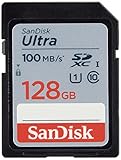
- Premium Choice: SanDisk 128GB Ultra SDXC UHS-I Memory Card – 100MB/s, C10, U1, Full HD, SD Card – SDSDUNR-128G-GN6IN
A memory card never shows up in a photo, yet it decides whether a burst of wildlife frames finishes writing, whether the card reader stalls during a wedding offload, and whether a corrupted card ruins a shoot. For stills photography the numbers that matter are write speed for continuous shooting, capacity for RAW files, and the speed class marks that guarantee a minimum sustained rate. Peak read speed is the number printed biggest on the package, and it is the one that matters least while shooting.
This guide is for hobbyists, travel photographers, and enthusiasts picking cards for a 2026 camera kit. It compares ten SD cards from SanDisk, Lexar, and PNY by what each title states: capacity, speed class, UHS bus, and quoted read and write figures. Where a title lists only a read speed, the write-up says so, because write speed is what keeps a burst moving.
Quick Picks
As an Amazon Associate we earn from qualifying purchases at no extra cost to you.




| Product | Best for | Key spec from the title |
|---|---|---|
| SanDisk Extreme PRO 128GB (SDSDXXJ) | Fast bursts with solid capacity | 250MB/s read, 120MB/s write, U3, V30 |
| SanDisk Extreme PRO 64GB (SDSDXXU-064G-GN4IN) | Light shooters needing V30 | SDXC UHS-I, C10, U3, V30 |
| SanDisk Ultra 128GB (SDSDUNR) | Casual stills in Full HD | 100MB/s, C10, U1 |
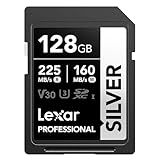
| Lexar Silver 128GB | Brand-flexible, V30 cameras | 225MB/s read, V30, U3 |
| Lexar Silver 256GB | Long shoots on one card | 225MB/s read, V30, U3, 256GB |
| SanDisk Ultra 128GB (SDSDUNB) | Entry stills, Full HD | Up to 140MB/s, C10, U1 |
| PNY Elite 32GB 5-Pack | Spare cards for rotation | 32GB x5, C10, U1, V10 |
| SanDisk Extreme PRO 256GB (SDSDXXD) | High capacity and fast writes | 200MB/s read, 140MB/s write, V30 |
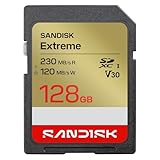
| SanDisk Extreme 128GB (SDSDXV9) | All-round 4K and stills | 230MB/s read, 120MB/s write, V30 |
| SanDisk Extreme PRO 64GB (SDSDXXU-064G-GSCIN) | Small card with app backup | 200MB/s read, 90MB/s write, V30 |
How to Choose
Write speed and speed class
Read figures speed up offloading to your computer; write figures decide whether the camera buffer clears quickly. The U3 and V30 marks promise a minimum sustained write of 30MB/s, while U1 and V10 promise 10MB/s. For RAW bursts on modern bodies, look for V30 and a stated write figure, such as the 120MB/s or 140MB/s on the Extreme PRO titles. A card that lists only 100MB/s read tells you nothing about how well it handles a burst.
Capacity and RAW file size
RAW files vary with sensor size; a 24-megapixel body often produces files in the neighborhood of 25 to 30MB, so 128GB holds several thousand frames. A 45-megapixel camera roughly doubles that file size. Cards at 64GB suit casual shoots, 128GB suits a day trip, and 256GB suits events or travel when you do not want to swap cards. Several smaller cards also spread risk, which a five-pack like the PNY set offers.
SDHC, SDXC, and compatibility
Cards of 32GB or less are SDHC, and those from 64GB up are SDXC. Older cameras may not read SDXC, so check your body’s manual before buying a large card. Titles that mention Canon, Sony, and Nikon compatibility, like the Lexar Silver, are a convenience, but any UHS-I card from a major brand should work in a camera that supports UHS-I.
What to ignore and where budget cards cut corners
Peak read speeds above 200MB/s only help offloading, and UHS-I tops out below UHS-II in practice, so a faster read does not make bursts faster. Entry-level Ultra and Elite lines usually carry U1 or V10 marks and trim write speed, which hurts shooting in bursts or recording 4K video. Do not rely on app or software extras as a reason to buy; the card hardware comes first.
The 10 Best Options
SanDisk Extreme PRO 128GB (SDSDXXJ-128G-GSCIN)
This UHS-I card lists up to 250MB/s read and 120MB/s write, with U3 and V30 marks and 4K UHD support. It is a strong all-round pick for a photographer shooting RAW bursts who wants a capacity that covers a long day without constant swapping. The title also lists 4K UHD and Full HD support, so the same card can serve a camera that records video alongside stills.
- A stated 120MB/s write speed makes buffer clearing easier to judge.
- V30 and U3 marks guarantee a sustained minimum rate for video.
- Trade-off: it sits above entry lines in tier.
Skip it if you shoot mostly casual snapshots.
SanDisk Extreme PRO 64GB (SDSDXXU-064G-GN4IN)
A 64GB SDXC UHS-I card with C10, U3, V30, and 4K UHD support. It fits a hobbyist who wants the V30 guarantee without a large capacity, such as a weekend walker shooting JPEGs and a few RAW files. Because it is a lower capacity, many photographers buy a pair so one can be offloaded while the other stays in the camera, which is also a quiet insurance policy against a single card failing.
- V30 and U3 marks are listed.
- A smaller capacity makes it a good second card.
- Trade-off: the title gives no read or write figures.
Skip it if you need long RAW sessions on a single card.
SanDisk Ultra 128GB (SDSDUNR-128G-GN6IN)
The Ultra lists 100MB/s read, C10, U1, and Full HD. It is an entry-level card for casual stills, suited to a beginner using a compact camera or an older DSLR that writes at modest speeds. It is the sort of card that makes sense for family photos and holiday snapshots, where bursts are rare and the files are mostly JPEGs.
- 128GB gives room for a large number of JPEGs.
- C10 and U1 marks cover basic needs.
- Trade-off: no write speed or V30 mark is listed, so bursts may be slow.
Skip it if you shoot RAW bursts or 4K video.
Lexar Silver 128GB
A 128GB card with 225MB/s read, 4K, V30, U3, and UHS-I, marketed as compatible with Canon, Sony, and Nikon bodies and targeted at photographers and videographers. It suits someone comparing brands beyond SanDisk, perhaps because a kit lens bundle or a friend’s setup already uses Lexar. Check your camera’s supported card list, since the compatibility line is marketing language, not a guarantee for every body.
- V30 and U3 marks appear in the title.
- The listing names common camera brands.
- Trade-off: no write speed number is given.
Skip it if you need a stated write figure.
Lexar Silver 256GB
The 256GB sibling carries the same 225MB/s read, 4K, V30, U3, and UHS-I marks. It suits a travel or event photographer who wants a single large card for a long day without a mid-shoot swap. If you pick it, offload nightly and keep a spare card in the bag so a failure in the field does not end the whole trip.
- 256GB capacity covers a full day of RAW files.
- V30 and U3 marks match the 128GB version.
- Trade-off: one large card concentrates risk.
Skip it if you prefer to spread shots across several cards.
SanDisk Ultra 128GB (SDSDUNB-128G-GN6IN)
This Ultra variant lists up to 140MB/s, C10, U1, and Full HD. It is another entry-level choice for stills, aimed at users who do not need 4K video. Compared with the other Ultra card in this list, it quotes a higher top read speed, which speeds up copying files to a computer but does not change how fast the camera writes.
- Up to 140MB/s read helps with offloading.
- 128GB capacity suits casual use.
- Trade-off: U1 only guarantees a modest minimum write speed.
Skip it if you plan to record 4K video.
PNY Elite 32GB 5-Pack
A five-pack of 32GB SDHC cards with C10, U1, V10, up to 100MB/s read, and Full HD video, listed as compatible with DSLRs and video cameras. It suits someone building a rotation of spare cards, such as a student photography class, a club that shares gear, or a hobbyist who wants a dedicated card per trip. At 32GB each, they work as labeled project cards.
- Five cards spread risk across a shoot.
- SDHC format works with older cameras.
- Trade-off: U1 and V10 marks fit light use, not heavy bursts.
Skip it if you need high-speed cards for RAW bursts.
SanDisk Extreme PRO 256GB (SDSDXXD-256G-GN4IN)
A 256GB card listing up to 200MB/s read, up to 140MB/s write, V30, U3, C10, 4K UHD, and QuickFlow technology. It is the highest stated write speed in this guide, suited to demanding bursts with large capacity. The QuickFlow label refers to the maker’s own feature set, so confirm what it means on the product page before treating it as a deciding factor.
- 140MB/s write is the top figure listed here.
- 256GB suits long events.
- Trade-off: a single large card concentrates risk.
Skip it if casual shooting is your main use.
SanDisk Extreme 128GB (SDSDXV9-128G-GUCIN)
The Extreme lists up to 230MB/s read, 120MB/s write, V30, U3, C10, and 4K UHD video, noted as compatible with cameras and camcorders. It is a balanced pick for a hybrid shooter who alternates between stills and 4K clips on the same trip, wants a sensible capacity, and prefers a card with a stated write speed rather than only a headline read speed.
- A stated write speed accompanies the read figure.
- V30 and U3 marks suit stills and 4K video.
- Trade-off: it carries a standard Extreme label rather than PRO.
Skip it if you want the highest available write figure.
SanDisk Extreme PRO 64GB (SDSDXXU-064G-GSCIN)
A 64GB card listing up to 200MB/s read, up to 90MB/s write, V30, U3, C10, 4K UHD, Full HD, and backup and transfer with the SanDisk app. It fits someone who wants V30 with a small capacity and likes the idea of moving files through the maker’s app, such as a traveler who backs up photos to a phone at the end of the day.
- Write speed is listed at up to 90MB/s.
- App-based backup and transfer are mentioned.
- Trade-off: the write figure is lower than the larger PRO cards.
Skip it if you need the fastest bursts.
Which One Fits Your Situation
Wildlife or sports bursts
The SanDisk Extreme PRO 256GB lists the highest write speed, and the 128GB PRO lists 120MB/s with 250MB/s read.
Travel with limited swaps
The Lexar Silver 256GB gives capacity in one card, while the PNY five-pack spreads risk.
Casual weekend shooting
The SanDisk Ultra 128GB cards cover basic stills at a modest tier.
Hybrid photo and video
The SanDisk Extreme 128GB pairs V30 with a stated write speed.
Common Mistakes
- Choosing by read speed alone and ignoring write figures.
- Buying SDXC for an older camera that only reads SDHC.
- Putting a whole trip on one large card.
- Assuming 4K video support means fast RAW burst performance.
- Ignoring the V30 or U3 mark on a card that will record video.
Related guides
- Aio Liquid Coolers For High Performance Gaming
- How To Lower Input Delay In Competitive Shooters
- External Hard Drives For Music Production
Frequently Asked Questions
What does V30 mean?
It is a video speed class guaranteeing 30MB/s minimum sustained write, useful for 4K recording and RAW bursts.
Is 64GB enough?
For casual shooting, yes. For RAW events or travel, 128GB or larger gives more headroom. Remember to leave a margin, because a card is never filled to the last megabyte, and video clips use space far faster than still frames do.
Do I need UHS-II?
Only if your camera supports it and you shoot long bursts. All cards here list UHS-I.
Is a five-pack a good idea?
It spreads risk and lets you rotate cards, though the V10 mark fits light use only.