For a streamer, the voice is the product, and that flips the usual headset decision on its head. What matters first is the microphone capsule, its pickup pattern, and the connection chain carrying it to the computer, because a polished headphone tuning cannot rescue a thin, roomy, or clipped vocal. Choose the mic and its path first, then judge the headphones attached to it, and only then weigh comfort features that matter over a long broadcast session.
This guide serves solo streamers building around an audio interface, creators who commentate from noisy rooms, and podcast-style hosts who record guests or co-hosts. Every pick below was chosen from the product names and specifications published on its Amazon product page, cross-checked against manufacturer specification sheets where the listing itself was brief.
Quick Picks
As an Amazon Associate we earn from qualifying purchases
| Product | Best for | Key spec from title |
|---|---|---|
| Audio-Technica ATH-M50xSTS StreamSet | Streamers with an XLR interface | XLR StreamSet Streaming Headset |
| Audio-Technica BPHS1 | Broadcast-style dynamic mic on a budget-conscious desk | Dynamic Cardioid Boom Mic |
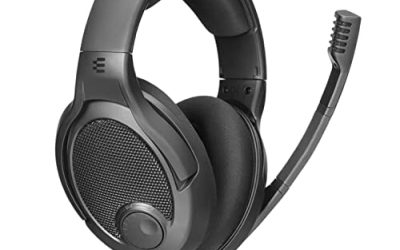
| Rode NTH-100M | 3.5mm plug-and-play creator desks | Professional Over-ear Headset for Media, Broadcast, Podcasting, Content Creation, Streaming |
How to Choose
Microphone type and pickup pattern
Dynamic and condenser capsules behave very differently at a streaming desk, so this choice shapes everything downstream. A dynamic cardioid capsule, like the one in the BPHS1, tolerates close talking and rejects sound arriving from the sides, which suits untreated rooms. A condenser capsule captures more detail and top-end clarity, yet it also picks up keyboards, fans, and room reflections more readily. Tighter patterns such as super-cardioid narrow the pickup zone further, at the cost of faster level drop when you turn your head. Match the pattern to your room before chasing any other feature, because no software setting fully undoes a poor capsule choice.
Connection chain and the interface you still need
Connection decides what else you must own. An XLR microphone output, found on the BPHS1 and the ATH-M50xSTS, does not plug into a computer by itself: it needs an audio interface or mixer with a microphone preamp, and a condenser version also needs phantom power from that interface. Budget for that box, a spare XLR lead if the headset cable is short, and a headphone output strong enough for the headset impedance. By contrast, a combined 3.5mm TRRS plug, like the Rode design, can feed a single headset jack directly, while separate plugs need the included splitter or dual inputs.
Monitoring, sidetone, and hearing yourself clearly
Speaking for hours while barely hearing your own voice leads to shouting, drifting levels, and fatigue, so monitoring deserves real attention. Hardware monitoring on an audio interface returns your microphone signal to the headphones with no perceptible delay, and that is the route XLR headsets rely on. Some USB headsets build sidetone circuitry into the earcup instead, which is simpler but ties you to that one device. Before buying, compare the options in this guide with the broader headsets with a microphone for streaming and chat already covered on this site, then confirm your chosen interface or headset offers a monitor mix control you can adjust mid-session without opening software menus.
Headphone side: isolation, impedance, and long-session comfort
The headphone half still matters, just second. Closed-back cups keep game audio and click tracks from leaking into a sensitive boom microphone, and they block household noise that would otherwise break your concentration. Check the published impedance figure against your interface or controller output, because high-impedance broadcast models can sound quiet on weak headphone sockets. Weight, clamp, and earpad material decide whether a headset stays comfortable through a long session, so compare the listed weight carefully. Replaceable pads and cables also matter here, since a broadcast headset should outlast several sets of ear cushions rather than being replaced as one sealed unit.
The 3 Best Options
Audio-Technica ATH-M50xSTS StreamSet
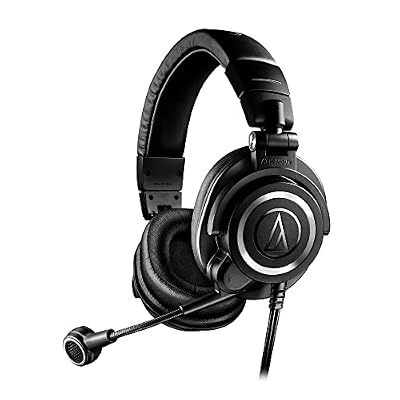
Built expressly for streamers and content creators, this StreamSet pairs the ATH-M50x headphone platform with a boom microphone drawn from the maker iconic 20 Series condenser designs, according to the Amazon description. That condenser capsule is the reason this headset belongs at the top of a mic-first list: the published design brief is vocal clarity, not chat convenience. The trade is the connection chain. The microphone leaves on XLR and the headphones on a separate plug, so an interface with phantom power sits between this headset and your computer on every session.
Specs
- Model name: ATH-M50XSTS
- Connector: XLR
- Headphones jack: 3.5 mm Jack
- Noise control: Sound Isolation
- Frequency response: 28000 Hz
- Item weight: 1 pounds
- Product dimensions: 4.53 x 8.9 x 10.4 inches
Best for: Streamers who already own, or plan to buy, an XLR audio interface and want a condenser boom microphone.
Watch out for: Confirm your interface supplies phantom power for the condenser microphone, and check that its headphone output is separate from the XLR input, because this variant splits mic and headphone signals across two plugs.
ASIN: B0BRQR55FK
Audio-Technica BPHS1

The BPHS1 is the classic broadcast answer to the same problem, built for on-air news, sports announcing, and interviews. Its dynamic cardioid boom microphone needs no phantom power, which makes it forgiving with a wide range of interfaces and mixers, and the cardioid pattern keeps the focus on the voice at close range. The Amazon listing describes closed-back circumaural ear cups and a boom that can be worn on either side, both useful for long commentary sessions. A long detachable cable ending in separate microphone and headphone connectors underlines that this is desk equipment, not a portable chat headset.
Specs
- Model name: BPHS1
- Microphone, from listing title: Dynamic Cardioid Boom Mic
- Headphones jack: 6.35 mm Jack
- Impedance: 65 Ohms
- Sensitivity: 100 dB
- Item weight: 9.3 ounces
- Included cable: 3.3 m cable with 3-pin XLRM-type connector for the microphone and 6.3 mm TRS plug for the headphones, plus 3 windscreens
Best for: Streamers and commentators who want a dynamic broadcast microphone that shrugs off untreated rooms and needs no phantom power.
Watch out for: Plan on an audio interface or mixer for the XLR microphone output, and check the 6.3 mm headphone plug against your gear, because a smaller 3.5 mm socket will need an adapter.
ASIN: B003D87JI2
Rode NTH-100M

Rode approaches the problem from the creator desk rather than the commentary booth. The NTH-100M combines its NTH-100 over-ear headphones with a detachable headset microphone that the maker describes as broadcast-grade, and the whole signal travels over a single TRRS cable with a splitter included in the box. Manufacturer material describes the microphone capsule as a miniature condenser with an omnidirectional pattern, which will sound natural at close range but will also hear more of the room than the cardioid models above. In return, there is no interface requirement for basic use, making this the simplest chain in the guide.
Specs
- Model name: NTH-100M
- Headphones jack: 3.5 mm Jack
- Sensitivity: 110 dB
- Noise control: None
- Item weight: 1 pounds
- Product dimensions: 3.15 x 7.48 x 7.4 inches
- Included components: NTH-100, NTH-Mic, bag, 2.4 m TRRS cable, splitter cable, ID set, 3.5 mm to 6.35 mm adaptor
Best for: Creators who want one-cable 3.5mm connection to a computer, controller, or camera, with a detachable microphone for headphone-only use.
Watch out for: Check whether your device has a combined TRRS headset jack; if it offers separate microphone and headphone sockets instead, you will rely on the included splitter cable, and the omnidirectional capsule makes room treatment more important.
ASIN: B0BLGQFGJR
Which One Fits Your Situation
Solo streamer with an XLR interface already on the desk
Pick the ATH-M50xSTS StreamSet. You already own the preamp and phantom power its condenser microphone requires, so the extra detail that capsule offers costs you nothing in new hardware. Set the interface direct-monitor balance once, keep the boom close and slightly off-axis, and the split XLR and headphone plugs stop being a chore and become the most flexible arrangement here.
New creator with no interface and a single headset jack
Choose the Rode NTH-100M and keep the chain honest. One TRRS plug, the included splitter when a computer separates its sockets, and no phantom power, preamp, or mixer to configure before your first broadcast. Spend the saved effort on microphone position and room soft furnishings instead, because its omnidirectional capsule will faithfully report every hard wall and desk echo in the room.
Commentator or co-host in a noisy shared room
Reach for the Audio-Technica BPHS1. Its directional dynamic cardioid microphone and closed-back isolation are the two published traits that help most when other people, screens, and equipment share your space. The dynamic capsule needs no phantom power, tolerates close talking, and rejects sound from the sides, while the lighter listed weight helps when a shared-room session runs long.
Host who records long interviews and talk segments
The BPHS1 suits marathon talking best on the published figures, pairing the lightest listed weight here with a dynamic microphone that stays consistent when guests lean in or turn away. Its either-side boom also helps when a co-host prefers the opposite wearing arrangement. Pair it with an interface that offers simple hardware monitoring, and long sessions stay manageable for everyone wearing a headset.
Common Mistakes
- Buying an XLR headset without owning an interface, then discovering the microphone plug has nowhere to go on the computer.
- Choosing a condenser headset for an untreated, echoing room and blaming the microphone for reflections the capsule was designed to hear.
- Ignoring the variant name, and receiving a broadcast headset sold without a cable, or with an unterminated cable meant for custom wiring.
- Placing the boom directly in front of the mouth, which invites plosives and breath noise that a slightly off-axis position avoids.
- Monitoring through software with delay enabled, then speaking unnaturally because your own voice returns a fraction of a second late.
Frequently Asked Questions
Does an XLR microphone headset need an audio interface?
Yes, in practice it does. The XLR plug carries an analogue microphone signal that a computer cannot accept directly, so an interface or mixer must provide the preamp, the analogue-to-digital conversion, and phantom power when the capsule is a condenser design. Dynamic models skip the phantom power requirement, but they still need that preamp and converter stage.
Is a dynamic or condenser microphone better for streaming?
Neither wins everywhere, because the room decides. Dynamic cardioid capsules reject off-axis sound and tolerate close, loud delivery, which suits untreated spaces. Condenser capsules capture finer vocal detail and suit quieter, better-treated rooms. Published pattern and frequency figures describe the design intent; your room, distance from the boom, and interface gain setting shape the result listeners actually hear.
What does sidetone do, and do I need it?
Sidetone feeds your own voice back into your headphones as you speak, so you can judge volume and tone naturally instead of raising your voice to hear yourself. XLR headset users normally get this from an interface direct-monitor control. USB headsets may build the same function into the earcup. For long sessions, some form of low-delay self-monitoring is worth prioritising.
Can I use a broadcast headset with a games console or controller?
Only some designs cooperate. A single TRRS 3.5mm plug, such as the Rode arrangement, can suit a controller headset jack, subject to platform settings. Split XLR and headphone connectors cannot: the console offers no microphone preamp or phantom power. Check the product page connector list against your hardware before assuming one will work.