

- Top Pick: HP 17 inch Business Laptop Computer • 2026 Edition • Latest AMD Ryzen 5 CPU • 16GB RAM • 512GB SSD • 17.3" FHD Display • Numeric Keypad • Long Battery Life • Windows 11 with Office 365 for The Web
- Best Value: HP New Everyday Slim Laptop • 2027 Edition • Microsoft Office 365 Included • Intel N150 • 128GB SSD + 1TB Cloud Storage • Stunning Color • Long Battery Life • Copilot AI • Windows 11
- Premium Choice: HP 15.6 inch Laptop, 2027 Edition, 4GB RAM, 128GB SSD, Intel 4 Cores N150, Long Battery Life, Portable Laptop for Business, Windows 11 Home with Microsoft 365
Every laptop in this guide carries the phrase long battery life in its title, which is exactly why that phrase deserves suspicion. Sellers use it freely, and a title rarely states watt-hours or hours of runtime. A shopper who needs a laptop to last through a lecture day, a flight, or a commute has to read between the lines: processor family, screen size, storage type, and software platform all shape how long a charge stretches.
This roundup is for students, commuters, and mobile workers choosing in 2026 who care more about hours away from an outlet than raw speed. Ten models are compared, from an entry-level Chromebook to 17-inch machines with 16GB of memory. Judgments rely only on what the listing titles say, so a battery claim is treated as a claim, never as a measured figure. Use the guide to narrow the field, then confirm the battery capacity on each full page.
Quick Picks
As an Amazon Associate we earn from qualifying purchases at no extra cost to you.


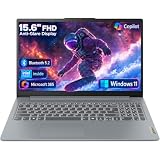


| Product | Best for | Key spec from the title |
|---|---|---|
| HP 17 Ryzen 5 | Big-screen productivity | 17.3-inch FHD, 16GB, 512GB SSD |
| HP Everyday Slim (Copilot) | Light everyday work | Intel N150, 128GB SSD, Copilot AI |
| HP 15.6 N150 | Basic browsing and documents | 4 cores, 4GB RAM, 128GB SSD |
| HP Chromebook 14 | Web-only, school use | Celeron N4120, 14-inch, Chrome OS |
| Lenovo Essential 15.6 | Everyday work with more memory | 8GB DDR5, WiFi 6, anti-glare |
| Lenovo Business 15.6 | Office-style work | 8GB DDR5, USB-C, anti-glare |
| HP 17.3 Ryzen 5 7430U | Large screen with strong specs | Ryzen 5 7430U, 16GB, 512GB PCIe |
| HP 14 Honey Lavender | Students and carry-everywhere use | 14-inch, Wi-Fi 6, HDMI |
| HP 15 Core i5 | Heavier multitasking | i5-1135G7, 16GB, 512GB SSD |
| HP Everyday Slim (N150) | Simple setup | N150, 128GB SSD, Microsoft 365 |
How to Choose
Battery capacity beats the slogan
Look for a watt-hour figure on the full specification page. Around 40Wh is modest, 50 to 60Wh is a comfortable range for a 14 to 15-inch machine, and bigger 17-inch designs often carry more. If the page lists only hours with no capacity, treat the number as a best case rather than a daily figure.
Processor class and screen size
Low-power chips such as the Intel N-series and Celeron class are designed to sip power, while Ryzen U-series and Core i5 chips draw more but handle multitasking better. A 14-inch panel generally draws less than a 17.3-inch panel. If the goal is the longest stretch away from an outlet, a smaller screen and a lower-power chip are the safer pair.
Memory, storage, and software
Eight gigabytes is the practical floor for Windows, and 4GB models will feel cramped with many browser tabs. A 128GB drive fills fast, and cloud storage bundled in the title is not local space. Chrome OS is lighter on resources, which suits web-based work, but it will not run traditional Windows programs.
What to ignore, and where corners get cut
Skip edition years, bundled AI labels, and processor comparisons printed in a title, because none of them describe battery life. Entry-level screens may be HD instead of FHD, plastic builds are common, and charging may use a barrel connector instead of USB-C. Check which ports and which Wi-Fi standard each laptop lists.
The 10 Best Options
HP 17 Ryzen 5
This 17.3-inch FHD laptop pairs a Ryzen 5 with 16GB of RAM and a 512GB SSD, plus a numeric keypad. It is for people who want a roomy screen at a desk and the occasional trip, and who accept that a bigger case holds a bigger cell but also lights a bigger display. The listing even notes Windows 11 with Office 365 for the Web, so the office suite runs in a browser.
- Strength: 16GB of memory and 512GB of storage leave room to multitask.
- Strength: the numeric keypad helps with spreadsheets and data entry sessions that run for hours.
- Trade-off: a 17.3-inch body is heavy to carry daily.
Skip it if you commute on foot or squeeze the laptop into a small bag.
HP Everyday Slim (Copilot)
A light Windows 11 laptop with an Intel N150, a 128GB SSD, and 1TB of cloud storage, plus Microsoft Office 365 and Copilot AI. It suits simple daily tasks such as email, streaming, and documents, and it reads as a pick for a household machine that mostly lives on a couch or a kitchen table.
- Strength: the N150 class of chip is built around low power draw.
- Strength: Office and cloud storage come bundled, which reduces the setup list on day one.
- Trade-off: local storage is only 128GB.
Skip it if you store large files locally or keep a big photo library on the laptop.
HP 15.6 N150
A 15.6-inch laptop with the Intel N150, 4GB of RAM, a 128GB SSD, and Windows 11 Home with Microsoft 365. It is built for light office and web work, and its larger screen with a standard layout suits people moving up from an older family laptop.
- Strength: a four-core efficient chip suits basic tasks.
- Strength: a familiar 15.6-inch layout is easy to work on.
- Trade-off: 4GB of RAM is thin for heavy tab use.
Skip it if you multitask with many browser windows, since 4GB leaves little headroom once Windows has loaded.
HP Chromebook 14
A 14-inch Chrome OS laptop with a Celeron N4120, 4GB of RAM, and 64GB of eMMC storage, in a thin design. It targets web-based school and home use, and it is the lightest idea in the group in both software and hardware, with a thin design called out in the title.
- Strength: Chrome OS is lean and matches a modest chip.
- Strength: a 14-inch size keeps weight and screen draw down.
- Trade-off: the HD display and 64GB eMMC are basic.
Skip it if you need Windows-only software, desktop editing tools, or lots of local storage.
Lenovo Essential 15.6
A 15.6-inch FHD Windows 11 laptop with 8GB of DDR5, 128GB of storage, 1TB of cloud storage, WiFi 6, and an anti-glare screen, in Abyss Blue. It is for buyers who want a bit more memory in a mainstream size and a screen that handles reflections.
- Strength: 8GB of DDR5 memory is a step up from the 4GB models.
- Strength: the anti-glare screen helps in bright rooms.
- Trade-off: the processor is listed only as Intel, with no model named.
Skip it if you want to compare exact chip generations before buying, since the listing does not name the processor.
Lenovo Business 15.6
A 15.6-inch FHD business-style laptop with 8GB of DDR5, 128GB of storage, Office 365, WiFi 6, USB-C, and an anti-glare screen, in Arctic Grey. It suits an office worker or a freelancer who wants a plain, professional look and a USB-C port.
- Strength: USB-C adds flexibility for charging and accessories, subject to the full listing.
- Strength: the office-friendly finish suits work settings.
- Trade-off: it shares the unnamed processor and small drive of the Essential model.
Skip it if the cloud bundle of the Essential matters more, or if you need a clearer processor description.
HP 17.3 Ryzen 5 7430U
A 17.3-inch FHD machine with a named Ryzen 5 7430U, 16GB of RAM, a 512GB PCIe drive, and Wi-Fi 6. The title also claims it beats an Intel Core i7 model, which is a seller claim and not something this guide can confirm. It is meant for people who want a big, fast-feeling machine that still lists efficient U-series silicon.
- Strength: a named U-series chip, 16GB, and fast storage form a capable base.
- Strength: Wi-Fi 6 supports quicker networks.
- Trade-off: 17.3 inches means more screen to power and more weight.
Skip it if you want a compact, pack-and-go size, or if a heavy bag is a daily problem.
HP 14 Honey Lavender
A 14-inch Windows 11 Home laptop with Copilot AI, Office 365, 128GB of storage, 1TB of cloud storage, Wi-Fi 6, and HDMI, aimed at students, with a color and size that set it apart from the usual grey office laptop. It is for the person who walks between buildings with the laptop in a backpack.
- Strength: the 14-inch size is easier to carry between classes.
- Strength: HDMI makes presenting simple.
- Trade-off: the processor is listed only as Intel.
Skip it if you want a named chip to compare, or if you need more than 128GB of local space.
HP 15 Core i5
A Windows 11 Pro 15.6-inch FHD laptop with an 11th Gen Core i5-1135G7, 16GB of RAM, a 512GB SSD, Iris Xe graphics, and a numeric pad. It is for people who run several programs at once, such as a spreadsheet, a browser, and a video call, and who want Pro features.
- Strength: 16GB and 512GB support heavier multitasking.
- Strength: Windows 11 Pro suits business needs.
- Trade-off: Wi-Fi 5 and Bluetooth 4.2 are older standards.
Skip it if you want the newest wireless support or the lowest-power chip in the group.
HP Everyday Slim (N150)
A plain take on the Everyday Slim idea: an Intel N150, a 128GB SSD, 1TB of cloud storage, and Windows 11 with Microsoft 365. It is for a shopper who just wants a straightforward laptop for a relative or a first-time user.
- Strength: a short feature list keeps things simple.
- Strength: the N150 class is built for efficiency.
- Trade-off: memory is not stated in the title.
Skip it if you need a confirmed memory amount, because the title leaves RAM out, or if you want the Copilot label and a longer feature list to compare against the other Everyday Slim.
Which One Fits Your Situation
You carry the laptop every day
The HP 14 Honey Lavender balances a 14-inch size with Wi-Fi 6 and HDMI.
You work on spreadsheets at a desk
The HP 17 Ryzen 5 offers 16GB, 512GB, and a numeric keypad on a big screen, which is useful for a home office that rarely moves.
Your work lives in a browser
The HP Chromebook 14 pairs a light software platform with a modest chip, and the low demands of web apps stretch each charge.
You multitask in Windows
The HP 15 Core i5 lists 16GB and a 512GB SSD for heavier loads.
Common Mistakes
- Trusting a long battery life label with no watt-hour figure behind it.
- Choosing 4GB of RAM for a Windows laptop meant to last several years.
- Counting cloud storage as local space.
- Picking a 17-inch screen and expecting an ultralight bag.
- Ignoring charging port type and wireless standard.
Related guides
- Combination Smoke And Carbon Monoxide Detectors
- Aio Liquid Coolers For High Performance Gaming
- Graphics Cards For Low Wattage Power Supplies
Frequently Asked Questions
How many hours should a long battery laptop last?
Look for a manufacturer figure in the full specification, then expect real use to be lower. Brightness, tabs, and video calls all shorten runtime, so lowering screen brightness is the simplest way to gain time.
Does a Chromebook last longer than a Windows laptop?
Often it does, because Chrome OS and low-power chips ask less of the battery. The trade-off is software, since Windows programs will not run.
Is an N150 chip enough?
For browsing, documents, and video, yes. For many tabs plus editing work, a Ryzen 5 or Core i5 with 16GB is more comfortable.
Do edition years matter?
Not much. Judge the processor, memory, storage, and battery capacity instead, since a newer-sounding year in a title says nothing about the hardware inside.









