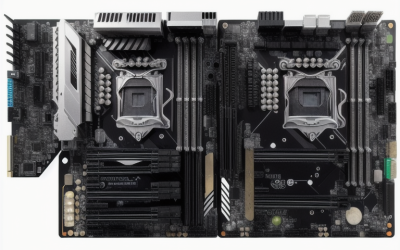
- Top Pick: ASRock B560M-C Micro-ATX Motherboard, Supports 10th & 11th Gen Intel Core Processors (LGA1200), DDR4 4800MHz (OC), PCIe 4.0, Dual M.2, 8 SATA3, Intel Gigabit LAN, WiFi + BT 5.1
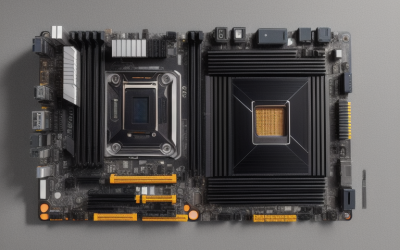
- Best Value: ASUS Pro Q570M-C/CSM LGA1200 (Intel 10th&11th Gen) mATX Commercial Motherboard (PCIe 4.0,1 LAN,Front Panel USB 3.2 Type-C, Intel vPro,2X DP,TPM 2.0 IC,COM debug Header,self-Recovering BIOS,ACCE)
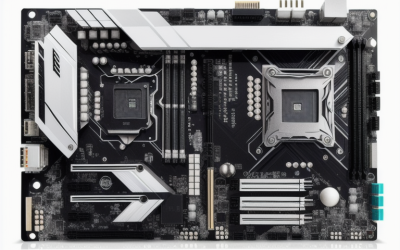
- Premium Choice: MSI PRO B760-P WiFi DDR4 ProSeries Motherboard – Supports 12th/13th/14th Gen Intel Processors, LGA 1700, DDR4, PCIe 4.0, M.2, 2.5Gbps LAN, USB 3.2 Gen2, HDMI/DP, Wi-Fi 6E, Bluetooth 5.3, ATX
LGA 1200 is a closed chapter: Intel moved on to a different socket after the 11th generation, so anyone shopping for a board today is almost certainly keeping a Core i5, i7, or i9 from the 10th or 11th generation alive, or building a secondhand-parts rig. That changes the buying logic. You are not hunting for the newest platform; you are matching a specific CPU, a pile of DDR4 memory, and a case you already own.
This guide covers nine LGA 1200 boards from ASUS, ASRock, and MSI, spanning compact micro-ATX models and full ATX designs. One listing in the original shortlist, an MSI B760 board, uses a different socket and was removed. Everything here is judged only from the specs in each listing, so use it as a starting map before you cross-check the manufacturer CPU support list in 2026.
Quick Picks
As an Amazon Associate we earn from qualifying purchases at no extra cost to you.


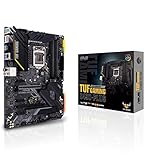
| Product | Best for | Key spec from the title |
|---|---|---|
| ASRock B560M-C | Compact, many SATA drives | 8 SATA3, dual M.2, WiFi + BT 5.1 |
| ASUS Pro Q570M-C/CSM | Office and commercial builds | Intel vPro, TPM 2.0, 2X DP |
| ASUS Prime Z590-V | ATX with several drives | 3X M.2, Thunderbolt 4 support |
| ASUS Prime Z490-P | 10th Gen CPU builds | Dual M.2, DDR4 4600 |
| ASRock Z590-C/ac | Built-in wireless on ATX | 802.11ac WiFi, DDR4 4800+ |
| ASUS Prime Z590-P | Faster wired networking | 2.5Gb LAN, 10+1 power stages |
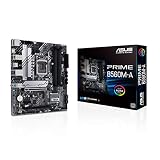
| ASUS Prime B560M-A | Compact, multiple displays | Dual HDMI, DP, 2X M.2 |
| ASUS TUF Gaming Z490-Plus | Stronger power delivery | 12+2 power stages |
| MSI Z490-A PRO | Dual M.2 plus 2.5G LAN | 2.5G LAN, DP/HDMI |
How to Choose
Check the CPU generation the board lists
Every board here uses the LGA 1200 socket, but not every listing covers both generations. The Z590 and B560 titles name 10th and 11th Gen processors. The Z490 titles from ASUS TUF, ASUS Prime, and MSI name 10th Gen only, so an 11th Gen chip on one of those may depend on a BIOS update and a closer look at the support list. PCIe 4.0 lanes to the CPU also require an 11th Gen processor.
Chipset and expansion
Z-series chipsets like Z590 and Z490 target overclocking, while B560 targets mainstream builds and Q570 targets business machines. If you will leave a CPU at stock speeds, a B560 board gives you the same socket and a similar feature set. Count M.2 slots: dual is common, and three, as on the Prime Z590-V and Z590-P, suits a builder with several NVMe drives.
Memory and size
All of these use DDR4, which is a gift if you already own a kit. Listings mention speeds like 4600 or 4800 as overclocked ceilings, so the real pace depends on your CPU and modules, and the memory controller inside the processor sets the ceiling. Micro-ATX boards fit small cases but usually have fewer expansion slots and fewer fan headers; choose full ATX if you want room for a large graphics card plus add-in cards.
Networking, ports, and where budget boards cut corners
A 2.5Gb LAN port (Prime Z590-P, MSI Z490-A PRO) matters if your router and switch support it, while 1Gb is fine otherwise. Only the ASRock B560M-C and Z590-C/ac list built-in wireless; others rely on a USB adapter or the Key E slot mentioned on the Prime B560M-A. Entry boards generally trim heat sinks, fan headers, and rear USB count first.
The 9 Best Options
ASRock B560M-C
A micro-ATX board for compact builds that need a lot of storage connections and a wireless card already attached, aimed at 10th and 11th Gen owners. Its mix of storage and wireless features makes it a tidy base for a media server, a home office machine, or a lean gaming PC.
- Strength: eight SATA3 ports and dual M.2 slots, with PCIe 4.0 listed.
- Strength: WiFi plus Bluetooth 5.1 and Intel Gigabit LAN in the title.
- Trade-off: a micro-ATX layout leaves fewer expansion slots.
Skip it if you need a full-size ATX layout or a multi-card setup that calls for extra slots, since the compact form factor limits how many add-in cards can fit.
ASUS Pro Q570M-C/CSM
A commercial-class micro-ATX board for office and workstation builds that value management features over gaming extras. The listing leans on remote-management and security items such as Intel vPro and TPM 2.0 rather than lighting or tuning tools.
- Strength: Intel vPro, TPM 2.0, a COM debug header, and self-recovering BIOS.
- Strength: two DisplayPort outputs and a front-panel USB 3.2 Type-C.
- Trade-off: a single LAN port and no gaming-oriented styling.
Skip it if you want RGB lighting, an overclocking focus, or built-in wireless, because this model is designed for managed fleets and quiet desks rather than showpiece builds.
ASUS Prime Z590-V
A full ATX board for builders who want three M.2 slots and Thunderbolt 4 support on an 11th or 10th Gen platform. It suits a builder who plans to add NVMe drives over time and wants a fast external port for docks or storage.
- Strength: three M.2 slots and PCIe 4.0 per the title.
- Strength: eight-plus-one power stages and Aura Sync RGB.
- Trade-off: only 1Gb LAN, which trails the 2.5Gb option on its sibling.
Skip it if you want faster built-in networking or a tight micro-ATX case, since the full ATX size needs a roomier chassis and the LAN stays at 1Gb.
ASUS Prime Z490-P
An older Z490 ATX option for anyone assembling a 10th Gen system around a Core i5 or i7. It is a sensible match when the CPU is already in hand and the rest of the parts are older DDR4 stock.
- Strength: dual M.2 and DDR4 up to 4600 per the title.
- Strength: Thunderbolt 3 support and USB 3.2 Gen 2 Type-A.
- Trade-off: the title lists 10th Gen only, so 11th Gen use needs extra checking.
Skip it if you plan to upgrade to an 11th Gen processor or need PCIe 4.0 graphics lanes, because the title names only the earlier generation and PCIe 4.0 does not appear in the listing.
ASRock Z590-C/ac
A Z590 ATX board with built-in 802.11ac WiFi, handy for a desk with no Ethernet nearby. The listing keeps the spec list short, so this is a straightforward foundation rather than a feature-packed board.
- Strength: 802.11ac WiFi and Intel Gigabit LAN in one board.
- Strength: DDR4 4800+ and PCIe 4.0 in the title.
- Trade-off: the listing shows no extra detail on M.2 slots, power stages, or Thunderbolt.
Skip it if you need Thunderbolt headers or a confirmed M.2 count from the title alone, since the listing leaves those details for the manufacturer page.
ASUS Prime Z590-P
A step up from the Z590-V for buyers who want faster wired networking and a beefier power design. It is the more complete of the two Prime Z590 models for a build that will carry a heavy CPU load.
- Strength: 2.5Gb LAN, three M.2 slots, and 10+1 power stages.
- Strength: front-panel USB 3.2 Gen 2 Type-C and Thunderbolt 4 support.
- Trade-off: no wireless mentioned in the title.
Skip it if you want built-in WiFi or a micro-ATX size, since you would need to add a wireless adapter and a roomier case for this ATX design.
ASUS Prime B560M-A
A micro-ATX B560 board for compact desktops that drive several monitors from the integrated graphics ports. With two HDMI outputs and DisplayPort listed, it works for a desk that needs a monitor wall without a separate graphics card.
- Strength: DP plus dual HDMI outputs and a Key E slot for a Wi-Fi card.
- Strength: PCIe 4.0, two M.2 slots, and eight power stages.
- Trade-off: a 1Gb LAN and no included wireless card.
Skip it if you plan to overclock or want a third M.2 slot, since the B560 chipset and compact layout aim at mainstream, stock-speed use.
ASUS TUF Gaming Z490-Plus
A Z490 ATX board whose headline is robust power delivery for a 10th Gen chip with headroom. The TUF branding and 12+2 power stages point at users who push a Core i7 or i9 hard.
- Strength: 12+2 power stages in the title.
- Strength: front USB 3.2 Type-C, addressable Gen 2 RGB header, and Aura Sync.
- Trade-off: the title names 10th Gen only and 1Gb LAN.
Skip it if you want 11th Gen compatibility spelled out or 2.5Gb networking, because the title names only the earlier generation and a Gigabit port.
MSI Z490-A PRO
A Z490 ATX board for builders who want 2.5G LAN together with dual M.2 slots. The listing focuses on ports and networking rather than extras, which keeps the appeal practical.
- Strength: 2.5G LAN and DP plus HDMI outputs.
- Strength: dual M.2 slots and USB 3.2 Gen 2.
- Trade-off: only 10th Gen is named, and no wireless is listed.
Skip it if you plan an 11th Gen upgrade or need built-in WiFi, as the title lists neither and leans on the 10th Gen generation alone.
Which One Fits Your Situation
You are upgrading an old 10th Gen build
The ASUS TUF Gaming Z490-Plus or MSI Z490-A PRO are direct matches since their titles name 10th Gen. Pick the TUF for power stages and the MSI for 2.5G LAN. Both ATX boards leave room for a full-size graphics card and several drives.
You want to fit an 11th Gen chip with PCIe 4.0
Choose the ASUS Prime Z590-P for 2.5Gb LAN and three M.2 slots, or the Prime Z590-V if you can live with 1Gb LAN. Both list Thunderbolt 4 support and PCIe 4.0, which only pays off when the CPU is an 11th Gen model.
You are building a small office or media PC
The ASRock B560M-C packs WiFi and eight SATA ports, while the ASUS Prime B560M-A gives three video outputs. The Pro Q570M-C/CSM suits managed business setups where TPM 2.0 and vPro matter more than lighting. Any of these three fits a small case.
Your desk has no Ethernet
The ASRock Z590-C/ac brings ATX size with 802.11ac WiFi on the board. It saves you from buying a separate adapter and keeps the back panel tidy. Pair it with a Core i5 or i7 from either supported generation, then confirm the BIOS version before you start the build.
Common Mistakes
- Buying a board for a 12th Gen or newer processor; those use a different socket.
- Assuming every Z490 listing supports 11th Gen without reading the support list.
- Choosing a Z-series chipset when the CPU will stay at stock settings.
- Ignoring the case size and then discovering an ATX board does not fit.
- Counting on PCIe 4.0 with a 10th Gen processor, which cannot use it.
Related guides
- Aio Liquid Coolers For High Performance Gaming
- How To Lower Input Delay In Competitive Shooters
- Wireless Gaming Headsets Under 100 For Pc
Frequently Asked Questions
Which Intel CPUs fit LGA 1200?
The 10th Gen and 11th Gen Core families use this socket. Newer generations moved to LGA 1700, so a 12th Gen processor will not fit.
Do I need a Z-series board for gaming?
No. Z boards add overclocking and often more M.2 slots, but a B560 board is enough when the CPU runs at stock settings.
Is DDR4 required?
Every board in this list uses DDR4, so reusing an older kit is possible. Check the maximum listed speed against your modules.
Why does the MSI B760 listing not appear?
Its title states LGA 1700 and 12th through 14th Gen support. That is a different socket, so it was left out of the review list.