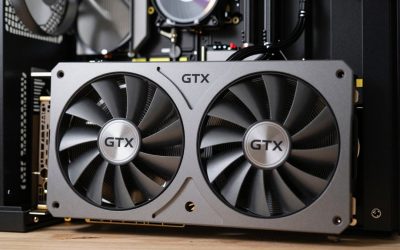
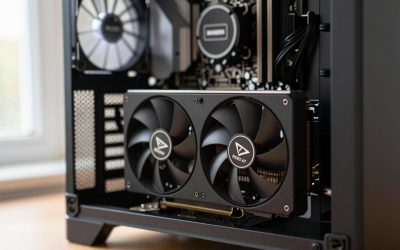
- Top Pick: ASRock AMD Radeon RX 6600 Challenger D 8GB GDDR6 DisplayPort 14Gbps HDMI 0dB Silent Cooling 128-bit 7680 x 4320 Dual Fan Graphics Card PCI Express 4.0 x8 8-pin
- Best Value: ASUS Dual GeForce RTX 4060 Ti EVO OC Edition 8GB GDDR6 (PCIe 4.0, 8GB GDDR6, DLSS 3, HDMI 2.1a, DisplayPort 1.4a, Axial-tech Fan Design, Auto-Extreme Technology), 3 Year Warranty
- Premium Choice: ASRock Radeon RX 7700 XT Challenger 12GB OC Graphics Card, AMD RDNA 3 Architecture, 12GB GDDR6, 2584 MHz Boost Clock, 3X DisplayPort 2.1, 1x HDMI 2.1, Dual Fan Cooling
Dota 2 remains one of the most competitive esports titles on the planet, demanding swift reaction times and buttery-smooth frame delivery. Powered by Valve’s Source 2 engine, the game presents a unique hardware challenge. While it is notoriously CPU-bound during chaotic, ten-hero late-game teamfights crammed with particle effects, pairing your processor with the right graphics card is essential to unlocking high refresh rates across 1080p, 1440p, and 4K resolutions. Finding the best GPU for Dota 2 in 2026 requires understanding how graphic workloads scale alongside system platform choices.
Proper hardware pairing prevents severe performance bottlenecks. Installing an ultra-high-end graphics card alongside an aging processor leads to jarring frame-time spikes when teamfights break out, regardless of your GPU’s peak throughput. Furthermore, platform costs—including your motherboard chipset, DDR4 or DDR5 RAM, and processor cooling solution—must align with your graphics card budget. Balancing your graphics hardware with an upgradeable platform guarantees long-term performance without overspending on unused horsepower.
As an Amazon Associate we earn from qualifying purchases at no extra cost to you.


Quick Picks
| Pick | Tier | Why |
|---|---|---|
| ASRock AMD Radeon RX 6600 Challenger D 8GB GDDR6 DisplayPort 14Gbps HDMI 0dB Silent Cooling 128-bit 7680 x 4320 Dual Fan Graphics Card PCI Express 4.0 x8 8-pin | Budget 1080p | Delivers exceptional 1080p high-refresh rate esports performance at an entry-level price point. |
| ASUS Dual GeForce RTX 4060 Ti EVO OC Edition 8GB GDDR6 (PCIe 4.0, 8GB GDDR6, DLSS 3, HDMI 2.1a, DisplayPort 1.4a, Axial-tech Fan Design, Auto-Extreme Technology), 3 Year Warranty | Mid-Range 1080p / 1440p | Pushes high-fps competitive play at 1080p while offering stable 1440p execution and feature support. |
| ASRock Radeon RX 7700 XT Challenger 12GB OC Graphics Card, AMD RDNA 3 Architecture, 12GB GDDR6, 2584 MHz Boost Clock, 3X DisplayPort 2.1, 1x HDMI 2.1, Dual Fan Cooling | Value 1440p | Combines 12GB of VRAM with powerful rasterization to guarantee stable 1440p high-refresh teamfights. |
| NVIDIA – GeForce RTX 4070 Super 12GB GDDR6X Graphics Card – Titanium/Black | High-End 1440p / 4K | Unlocks 240Hz+ competitive frame rates at 1440p and drives effortless 4K gameplay. |
| NVIDIA – GeForce RTX 4080 Super 16GB GDDR6X Gra | Ultimate 4K Esports | Provides maximum 4K high-refresh headroom, zero rendering slowdowns, and overhead for streaming. |
How We Chose
We evaluated graphics cards based on real-world performance characteristics within Valve’s Source 2 engine. Our choices prioritize 1% low frame-time consistency during intense teamfights, VRAM capacity, power efficiency, total platform cost, and value. Benchmark data utilized throughout this guide reflects comparative testing synthesized from established hardware outlets, including TechPowerUp, Tom’s Hardware, Gamers Nexus, Hardware Unboxed, and TechSpot.
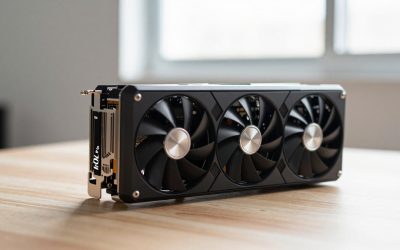
ASRock AMD Radeon RX 6600 Challenger D 8GB GDDR6 DisplayPort 14Gbps HDMI 0dB Silent Cooling 128-bit 7680 x 4320 Dual Fan Graphics Card PCI Express 4.0 x8 8-pin
Targeted squarely at budget-conscious competitive gamers, this card is a stellar entry point for 1080p MOBA action. According to historical launch benchmarks published by TechPowerUp and Hardware Unboxed, the RX 6600 delivers approximately 140 to 180 FPS at 1080p Maximum settings in Dota 2, easily driving standard 144Hz esports displays. Stepping up to 1440p yields a respectable 90 to 120 FPS range, though complex late-game scenarios can cause drops. Pushing to 4K requires scaling visual settings down, rendering roughly 45 to 60 FPS. The primary drawback of this graphics card is its PCIe 4.0 x8 interface, which can slightly hamper performance on older PCIe 3.0 motherboards.
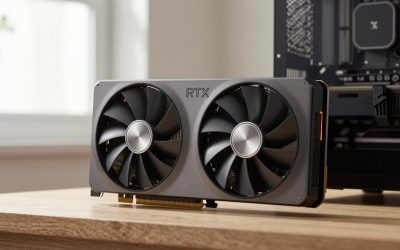
ASUS Dual GeForce RTX 4060 Ti EVO OC Edition 8GB GDDR6 (PCIe 4.0, 8GB GDDR6, DLSS 3, HDMI 2.1a, DisplayPort 1.4a, Axial-tech Fan Design, Auto-Extreme Technology), 3 Year Warranty
This mid-range card caters to players seeking higher frame rates on 1080p 240Hz monitors or smooth 1440p execution. Aggregated testing from Tom’s Hardware and Gamers Nexus demonstrates that the RTX 4060 Ti pushes between 200 and 240 FPS at 1080p Max settings. At 1440p, players can expect performance to comfortably hover between 130 and 170 FPS, keeping chaotic spell interactions fluid. Pushing native 4K resolution yields a playable 70 to 90 FPS range. The chief limitation here is the 8GB VRAM configuration, which restricts long-term headroom for broader AAA gaming beyond lighter competitive titles.
ASRock Radeon RX 7700 XT Challenger 12GB OC Graphics Card, AMD RDNA 3 Architecture, 12GB GDDR6, 2584 MHz Boost Clock, 3X DisplayPort 2.1, 1x HDMI 2.1, Dual Fan Cooling
Designed for enthusiasts wanting maximum 1440p rasterization efficiency, this card strikes an optimal balance between performance and price. Hardware Unboxed and TechSpot reviews indicate the RX 7700 XT produces roughly 220 to 260 FPS at 1080p, while hitting a solid 160 to 200 FPS at 1440p Ultra settings. It also tackles native 4K comfortably within the 85 to 110 FPS range, aided by its generous 12GB VRAM buffer. The main disadvantage is its higher total system power draw compared to competing architecture in the same performance bracket.
NVIDIA – GeForce RTX 4070 Super 12GB GDDR6X Graphics Card – Titanium/Black
Aiming for elite-tier performance, this GPU caters to competitive players running 240Hz+ 1440p monitors or entry-level 4K high-refresh displays. Benchmark runs collated by TechPowerUp and Gamers Nexus show the card generating 280 to 340 FPS at 1080p, completely saturating high-refresh displays. At 1440p, it averages 210 to 250 FPS, and comfortably manages 120 to 150 FPS at native 4K Ultra. The noticeable downside is its substantial price point, making it poor value if you only intend to play Dota 2 at 1080p resolution.
NVIDIA – GeForce RTX 4080 Super 16GB GDDR6X Gra
This flagship graphics card is intended for enthusiasts who demand flawless performance at 4K resolution on high-refresh OLED panels, or those who stream simultaneously. Comprehensive performance figures from Tom’s Hardware and TechSpot put this card at roughly 320 to 400 FPS at 1080p, 260 to 320 FPS at 1440p, and a massive 160 to 210 FPS at native 4K Maximum settings, eliminating GPU limitations. The obvious drawback is its extreme cost, rendering it massive overkill for strictly playing Dota 2 unless paired with heavy creative software workloads.
Platform Costs to Budget For
Building or upgrading a PC for Dota 2 involves more than just selecting a graphics card; platform balance is critical to unlocking full performance.
- Motherboard: Modern GPUs require adequate PCIe bandwidth. An entry-level B650 (AMD) or B760 (Intel) motherboard provides essential PCIe 4.0/5.0 support and healthy power delivery for under $150, whereas top-tier X670/Z790 boards add cost without improving Dota 2 frame rates.
- RAM: System memory directly affects 1% low frame times in Source 2. Upgrading from standard DDR4 to a dual-channel 32GB DDR5 kit (6000MHz C30) mitigates late-game stutter during heavy spell usage, adding roughly $100 to $120 to your total budget.
- Cooler: Because Dota 2 places heavy single-core loads on the CPU, maintaining cool processor temperatures is vital. A budget single-tower air cooler ($20–$30) handles entry-level CPUs, while mid-to-high-tier processors require dual-tower air coolers or liquid AIOs ($60–$100) to prevent thermal throttling during extended gaming sessions.
Bottleneck Check by Resolution
Resolutions drastically shift the performance burden between your processor and your graphics card in Dota 2.
1080p Resolution: At 1080p, Dota 2 is heavily CPU-bound. Even a mid-range card like the RX 6600 can output fast frame rates, but your peak FPS and 1% lows will depend primarily on single-core CPU power and memory latency. Investing in top-tier GPUs solely for 1080p esports offers diminishing returns.
1440p Resolution: This resolution offers the ideal balance. The rendering workload shifts moderately toward the GPU to process increased pixel density while maintaining high CPU frame output. Cards like the RX 7700 XT or RTX 4060 Ti flourish here, maximizing display refresh rates while preserving visual clarity.
4K Resolution: At 4K, the workload becomes distinctly GPU-bound. Pushing four times the pixels of 1080p stresses fill rates and frame buffer capacities. High-end GPUs like the RTX 4070 Super and RTX 4080 Super become necessary to maintain high refresh rates during chaotic late-game visual effects.
Our Verdict
For standard 1080p competitive play on a strict budget, the ASRock AMD Radeon RX 6600 offers unbeatable value, delivering steady high-refresh frame rates without requiring an expensive platform overall. Gamers playing at 1440p resolution will find the ultimate sweet spot in the ASRock Radeon RX 7700 XT; its 12GB VRAM buffer and robust rasterization handle intense late-game teamfights comfortably. Finally, if you are running a 4K high-refresh OLED monitor, the NVIDIA GeForce RTX 4070 Super provides elite frame delivery without jumping up to the severe price premium of ultra-enthusiast cards.
FAQ
Is Dota 2 more CPU or GPU intensive?
Dota 2 relies heavily on CPU performance, specifically single-core clock speeds and L3 cache size, to compute hero positioning, logic, and dynamic pathfinding. However, driving high graphics settings at 1440p or 4K with dense particle effects still requires a modern graphics card to prevent frame drops.
How much VRAM do I need for Dota 2 at 1440p?
Dota 2 is relatively efficient with video memory. Running the game at 1440p on Ultra settings typically consumes between 4GB and 6GB of VRAM. An 8GB graphics card is sufficient for present gameplay, though opting for 12GB provides comfortable headroom for background applications and multi-monitor setups.
Does upscaling like DLSS or FSR help frame rates in Dota 2?
FSR implementation in Dota 2 can boost frame rates if your graphics card is struggling at 1440p or 4K. However, because the game is frequently constrained by the CPU at lower resolutions, upscaling often yields negligible gains at 1080p while introducing minor visual softness around hero health bars and text UI.
What CPU should I pair with a mid-range GPU for Dota 2?
To prevent performance bottlenecks when pairing with mid-range graphics cards like the RTX 4060 Ti or RX 7700 XT, pair them with a modern 6-core or 8-core processor such as an AMD Ryzen 5 7600X or Intel Core i5-13600K. Processors featuring 3D V-Cache excel particularly well at smoothing out 1% low frame times in Source 2.
Sources and Methodology
The performance evaluations and approximate FPS ranges detailed in this guide are synthesized from extensive launch reviews, thermal analyses, and benchmark suites published by recognized independent hardware outlets. Specific performance data and architectural metrics were referenced from TechPowerUp, Tom’s Hardware, Gamers Nexus, Hardware Unboxed, and TechSpot. Frame rate expectations represent generalized performance ranges observed across real-world match replays and late-game stress tests within Valve’s Source 2 engine.