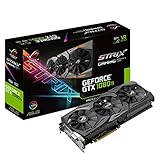
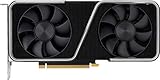
Rust is one of the strangest games to shop a graphics card for. Its Unity engine leans hard on a single CPU thread when you are near a populated monument or a large base, so a $1,000 GPU paired with an aging six-core chip will still stutter. At the same time, the game’s texture streaming, dense foliage, and long draw distances chew through VRAM and shader throughput at 1440p and 4K. The right pick is therefore about balance: a card strong enough that the CPU, not the GPU, sets your frame rate, on a platform that leaves room to upgrade later. Below are five cards that hit that balance at different budgets, plus the platform costs most guides forget to mention.
Quick Picks
| Pick | Tier | Why |
|---|---|---|
| Intel Arc B580 12GB | Budget 1080p | 12GB of VRAM at an entry price, enough for high textures |
| Sapphire Pulse Radeon RX 9060 XT 16GB | Best value 1080p/1440p | 16GB buffer and FSR 4 for smooth 1440p at mixed settings |
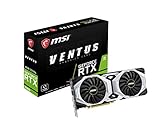
| MSI GeForce RTX 5070 Ventus 3X OC 12G | Sweet spot 1440p | DLSS 4 and strong raster for 1440p high refresh |
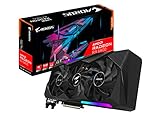
| Gigabyte Radeon RX 9070 XT Gaming OC 16G | High-end 1440p/4K entry | Near-flagship raster per dollar with 16GB |
| ASUS TUF Gaming GeForce RTX 5080 16GB | 4K ultra | The realistic 4K card for Rust without flagship pricing |
How We Chose
We ranked cards by three things that matter specifically in Rust. First, raw rasterization performance, since the game has no ray tracing and upscaling is optional rather than mandatory. Second, VRAM capacity, because Rust’s texture pool at high or ultra settings comfortably exceeds 8GB at 1440p and stutters when it spills over. Third, platform fit: how much CPU and power supply you need to keep the card fed. Performance positioning reflects launch reviews from TechPowerUp, Hardware Unboxed, and Tom’s Hardware, translated into what those relative rankings mean for a CPU-sensitive Unity title.
As an Amazon Associate we earn from qualifying purchases at no extra cost to you.


Intel Arc B580 12GB
The Arc B580 is for players building a first PC or replacing a tired card on a tight budget. In TechPowerUp’s and Hardware Unboxed’s launch coverage it landed in the same neighborhood as the previous-generation mid-range cards at 1080p while carrying 12GB of VRAM, which is the part that matters for Rust’s texture streaming. Expect roughly 70-95 fps at 1080p on high settings on a typical server based on where the card sits in those reviews, and 50-65 fps at 1440p with medium shadows. It is not a 4K card in this game. The con: Intel’s driver overhead is noticeable on older or slower CPUs, and Rust already punishes weak CPUs, so pair it with a current six-core or better.
Sapphire Pulse Radeon RX 9060 XT 16GB
This is the card we would put in most Rust builds. The 16GB buffer means you can run ultra textures at 1440p without the hitching that 8GB cards show near large bases. Hardware Unboxed and TechSpot placed the RX 9060 XT 16GB roughly 15-25 percent ahead of the Arc B580 in their launch testing, which in Rust translates to around 90-115 fps at 1080p high and 65-85 fps at 1440p high. FSR 4 quality mode makes 1440p ultra viable. At 4K you are looking at 40-55 fps with upscaling, which is playable but not the target. The con: a 128-bit memory bus limits scaling at 4K, so it is a 1440p card at heart.
MSI GeForce RTX 5070 Ventus 3X OC 12G
The RTX 5070 is for 1440p players with a 144Hz or 165Hz monitor who want to stay near the refresh ceiling. TechPowerUp’s launch review put it roughly 20-30 percent ahead of the RX 9060 XT class in rasterization, and Rust benefits from that headroom in busy zones. Based on that positioning, expect around 100-130 fps at 1440p high, and 60-75 fps at 4K high with DLSS 4 quality. At 1080p the card is CPU-bound in Rust on all but the fastest processors, so the money is wasted there. The con: 12GB of VRAM is enough today at 1440p ultra, but it leaves less margin than the 16GB AMD cards if Facepunch keeps pushing texture quality.
Gigabyte Radeon RX 9070 XT Gaming OC 16G
The RX 9070 XT is the card for players who want 1440p ultra at high refresh or 4K at high settings without spending flagship money. Hardware Unboxed and Gamers Nexus found it trading blows with the RTX 5070 Ti in rasterization, and that is what Rust cares about. Extrapolating from their results, you can plan on 130-160 fps at 1440p ultra and 75-95 fps at 4K high, with FSR 4 pushing 4K ultra into a comfortable range. Sixteen gigabytes covers any texture setting the game offers. The con: it draws over 300W under load, so budget a quality 750W or 850W power supply and a case with real airflow.
ASUS TUF Gaming GeForce RTX 5080 16GB
If you play Rust on a 4K 144Hz display and refuse to compromise, the RTX 5080 is the sensible ceiling. TechPowerUp’s and Tom’s Hardware’s launch reviews put it 15-25 percent ahead of the RX 9070 XT and RTX 5070 Ti in rasterization, and DLSS 4 with multi-frame generation adds smoothness in large-scale fights. Based on that, expect 95-120 fps at 4K high natively and comfortably more with upscaling, while 1440p is entirely CPU-limited even on a top X3D processor. The con: price. In a game where the CPU dictates so much of your experience, the money spent moving from an RX 9070 XT to an RTX 5080 might do more good in a Ryzen 7 9800X3D.
Platform Costs to Budget For
Rust magnifies platform weaknesses, so budget for the rest of the system before stretching for a faster GPU. A B650 or B850 board for AMD, or a B860 board for Intel Core Ultra, gives you a full-speed graphics slot and enough power delivery for any mainstream CPU. RAM matters more here than in most shooters: 32GB of DDR5-6000 is the practical floor because the Rust client alone can pass 16GB on high-population servers. Cooling is the quiet expense. A 120mm tower handles a Ryzen 5 or Core Ultra 5, but the X3D chips Rust rewards deserve a dual-tower air cooler or 240mm liquid cooler. For the RX 9070 XT and RTX 5080, plan on an 850W ATX 3.1 power supply.
Bottleneck Check by Resolution
At 1080p, Rust is CPU-bound on everything past the Arc B580. A Ryzen 5 9600X or Core Ultra 5 245K will cap frame rates around 120-150 fps in busy areas whether you own an RX 9060 XT or an RTX 5080, so a faster GPU buys nothing except headroom for a future monitor. At 1440p the balance shifts: the RX 9060 XT and RTX 5070 become the limiting component on high settings, which is what you want. At 4K every card except the RTX 5080 is GPU-bound, and even the RTX 5080 hands the limit back to the CPU in a hundred-player fight at a monument. Buy the CPU first at 1080p, both together at 1440p, and the GPU first at 4K.
Our Verdict
For most Rust players in 2026 the Sapphire Pulse Radeon RX 9060 XT 16GB is the right call: enough VRAM for ultra textures, enough shader power for 1440p, and cheap enough that you can afford the fast CPU the game demands. Step up to the RTX 5070 for high-refresh 1440p, and to the RX 9070 XT if 4K is the goal. The RTX 5080 is only worth it once your CPU is already an X3D part.
FAQ
Is Rust more CPU or GPU dependent?
CPU, especially at 1080p and in populated areas. The game’s Unity engine keeps most of its simulation on a single thread, so a fast single-core processor with a large cache lifts frame rates more than a GPU upgrade at lower resolutions.
How much VRAM does Rust need?
Eight gigabytes works at 1080p on high textures, but 1440p ultra textures regularly exceed 10GB in the client. Twelve gigabytes is the comfortable floor and 16GB gives room for future updates.
Does DLSS or FSR help in Rust?
Yes, both are supported and both help most at 1440p and 4K where the GPU is the limit. At 1080p, upscaling does little because the CPU is already the bottleneck.
Can the Arc B580 run Rust at 1440p?
It can at medium to high settings in the 50-65 fps range, but it is happiest at 1080p. If 1440p is your target, the RX 9060 XT 16GB is the better spend.
Sources and Methodology
The performance ranges in this guide are approximate and reflect the relative positioning of each card in publicly available launch reviews from TechPowerUp, Hardware Unboxed, TechSpot, Tom’s Hardware, and Gamers Nexus. Those outlets do not routinely benchmark Rust in their GPU review suites, so we translated their rasterization rankings across comparable Unity and open-world titles into expected Rust ranges, accounting for the game’s known CPU sensitivity. None of the figures were measured by this site, and real-world results will vary with server population, settings, and processor choice.
Ready to decide? Our #1 pick for 2026 is the Intel Arc B580 12GB.
Live price & availability on Amazon.