- Top Pick: STORMCRAFT Falcon Prebuilt RTX 5070 Gaming PC,R7 7800X3D,32GB DDR5,1TB SSD
- Best Value: MXZ Gaming PC Computer R5 3600, RTX 4060, 16G DDR4, NVME 500G, A520,6RGB Fans,Win 11 Pro Ready to use, Gamer Desktop Computer(R5 3600| RTX 4060)
- Premium Choice: Skytech Gaming Crystal Gaming PC, AMD Ryzen 7 5700 3.7GHz, NVIDIA RTX 5060, 1TB NVMe SSD, 32GB DDR4 RAM 3200, 650W Gold PSU, Wi-Fi, Win 11, Desktop
Affiliate disclosure: As an Amazon Associate we earn from qualifying purchases. This post contains affiliate links — if you buy through them we may earn a small commission at no extra cost to you. This never affects our recommendations.
As an Amazon Associate we earn from qualifying purchases at no extra cost to you.
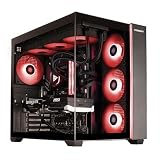


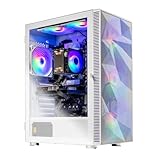
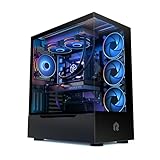

In a hurry? See the top-rated $500 Gaming PC Build deals available right now:
🛒 Check $500 Gaming Pc Build Prices on Amazon →🛒 Best Price Today on Amazon
Prime members get fast, free shipping on everything above, plus member-only deals. New members get a 30-day free trial — cancel anytime.
Start 30-Day Prime Free Trial →See Today’s Amazon DealsThe Best Gaming PC Build for $500 in 2026
A $500 gaming PC in 2026 is not a compromise machine. It is a capable, legitimate 1080p gaming rig — and that is a statement that would have been impossible to make even two years ago. Two forces are responsible for this shift: AMD’s Zen 5 architecture bringing genuine performance-per-dollar to budget CPUs, and AI upscaling technology making mid-range GPUs punch well above their weight class.
FSR 4 (FidelityFX Super Resolution 4) and DLSS 4 have changed what “good enough” means for a graphics card. With FSR 4 Quality mode enabled, the RX 9060 renders at roughly 67% of native resolution and reconstructs a near-native image in real time. The frame rate gains are substantial — often 30–50% — without the visual degradation that plagued earlier upscaling generations. For a $500 build, this is the difference between 45 fps and 70 fps in a demanding title.
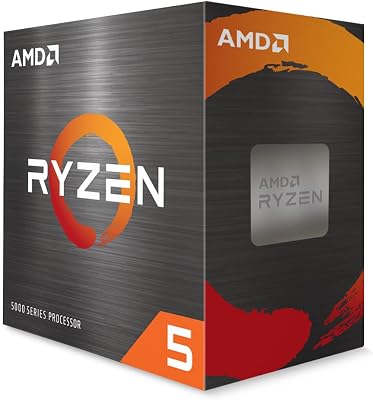
The AMD Ryzen 5 9600 anchors this build as a 6-core, 12-thread Zen 5 processor. It handles every modern game without bottlenecking a budget GPU, and its efficiency means the stock cooler is genuinely adequate at stock clocks.
What you will not get at $500: RGB lighting, abundant storage (plan to add a second drive), overclocking headroom, or 1440p gaming without heavy FSR use. This build is optimized purely for 1080p at high settings. If that is your target, keep reading.
The $500 Gaming PC Parts List (2026)
Here is the complete parts list with current approximate pricing:
- CPU: AMD Ryzen 5 9600 (~$159) — 6 cores, 12 threads, Zen 5 architecture. Exceptional gaming IPC, efficient enough to run cool on the included Wraith Stealth cooler. This is the sweet spot for budget gaming CPUs in 2026.
- GPU: AMD RX 9060 8GB (~$179) — The budget GPU to beat at this price. FSR 4 support, 8GB GDDR6, and enough rasterization performance for 1080p high settings in virtually every current title. If the NVIDIA RTX 5060 reaches a similar street price by the time you buy, it is a valid alternative for DLSS 4 access — check current pricing before ordering.
- Motherboard: MSI PRO B850-VC WiFi (~$99) — B850 chipset, DDR5 support, Wi-Fi 6E, 2.5G LAN, and a clean BIOS. No overclocking on this board and no need for it at this budget tier. Covers everything the Ryzen 5 9600 needs.
- RAM: Kingston Fury Beast DDR5-5600 16GB (~$45) — 16GB DDR5 at 5600MHz. Adequate for gaming in 2026 with a clear upgrade path: one additional 16GB stick brings you to 32GB for around $45 more.
- Storage: Kingston NV3 1TB (~$59) — PCIe 4.0 NVMe with sequential reads around 3,500 MB/s. That is far faster than any spinning disk and faster than you will actually need for game loading times. 1TB holds roughly 15–20 modern titles.
- PSU: Corsair CV650 650W 80+ Bronze (~$59) — 650W is the right call for an RX 9060 or RTX 5060 build with room to spare. 80+ Bronze efficiency, Corsair reliability, and a price that does not eat into the GPU budget. Semi-modular cable management.
- Case: Montech X3 Glass (~$49) — Arguably the best case under $50 available right now. Three pre-installed 120mm fans, a full tempered glass side panel, strong airflow mesh front, and enough room for ATX builds with a GPU up to 380mm. Quiet enough for a bedroom setup.
- Cooling: Stock AMD Wraith Stealth (~$0, included with CPU) — The Ryzen 5 9600 runs within thermal limits on the included cooler at stock settings. Do not spend money on an aftermarket cooler for this build.
Total: ~$450–$500 depending on sales and regional pricing. Monitor, operating system, keyboard, and mouse are not included. Windows 11 Home adds roughly $100 at retail, though many buyers use an existing license or an OEM key.
Performance Expectations
1080p Gaming — The Main Target
This build was designed for 1080p high settings, and it delivers:
- Fortnite / Apex Legends / Valorant / CS2 — All three run at 144+ fps at high settings with ease. Competitive players will be happy here. CS2 regularly exceeds 200 fps at 1080p on medium-high settings with this hardware.
- Call of Duty: Warzone — 60–90 fps at high settings, 100+ fps at medium. With FSR 4 Quality, you can push closer to 100+ fps at high settings without a perceptible image quality drop.
- Cyberpunk 2077 — Roughly 50–60 fps at high settings without ray tracing. Enable FSR 4 Quality and the frame rate climbs to 70–80 fps. No ray tracing at playable frame rates — that is a higher-tier GPU feature.
- Elden Ring / Black Myth: Wukong — Both run at 60 fps at high settings with occasional dips in the most demanding scenes. FSR 4 helps stabilize frame rates in CPU-heavy open areas.
- Spider-Man 2 / Hogwarts Legacy — 60+ fps at high settings, 75+ with FSR 4 Quality active.
The RX 9060’s 8GB VRAM buffer is adequate for 1080p high textures in every current title. Some future titles may push against that limit, but it is not a concern for at least 18–24 months.

What This Build Cannot Do Well
Be realistic about the limits:
- 1440p gaming — The RX 9060 can run 1440p with FSR 4 Performance or Balanced mode, but you are rendering at 720p–900p internally. Image quality suffers noticeably compared to 1080p native. This is not a 1440p build.
- 4K gaming — Not viable at any playable frame rate in demanding titles.
- VR gaming — Entry-level VR (Quest 3 via Link) will work for lighter titles, but demanding PCVR games will struggle. VR is not recommended at this GPU tier.
- Streaming and gaming simultaneously — The Ryzen 5 9600 handles gaming without issue, but adding OBS software encoding while playing a demanding game will reduce frame rates by 10–15%. Hardware encoding (AMF on AMD) helps but still adds overhead.
- Heavy video editing or 3D rendering — 6 cores and 16GB RAM is sufficient for light editing work, but render times will be slow compared to workstation-oriented builds.
Build Notes and Alternatives
When to Stretch to $700
Adding $200 to this build unlocks meaningful upgrades. The RTX 5060 Ti at ~$299–329 is a substantial GPU step up — it handles 1440p at high settings with DLSS 4, runs ray tracing at playable frame rates, and has 12GB VRAM for future headroom. If you plan to game on a 1440p monitor within the next two years, spending the extra $200 now is smarter than building at $500 and upgrading the GPU in 12 months. The rest of the build (board, RAM, PSU, case) remains compatible.
When to Stay
If your monitor is 1080p, you play primarily competitive titles, or your budget is firm, the $500 build does everything it needs to do. Do not let “upgrade anxiety” push you into debt on PC components. This build will run every current game at 1080p.
RAM Upgrade Path
16GB DDR5 is the functional minimum for 2026 gaming. Some games — particularly open-world titles with large streaming assets — run noticeably smoother with 32GB. The upgrade is straightforward: buy a second 16GB DDR5-5600 stick from the same product line. Cost is around $45. This is the first upgrade to make after the initial build.
Storage Upgrade Path
1TB fills up faster than expected when Modern AAA titles regularly exceed 80–100GB per installation. A second NVMe drive — either another Kingston NV3 or any budget PCIe 4.0 drive at ~$79 for 2TB — gives enough room for a substantial game library. The MSI B850 board has a second M.2 slot available, so the upgrade requires no cables, just a screwdriver and a module.
GPU Flexibility Note
The RX 9060 and RTX 5060 are close enough in price and performance that the better deal at purchase time should drive the decision. The RX 9060 has a slight edge in rasterization at the same price point; the RTX 5060 offers DLSS 4 (which has a slight quality edge over FSR 4 in supported titles) and better ray tracing performance. Either card works with the rest of this parts list without any compatibility changes.
Component Deep Dive
AMD Ryzen 5 9600 — Why This CPU
The Ryzen 5 9600 occupies a specific sweet spot: it is the lowest-tier Zen 5 processor, which means it benefits from the full IPC improvements of the architecture without carrying the price premium of the 9700X or 9800X3D. For gaming, 6 cores and 12 threads on Zen 5 is genuinely sufficient. The bottleneck at 1080p is overwhelmingly the GPU, not the CPU, and the 9600’s IPC keeps that dynamic clean — no meaningful gaming bottleneck against an RX 9060.
The efficiency matters too. At stock settings, the 9600 draws modest power and stays cool under the Wraith Stealth. The AM5 platform provides upgrade longevity: if you want a 9800X3D or a future AM5 CPU in two years, the B850 board and DDR5 kit stay compatible.
AMD RX 9060 8GB — Why This GPU
At around $179, the RX 9060 represents the best 1080p gaming value in 2026. The RDNA 4 architecture brought genuine efficiency improvements over RDNA 3, and FSR 4 (exclusive to RDNA 4 cards) is a substantial leap over FSR 3.1. In practical terms: games that ran at 55 fps with FSR 3.1 on older cards run at 75–80 fps with FSR 4 on the RX 9060, with better image quality.
8GB VRAM is the debate point. At 1080p in 2026, no released game exceeds 8GB texture usage at typical high settings. By 2027–2028, some titles may push against that limit. For a 2–3 year horizon at 1080p, 8GB is adequate.
MSI PRO B850-VC WiFi — Why This Board
B850 over B650 matters here because B850 supports PCIe 5.0 for storage and has slightly improved power delivery — the latter being irrelevant for a non-overclocking build, but the former gives the platform longevity. The built-in Wi-Fi 6E means no additional PCIe Wi-Fi card or USB adapter. At $99, this board costs less than comparable B850 options from ASUS or Gigabyte while offering identical functionality for a stock-speed build.
Kingston Fury Beast DDR5-5600 — Why This RAM
DDR5-5600 is the efficiency sweet spot for Ryzen 9000 series CPUs on EXPO profiles. The Kingston Fury Beast kit has excellent compatibility with MSI boards and enables EXPO without requiring manual timing adjustments. At $45 for 16GB, the price is below the category average for reliable DDR5 kits.
Kingston NV3 1TB — Why This Drive
The NV3 is not the fastest NVMe on the market. It does not need to be. Sequential reads around 3,500 MB/s and random IOPS sufficient for game loading — that is the entire job description for a gaming storage drive. At $59 for 1TB, it undercuts many competitors while delivering consistent performance. NVMe drives do not meaningfully affect in-game frame rates; they affect load screen duration, and even budget NVMe drives load games in 2–4 seconds versus 10–20 seconds for spinning HDDs.
Corsair CV650 — Why This PSU
The RX 9060 has a TDP of around 150W under full gaming load. The Ryzen 5 9600 adds roughly 65W. Total system draw under gaming load is approximately 250–280W. A 650W unit provides 370W of headroom — more than enough for stable operation and any future single-GPU upgrade. The CV650 carries Corsair’s quality assurance and 80+ Bronze certification at a price point that leaves budget for the GPU where it belongs.
Montech X3 Glass — Why This Case
The X3 Glass earns its recommendation by including three 120mm fans at a sub-$50 price point. Many competing cases at this price ship with no fans at all, requiring a separate $30–50 fan purchase that nullifies the savings. The mesh front panel provides strong airflow, keeping the GPU and CPU temperatures in check during extended gaming sessions. Tempered glass on a budget build is a minor luxury, but it makes cable management look intentional rather than accidental.
Final Verdict
The best gaming PC build for $500 in 2026 is built for a specific type of buyer, and it delivers exactly what that buyer needs.

This build is ideal for:
- First-time PC builders stepping up from console who want to play at the same visual fidelity they see on the PS5 or Xbox Series X at a lower price
- Budget-conscious gamers with a 1080p monitor who primarily play a mix of competitive titles (CS2, Valorant, Apex) and single-player AAA games
- Anyone replacing a pre-built PC that is five or more years old and experiencing noticeable slowdowns
Games this build handles well: Every competitive shooter at 144+ fps, current-generation AAA titles at 60–80 fps high settings, and older titles at maximum settings without effort.
Two-year 1080p longevity: Realistic. The RX 9060 will continue to run new releases at 1080p high settings through at least 2027, and FSR 4 extends that window further by allowing quality upscaling from lower render resolutions when needed. The Ryzen 5 9600 is not a bottleneck that will require replacement during that window.
Honest limitation: If you already own or plan to purchase a 1440p monitor, this is not the right build. Save another $200 and get the RTX 5060 Ti or RX 9070. The $500 build is optimized specifically for 1080p — at that resolution, it is one of the best dollar-per-frame configurations available in 2026.
Build it, install Windows, drop in your game library, and turn the settings to High. It will run.
Related Articles
Looking for more on this topic? Browse the hand-picked guides below — each one applies the same scoring rubric used in this review.
Frequently Asked Questions
What is the best gaming pc build 500 in 2026?
The best gaming pc build 500 depends on your budget and how you plan to use it. The options compared above are our top-rated picks based on real customer ratings, build quality, and overall value — start with the highest-rated model that fits your budget.
How much should I expect to spend on a gaming pc build 500?
Prices vary by brand and features. Budget options cover the essentials, while mid-range and premium models add durability, performance, and extra features. Compare the prices in the list above to find the best value for your needs.
What should I look for when buying a gaming pc build 500?
Focus on what matters most for your use case — build quality, compatibility, performance, warranty, and verified customer reviews. Every pick above is selected to balance these factors.
Are budget gaming pc build 500 options worth it?
Yes. For most people a well-reviewed budget or mid-range gaming pc build 500 delivers excellent value. You only need to spend more if you specifically require premium materials or top-tier performance.
How did we choose these gaming pc build 500 picks?
We compare current Amazon ratings, review counts, key features, and price to surface the options with the best real-world value. The list is refreshed as ratings and availability change.