- Top Pick: Skytech Gaming Archangel 5 Gaming PC, Intel i5 14400F 2.5GHz, NVIDIA RTX 5060, 1TB NVMe SSD, 16GB DDR5 RAM 6000, 750W Gold PSU, Wi-Fi, Win 11, Desktop
- Best Value: Skytech Gaming Archangel 5 Gaming PC, AMD Ryzen 7 7700 3.8GHz, NVIDIA RTX 5060, 1TB NVMe SSD, 32GB DDR5 RAM 6000, 750W Gold PSU, Wi-Fi, Win 11, Desktop
- Premium Choice: Skytech Gaming King 95 Gaming PC, AMD Ryzen 7 9850X3D 4.7GHz, NVIDIA RTX 5080 16GB VRAM, 2TB NVMe SSD, 32GB DDR5 RAM 6000, 850W Gold ATX 3 PSU, 360 ARGB AIO, Wi-Fi 5, Windows 11, Desktop
Affiliate disclosure: As an Amazon Associate we earn from qualifying purchases. This post contains affiliate links — if you buy through them we may earn a small commission at no extra cost to you. This never affects our recommendations.
- Budget Breakdown: Where Your $500 Should Go
- Option 1: Console + Monitor + Headset Setup (~$500)
- Option 2: Prebuilt PC + Essential Peripherals (~$500)
- Option 3: Used/Refurb Gaming Laptop + Accessories (~$500)
- The Core Peripherals: Best Picks for Any Setup
- FAQ
- Verdict
- Related Articles
- Frequently Asked Questions
- Related Articles
As an Amazon Associate we earn from qualifying purchases at no extra cost to you.
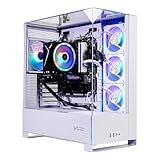
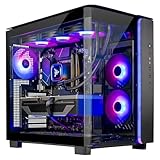


Getting into PC gaming doesn’t require a second mortgage. In 2026, $500 buys you a genuinely capable gaming rig — one that handles popular titles like Fortnite, Valorant, Minecraft, and even older AAA games at respectable settings. The trick is knowing where to spend and where to cut.
This guide isn’t a ranked product list. It’s a practical blueprint covering three different paths to a complete gaming setup at or near $500 — console hybrid, prebuilt PC, and refurb laptop — plus peripheral picks that pair well with any of them. By the end, you’ll know exactly how to allocate your budget and which specific products give you the best return.
In a hurry? See the top-rated Gaming Setup Under $500 deals available right now:
🛒 Check Gaming Setup Under $500 Prices on Amazon →🛒 Best Price Today on Amazon
Prime members get fast, free shipping on everything above, plus member-only deals. New members get a 30-day free trial — cancel anytime.
Start 30-Day Prime Free Trial →See Today’s Amazon DealsBudget Breakdown: Where Your $500 Should Go
Before buying anything, understand the tradeoffs. Every setup type splits the budget differently between the “compute” side (what runs your games) and the “interface” side (monitor, peripherals).
| Setup Type | Compute Budget | Monitor | Peripherals | Stretch? |
|---|---|---|---|---|
| Console + Monitor + Headset | $300 (console) | $150 | $50 | No |
| Prebuilt PC + Peripherals | $350–$400 | $0 (reuse) | $100–$150 | Slight |
| Refurb Laptop + Accessories | $300–$350 | $0 (built-in) | $100–$150 | No |
General allocation logic for a PC-centric build:
| Component | Suggested Allocation |
|---|---|
| PC / Console / Laptop | 60–70% (~$300–$350) |
| Monitor | 25–30% (~$150–$200) |
| Mouse | 6–8% (~$35–$45) |
| Keyboard | 6–7% (~$30–$40) |
| Headset | 10–12% (~$50–$70) |
The monitor and peripherals budget is shared across all three setup paths. If you already own a monitor, you can redirect $150–$200 toward a better PC or splurge slightly on peripherals.
Option 1: Console + Monitor + Headset Setup (~$500)
Best for: Players who want plug-and-play simplicity, couch gaming, or who play titles exclusive to PlayStation or Xbox ecosystems.
A used PlayStation 5 Digital Edition or Xbox Series S sits in the $250–$300 range on the secondhand market in 2026. Pair that with a solid 1080p monitor and a good headset and you have a complete gaming station under $500.
The Build
- Console: Xbox Series S (new, ~$299) or used PS5 Digital (~$279–$300)
- Monitor: Gigabyte M27Q (~$199) — 27-inch, 1440p, 170Hz, IPS; technically overkill for console but future-proofs you
- Headset: HyperX Cloud II (~$69)
Total: ~$567–$568 — slightly over, but manageable if you catch a console sale or go used.
To stay under $500 strictly
Skip the M27Q and grab a 1080p 27-inch monitor in the $120–$140 range. Console gaming at 1080p/60fps is still excellent, and saving $60 gives you room for a proper headset or a second controller.
Why this path works
Consoles have zero driver headaches, guaranteed game compatibility, and a curated ecosystem. If you’re not interested in tinkering with hardware or software, this is the lowest-friction path to gaming.
Limitation: You’re locked into the console ecosystem. PC game deals (Steam sales, Epic freebies, Humble Bundle) are off the table, and upgrades later mean buying a whole new console.
Option 2: Prebuilt PC + Essential Peripherals (~$500)
Best for: Players who want access to the PC ecosystem — Steam, mods, emulation, broader peripheral support — without building from scratch.

The prebuilt gaming PC market has improved significantly. Where budget prebuilts once meant embarrassing thermal paste jobs and junk PSUs, brands like SkyTech now ship systems with real GPUs and reasonable airflow.
The Build
- PC: SkyTech Blaze (~$549) — AMD Ryzen 5, RX 6600 XT or equivalent, 16GB RAM, 500GB SSD
- Mouse: Logitech G305 (~$39)
- Keyboard: Redragon K552 (~$35)
Total (without monitor): ~$623 — stretch budget, but if you already own a monitor or TV with an HDMI port, this is workable.
Total (with M27Q monitor): ~$822 — over budget.
How to get this under $500
The SkyTech Blaze frequently drops to $449–$479 during sales. If you can catch a deal:
- PC at $449 + G305 ($39) + K552 ($35) = $523 — add headset and you’re at $592.
Alternatively, hunt Facebook Marketplace or eBay for prebuilt systems with a GTX 1660 Super or RX 580 in the $250–$300 range. Add the peripherals below and a monitor later when budget allows.
Why this path works
Access to PC game sales alone recovers the cost premium over console within 12–18 months of gaming. The upgrade path is also cleaner — swap the GPU, add RAM, upgrade storage without replacing the whole system.
Limitation: The SkyTech Blaze is a stretch above $500. Without a sale or monitor reuse, this path requires either compromise or patience.
Option 3: Used/Refurb Gaming Laptop + Accessories (~$500)
Best for: Players who game in multiple locations, students, or anyone without a dedicated desk setup.
A refurbished gaming laptop with a GTX 1650 or RTX 3050 sits in the $300–$380 range from certified refurb sellers on Amazon, Newegg Renewed, or Back Market. These machines handle esports titles (Valorant, CS2, Apex, Rocket League) at medium-high settings, and even some AAA games at 1080p/medium.
The Build
- Laptop: Certified refurb ASUS TUF Gaming or Lenovo IdeaPad Gaming 3 w/ GTX 1650 (~$299–$350)
- Mouse: Logitech G305 (~$39) — wireless, no dongle bulk
- Keyboard: Redragon K552 (~$35) — for desk sessions
- Headset: HyperX Cloud II (~$69)
Total: ~$442–$493 — solidly under $500, with the laptop’s built-in screen saving the monitor budget entirely.
Why this path works
The built-in display is a free monitor. That $150–$200 in saved display budget either stays in your pocket or goes directly into better peripherals and a quality headset. You get genuine portability, and certified refurb programs typically include 90-day to 1-year warranties.
Limitation: Laptop GPUs underperform their desktop counterparts. A GTX 1650 laptop is roughly equivalent to a desktop GTX 1060. Thermals throttle under sustained load, and you can’t upgrade the GPU later.
The Core Peripherals: Best Picks for Any Setup
Whatever path you choose, these peripherals work across all three options and represent the best value at their respective price points in 2026.

Monitor: Gigabyte M27Q
Gigabyte M27Q — ~$199 on Amazon
The M27Q is the monitor recommendation that’s stood the test of time in budget gaming circles. It delivers 1440p resolution at 170Hz on an IPS panel — a combination that usually costs $280+. Colors are accurate, response time is tight at 0.5ms (GtG), and the KVM switch is a legitimate quality-of-life feature for multi-device setups.
Skip if: you’re on the console path and strictly need to stay under $500. In that case, a 1080p IPS at $120–$140 does the job.
Mouse: Logitech G305
Logitech G305 — ~$39 on Amazon
The G305 runs on HERO sensor technology — the same sensor family found in Logitech’s $150 flagship mice. It’s wireless (2.4GHz LIGHTSPEED dongle, not Bluetooth), runs on a single AA battery for approximately 250 hours, and weighs 99g. For competitive titles like Valorant or CS2, a precise wireless mouse at this price is almost unfair.
The G305 is the peripheral most likely to stay in your setup even after upgrading everything else.
Keyboard: Redragon K552
Redragon K552 — ~$35 on Amazon
Mechanical switches at $35 used to be a red flag. Redragon has changed that. The K552 uses genuine mechanical switches (Outemu Brown or Red depending on variant), has a compact tenkeyless layout that frees up desk space for mouse movement, and is solidly built for its price. RGB lighting, N-key rollover, and a braided cable round out the package.
If you’re used to membrane keyboards, the tactile feedback alone will feel like an upgrade.
Headset: HyperX Cloud II
HyperX Cloud II — ~$69 on Amazon
The Cloud II has been a benchmark for budget gaming audio since it launched, and in 2026 it remains one of the best value propositions in headsets. 53mm drivers, passive noise isolation from the leatherette ear cushions, a detachable noise-canceling microphone, and an included USB audio mixer for virtual 7.1 surround. Works on PC, console, and mobile via 3.5mm.
Sound signature leans slightly warm — slightly bass-forward but not muddy. Positional audio is clear enough for competitive play.

FAQ
Can you actually game at 1080p/60fps on a $500 budget in 2026?
Yes, reliably. A prebuilt with an RX 6600 XT or GTX 1660 Super handles most titles at 1080p high settings above 60fps. Even the laptop path with a GTX 1650 manages 1080p/medium in most games and 1080p/high in esports titles. The Xbox Series S runs 1080p/60fps on virtually every game in its library.
Is it better to buy a prebuilt or build your own PC on a $500 budget?
Building your own is typically cheaper per component but riskier at this budget. Component prices fluctuate, and sourcing a reliable PSU, case, and GPU within $350–$400 without experience is difficult. For first-time buyers, a prebuilt removes compatibility risk. If you’ve built before or are willing to hunt secondhand markets for 2–3 weeks, self-builds can squeeze more GPU performance for the same money.
Should I prioritize monitor refresh rate or resolution on a $500 budget?
Depends on your game genre. Competitive/esports players (CS2, Valorant, Apex) benefit more from high refresh rate (144Hz+) at 1080p than from 1440p at lower Hz. Casual/single-player gamers get more visual benefit from 1440p resolution. The Gigabyte M27Q covers both — but if budget forces a choice, prioritize Hz for competitive, resolution for single-player.
What’s the single biggest upgrade you can make after the $500 build?
For the laptop path: an external SSD or additional RAM if the system supports it. For the console path: a quality monitor upgrade (the M27Q). For the prebuilt PC path: a GPU upgrade within 12–18 months as secondhand RTX 3060 / RX 6700 prices normalize. Peripherals (your G305 and Cloud II) won’t need replacing for 3–5 years.
Verdict
There’s no single “best” $500 gaming setup — there’s the best one for your situation.
Choose the console path if you want simplicity, couch gaming, or platform-exclusive titles. Catch a Series S on sale and you’re set with minimal effort.
Choose the prebuilt PC path if you want the PC ecosystem — cheaper games, mods, emulation, and a real upgrade path. The SkyTech Blaze is a slight budget stretch, but catching it on sale or hunting a used equivalent brings it into range. This path pays dividends long-term.
Choose the refurb laptop path if portability matters or you don’t have a permanent desk setup. The display savings offset the GPU compromise, and you end up with a complete setup that travels with you.
Regardless of path, the peripheral stack stays the same: the Gigabyte M27Q, Logitech G305, Redragon K552, and HyperX Cloud II represent some of the best value-per-dollar in gaming hardware right now. These aren’t budget compromises — they’re the products experienced PC gamers actually recommend.
Start with the path that fits your life. Upgrade from there.
Related Articles
Looking for more on this topic? Browse the hand-picked guides below — each one applies the same scoring rubric used in this review.
Frequently Asked Questions
Can $500 buy a genuinely playable gaming setup?
Yes, if expectations are calibrated. A used or entry-level tower with a modern integrated GPU or a previous-generation discrete card handles 1080p esports titles at high frame rates and AAA games at medium settings around 60 FPS. Pair it with a budget 1080p 100Hz monitor and basic peripherals.
Should I buy used parts at this budget?
The used market is where $500 stretches furthest. Previous-generation graphics cards, cases, and monitors offer excellent value second hand. Avoid used power supplies and heavily worn storage, where degradation is invisible until failure. Test everything immediately on receipt while you still have recourse with the seller.
How should I divide the money?
Roughly $330 to $370 for the computer, $90 to $110 for a 1080p monitor at 75Hz or better, and the remainder for a keyboard, mouse, and headset. Peripherals can be very cheap initially and upgraded later without affecting game performance, so protect the PC portion of the budget first.
Is a console better value at this price?
For pure gaming performance per dollar, a current console is often stronger at $500. A PC wins on game library breadth, free online play, modding, emulation, and doubling as a work machine. Choose based on whether you need the versatility, not on raw frame rates alone.
What should I upgrade first as budget allows?
The graphics card gives the largest single jump in game performance, followed by moving from 8GB to 16GB of RAM and from a hard drive to an SSD if either applies. Upgrade the monitor to 144Hz only once your machine can actually produce frame rates above 60 consistently.
Ready to decide? Our #1 pick for 2026 is the Setup Type.
Live price & availability on Amazon.