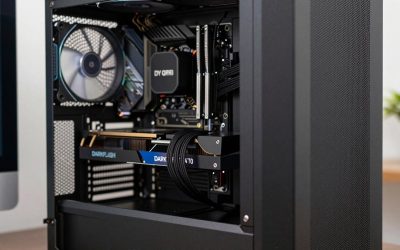
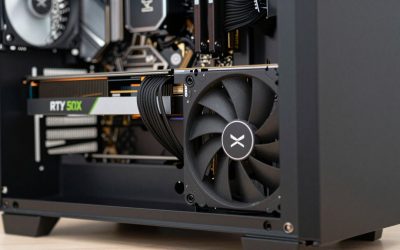
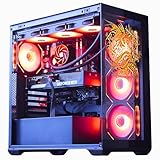
- Top Pick: The Horizon Autherium Dragon RGB I9 RTX Gaming PC || 64GB RAM || 5TB Storage || Core I9 Upto 5.4Ghz || RTX 5070 OC || Windows 11 PRO || 360MM AIO || 2.4GB/s WiFi, VR, Gaming Ready Desktop Computer
- Best Value: ASUS TUF Gaming 1000W Gold (1000 Watt, ATX 3.1 Compatible Fully Modular Power Supply, 80+ Gold Certified, Military-Grade Components, Dual Ball Bearing, Axial-tech Fan, PCB Coating, 10 Year Warranty)
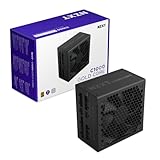
- Premium Choice: SAMA G1000 ATX 3.1 Standard Fully Modular Gaming 1000W Power Supply White
Affiliate disclosure: As an Amazon Associate we earn from qualifying purchases. This post contains affiliate links — if you buy through them we may earn a small commission at no extra cost to you. This never affects our recommendations.
As an Amazon Associate we earn from qualifying purchases at no extra cost to you.




In a hurry? See the top-rated $1000 Gaming PC Build deals available right now:
🛒 Check $1000 Gaming Pc Build Prices on Amazon →🛒 Best Price Today on Amazon
Prime members get fast, free shipping on everything above, plus member-only deals. New members get a 30-day free trial — cancel anytime.
Start 30-Day Prime Free Trial →See Today’s Amazon DealsIntroduction
The $1,000 PC build has always been a milestone, but in 2026 it genuinely hits the sweet spot between value and performance like never before. At this budget you are not making painful compromises — you are getting a rig capable of 1440p gaming at high to ultra settings in virtually every modern title, with headroom to spare.
The foundation of this build is the AMD Ryzen 7 9700X, AMD’s eight-core Zen 5 flagship for the mainstream platform, paired with an NVIDIA RTX 5060 Ti 16GB as the primary GPU option. Together they land inside the $1,000 window while delivering a platform with genuine longevity. If you prefer to stay all-AMD, the RX 9060 XT is a direct GPU alternative covered in the alternatives section below.
What makes 2026 a particularly good time to build at this price point is upscaling maturity. DLSS 4 with Multi Frame Generation (MFG) and AMD’s FSR 4 both dramatically extend effective frame rates at 1440p, meaning a GPU in the $350–$380 range now punches well above its rasterization ceiling. Pair that with a B850 motherboard, 32GB of DDR5-6000, and a 1TB NVMe drive, and you have a modern platform that will age gracefully through 2028 and beyond.
Whether you are stepping up from an aging mid-range build, converting from console, or building your first PC, this guide walks you through every component choice, the reasoning behind it, and what you can realistically expect on screen.
The $1,000 Gaming PC Parts List (2026)
| Component | Part |
|---|---|
| CPU | AMD Ryzen 7 9700X |
| GPU | NVIDIA RTX 5060 Ti 16GB |
| Motherboard | MSI MAG B850 Tomahawk WiFi |
| RAM | Kingston Fury Beast DDR5-6000 32GB |
| Storage | Samsung 990 Pro 1TB |
| PSU | Corsair RM750x 750W |
| Case | Fractal Design Pop Air |
| CPU Cooler | DeepCool AK620 |
| Total |
Prices fluctuate, so always check PCPartPicker before ordering to catch sales and verify current compatibility.
Performance Expectations
1440p Gaming (Main Target)
1440p at high to ultra settings is where this build lives. The RTX 5060 Ti’s 16GB VRAM buffer means it is not memory-constrained in texture-heavy titles the way previous mid-range cards were, and DLSS 4’s Quality mode adds virtually zero perceptible sharpness loss at this resolution.
- AAA open-world titles (Cyberpunk 2077, Alan Wake 2, Black Myth: Wukong): 70–90 fps native at Ultra; 90–120+ fps with DLSS 4 Quality mode. Enable Multi Frame Generation and effective frame rates push past 144 fps in supported titles.
- CS2 / Valorant: 200+ fps with no effort required. Competitive shooters are CPU-bound at this level, and the 9700X delivers.
- Cyberpunk 2077 with DLSS 4 Quality + MFG: consistently 90+ fps native, effectively 144–180+ fps with MFG active at 1440p Ultra. Ray tracing is playable in Psycho mode with MFG on.
- Elden Ring, Spider-Man 2, Hogwarts Legacy: locked or near-locked to 144 fps at High/Ultra without upscaling needed.
- Flight Simulator 2024, Starfield: CPU-intensive titles that will benefit most from the 9700X’s Zen 5 IPC uplift; expect 60–90 fps at High.
The practical outcome: a 144Hz 1440p monitor is the ideal pairing for this build. It will saturate that panel in the majority of titles, with DLSS 4 carrying heavier workloads past the 144 fps mark.
1080p Gaming
At 1080p this build is overpowered for the resolution in most scenarios, which is actually useful for high-refresh competitive play.

- 240 fps is achievable in CS2, Valorant, Apex Legends, and Overwatch 2 on high settings
- Virtually every single-player AAA title will exceed 144 fps at 1080p Ultra
- A 240Hz 1080p monitor (often cheaper than a 1440p 144Hz panel) is a legitimate pairing if competitive gaming is your primary focus
4K Gaming
4K is not this build’s primary use case, but it is not off the table either.
- DLSS 4 Balanced at 4K: Most AAA titles become playable at 40–60+ fps, making it a viable secondary use case on a 4K display
- Native 4K: Expect 30–50 fps in demanding titles — fine for slower-paced games, but not the right config for action titles or anything requiring high frame rates
- With MFG enabled at 4K: effective frame rates improve significantly in supported games, making this build more capable at 4K than its native rasterization suggests
Build Notes and Alternatives
AMD GPU Alternative
If you prefer a full AMD ecosystem, prefer to avoid NVIDIA, or simply find the RX 9060 XT at a better street price, it is a legitimate alternative to the RTX 5060 Ti. At approximately $349–$379 it saves $20–$30 and offers competitive rasterization performance within a few percent of the 5060 Ti in most workloads.
The trade-offs: you lose DLSS 4 and Multi Frame Generation, which is a meaningful sacrifice in supported titles. FSR 4 is AMD’s answer, and it has improved substantially — but DLSS 4 at Quality mode is still the sharper, more widely supported implementation. The RX 9060 XT does offer 12GB GDDR6, which is below the 5060 Ti’s 16GB but sufficient for 1440p in 2026 titles. If you primarily play games that do not support DLSS (or you are philosophically opposed to the technology), the 9060 XT is a sound choice.
Summary: RX 9060 XT = ~$20–30 savings, FSR 4 instead of DLSS 4, 12GB VRAM, no MFG. Competitive rasterization. Recommended if street price falls below $360.
Intel Alternative Build
For builders who prefer Intel, swapping the Ryzen 7 9700X and B850 motherboard for an Intel Core Ultra 5 245K and an MSI MAG Z890 Tomahawk lands at a similar total price point. The Core Ultra 5 245K holds its own in gaming IPC — it trails the 9700X by a small margin in pure gaming benchmarks but edges ahead in multi-threaded productivity and content creation workloads.
The Z890 platform also supports DDR5 natively and offers competitive PCIe 5.0 M.2 slots. The primary downside is slightly higher platform cost (Z890 boards command a premium over B850) and higher CPU power draw, which means the DeepCool AK620 remains just adequate — you may want to budget for a 240mm AIO with the 245K to keep temperatures comfortable under sustained loads.
Summary: Intel alternative = similar gaming performance, better multi-threaded productivity, higher platform cost, heavier thermals.
Upgrade Paths
This build is designed with future upgrades in mind:

- Second 1TB NVMe SSD (~$89): The B850 Tomahawk has multiple M.2 slots. Adding a second drive is a zero-downtime, no-reinstall upgrade — just plug in and format.
- RTX 5070 (future): When prices on next-tier cards normalize, the RTX 5070 is a direct drop-in upgrade to this system. The RM750x PSU handles it comfortably, and the B850 platform will remain current through the next GPU generation.
- AIO liquid cooler: If you push the 9700X with a manual overclock or sustained workloads and see temperatures above 85°C, a 240mm AIO (approximately $70–$90) brings temps down 10–15°C and removes fan noise from the equation.
- Monitor upgrade: If you start at 1080p 144Hz, upgrading to a 1440p 165Hz or 180Hz panel is the single highest-impact quality-of-life improvement you can make once budget allows.
Component Deep Dive
CPU: AMD Ryzen 7 9700X
The AMD Ryzen 7 9700X is AMD’s current mainstream gaming champion. Eight cores on the Zen 5 architecture deliver the highest single-threaded IPC AMD has shipped to date, and the 9700X’s 65W TDP means it runs cool and quiet under the AK620 without breaking a sweat. Clock speeds boost to 5.5GHz on priority cores, which keeps frame times tight in CPU-limited scenarios. It is not the fastest CPU money can buy, but at $279 it represents outstanding value for a gaming-primary build, and the AM5 platform has a committed upgrade path through at least 2027.
GPU: NVIDIA RTX 5060 Ti 16GB
The NVIDIA RTX 5060 Ti is the centerpiece of this build and the part that makes the $1,000 price point compelling in 2026. Its 16GB GDDR7 VRAM is the headline spec — generous enough to handle 1440p texture packs without thrashing, and future-proof well beyond this generation. DLSS 4 Super Resolution and Multi Frame Generation support means the card’s effective performance significantly exceeds its rasterization numbers in supported games. For a buyer who prioritizes 1440p gaming quality at this budget, no competing card offers a better combination of VRAM, feature support, and raw performance per dollar.
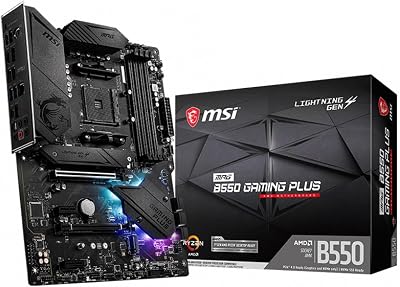
Motherboard: MSI MAG B850 Tomahawk WiFi
The MSI MAG B850 Tomahawk WiFi earns its slot on the strength of a robust VRM (capable of handling AM5 CPUs well beyond the 9700X), DDR5 support with EXPO XMP profiles, dual PCIe 4.0 M.2 slots, 2.5GbE LAN, and Wi-Fi 6E — all for $149. B850 chipset boards are the value sweet spot for AM5: they include everything a gaming build needs and nothing it does not. The Tomahawk specifically has a strong reputation for stable memory training and clean BIOS design, which matters when dialing in DDR5-6000 speeds.
RAM: Kingston Fury Beast DDR5-6000 32GB
The Kingston Fury Beast DDR5-6000 32GB kit hits the performance sweet spot for Zen 5. DDR5-6000 CL36 is the frequency AMD’s Infinity Fabric runs most efficiently at — go higher and you pay latency penalties; go lower and you leave IPC on the table. 32GB is now the minimum recommended for a gaming build in 2026, with modern titles such as Flight Simulator 2024 and modded Skyrim regularly exceeding 16GB system RAM usage. The EXPO profile means one click in BIOS to enable rated speeds.
Storage: Samsung 990 Pro 1TB
The Samsung 990 Pro 1TB is the reliability pick at this price point. PCIe 4.0 NVMe with sequential reads exceeding 7,000 MB/s means game load times are effectively instant, and Samsung’s track record for drive longevity removes any hesitation about long-term reliability. 1TB is the floor for a modern gaming library — factor in OS, applications, and a rotating roster of AAA titles, and the second M.2 slot on the Tomahawk will get used within a year or two.
PSU: Corsair RM750x 750W 80+ Gold
The Corsair RM750x 750W provides 750W of fully modular, 80+ Gold certified power with a 10-year warranty. The 9700X and RTX 5060 Ti system peaks at roughly 400–450W under combined load, so 750W gives a comfortable headroom buffer for future GPU upgrades and any overclocking. Fully modular cabling makes building in the Pop Air straightforward, and the silent fan mode keeps the PSU quiet during light loads. Corsair’s RM series is one of the most consistently recommended unit lines in enthusiast PC building for good reason.
Case: Fractal Design Pop Air
The Fractal Design Pop Air prioritizes what this build actually needs: airflow, ease of build, and clean aesthetics without unnecessary RGB tax. The front mesh panel delivers strong front-to-back airflow that keeps the GPU and CPU cool under load. The interior layout is spacious for a mid-tower, with a dedicated cable management channel and generous GPU clearance. It ships with two 140mm front fans and one 140mm rear fan — enough to keep this system thermally comfortable without purchasing additional fans immediately.
CPU Cooler: DeepCool AK620
The DeepCool AK620 is a dual-tower, six-heatpipe air cooler that competes with 240mm AIOs in thermal performance while eliminating pump noise and the failure point of a liquid loop. On the 65W Ryzen 7 9700X it is dramatically overspecced — which means the fans barely spin at moderate loads, keeping noise levels low during everyday gaming. It also handles the 9700X under any sustained workload without thermal throttling. At $50 it is one of the highest value-per-dollar coolers available and needs no future maintenance.
Final Verdict
The best gaming PC build for $1,000 in 2026 is a genuinely compelling machine — not a compromise build, not a “good enough for the price” suggestion, but an actual high-performance 1440p gaming rig that will remain relevant through 2028–2029 without major upgrades.
The Ryzen 7 9700X and RTX 5060 Ti core gives you a CPU that ages well on AM5 and a GPU with enough VRAM and upscaling support to stay competitive long after its rasterization ceiling becomes the bottleneck. The B850 platform, 32GB DDR5, and quality supporting components mean you are not paying hidden taxes in upgrade costs down the road.
This build is right for you if you want a 1440p 144Hz gaming experience today, plan to keep the system for three to four years, and want a stable, well-cooled, quiet system that does not require constant tinkering. It is also the right foundation if you plan to upgrade the GPU in two years — the platform will support next-generation cards without changes.
Before ordering, run the parts list through PCPartPicker to check for current street prices, active sales, and any compatibility notes that may have changed since this guide was published. GPU and RAM prices in particular can shift meaningfully week to week.
Build confidently — at $1,000 in 2026, you are not settling for less. You are building exactly the right machine.
Related Articles
Looking for more on this topic? Browse the hand-picked guides below — each one applies the same scoring rubric used in this review.
Frequently Asked Questions
What parts do you need for a gaming PC build?
The core parts are a CPU, motherboard, GPU, RAM, an NVMe SSD, a power supply, a case and a CPU cooler, plus Windows or Linux. Around $1000, balance a strong GPU with a capable mid-range CPU and 16–32GB of RAM.